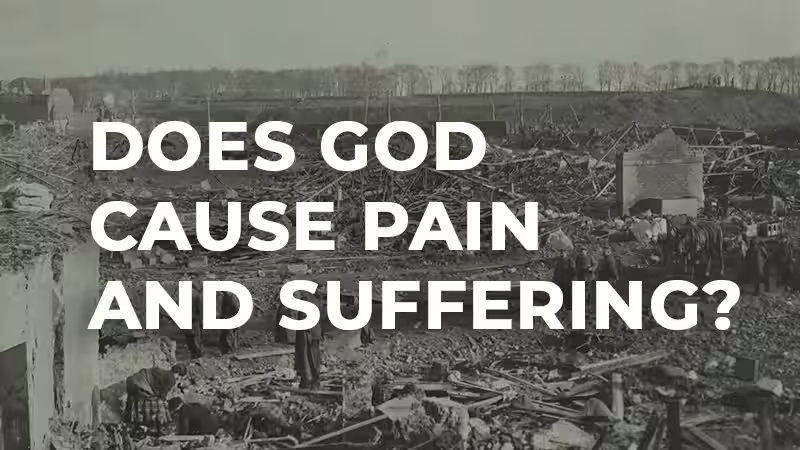
The question, “Why do we suffer if God loves us?” is not just a philosophical query; it’s a raw, visceral cry that echoes through the corridors of human experience. It’s the whisper in the dark of night when grief feels suffocating, the shout into the void when injustice prevails, and the quiet contemplation during moments of profound personal loss. This fundamental tension between the belief in a benevolent, all-powerful deity and the undeniable reality of human suffering is perhaps the most persistent and profound challenge to faith across all religious traditions. It’s a question that can shake the foundations of our devotion, leaving us wrestling with doubt and a desperate need for understanding. We yearn for a world free from sickness, cruelty, and the sharp edges of pain, yet life consistently presents us with these harsh realities, often in the most unexpected and devastating ways. The absence of easy answers can lead to a crisis of faith, prompting us to question the very nature of the love we are told God extends to us.
Think of a parent who deeply loves their child. Would that parent willingly subject their child to unnecessary pain? Intuitively, the answer is no. This analogy, while imperfect, highlights the core of our struggle. If the love of a human parent, with all its limitations, seeks to protect and nurture, why would a divine love, presumably infinite and perfect, allow its creation to endure such hardship? This stark contrast fuels our questioning. The suffering we witness, whether it’s the ravages of a natural disaster, the slow cruelty of a terminal illness, or the systemic oppression faced by communities, seems antithetical to the very concept of a loving God. This paradox forces us to confront difficult theological and existential issues, seeking a framework that can reconcile our lived experiences with our deeply held beliefs. The search for answers often involves delving into the nuances of scripture, theological discourse, and personal spiritual journeys, a testament to the enduring power of this question.
Exploring the Theological Landscape: Diverse Perspectives on Suffering
Religious traditions, in their efforts to grapple with this profound dilemma, have developed a rich tapestry of explanations. These aren’t always simple, one-size-fits-all answers, but rather nuanced theological frameworks designed to offer solace and understanding. One prominent perspective suggests that suffering is an inevitable consequence of free will. In many faiths, God granted humanity the capacity to make choices, both good and bad. The choices of individuals and societies can lead to immense pain, not because God desires it, but because the exercise of freedom, in a world where not all choices are aligned with divine love, can result in negative outcomes. For instance, the decision to wage war, to exploit others, or to neglect the vulnerable all stem from human agency and directly contribute to widespread suffering. This view places a significant emphasis on human responsibility within the divine plan.
Another significant theological lens through which suffering is viewed is that of spiritual growth and refinement. Many traditions teach that adversity can serve as a crucible, forging stronger faith, deeper compassion, and a more profound understanding of ourselves and our reliance on God. This isn’t to say that God causes suffering for the sole purpose of making us stronger, but rather that God can work through suffering to achieve positive spiritual outcomes. Consider the analogy of a sculptor chipping away at a block of marble to reveal its true form. The process can be arduous, but the result is a beautiful, refined work of art. Similarly, the trials we face, while painful, can strip away superficialities, reveal our inner strength, and draw us closer to a divine purpose we might otherwise miss. The Biblical narrative of Job, who endured immense loss yet remained steadfast in his faith, is a classic example of this perspective.
Many religious doctrines propose that the world we inhabit is not in its pristine, original state. The concept of a “fall from grace” is central to Christian theology, suggesting that humanity’s original sin introduced brokenness, imperfection, and consequently, suffering into the world. This view posits that suffering is not a direct act of God’s will, but rather a pervasive element of a world that is estranged from its intended perfect state due to humanity’s choices. This includes not only moral suffering caused by human actions but also physical suffering, such as disease and death, which are seen as part of the natural decay of a world no longer in perfect harmony with its Creator. This perspective helps explain why even innocent children suffer, as they are born into a world already affected by this inherited brokenness.
This understanding of a fallen world also extends to the natural order itself. Natural disasters like earthquakes, floods, and famines, while seemingly random and cruel, are understood by some as manifestations of a world groaning under the weight of sin and separation from God. It’s not that God is actively orchestrating these events as punishment, but rather that the very fabric of creation has been impacted by the initial rebellion. This perspective offers a framework for understanding suffering that doesn’t directly attribute malevolence to God, but rather sees it as an unfortunate byproduct of a cosmic event. The “groaning of creation” described in Romans 8:22 in the New Testament is often cited as evidence for this view, suggesting that the entire natural world is impacted by humanity’s spiritual condition.
The Mystery of Divine Purpose
Beyond specific doctrines, many religious traditions acknowledge that the full scope of God’s purposes remains a profound mystery. We are finite beings attempting to comprehend an infinite mind. Theologians often speak of the limits of human understanding when it comes to discerning God’s ultimate plan. What appears to us as senseless suffering might, from an eternal perspective, serve a purpose we cannot yet grasp. This doesn’t negate the pain we feel, but it offers a potential comfort: that our suffering is not necessarily without meaning, even if that meaning is hidden from us. It encourages a posture of humble trust rather than demanding complete intellectual comprehension. This is akin to a child not understanding why a doctor administers a painful injection, but trusting that the parent knows it’s for their ultimate well-being.
This mystery also invites us to look beyond the immediate circumstances. While we are deeply affected by present pain, many faiths encourage believers to focus on an eternal perspective, where suffering is temporary and ultimately overcome. The promise of an afterlife, where there is no more pain or sorrow, offers a powerful counterpoint to the hardship experienced in this life. This hope is not a denial of present reality, but a transcendent vision that provides strength and resilience. It allows individuals to endure suffering with the conviction that their present trials are not the final word, and that a greater, more loving reality awaits. The resurrection narratives in Christianity, for example, emphasize the ultimate triumph over suffering and death, providing hope for believers facing their own mortality and the pain of loss.
One of the most profound and often overlooked aspects of suffering is its capacity to cultivate empathy and compassion. When we experience pain, we are often better equipped to understand and relate to the suffering of others. This shared humanity, forged in the crucible of adversity, can break down barriers and foster a deep sense of connection. Religious teachings frequently highlight the importance of caring for the less fortunate, and personal experience with hardship can be a powerful motivator for such acts of kindness and service. Think of someone who has battled a serious illness and then volunteers at a hospital; their lived experience allows them to connect with patients on a level that someone who hasn’t faced similar challenges might not be able to. This connection is a tangible manifestation of divine love working through human hearts.
Furthermore, suffering can serve as a powerful catalyst for positive change. Witnessing injustice or enduring personal hardship can ignite within us a desire to alleviate the suffering of others and to work towards a more just and equitable world. This aligns with the religious imperative to be a force for good. Many social justice movements throughout history have been fueled by individuals and groups who, having experienced or witnessed profound suffering, were moved to action. This isn’t about suggesting God wants us to suffer so we can be motivated, but rather that the human response to suffering, guided by divine principles of love and justice, can lead to significant positive societal transformation. The Golden Rule, “Do unto others as you would have them do unto you,” becomes a beacon for action when we have personally felt the sting of pain or neglect.
Finding Solace and Meaning in Faith
While the question of suffering may never be fully answered to our complete satisfaction, faith offers a pathway to navigate its complexities. It provides a framework for understanding, a source of hope, and a community of support. Believing in a God who is not only loving but also sovereign and just, even when His ways are inscrutable, can provide a bedrock of stability in turbulent times. This doesn’t mean that faith eradicates suffering or makes it painless, but it offers a different lens through which to view it. It allows for lament and protest, but also for perseverance and ultimately, for a form of peace that transcends circumstances.
Ultimately, faith is not the absence of questions, but the commitment to seeking answers and finding meaning even amidst uncertainty. It’s about trusting that there is a larger narrative at play, one guided by a love that is both profound and enduring, even if its manifestations are not always immediately apparent. This trust allows us to continue to love, to serve, and to hope, even when faced with the harsh realities of suffering. It’s in the quiet moments of prayer, in the shared rituals of community, and in the personal wrestling with difficult truths that many find the strength to continue their journey, holding onto the belief that even in suffering, they are not alone and that a divine love continues to surround them.
Frequently Asked Questions: Why Do We Suffer If God Loves Us?
This section addresses common questions and theological perspectives on the existence of suffering in a world believed to be governed by a loving God.
Why do we suffer if God loves us?
This is one of the most profound and persistent questions in religious thought. Various theological explanations attempt to reconcile divine love with the reality of suffering. Some common perspectives include:
The Free Will Defense: Many religions emphasize that God has granted humans free will. Suffering, in this view, is often a consequence of human choices and actions, or the choices of others. A world with genuine free will, even if it leads to pain, is seen as more valuable than a world of predetermined happiness where true freedom is absent.
The Soul-Making Theodicy: This perspective suggests that suffering is a necessary element for spiritual growth, character development, and the cultivation of virtues like compassion, resilience, and faith. Challenges and hardships can refine individuals and draw them closer to God.
The Mystery of Divine Providence: Some traditions hold that God’s plan is beyond human comprehension. While we may not understand the reasons for individual suffering, believers are encouraged to trust in God’s ultimate goodness and purpose, even in the midst of pain.
The Fall of Man/Original Sin: In traditions like Christianity, suffering is often linked to the disobedience of the first humans, which introduced sin and its consequences (including death and suffering) into the world.
A Test of Faith: In some contexts, suffering is viewed as a test designed to strengthen faith, commitment, and reliance on God.
The Greater Good: Some believe that suffering, while terrible in itself, may contribute to a larger, ultimate good that is not immediately apparent to humans.
It’s important to note that different religions and denominations within religions may offer distinct or nuanced explanations for suffering. These explanations often aim to maintain belief in a loving and powerful God while acknowledging the palpable reality of pain and hardship in the world.
What is religion’s role in understanding suffering?
Religion often provides a framework for understanding, coping with, and finding meaning in suffering. Its roles include:
Providing Explanations: As seen above, religions offer theological explanations for why suffering occurs, attempting to reconcile it with the nature of God or the divine.
Offering Comfort and Hope: Religious teachings often provide solace, assurance, and the promise of a better future (e.g., afterlife, redemption, divine intervention) that can help individuals endure present difficulties.
Guiding Moral and Ethical Behavior: Many religions advocate for compassion, charity, and mutual support, encouraging believers to alleviate the suffering of others.
Facilitating Community Support: Religious communities offer a sense of belonging and shared experience, allowing individuals to support each other through difficult times.
Promoting Spiritual Practices: Prayer, meditation, worship, and scripture study can be sources of strength, peace, and connection to something greater than oneself, aiding in the process of dealing with suffering.
Encouraging Meaning-Making: Religions can help individuals find purpose or meaning in their suffering, viewing it as part of a larger divine plan or an opportunity for spiritual growth.