The Christian calendar is punctuated by a series of significant feasts, each offering a unique lens through which to understand the unfolding narrative of faith. Among these, Whit Sunday, also known as Pentecost, holds a special place. It’s a day that resonates with themes of divine intervention, the birth of the Church, and the enduring power of the Holy Spirit. More than just a historical observance, Whit Sunday serves as a vibrant reminder of spiritual empowerment and the transformative grace available to believers.
For many, the name “Whit Sunday” might conjure images of white robes, a visual representation of purity and divine presence. This association is deeply rooted in the tradition of baptisms that often took place on this day, symbolizing a cleansing and a new beginning. The very essence of Whit Sunday lies in its celebration of the Holy Spirit’s descent upon the apostles, an event that irrevocably altered the course of religious history and continues to inspire millions across the globe.
The narrative of Whit Sunday is intrinsically linked to the events immediately following Jesus Christ’s ascension. After Jesus departed, his followers, filled with a mixture of hope and apprehension, gathered together. They were awaiting the promised gift from the Father, the Helper whom Jesus had spoken of – the Holy Spirit. This anticipation reached its climax on the fiftieth day after Passover, a significant Jewish festival itself, making the timing deeply symbolic.
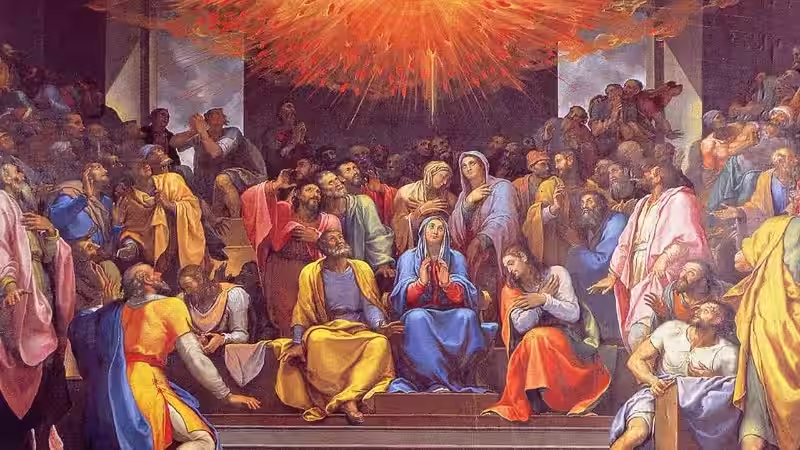
The Book of Acts vividly describes this momentous occasion. As the disciples were gathered in one place, a sound like a mighty rushing wind filled the room, and what appeared to be tongues of fire descended upon each of them. This was not a gentle breeze, but a powerful, undeniable manifestation of God’s presence. The disciples were instantly filled with the Holy Spirit, empowering them to speak in other languages, a miraculous feat that allowed them to share the Gospel with people from diverse linguistic backgrounds. This initial outpouring is the very foundation of Whit Sunday’s significance.
Understanding the Holy Spirit’s Role
The Holy Spirit, often misunderstood, is the third person of the Trinity, co-equal with God the Father and God the Son. On Whit Sunday, the Spirit’s active, tangible presence was made manifest. Imagine a group of individuals, once fearful and uncertain, suddenly imbued with unwavering courage, profound wisdom, and the ability to communicate the most profound truths in ways they never could before. This is the essence of the Holy Spirit’s work – to guide, to empower, and to illuminate.
The gifts of the Spirit, as described in scripture, are diverse and essential for the life and growth of the Church. These include wisdom, knowledge, faith, healing, miraculous powers, prophecy, discernment of spirits, tongues, and interpretation of tongues. These are not mere abstract concepts; they are practical, spiritual endowments meant to equip believers for service and to build up the community of faith. Whit Sunday celebrates the inauguration of this spiritual equipping, a gift that continues to be available to all who seek it.
Whit Sunday’s Impact on the Early Church
The event of Whit Sunday marked the true birth of the Christian Church. Prior to this, the followers of Jesus were a small, nascent group. However, the outpouring of the Holy Spirit galvanized them into bold evangelists and unwavering witnesses. Peter, who had previously denied Jesus, now stood before a multitude and preached with such conviction that thousands were converted that very day. This demonstrates the transformative power of the Spirit, turning fear into boldness and doubt into assurance.
This newfound power allowed the early Christians to spread the Gospel far and wide, despite persecution and opposition. The ability to speak in different languages was a miraculous sign that drew attention and opened doors for communication. Whit Sunday, therefore, is not just about a past event; it’s about the ongoing mission of the Church, empowered by the same Spirit that descended on that foundational day. It reminds us that we, too, are called to be witnesses, equipped by the Spirit to share our faith.
Building a Community of Faith
Beyond evangelism, the Holy Spirit’s presence fostered a deep sense of unity and shared purpose among the early believers. They sold their possessions, shared their resources, and committed themselves to the apostles’ teaching and to fellowship. This communal spirit, born from a shared experience of divine grace on Whit Sunday, became a hallmark of the early Church. It was a testament to how the Spirit could overcome differences and forge a powerful, cohesive body.
The Apostle Paul, in his letters, frequently emphasizes the importance of the “body of Christ,” where each member has a unique role and gift, all working together for the common good. This interconnectedness, facilitated by the Holy Spirit, is a crucial aspect of Whit Sunday’s legacy. It encourages us to consider our own contributions to our faith communities and how we can live in greater unity and mutual support, reflecting the Spirit’s unifying work.
Modern Relevance of Whit Sunday
Even centuries later, the message of Whit Sunday remains profoundly relevant. In a world often characterized by division, confusion, and a search for meaning, the promise of the Holy Spirit’s guidance and empowerment offers solace and direction. The spiritual gifts mentioned on Whit Sunday are not relics of the past; they are considered by many Christians to be active and available today, vital for navigating the complexities of modern life and for living a life of purpose.
For individuals, Whit Sunday is an invitation to seek a deeper connection with the divine. It’s about recognizing that we are not alone in our struggles and that a source of immense power and wisdom is accessible. This can manifest in various ways: a renewed sense of peace, a burst of creativity, the courage to speak truth, or the ability to show profound compassion. These are all echoes of the Spirit’s work, a continuation of the promise made on that first Whit Sunday.
Living Out the Spirit’s Gifts Today
The celebration of Whit Sunday encourages believers to reflect on how they are utilizing the spiritual gifts they have received. Are we using our talents to serve others, to build up our communities, and to spread the message of hope? It’s a call to action, an exhortation to move beyond passive observance and to actively engage with the power of the Holy Spirit in our daily lives. This might involve volunteering, mentoring, offering a listening ear, or simply living with greater integrity and love.
Ultimately, Whit Sunday is a festival of hope and transformation. It reminds us that divine power is not confined to ancient history but is a living, active force in the present. By embracing the spirit of Whit Sunday, we can experience spiritual renewal, foster stronger communities, and live lives that are more fully aligned with God’s will, just as the apostles did after their encounter with the Holy Spirit on that pivotal day.
Frequently Asked Questions about Whitsunday and Religion
What is Whitsunday?
Whitsunday is the Christian festival celebrated seven weeks after Easter Sunday. It commemorates the descent of the Holy Spirit upon the Apostles, as described in the Book of Acts in the New Testament. The name “Whitsunday” is believed to derive from “White Sunday,” referring to the white garments worn by those baptized on this day. It is also known as Pentecost.
What is the religious significance of Whitsunday?
Whitsunday marks a pivotal moment in Christian history, signifying the birth of the Church. The Holy Spirit’s coming empowered the Apostles to spread the Gospel throughout the world. It is a celebration of the Holy Trinity – God the Father, God the Son, and God the Holy Spirit – and the transformative power of the Spirit in believers’ lives.
How is Whitsunday celebrated in religious traditions?
Celebrations vary across Christian denominations. Many churches hold special services with themes of the Holy Spirit, often featuring readings from Acts chapter 2, hymns, and sermons focusing on the gifts and fruits of the Spirit. Some traditions incorporate contemporary music and modern expressions of faith. In some cultures, traditional processions, festivals, and community gatherings also take place.
What are the key biblical passages related to Whitsunday?
The primary biblical account of Whitsunday is found in the Book of Acts, chapter 2, verses 1-4, which describes the event of Pentecost. Other relevant passages include Jesus’ promise of the Holy Spirit in the Gospel of John (e.g., John 14:16-17, 14:26, 15:26, 16:7-15) and St. Paul’s writings on the gifts of the Spirit in 1 Corinthians chapters 12-14.
What are the “gifts of the Spirit” often discussed in relation to Whitsunday?
The “gifts of the Spirit” refer to supernatural abilities or endowments bestowed by the Holy Spirit upon believers to serve the Church and the world. While the list varies slightly in scripture, common examples include wisdom, knowledge, faith, healing, miraculous powers, prophecy, discernment of spirits, speaking in tongues, and interpretation of tongues. These gifts are understood as enabling believers for ministry and spiritual growth.