Pentecost, in the Catholic tradition, is far more than just a holiday; it is a pivotal moment in salvation history, a divine outpouring that irrevocably changed the course of the early Church and continues to resonate with believers today. More than fifty days after Easter Sunday, the feast of Pentecost marks the descent of the Holy Spirit upon the Apostles and other disciples gathered in Jerusalem. This event, vividly described in the Acts of the Apostles, is foundational to Catholic belief, signifying the birth of the Church and the inauguration of its mission to spread the Gospel.
The Catholic definition of Pentecost is deeply rooted in the Old Testament festival of Shavuot, also known as the Feast of Weeks. This Jewish harvest festival, celebrated seven weeks after Passover, commemorated the giving of the Law on Mount Sinai and the firstfruits of the harvest. In its Christian fulfillment, Pentecost mirrors this: the Holy Spirit, the third person of the Trinity, is given as the new Law written on the hearts of believers, and the Church, the mystical body of Christ, is birthed as the firstfruits of God’s redeemed people. It’s a day of immense spiritual renewal and empowerment.
The Wind, the Fire, and the Tongues: Divine Manifestations
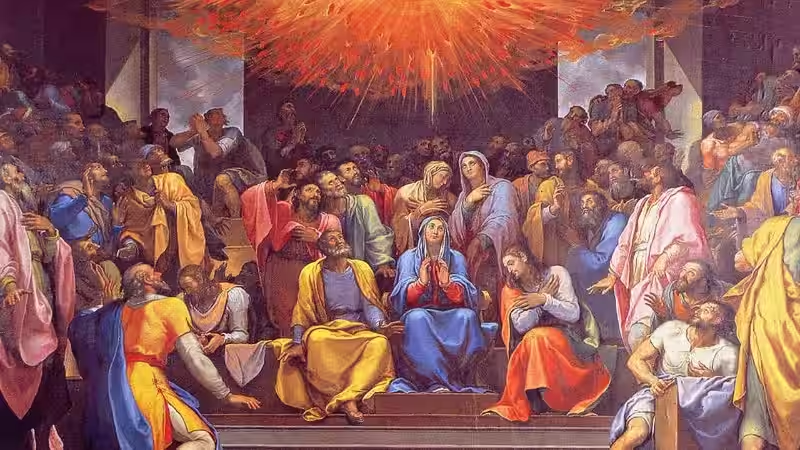
The Gospel accounts of Pentecost describe the Holy Spirit’s arrival with dramatic sensory details. A sound like a powerful wind swept through the house where the disciples were assembled, a powerful metaphor for the invisible yet potent force of God’s presence. This wasn’t a gentle breeze but a gale, signifying the overwhelming and transformative power that was about to descend. Imagine a mighty gust of wind suddenly filling a room – it’s impossible to ignore, and so too was the coming of the Spirit.
Following the sound, tongues of fire appeared, resting on each of the disciples. This imagery is particularly striking. Fire, in scripture, often symbolizes purification, divine presence, and the burning zeal of God’s love and truth. These tongues of fire were a visible sign that the Holy Spirit had truly come to ignite a divine fire within the Apostles, empowering them with courage and clarity to proclaim the Gospel. It was a tangible manifestation of an invisible grace.
Speaking in Other Tongues: The Universal Mission of the Church
Perhaps the most remarkable and defining aspect of Pentecost for Catholics is the phenomenon of speaking in other tongues, or glossolalia. The Holy Spirit enabled the Apostles to speak in languages unknown to them, so that all present, from various nations and backgrounds, could understand the message of salvation in their own native tongues. This miraculous event directly addresses the universal nature of God’s plan for the Church.
This event is a powerful symbol of unity in diversity. Suddenly, the barriers of language that had divided humanity were overcome by the unifying power of the Spirit. The Catholic Church sees this as a divine mandate to reach out to all peoples, regardless of their origin or language. It underscores the Church’s ongoing mission to evangelize and to foster communion among all believers, demonstrating that the Gospel is meant for every nation and every tongue.
The Holy Spirit: The Lifeblood of the Catholic Church
The Catholic definition of Pentecost is inextricably linked to the person and work of the Holy Spirit. The Holy Spirit is not merely a force or an energy; in Catholic theology, He is the Third Person of the Blessed Trinity, co-equal and co-eternal with the Father and the Son. Pentecost is the moment when His divine presence and power were definitively poured out upon Christ’s followers, marking the Church’s true coming into being.
The Holy Spirit is the animator of the Church, the source of its spiritual life and its ability to carry out Christ’s mission. He guides the Church, sanctifies its members, and empowers them with charisms – spiritual gifts that are given for the building up of the Body of Christ. These gifts, such as wisdom, understanding, counsel, fortitude, knowledge, piety, and fear of the Lord (the Gifts of the Holy Spirit), are infused by the Spirit to help believers live out their faith more fully.
Gifts and Fruits of the Spirit: Living the Pentecostal Experience Daily
The Holy Spirit doesn’t just visit the Church on Pentecost; He continues to dwell within it and within individual believers. This indwelling manifests in the Fruits of the Holy Spirit, which are the virtues that grow in a soul as a result of the Spirit’s action. These fruits, listed in Galatians 5:22-23, include love, joy, peace, patience, kindness, goodness, faithfulness, gentleness, and self-control. Experiencing these qualities in our lives is a sure sign of the Holy Spirit’s working.
The Catholic faith encourages believers to actively seek the guidance and empowerment of the Holy Spirit through prayer and the sacraments. The sacrament of Confirmation is particularly significant, as it is understood to be a strengthening and deepening of the grace received at Baptism, imbuing the recipient with the fullness of the Holy Spirit, much like the Apostles received Him at Pentecost. It’s a personal Pentecost for each confirmed Catholic.
Empowerment for Mission: The Church’s Ongoing Work
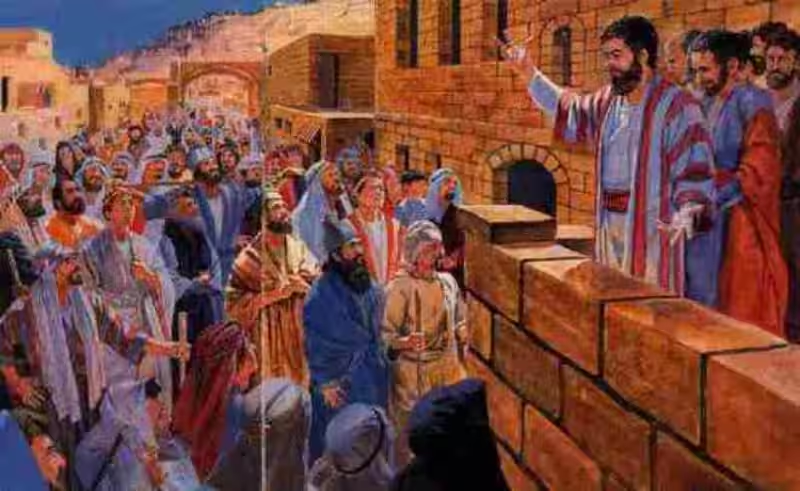
Pentecost is not a historical event to be merely remembered; it is a living reality that empowers the Catholic Church for its ongoing mission in the world. The disciples, transformed by the Holy Spirit, went forth from Jerusalem to preach the Gospel, facing persecution but armed with divine boldness and wisdom. This empowerment is still available to Catholics today.
Through the Holy Spirit, Catholics are called to be witnesses of Christ, to live lives that radiate His love and truth. This mission involves not only evangelization through words but also through deeds of charity, justice, and service. The spirit of Pentecost calls us to be active participants in God’s work of redemption, bringing His light into every corner of the world.
Pentecost Today: A Call to Spiritual Renewal
For Catholics, the celebration of Pentecost remains a profound and joyous occasion that calls for deep reflection and spiritual renewal. It is a time to recommit ourselves to the life of the Spirit, to ask for His guidance, and to allow His transforming power to work within us. The Catholic definition of Pentecost serves as a constant reminder of the Church’s divine origin and its ongoing mission.
The Feast of Pentecost is an invitation to experience the Spirit’s presence anew, to be filled with His gifts, and to bear His fruits in our lives. It is a call to embrace the Church’s universality and to participate actively in its mission of love and evangelization. By understanding and embracing the Catholic definition of Pentecost, believers can draw closer to God and become more effective instruments of His grace in the world.
Frequently Asked Questions about Pentecost in the Catholic Church
What is Pentecost?
Pentecost is a major feast day in the Catholic Church celebrated fifty days after Easter Sunday. It commemorates the descent of the Holy Spirit upon the Apostles and other followers of Jesus Christ, as described in the Acts of the Apostles in the New Testament. It is considered the birthday of the Church.
What is the significance of Pentecost for Catholics?
For Catholics, Pentecost is a pivotal moment because it marks the fulfillment of Jesus’ promise to send the Holy Spirit to guide and empower his disciples. The Holy Spirit bestows gifts upon believers, enabling them to spread the Gospel and live out their faith. It is a celebration of the Holy Spirit’s presence and activity in the Church and in the lives of individual Catholics.
When is Pentecost celebrated?
Pentecost is celebrated on the seventh Sunday after Easter Sunday. The date varies each year because Easter is a movable feast, determined by the lunar calendar.
What are the main themes associated with Pentecost?
The main themes of Pentecost include the coming of the Holy Spirit, the birth of the Church, the universality of God’s love, the gifts of the Holy Spirit (such as wisdom, understanding, counsel, fortitude, knowledge, piety, and fear of the Lord), and the empowerment of believers for mission.
How do Catholics typically celebrate Pentecost?
Catholics celebrate Pentecost through special Masses, which often feature readings that highlight the descent of the Holy Spirit and the early days of the Church. Liturgies may include the renewal of baptismal promises, the use of red vestments (symbolizing the fire of the Holy Spirit), and sometimes special prayers for the outpouring of the Holy Spirit. Many churches are decorated with red, and sometimes flowers.
What is the role of the Holy Spirit in Catholic belief?
In Catholic theology, the Holy Spirit is the third Person of the Blessed Trinity, co-equal with God the Father and God the Son. The Holy Spirit is seen as the divine advocate, sanctifier, and guide of the Church and of individual believers. The Spirit inspires, illumines, and strengthens Christians in their faith and in their efforts to live according to God’s will.
Is Pentecost a Holy Day of Obligation for Catholics?
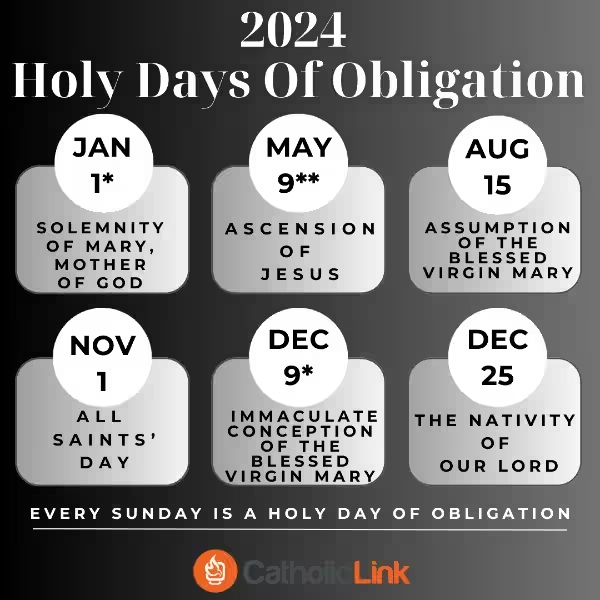
Pentecost is not a Holy Day of Obligation in many places, meaning that Catholics are not required to attend Mass on that day, although it is highly encouraged. However, in some regions or countries, it may still be considered a Holy Day of Obligation. It is advisable to check local diocesan regulations.