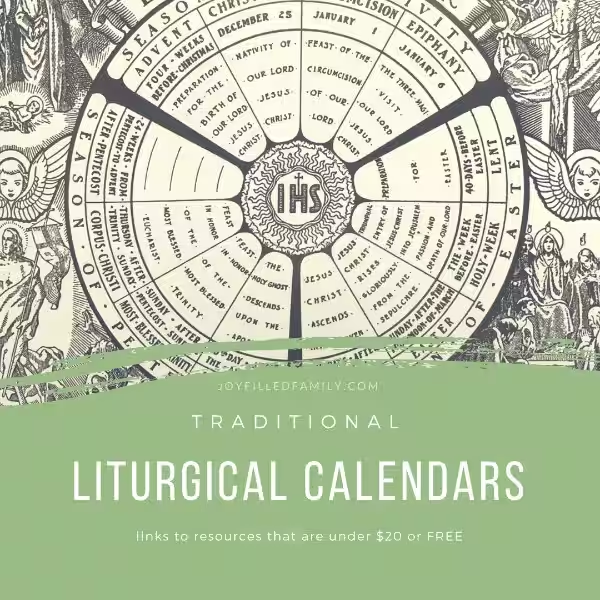
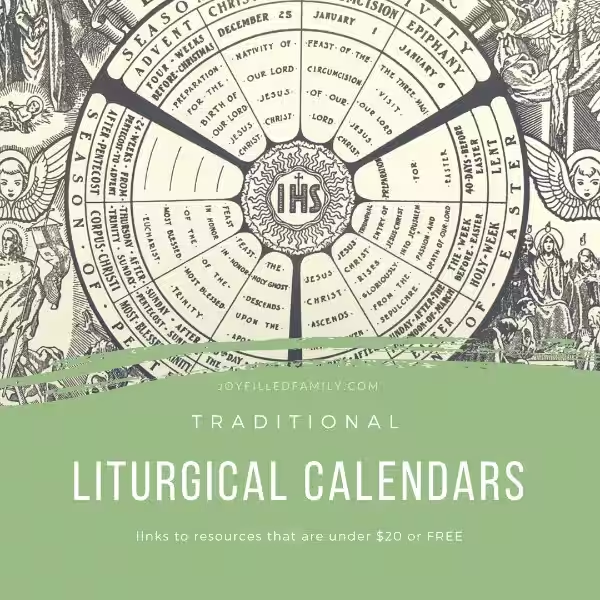
In the bustling, ever-changing landscape of modern life, the concept of a traditional Catholic calendar might seem like a relic of the past, a quaint reminder of bygone eras. Yet, for millions, it remains a vital, living framework that shapes their spiritual journey, offering a predictable and profound rhythm to their faith. This calendar, deeply rooted in the history and liturgy of the Catholic Church, is far more than just a series of dates; it’s a narrative told through feasts, fasts, and liturgical seasons, each imbued with theological significance and personal meaning. Understanding its structure and purpose can unlock a richer, more intentional engagement with Catholic life, providing a constant anchor in a world often characterized by flux and uncertainty.
The beauty of the traditional Catholic calendar lies in its ability to connect us to the unfolding story of salvation. It’s a meticulously crafted tapestry that weaves together the lives of Christ, His Mother, the saints, and the foundational events of our faith. By following its appointed days, we are invited to walk with Jesus from His humble Nativity to His glorious Resurrection, to meditate on the mysteries of His life, and to draw inspiration from the heroic virtues of those who have gone before us. This cyclical remembrance isn’t mere repetition; it’s a dynamic engagement that allows us to encounter these sacred truths anew each year, deepening our understanding and strengthening our devotion.
The Liturgical Seasons: A Spiritual Journey Through the Year
The traditional Catholic calendar is organized into distinct liturgical seasons, each with its own unique character, penitential tone, and celebratory focus. These seasons are not arbitrary divisions but rather carefully designed periods that guide the faithful through the central mysteries of Christianity. Think of them as the spiritual heartbeat of the Church, pulsing with the life of Christ and His teachings. Each season offers a particular lens through which to view and interiorize our faith, providing a structured path for spiritual growth and conversion throughout the year.
The year begins with Advent, a season of joyful anticipation and hopeful waiting for the coming of Christ. It’s a time of penance and preparation, much like waiting for a beloved guest to arrive. This is followed by Christmas, a joyous celebration of the Incarnation, the birth of Jesus. Then comes Ordinary Time, which is divided into two parts, a period for reflecting on Christ’s public ministry and teachings throughout the year. The most solemn season is Lent, a forty-day period of intense prayer, fasting, and almsgiving, mirroring Christ’s own forty days in the desert, preparing us for the ultimate sacrifice. This culminates in the Sacred Triduum – Holy Thursday, Good Friday, and Holy Saturday – the most sacred days of the liturgical year, commemorating Christ’s Passion, death, and burial. Finally, Easter, a season of jubilant celebration of Christ’s resurrection, extends for fifty days, reminding us of the victory over sin and death, and concluding with Pentecost, the descent of the Holy Spirit. These seasons provide a predictable yet profound rhythm, allowing us to revisit and re-experience the core tenets of our faith annually.
Advent: The Season of Hope and Waiting
Advent marks the beginning of the liturgical year in the traditional Catholic calendar, a period of four weeks filled with anticipation and spiritual reflection. It’s a time when the Church encourages us to be vigilant and to prepare our hearts for the coming of Christ, not just His first coming at Christmas, but also His eventual return in glory. The readings and prayers during Advent often focus on themes of hope, repentance, and the fulfillment of ancient prophecies, painting a vivid picture of a world yearning for salvation. Think of it as a spiritual ‘waiting room’ where we are called to cultivate patience and deepen our longing for Christ’s presence in our lives.
During Advent, we often see symbols like the Advent wreath with its four candles, each lit successively each week, representing the growing light of Christ. The color purple, a regal and penitential hue, dominates the vestments and decorations, signifying a call to introspection and spiritual preparation. This season is an invitation to quiet our minds, to listen for God’s voice amidst the clamor of the world, and to consciously make room for Christ in our lives. It’s a stark contrast to the commercial frenzy often associated with the secular holiday season, offering a genuine opportunity for spiritual renewal and a deeper appreciation for the meaning of Christmas. The emphasis is on hope, a steadfast belief in God’s promises and the ultimate triumph of good over evil.
Lent, a pivotal season in the traditional Catholic calendar, is a forty-day period of intense spiritual discipline and reflection, leading up to the observance of Holy Week and Easter. This extended period of penance is designed to help us confront our sins, cultivate deeper prayer, and practice selfless charity. It’s a time to strip away the superficial and to focus on what truly matters, mirroring Christ’s own forty days in the desert, where He was tempted but remained steadfast in His mission. The spiritual goal is not punishment, but transformation, a profound reorientation of our hearts towards God.
The practices of fasting, prayer, and almsgiving are central to the Lenten observance. Fasting isn’t just about abstaining from food; it’s about deliberately sacrificing something we enjoy to bring ourselves closer to God and to foster empathy for those who suffer from deprivation. Prayer becomes more fervent, a direct and heartfelt conversation with the Divine. Almsgiving, or charitable giving, reminds us of our responsibility to our neighbors and the importance of sharing God’s blessings. The liturgical color for Lent is typically purple, signifying penance and sorrow. However, it is also a season of hope, as it prepares us for the glorious resurrection of Christ, reminding us that through suffering and sacrifice, we find redemption and new life. This season is a powerful reminder that spiritual growth often requires effort and a willingness to embrace discomfort for the sake of greater spiritual clarity and a deeper connection to the divine.
Easter and Ordinary Time: The Celebration of Victory and the Journey of Faith
The traditional Catholic calendar erupts in joyous celebration during the Easter season, a period that lasts for fifty days and marks the heart of the Christian faith: the Resurrection of Jesus Christ. This is a time of profound spiritual victory, a testament to God’s power over sin and death. The liturgy overflows with hymns of praise, the Gloria is sung with renewed vigor, and the readings focus on the appearances of the Risen Christ and the unfolding of His mission through the apostles. It’s a time to truly rejoice and to internalize the transformative power of Christ’s victory in our own lives.
Following the vibrant celebrations of Easter and Pentecost, the Church enters two periods of Ordinary Time. These are not “ordinary” in the sense of being mundane or unremarkable, but rather in the sense of being the regular, ordered time of the Church’s year. This is the time for living out the implications of Christ’s teachings throughout the year. The readings and liturgical focus shift to Jesus’ public ministry, His parables, His miracles, and the practical application of His Gospel in our daily lives. It’s a period of discipleship, where we are called to integrate the lessons learned during Advent, Christmas, Lent, and Easter into our ongoing spiritual journey. The traditional Catholic calendar provides this extended period for steady growth, allowing the truths of faith to be absorbed and lived out in the fabric of our everyday existence.
The Feast Days: Honoring Saints and Sacred Events
Beyond the overarching liturgical seasons, the traditional Catholic calendar is punctuated by a rich array of feast days dedicated to honoring saints and commemorating significant events in salvation history. These days serve as vibrant signposts along the spiritual path, offering specific moments to reflect on particular aspects of God’s work and the lives of those who have heroically lived out their faith. Each feast day is an invitation to draw inspiration, to learn from the examples of Christian virtue, and to intercede through the communion of saints.
The calendar boasts a hierarchy of feasts, with Solemnities being the highest, such as the Solemnity of the Annunciation or the Solemnity of Christ the King, celebrating the most important events and figures. Then there are Feasts, like the Feast of Saint John the Baptist or the Feast of the Transfiguration, which commemorate significant individuals or moments in Christ’s life. Finally, there are Obligatory Memorials and optional ones, honoring saints whose lives offer particular lessons or whose intercession is especially sought. These feast days are not just historical markers; they are opportunities to encounter Christ through His saints, to understand the universality of His love, and to be encouraged in our own walk of faith by cloud of witnesses who have gone before us. For example, the Feast of Saint Francis of Assisi invites us to contemplate poverty, humility, and love for creation, while the Feast of Saint Joan of Arc can inspire courage and unwavering faith in the face of adversity.
The Blessed Virgin Mary: Mother of God and Model of Faith
The traditional Catholic calendar places a special emphasis on the Blessed Virgin Mary, recognizing her unique and central role in the history of salvation. Numerous feast days are dedicated to her, celebrating pivotal moments in her life and her profound relationship with her Divine Son. These observances are not mere veneration but are deeply theological, highlighting her Immaculate Conception, her role in the Annunciation, her Visitation to Elizabeth, her Assumption into heaven, and her title as Mother of God. These feasts allow us to contemplate her perfect faith, her obedience to God’s will, and her powerful intercession for humanity.
Consider the Solemnity of the Immaculate Conception. This feast, celebrated on December 8th, honors Mary’s unique grace of being preserved from original sin from the moment of her conception. It’s a foundational belief that underscores her purity and her complete openness to God. Similarly, the Solemnity of Mary, Mother of God, celebrated on January 1st, affirms her divine motherhood, a truth that has profound implications for our understanding of Christ’s humanity. By observing these Marian feasts, the traditional Catholic calendar encourages us to look to Mary as a model of discipleship – a woman who perfectly responded to God’s call and who continues to guide and protect us with maternal love. Her example of humility, obedience, and unwavering trust in God offers an invaluable blueprint for our own spiritual lives.
The Saints: Examples of Christian Virtue and Intercessors for Us
The traditional Catholic calendar is richly populated with the feasts of saints, individuals who, through their lives, exemplify the teachings of Christ and serve as beacons of hope and inspiration for believers. These men and women, from apostles and martyrs to hermits and theologians, demonstrate the diverse ways in which one can live a life devoted to God. Their feast days are not just historical commemorations; they are opportunities to learn from their virtues, to be encouraged by their perseverance, and to draw strength from their intercession on our behalf.
For instance, the feast of Saint Peter the Apostle reminds us of both his bold faith and his human failings, illustrating that even those closest to Christ were imperfect yet called to serve. The feast of Saint Agnes, a young martyr, inspires courage in the face of persecution and steadfastness in one’s beliefs. The traditional Catholic calendar includes a vast spectrum of saints, each offering a unique perspective on Christian living. By celebrating their lives, we are reminded that holiness is attainable for all, regardless of background or circumstance. These saints become our spiritual companions and intercessors, reminding us that we are part of a larger, unbroken communion of faith that transcends time and space. Their lives serve as tangible proof of God’s grace working in the world, offering practical lessons and profound encouragement for our own spiritual journey.
Integrating the Traditional Catholic Calendar into Modern Life
In our fast-paced, digitally saturated world, the traditional Catholic calendar might seem challenging to integrate. However, its enduring rhythms offer a powerful antidote to the fragmentation and superficiality that often characterize modern life. By consciously embracing its structure, we can cultivate a deeper, more meaningful spiritual life, finding stability and purpose amidst the constant flux. It’s about intentionally choosing to anchor ourselves in the timeless truths of our faith, allowing the sacred cycle to shape our priorities and our perspective.
One practical way to engage with the traditional Catholic calendar is to make it a visible part of your home. A simple liturgical wall calendar can serve as a constant reminder of the unfolding seasons and upcoming feast days. Planning family meals or activities around specific celebrations can transform ordinary days into opportunities for spiritual reflection and connection. For example, preparing a special meal on the feast of a patron saint or incorporating a particular Lenten fast into your family’s routine can make these observances tangible and memorable. Furthermore, actively participating in the Church’s liturgy – attending Mass on feast days, praying the Liturgy of the Hours, or engaging with the scripture readings assigned for each day – provides a direct encounter with the rhythms of faith. The traditional Catholic calendar is not a relic; it is a living, breathing guide to a richer, more intentional Christian life, offering enduring wisdom and profound opportunities for spiritual growth for those who choose to embrace it.
Frequently Asked Questions about the Traditional Catholic Calendar
What is the Traditional Catholic Calendar?
The Traditional Catholic Calendar, also known as the Traditional Roman Calendar or the Tridentine Calendar, refers to the liturgical calendar of the Roman Catholic Church as it was generally observed before the liturgical reforms following the Second Vatican Council (Vatican II). It emphasizes the celebration of feasts and seasons according to the older rites and traditions.
What is the difference between the Traditional Catholic Calendar and the current (Novus Ordo) calendar?
The primary differences lie in the number and prominence of feasts, the specific observances, and the ranking of certain saints. The Traditional Calendar includes a greater number of saints’ days, often with their own proper liturgical texts, and retains feasts that were suppressed or significantly reduced in the reformed calendar. For example, many feasts of saints that are now optional memorials in the current calendar are considered “doubles” or “semidoubles” in the Traditional Calendar with their own specific liturgical rites. The season of Septuagesima, a period of preparation for Lent, is also a distinct feature of the Traditional Calendar, which is absent in the reformed calendar.
When did the Traditional Catholic Calendar change?
The most significant revisions to the Roman Calendar occurred with Pope John XXIII’s promulgation of the General Roman Calendar of 1960, which was a precursor to the post-Vatican II reforms. The liturgical reforms that followed Vatican II, particularly the promulgation of the new Roman Missal in 1969 and its subsequent revisions, led to the current liturgical calendar observed by most Catholics today.
Are there still Catholics who follow the Traditional Catholic Calendar?
Yes, there are many Catholics who continue to follow the Traditional Catholic Calendar. These communities often worship using the Traditional Latin Mass (also known as the Tridentine Mass) and adhere to the liturgical calendar as it existed prior to the reforms. The Extraordinary Form of the Roman Rite, as permitted by Pope Benedict XVI’s motu proprio Summorum Pontificum (now superseded by Traditionis Custodes), allows for the use of the 1962 Roman Missal and its accompanying calendar.
What are some key features of the Traditional Catholic Calendar?
Key features include:
A richer hierarchy of feasts (e.g., Doubles, Semidoubles, Simples).
The season of Septuagesima, Sexagesima, and Quinquagesima leading up to Ash Wednesday.
More numerous and prominent feasts of saints, including many martyrs and earlier saints.
Specific liturgical colors and readings for a wider array of feast days.
A more extensive period of solemn fasting and abstinence during Ember Days and Vigils.
What is the significance of Ember Days in the Traditional Calendar?
Ember Days are days of fasting and abstinence, traditionally observed four times a year (after the feast of Saint Lucy, after Pentecost, after the feast of the Exaltation of the Cross, and after the feast of Saint Andrew). They are dedicated to praying for the ordinations that took place during those times and for the fruits of the earth. They are more consistently observed and emphasized in the Traditional Calendar.
How does the Traditional Calendar view Sundays?
In the Traditional Calendar, Sundays are considered the “first of all feasts” and are always observed with a higher liturgical rank than any occurring weekday feast. This emphasis on the sanctity and importance of the Lord’s Day is a foundational aspect of the Traditional Calendar.