The Foundation of Belief: What is Theological Doctrine?
At its heart, theological doctrine serves as the bedrock of religious understanding. It’s not simply a collection of quaint stories or ancient rituals; rather, it represents the crystallized teachings and beliefs that define a particular faith. Think of it like the architectural blueprints for a grand cathedral. Without these plans, the structure might stand, but it would lack coherence, purpose, and the intricate beauty that comes from intentional design. These doctrines are the summation of centuries of contemplation, interpretation, and revelation, providing a framework for adherents to grasp the divine, their place in the cosmos, and their moral compass.
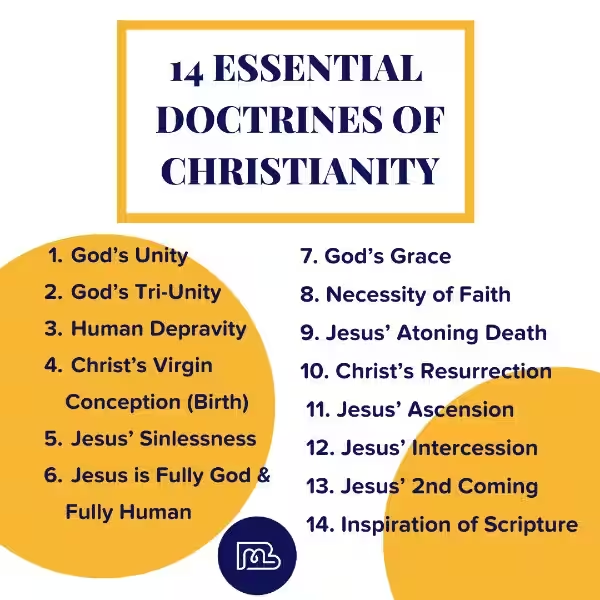
These doctrines are not static pronouncements handed down from on high without question. Instead, they are often the result of deep theological inquiry and debate within a religious tradition. They are the articulated answers to fundamental questions that have echoed through human history: Who is God? What is the nature of humanity? What is the path to salvation or enlightenment? What is the meaning of suffering? The development and refinement of theological doctrine is an ongoing process, a testament to the living, breathing nature of religious thought. For instance, the Christian doctrine of the Trinity, the belief in one God existing in three co-equal persons (Father, Son, and Holy Spirit), didn’t spring fully formed overnight; it emerged through centuries of theological discussion and councils. Similarly, Buddhist doctrines like the Four Noble Truths provide a systematic approach to understanding suffering and its cessation, forming the core of Buddhist practice.
Exploring the Diverse Landscape of Theological Doctrine
The sheer variety of theological doctrines across the world’s religions is astounding, reflecting the diverse tapestry of human experience and spiritual seeking. Each tradition has its own unique set of tenets, shaping not only what believers believe but also how they live. These doctrines offer distinct pathways to understanding the sacred and provide a sense of shared identity and purpose for communities of faith. From the monotheistic declarations of Islam and Judaism to the polytheistic pantheons of ancient Greece and the intricate philosophical systems of Hinduism and Buddhism, the world of religious belief is a rich and complex ecosystem of doctrines.
Consider the concept of salvation as a prime example of differing doctrines. In some Christian traditions, salvation is understood primarily through faith in Jesus Christ and his atoning sacrifice, a theological doctrine emphasizing God’s grace. In contrast, within certain branches of Buddhism, the focus is on achieving enlightenment (Nirvana) through personal effort, meditation, and adherence to ethical principles, a doctrine centered on self-liberation. The Hindu doctrine of karma and reincarnation offers another perspective, suggesting a cyclical journey of the soul through multiple lifetimes, where actions in this life determine the circumstances of the next. These are not just abstract ideas; they have profound implications for how individuals approach their lives, their relationships, and their understanding of death.
For an individual, theological doctrine is far more than academic study; it’s a personal guide and a source of profound meaning. It provides answers to life’s most pressing questions, offering comfort in times of sorrow, strength in the face of adversity, and a moral framework for daily decisions. When we grapple with the doctrine of divine providence, for example, the belief that God has a plan for everything, it can offer solace during difficult periods, suggesting that even in suffering, there is a greater purpose at play. This theological doctrine can transform feelings of helplessness into a sense of trust and surrender.
Imagine a young person struggling with a significant ethical dilemma. A well-understood theological doctrine within their faith, perhaps the principle of loving your neighbor or the concept of non-violence, can provide a clear and compelling compass. It offers a reasoned basis for action that transcends personal preference or societal pressure. This is the power of doctrine: it equips individuals with a coherent worldview that informs their choices and shapes their character, fostering a sense of belonging and a shared commitment to a set of values that extend beyond the individual. The doctrines of compassion and forgiveness, for instance, can heavily influence how someone responds to conflict and seeks reconciliation.
The Role of Doctrine in Religious Community and Practice
Beyond the individual, theological doctrine is the invisible glue that binds religious communities together. It creates a shared language, a common understanding, and a collective history that fosters a profound sense of belonging and solidarity. When people gather for worship, prayer, or study, they are often engaging with and reinforcing the central doctrines of their faith. This shared commitment to theological doctrine allows for collective action, social justice initiatives, and the transmission of faith from one generation to the next.
Think about the practice of communion in Christianity or the Hajj pilgrimage in Islam. These are not isolated acts; they are deeply rooted in specific theological doctrines about God’s presence, sacrifice, or the importance of submission to the divine will. These communal rituals serve to reaffirm and internalize core beliefs, strengthening the bonds between believers and perpetuating the enduring legacy of their faith. The doctrine of the oneness of God (Tawhid) in Islam, for example, is not just a statement of belief but the driving force behind the entire religious and social fabric of Muslim communities worldwide, influencing everything from prayer to social justice.
Doctrine as a Living Tradition: Evolution and Interpretation
It’s crucial to understand that theological doctrine is not a rigid, unchanging monument to the past. While the core tenets may remain constant, their interpretation and application evolve over time in response to new questions, cultural contexts, and societal changes. This dynamic process of hermeneutics (the art and science of interpretation) ensures that religious traditions remain relevant and meaningful for contemporary adherents. The doctrine of justice, for instance, might be understood and applied differently in the 21st century than it was in the 10th century, yet the underlying principle of fairness and righteousness remains central.
The history of almost every major religion is replete with examples of doctrinal development and debate. Consider the ongoing discussions within various denominations about the role of women in leadership, the application of ancient ethical teachings to modern technological advancements, or the understanding of scripture in light of scientific discoveries. These dialogues, while sometimes challenging, are a sign of a vibrant and living faith, demonstrating a commitment to grappling with the complexities of existence through the lens of theological doctrine. The doctrine of creation, for example, has been re-examined and re-interpreted in light of scientific understandings of the universe, showcasing the adaptability of religious thought.
Navigating the Nuances: Avoiding Misinterpretations of Doctrine
While theological doctrine provides essential guidance, it can also be a source of misunderstanding and conflict when misinterpreted or wielded in exclusionary ways. It’s easy for the nuances of complex doctrines to be oversimplified, leading to rigid dogma or even intolerance. A healthy engagement with theological doctrine involves a commitment to critical thinking, empathy, and a recognition of diverse perspectives within one’s own faith and across different religious traditions. The doctrine of love should, by its very nature, foster understanding, not animosity.
When people focus solely on the literal interpretation of certain passages without considering the historical context or the broader theological framework, they can inadvertently create divisive and harmful interpretations. This can lead to the weaponization of doctrine, where it’s used to judge, condemn, or exclude others. A more constructive approach involves understanding doctrine as a tool for spiritual growth and ethical living, rather than as a rigid set of rules to be enforced. The doctrine of humility, for example, encourages self-reflection and a recognition of one’s own limitations, fostering an openness to learning from others.
The Enduring Significance of Theological Doctrine
In a world often characterized by rapid change and uncertainty, theological doctrine offers a timeless anchor for many. It speaks to enduring human needs for meaning, purpose, and connection. Whether it’s the doctrines of compassion and service in Buddhism, the doctrines of faith and redemption in Christianity, or the doctrines of submission and justice in Islam, these frameworks continue to shape the lives of billions, guiding their understanding of themselves, their communities, and the divine. The theological doctrine of universal responsibility, present in many faiths, calls individuals to act with care and concern for all beings, a principle that remains profoundly relevant today.
Ultimately, theological doctrine is not just an ancient relic; it is a living, breathing testament to humanity’s ongoing quest for understanding the sacred. It provides the essential language and concepts through which we can explore the deepest questions of existence. By engaging with these doctrines thoughtfully and with an open heart, we can gain valuable insights into the richness of religious traditions and the profound ways they have shaped human civilization and continue to offer guiding stars for navigating the complexities of life. The doctrine of hope, a cornerstone of many religions, offers a powerful antidote to despair and a vision for a better future, inspiring individuals and communities to strive for positive change.
Theological doctrine refers to the core beliefs and teachings of a particular religion or religious tradition. These doctrines are often based on sacred texts, historical interpretations, and the pronouncements of religious authorities. They provide a framework for understanding the nature of God, humanity, the universe, and the path to salvation or enlightenment.
How do different religions approach the concept of God?
The concept of God varies significantly across religions. Monotheistic religions (like Christianity, Islam, and Judaism) believe in one God. Polytheistic religions worship multiple gods. Pantheistic religions view God as being identical with the universe. Atheistic perspectives do not believe in God, while agnostic perspectives hold that the existence of God is unknowable.
What is the purpose of religious rituals?
Religious rituals are symbolic actions or ceremonies performed by adherents of a religion. They can serve various purposes, including expressing devotion, marking significant life events (birth, marriage, death), fostering community cohesion, connecting with the divine, and facilitating spiritual transformation.
How are sacred texts interpreted within different religions?
The interpretation of sacred texts is a crucial aspect of theological doctrine. Methods range from literal readings to allegorical, historical, or mystical interpretations. Different denominations or schools of thought within a religion may have distinct approaches to understanding and applying the teachings found in their scriptures.
What is the role of faith in religion?
Faith is often central to religious belief and practice. It generally involves a strong belief in the doctrines and tenets of a religion, often in the absence of empirical proof. Faith can provide comfort, guidance, motivation for ethical behavior, and a sense of connection to something larger than oneself.
How do religions address the problem of suffering?
Religions offer various explanations and coping mechanisms for suffering. Some attribute suffering to sin, karma, divine will, or the imperfection of the material world. Solutions often involve seeking redemption, practicing compassion, achieving enlightenment, or finding solace in divine promises of an afterlife.
What are the common ethical principles found in religions?
Many religions share a common ethical foundation emphasizing principles like love, compassion, honesty, justice, forgiveness, and the Golden Rule (treating others as you wish to be treated). These principles guide adherents’ interactions with others and their moral conduct.