In the tapestry of human experience, prayer stands as a thread woven through countless cultures and faiths, a universal language of the soul seeking connection, guidance, and solace. It’s more than just reciting words; it’s a profound act of communication with the divine, a deliberate engagement with something greater than ourselves. Understanding the distinct prayer parts can transform our personal practice, breathing new life into our spiritual journeys and deepening our relationship with religion. Whether you’re a seasoned devotee or exploring faith for the first time, this exploration will illuminate the foundational elements that make prayer a potent force in our lives.
From the quiet whispers of a personal contemplation to the resonant chorus of a congregational service, prayer’s essence remains constant: a bridge between the human and the divine. It’s in these moments of intentional connection that we tap into a wellspring of strength, peace, and understanding. By dissecting the core prayer parts, we can approach our spiritual disciplines with greater clarity and purpose, ensuring that our prayers are not just spoken, but truly felt and heard.
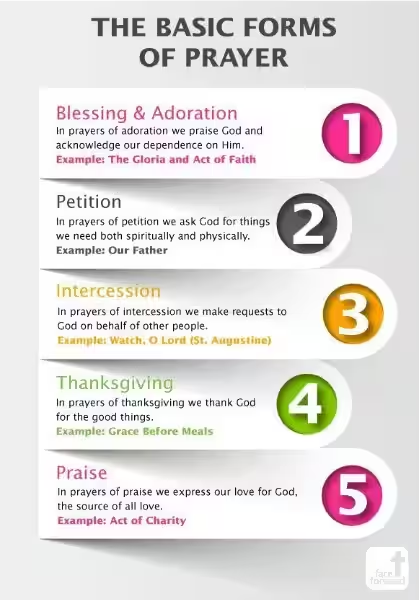
Every meaningful prayer begins with a recognition of the divine. This initial prayer part, often referred to as acknowledgment or adoration, is about setting the stage by understanding who we are addressing. It’s a moment to humble ourselves, to acknowledge the infinite power, wisdom, and love of God, the Creator, the Ultimate Reality, whatever name or concept your religion uses. This isn’t about feeling small, but about realizing the immensity of the divine presence and our place within it. Think of it like preparing to meet a truly awe-inspiring figure; you wouldn’t start with a request, but with a respectful greeting and an appreciation for their presence.
This opening phase is crucial because it shifts our focus from our immediate concerns to the majesty of the divine. It’s an act of worship, of pouring out our hearts in praise and reverence. For example, in many Christian traditions, this might involve reciting phrases like “Our Father, who art in heaven, hallowed be thy name,” which immediately establishes the divine name as sacred and worthy of honor. Similarly, in Islamic prayer (Salah), the opening Surah (Al-Fatiha) is a powerful testament to God’s Lordship and mercy. This initial act of giving glory prepares the heart for deeper communion and makes the subsequent prayer parts more impactful.
Once we’ve established a connection through acknowledgment and adoration, prayer naturally flows into the crucial prayer part of confession. This is where we honestly examine our lives, our actions, and our intentions, acknowledging our shortcomings and mistakes. It’s not about dwelling in guilt, but about seeking purification and forgiveness. This part of prayer is vital for spiritual growth, as it allows us to identify areas where we need to change and to actively seek divine help in doing so. Imagine a gardener tending to their plants; confession is like weeding out the unwanted growth to allow the healthy plants to flourish.
Following confession, we move into petition, the act of making our requests known to the divine. This is perhaps the most commonly understood prayer part. It’s where we bring our needs, desires, and concerns before God. Whether it’s for personal strength, the well-being of loved ones, guidance in a difficult situation, or even for the needs of the world, petition is a direct expression of our reliance on a higher power. Consider it a dialogue where we share our burdens and aspirations. Religions encourage this openness, recognizing that God is not distant, but intimately involved in the details of our lives. This is where we can pray for specific things, such as:
Personal healing: Praying for recovery from illness or emotional distress.
Guidance and wisdom: Seeking direction in decisions, big or small.
Protection: Asking for safety for ourselves and others.
Provision: Praying for our basic needs to be met.
The Path to Peace: Thanksgiving and Supplication
A vital, yet sometimes overlooked, prayer part is thanksgiving. This is the act of expressing gratitude for all that we have received, both big and small. It’s easy to get caught up in what we lack, but intentionally focusing on what we are thankful for shifts our perspective and cultivates a spirit of contentment. Thanksgiving reminds us of the gifts of life, the love we share, and the blessings we often take for granted. It’s a powerful antidote to negativity and a way to cultivate joy. Think of it as sending a thank-you note to the universe for all its kindness.
Closely related to petition, but often with a broader scope, is supplication. While petition might focus on specific personal needs, supplication can encompass praying for others, for communities, and for broader societal change. It’s an act of intercession, where we stand in the gap for those who may not be able to pray for themselves, or where we advocate for the needs of humanity. This prayer part embodies the spirit of compassion and empathy that is central to most religions. It’s about extending our prayers beyond our immediate circle, recognizing our interconnectedness and our responsibility to the wider world. This can involve praying for:
Peace and justice: For an end to conflict and suffering.
The vulnerable: For those who are marginalized, oppressed, or in need.
Healing for the planet: For the preservation of our environment.
Finally, every prayer, in its own way, concludes with a sense of devotion and commitment. This is the prayer part that seals our communion, reinforcing our dedication to the divine will. It’s about affirming our faith, trust, and willingness to align our lives with the principles of our religion. It’s not just about asking for things, but about pledging ourselves to live in a way that honors our beliefs. For instance, ending a prayer with an “Amen” (meaning “so be it”) signifies our acceptance and commitment to what has been prayed and to the divine plan. This part of prayer is about surrender and obedience, acknowledging that the divine knows what is best.
This closing phase solidifies the transformative power of prayer. It’s a reminder that prayer is not a one-time event, but an ongoing relationship. By consistently engaging in these various prayer parts, we cultivate a deeper spiritual discipline, fostering resilience, inner peace, and a profound sense of purpose. Our faith becomes more than just belief; it becomes a lived reality, shaped by the consistent and heartfelt conversations we have with the divine through the intentional practice of prayer.
Frequently Asked Questions about Prayer and Religion
What are the essential parts of prayer?
The essential parts of prayer can vary by religion and tradition, but often include:
* Invocation/Addressing the Divine: Calling out to or acknowledging God, a deity, or the spiritual realm.
* Praise/Adoration: Expressing reverence, awe, or love for the divine.
* Confession/Repentance: Acknowledging shortcomings or sins and seeking forgiveness.
* Thanksgiving/Gratitude: Expressing appreciation for blessings, favors, or life itself.
* Petition/Supplication: Asking for needs, guidance, help, or the well-being of others.
* Meditation/Contemplation: Quiet reflection, listening, or seeking inner peace and understanding.
* Affirmation/Commitment: Reaffirming faith, vows, or a desire to live according to spiritual principles.
Religion is a system of beliefs, practices, and rituals that typically centers around the worship of a supernatural power or powers, or a set of moral and ethical principles, often derived from a divine source. It provides a framework for understanding the meaning of life, the universe, and humanity’s place within it, and often includes shared values, community, and traditions.
How do different religions approach prayer?
Different religions approach prayer in diverse ways:
* Christianity: Prayer can be formal (liturgical, reciting creeds) or informal (personal conversation with God), often involving praise, confession, thanksgiving, and petition.
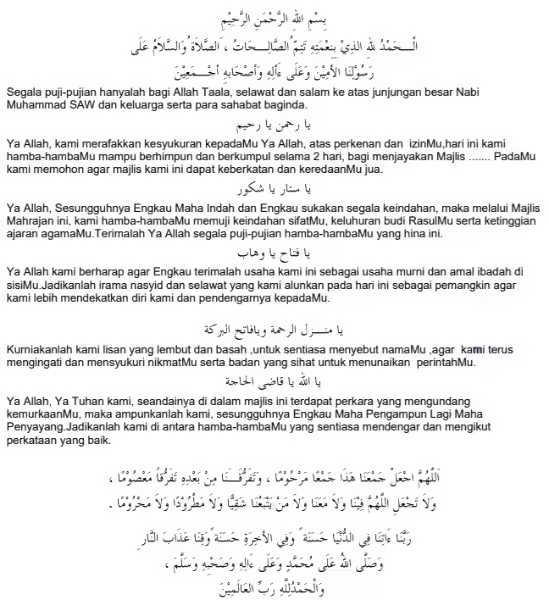
* Islam: Prayer (Salat) is a ritualistic, obligatory act performed five times daily, involving specific movements and recitations in Arabic, facing the Kaaba in Mecca.
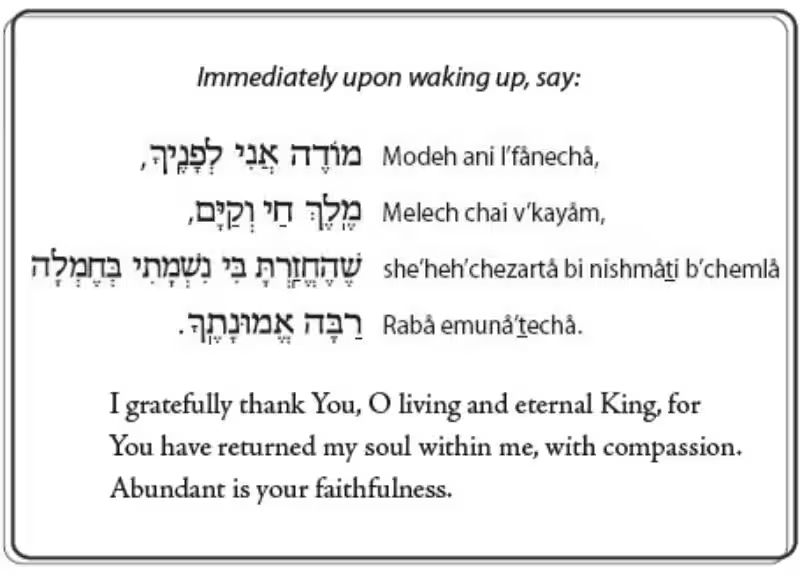
* Judaism: Prayer can be individual or communal, often recited from a Siddur (prayer book), and includes praise, thanksgiving, and supplication.
* Hinduism: Prayer can take many forms, including chanting mantras, reciting scriptures, devotion (Bhakti) to deities, meditation, and ritualistic worship (puja).
* Buddhism: While not always focused on a personal deity, Buddhist practices often involve meditation, mindfulness, chanting, and reciting sutras to cultivate wisdom and compassion.
* Sikhism: Prayer (Naam Japna) involves meditating on God’s name, reciting Gurbani (scriptures), and selfless service.
Can prayer have different forms beyond spoken words?
Yes, prayer can take many forms beyond spoken words. These include:
* Meditation: A practice of focused contemplation or mindfulness.
* Contemplation: Deep reflection on spiritual truths or the divine.
* Mindfulness: Paying attention to the present moment without judgment.
* Ritualistic actions: Performing specific ceremonies or acts of devotion.
* Acts of service: Engaging in selfless deeds for others.
* Creative expression: Through art, music, dance, or writing.
* Silence: Simply being in the presence of the divine.
Is religion the only way to connect with the spiritual or divine?
No, religion is not the only way to connect with the spiritual or divine. Many individuals find spiritual connection through personal introspection, nature, philosophy, meditation, mindfulness practices, ethical living, and relationships with others, without adhering to a formal religious structure. These are often referred to as “spiritual but not religious” paths.