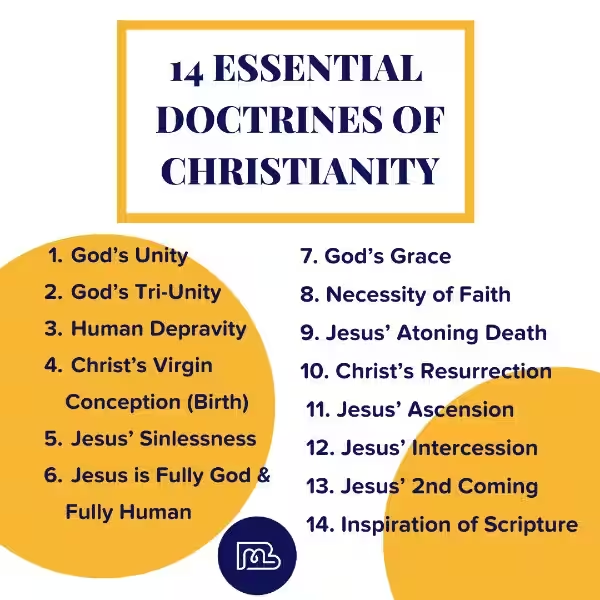
Have you ever found yourself pondering the deeper meaning behind the stories you’ve heard, the rituals you observe, or the very essence of your faith? This quest for understanding often leads us to the core of what makes religion, religion: its foundational teachings. For many, these teachings are intricately woven into the fabric of Bible doctrine. These aren’t just ancient pronouncements; they are living principles that shape our worldview, guide our actions, and offer a profound sense of purpose. Exploring Bible doctrine is akin to understanding the architectural blueprints of a magnificent cathedral – it reveals the strength, beauty, and intended design of the entire structure of religious belief.
The term “doctrine” itself might sound a bit formal, perhaps even intimidating. However, at its heart, Bible doctrine refers to the fundamental truths and teachings derived from the Bible. It’s the distillation of what the Scriptures reveal about God, humanity, salvation, and the Christian life. Think of it as the essential vitamins and minerals that nourish a healthy spiritual body. Without a solid grasp of these core tenets, our faith can become shaky, susceptible to misinterpretation or lacking the robust foundation needed to navigate the complexities of life. This article will delve into some key aspects of Bible doctrine, making them accessible and demonstrating their practical application in our modern world. We’ll explore how these ancient truths continue to resonate, offering guidance, hope, and a framework for living a meaningful life.
At its most basic, Bible doctrine is a systematic presentation of the teachings found within the Holy Bible. It’s the result of careful study and interpretation of Scripture, aimed at understanding what the Bible teaches on specific topics. These doctrines aren’t arbitrary rules; they are presented as divinely inspired truths that reveal God’s character, His plan for humanity, and the way to reconciliation with Him. For instance, the doctrine of the Trinity, a cornerstone of Christian theology, explains the belief in one God existing in three co-equal persons: the Father, the Son (Jesus Christ), and the Holy Spirit. This is a concept that can be challenging to grasp intellectually, but it is fundamental to understanding the nature of God as revealed in the Bible.
The importance of sound Bible doctrine cannot be overstated. It provides a reliable compass for navigating spiritual journeys and discerning truth from error. Just as a doctor relies on established medical knowledge to treat patients, a believer relies on sound doctrine to understand God’s will and live a life pleasing to Him. Without a solid doctrinal foundation, individuals might be prone to adopting fleeting trends or misinterpreting Scripture to fit personal preferences, leading to a diluted or even perverted understanding of faith. This is why diligent study and a commitment to understanding what the Bible truly teaches are so crucial for genuine spiritual growth.
Central to all Bible doctrine is the understanding of God Himself. The Bible presents God as the sovereign Creator of all things, existing eternally in three persons: Father, Son, and Holy Spirit. This doctrine of the Trinity is not a mathematical equation but a profound mystery that reveals the multifaceted nature of God’s being. He is not a distant, impersonal force, but a God who is actively involved in His creation, personal, loving, and just. Understanding God’s character as described in Scripture, from His immense power to His unfailing love, forms the bedrock upon which all other doctrines are built.
This understanding of God has immense practical implications. When we grasp that God is all-powerful and all-knowing, it can bring immense comfort during times of trial, reminding us that He is in control. The doctrine of God’s omnipresence means He is with us in every situation, offering solace in loneliness. Furthermore, the doctrine of God’s holiness calls us to live lives that reflect His perfection, striving for righteousness. Consider the story of Job, who endured immense suffering but ultimately found solace and renewed faith in understanding God’s sovereign power and wisdom, even when it was beyond his comprehension. This demonstrates how a deep understanding of God’s nature, as revealed through Bible doctrine, can anchor us through life’s storms.
The Doctrine of Salvation: God’s Gracious Plan
Perhaps one of the most central and beloved aspects of Bible doctrine is the doctrine of salvation. This doctrine addresses the profound problem of human sin and God’s gracious solution through Jesus Christ. The Bible teaches that humanity, by nature, is separated from God due to sin, and no amount of good works can bridge this gap. However, God, in His infinite love, provided a way for us to be reconciled to Him through the atoning sacrifice of Jesus Christ on the cross. Understanding this doctrine means recognizing our need for a Savior and the sufficiency of Christ’s work for our redemption.
This doctrine is not just a theological concept; it’s a message of hope and liberation. It offers forgiveness for past mistakes and the promise of eternal life. The key components of this doctrine often include: election (God’s choosing of believers), regeneration (the Holy Spirit’s work of giving new spiritual life), justification (being declared righteous through faith in Christ), sanctification (the ongoing process of becoming more like Christ), and perseverance (the assurance that those who are truly saved will remain so). For example, imagine a person burdened by guilt from past actions. The doctrine of salvation offers the profound relief of knowing that through faith in Jesus, that guilt can be washed away, and they can start with a clean slate. This is the power of the Gospel, the core message of Bible doctrine.
Beyond individual salvation, Bible doctrine also outlines the nature and purpose of the Church. The Church, in its truest sense, is not a building but the community of believers – all those who have placed their faith in Jesus Christ. This doctrine emphasizes that believers are called to come together for worship, mutual encouragement, teaching, and service. The Church is viewed as the body of Christ on earth, with each member playing a vital role in its functioning and mission. Understanding the doctrine of the Church highlights the importance of fellowship and the collective witness of believers to the world.
The doctrine of the Church calls us to actively participate in the life of a local congregation. This involves fellowship, where believers support and encourage one another; worship, where they collectively acknowledge God’s greatness; discipleship, where they learn and grow in their faith; and mission, where they share the Gospel with others. Consider the analogy of a single thread versus a woven tapestry. A single thread might be beautiful, but when many threads are woven together, they create something far more intricate, strong, and visually stunning. Similarly, individual believers, when united in the Church, form a powerful force for good and a vibrant testament to God’s work. This community aspect is a crucial element of Bible doctrine.
Living Out Bible Doctrine: Faith in Action
Ultimately, the true test of any doctrine lies in its ability to transform lives and inspire godly living. Bible doctrine is not meant to be an abstract intellectual exercise; it is intended to be the foundation for a life lived in obedience to God and in love for others. When we truly understand and embrace doctrines like God’s sovereignty, the price of sin, and the power of Christ’s redemption, it should naturally lead to a desire to live differently. This involves cultivating virtues such as love, joy, peace, patience, kindness, goodness, faithfulness, gentleness, and self-control, as outlined in the fruit of the Spirit.
Living out Bible doctrine means actively applying its truths to our daily decisions, relationships, and challenges. It’s about aligning our thoughts, words, and actions with what we believe to be true according to Scripture. For example, if we believe in the doctrine of God’s love and forgiveness, it should compel us to extend grace and forgiveness to those who have wronged us. If we believe in the stewardship of resources, it should influence how we manage our finances and possessions. This lived-out faith is often referred to as practical theology or applied doctrine, where the abstract becomes the tangible, shaping us into the image of Christ. It’s the difference between knowing the recipe for a delicious meal and actually preparing and savoring it.
In conclusion, exploring Bible doctrine is not merely an academic pursuit; it is an essential journey for anyone seeking to understand the depth and breadth of their faith. These foundational teachings provide a robust framework for belief, offering clarity in a world often filled with confusion. From the very nature of God to His redemptive plan for humanity and the community He has established, Bible doctrine offers a consistent and reliable guide. By engaging with these truths, we equip ourselves to live lives of purpose, hope, and unwavering faith, allowing the bedrock of biblical teaching to shape our every step.
Frequently Asked Questions: Bible Doctrine and Religion
What is Bible Doctrine?
Bible doctrine refers to the fundamental teachings and beliefs derived from the Holy Bible. It encompasses the core principles of faith, theology, and practice that Christians hold as true, based on their interpretation of Scripture.
What are the major categories of Bible Doctrine?
Major categories often include topics such as the nature of God (theology proper), the person and work of Jesus Christ (Christology), the Holy Spirit (Pneumatology), salvation (Soteriology), the church (Ecclesiology), and last things (Eschatology).
How is Bible Doctrine developed or understood?
Bible doctrine is typically developed through careful study, interpretation, and application of Scripture, often within the context of historical Christian tradition and community. Different denominations and theological schools may emphasize certain doctrines or interpret them in slightly different ways.
What is Religion?
Religion is a system of faith and worship, often involving a set of beliefs, moral codes, rituals, and practices that relate humanity to supernatural, sacred, or divine elements. It provides a framework for understanding life’s meaning, purpose, and one’s place in the universe.
How does Bible Doctrine relate to Religion?
For Christians, Bible doctrine forms the theological foundation of their religion. It explains the core beliefs about God, Jesus Christ, salvation, and the Christian way of life that shape their religious practices, worship, and ethical behavior.
Are all religions based on the Bible?
No, only Christianity and Judaism are religions that consider the Hebrew Bible (Old Testament) as a foundational scripture. Other religions, such as Islam, Hinduism, Buddhism, and Sikhism, have their own distinct scriptures and theological systems.
Can individuals hold different religious beliefs even if they follow the same religion?
Yes, within any given religion, individuals may have varying interpretations of doctrines, different levels of adherence to practices, or personal spiritual experiences that lead to diverse expressions of faith.