Religion, in its myriad forms, has always been a cornerstone of human civilization, offering solace, purpose, and a framework for understanding our existence. At the heart of this spiritual journey lies the concept of holy gifts. These are not merely material possessions but divine endowments, blessings, and capacities bestowed upon individuals and communities by sacred powers. They range from the intangible, like wisdom and compassion, to the more tangible, such as prophetic insight and healing abilities. Exploring these holy gifts allows us to delve deeper into the rich tapestry of religious belief, uncovering how they shape our lives, foster connection, and inspire us to live more meaningful and virtuous lives.
The idea of receiving holy gifts is a universal theme, resonating across diverse faiths and traditions. Whether viewed as divine grace, karmic merit, or the result of dedicated spiritual practice, these endowments serve as tangible manifestations of a connection to the sacred. They empower believers, guide their actions, and often serve as catalysts for profound personal transformation. Understanding these holy gifts isn’t just an academic exercise; it’s an invitation to recognize the divine presence within and around us, and to cultivate these blessings in our own lives, thereby enriching our personal faith and contributing to the collective spiritual well-being of our communities.
Unveiling the Nature of Holy Gifts: Divine Endowments and Human Potential
What exactly constitutes a holy gift? It’s crucial to understand that these are not earned in the conventional sense, like receiving a salary for work. Instead, they are often understood as unmerited favor or divine bestowal, freely given by a higher power. These gifts are designed to equip individuals for specific purposes, whether it’s to serve their community, to spread spiritual teachings, or to offer comfort to the suffering. Think of a musician who possesses an innate talent for melody; this raw ability can be seen as a natural gift, but when imbued with spiritual purpose and honed through dedication, it transforms into a holy gift, capable of uplifting souls and inspiring devotion.
The spectrum of holy gifts is vast and varied, reflecting the diverse expressions of religious thought. In some traditions, they might manifest as spiritual discernment, the ability to distinguish truth from falsehood, or profound empathy, allowing individuals to truly feel and understand the struggles of others. Other examples include eloquence in prayer, the capacity to articulate one’s deepest yearnings to the divine, or miraculous intervention, where seemingly impossible events occur due to divine will. These are not mere personality traits; they are often seen as supernatural capacities that transcend ordinary human abilities, pointing towards a direct connection with the divine source.
Examples of Holy Gifts Across Religious Traditions
Across the global landscape of religion, holy gifts are described in ways that are both unique to each tradition and remarkably similar in their essence. In Christianity, the Apostle Paul, in his letter to the Corinthians, famously outlines various spiritual gifts such as the gift of prophecy, the gift of healing, and the gift of speaking in tongues, all intended to build up the Church and serve its members. These are not seen as achievements of the individual but as manifestations of the Holy Spirit, empowering believers for ministry. For instance, someone might receive the gift of healing, not because they are a skilled physician, but through a direct divine touch that brings restoration to the sick.
In Buddhism, while the terminology might differ, the concept of profound spiritual capacities is equally present. The Buddha himself possessed enlightened wisdom and unparalleled compassion, qualities that he shared with his followers. Disciples who dedicate themselves to the path can cultivate extraordinary abilities through rigorous practice, such as mindfulness, concentration, and insight. These are not necessarily seen as external gifts but as realized potentials within the human mind, awakened through spiritual discipline. A monk who can exhibit immense patience and understanding, even in the face of adversity, might be seen as embodying such a holy gift, cultivated through years of devoted practice.
The Practical Application of Holy Gifts in Daily Life
The significance of holy gifts extends far beyond theological discourse; they have a profound impact on the everyday lives of believers. When we recognize these divine endowments within ourselves and others, it fosters a sense of purpose and responsibility. For example, the gift of hospitality in many religions isn’t just about being a good host; it’s a sacred duty to welcome strangers and care for the vulnerable, reflecting the divine love extended to humanity. This can manifest in simple acts like offering a meal to someone in need or providing a listening ear to a friend facing hardship.
Furthermore, understanding holy gifts encourages a spirit of gratitude and humility. Instead of boasting about one’s abilities, believers are called to acknowledge that these capacities are ultimately gifts from God or the divine. This perspective helps to prevent pride and encourages individuals to use their talents for the benefit of others, not for personal gain. Imagine a writer who feels a strong urge to share their stories; if they view this urge as a holy gift, they will likely focus on crafting narratives that inspire, educate, or offer comfort, rather than solely aiming for fame or fortune. These holy gifts, when applied with intention and humility, weave a stronger fabric of community and spiritual resilience.
Cultivating and Nurturing Your Own Holy Gifts
The idea that holy gifts are solely bestowed and cannot be cultivated can be a limiting one. While the initial spark may be divine, nurturing these endowments requires active participation and dedication. This often involves practices such as prayer, meditation, scriptural study, and acts of service. Just as a gardener tends to their plants, believers must diligently cultivate the seeds of divine potential within them. This might mean dedicating time each day to quiet reflection, immersing oneself in sacred texts to gain wisdom, or actively seeking opportunities to help those less fortunate.
Developing one’s spiritual gifts is a lifelong journey, marked by continuous learning and growth. It’s about being open and receptive to the promptings of the divine and being willing to step outside one’s comfort zone. For instance, if someone feels they have the gift of encouragement, they must actively seek out opportunities to uplift others, perhaps through volunteering in a support group or simply by offering kind words to strangers. The rewards of cultivating holy gifts are immeasurable, leading not only to personal spiritual fulfillment but also to a greater capacity to contribute positively to the world around us, making these divine endowments a truly transformative force.
The Communal Resonance of Holy Gifts: Building Faith Together
The impact of holy gifts is not confined to the individual; it extends outward, strengthening the very fabric of religious communities. When individuals recognize and utilize their unique spiritual endowments, they contribute to a collective spiritual strength. Imagine a church choir where each member’s voice, a holy gift in its own right, blends harmoniously to create something beautiful and awe-inspiring. This collective effort, powered by individual blessings, elevates worship and fosters a profound sense of unity among the congregation.
Moreover, the sharing of holy gifts creates a supportive and interconnected spiritual ecosystem. When one member offers the gift of wisdom to guide a struggling individual, or the gift of compassion to comfort a grieving family, the entire community benefits. This interconnectedness reinforces the belief that no one is alone in their spiritual journey. The mutual recognition and appreciation of each other’s gifts fosters a culture of service and shared responsibility, ensuring that the community can effectively address challenges and celebrate its triumphs, all empowered by the diverse holy gifts bestowed upon its members.
The Role of Holy Gifts in Religious Rituals and Practices
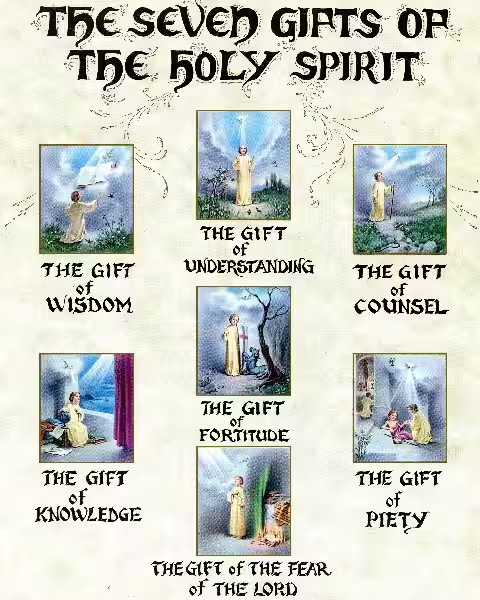
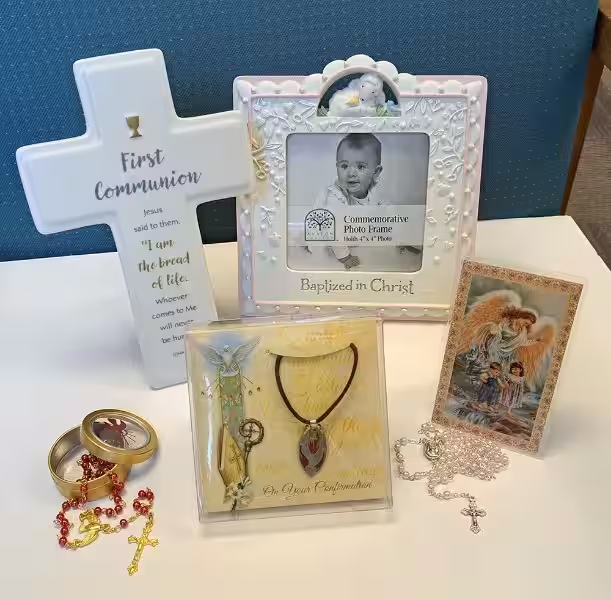
Throughout history, holy gifts have played a central role in the rituals and practices that define religious life. Many ceremonies are designed to acknowledge and celebrate these divine endowments. Consider the sacrament of baptism in Christianity, which is often seen as a gateway to receiving the gifts of the Holy Spirit. Or think of the intricate rituals in Hinduism that invoke the blessings of deities, believed to bestow divine grace and spiritual power upon devotees. These occasions are not mere formalities; they are deeply meaningful encounters where individuals connect with the sacred and reaffirm their commitment to living a life guided by divine principles.
The very performance of religious rituals often relies on the manifestation of holy gifts. The ability of a priest or shaman to perform ceremonies with spiritual authority and profound understanding is frequently attributed to divine empowerment – a holy gift that enables them to act as intermediaries between the human and the divine. Similarly, the collective singing of hymns, the recitation of prayers, and the breaking of bread all become imbued with a deeper significance when understood as expressions of shared faith and as channels through which holy gifts are received and bestowed. These practices act as conduits, fostering a palpable sense of the sacred and reinforcing the interconnectedness of the community through the shared experience of divine blessings.
Living a Life Enriched by the Awareness of Holy Gifts
Ultimately, understanding and embracing the concept of holy gifts transforms the way we navigate our lives. It shifts our perspective from one of scarcity to one of divine abundance. We begin to see challenges not as insurmountable obstacles, but as opportunities to exercise our spiritual capacities and rely on the guidance of the divine. This proactive engagement with our faith, fueled by the awareness of holy gifts, leads to a life characterized by purpose, resilience, and deep spiritual fulfillment.
By actively seeking to identify and cultivate our own holy gifts, and by recognizing and appreciating them in others, we contribute to a more compassionate, just, and spiritually vibrant world. The journey of faith is, in many ways, the journey of discovering and living out these sacred endowments. It is in the application of holy gifts – whether it’s the gift of patience in a frustrating situation, the gift of generosity when faced with scarcity, or the gift of wisdom when making difficult decisions – that we truly embody the ideals of our respective religions and experience the profound richness that comes from living a life touched by the divine.
Frequently Asked Questions about Holy Gifts
What are holy gifts?
Holy gifts, in a religious context, refer to offerings, donations, or items consecrated or dedicated to a deity or religious purpose. These can range from material possessions like money, food, or precious objects to symbolic gestures of devotion.
What is the purpose of giving holy gifts?
The purpose of giving holy gifts is multifaceted. It can be an act of worship, gratitude, atonement, or a way to seek divine favor. It often signifies a commitment to one’s faith and a desire to support religious institutions or practices.
Are there specific types of holy gifts recommended in different religions?
Yes, different religions have traditions and recommendations regarding holy gifts. For example, in some Abrahamic traditions, tithes (a tenth of one’s income) are considered a holy gift. In Hinduism, offerings of fruits, flowers, and incense are common. Buddhism may involve offerings of food, robes, or monetary donations to monasteries and temples.
Is there a prescribed way to present holy gifts?
The manner of presentation can vary. Some religions have specific rituals or ceremonies for offering gifts, while others may allow for more personal or direct contributions. The emphasis is often on the sincerity and intention behind the gift rather than the elaborate nature of its presentation.
Can anyone give holy gifts?
Generally, any adherent of a religion is welcome to give holy gifts as an expression of their faith. The ability to give and the form it takes may be influenced by individual circumstances, but the act of giving is often encouraged as part of spiritual practice.
What happens to holy gifts once they are given?
The use of holy gifts depends on the specific religious tradition and the institution receiving them. They are typically used to support the religious community, fund charitable activities, maintain places of worship, or support religious leaders and scholars.