In the vast tapestry of global religions, a fascinating and increasingly visible thread is emerging: the Pentecostal Catholic experience. This isn’t a contradiction in terms, but rather a vibrant expression of faith that blends the rich sacramental tradition of Catholicism with the dynamic, Spirit-filled worship characteristic of Pentecostalism. For many, this fusion offers a deeply personal and transformative way to connect with God.
The term itself, Pentecostal Catholic, might initially raise eyebrows. How can one reconcile the hierarchical structure and ancient liturgy of the Catholic Church with the spontaneous, charismatic expressions often associated with Pentecostalism? The answer lies in a profound spiritual renewal that is not replacing, but enriching, the existing Catholic faith. It’s a journey for individuals and communities seeking a more visceral, experiential encounter with the Holy Spirit within the framework of their Catholic identity.
Understanding the Roots: Catholicism and the Charismatic Renewal
Catholicism, with its roots tracing back to the early Church, is characterized by its sacramental system, its emphasis on the Eucharist, and its rich theological tradition. It offers a structured, communal path to salvation, guided by the authority of the Magisterium and the intercession of saints. This enduring framework has provided spiritual sustenance for billions over centuries.
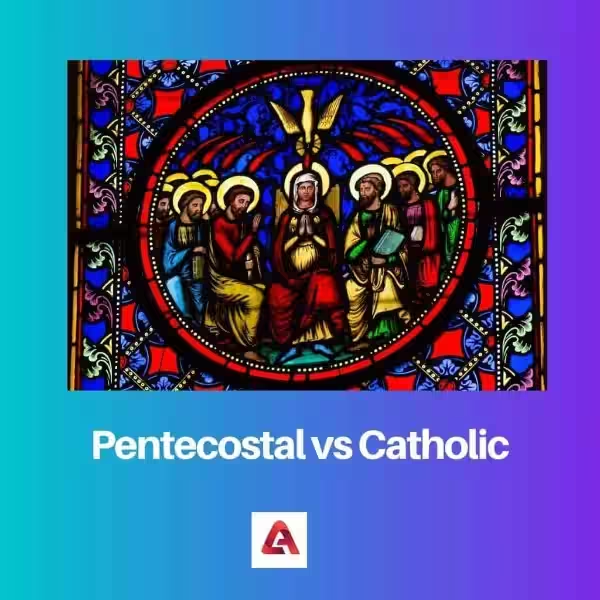
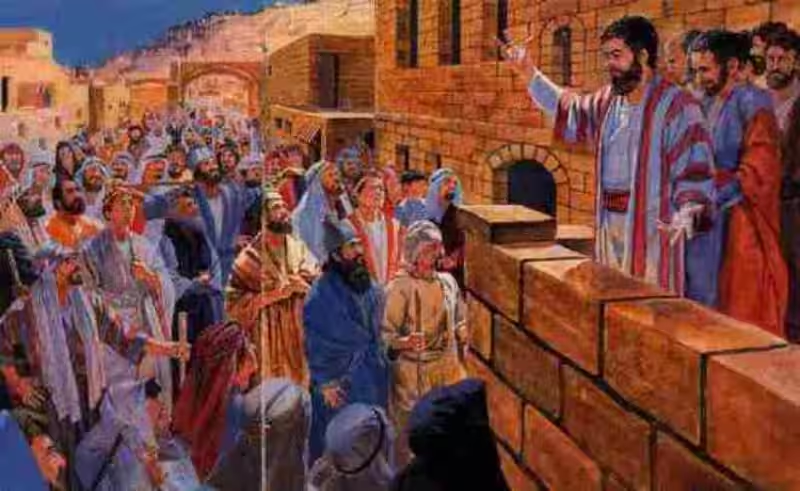
However, the latter half of the 20th century saw a significant spiritual movement sweep across various Christian denominations, including Catholicism. This was the Charismatic Renewal. It brought a renewed emphasis on the gifts of the Holy Spirit – such as speaking in tongues, prophecy, and divine healing – as described in the Acts of the Apostles, particularly the events of Pentecost. This renewal didn’t seek to leave the Catholic Church but to experience its faith more profoundly and dynamically.
The Charismatic Renewal within Catholicism
The Charismatic Renewal within Catholicism is not a separate denomination but a movement within the Church. Participants maintain their full Catholic identity, receiving the sacraments and adhering to Church doctrine. What distinguishes them is a conscious and deliberate seeking of a deeper, personal relationship with the Holy Spirit. This often manifests in prayer meetings characterized by:
Spontaneous prayer and praise: Moving beyond recited prayers to heartfelt, often unscripted expressions of adoration.
Worship in tongues: Speaking in a language believed to be divinely inspired, understood by God and, in some cases, by others present.
Prophetic utterances: Receiving and sharing messages believed to be from God, offering guidance or encouragement.
Manifestations of spiritual gifts: Experiencing phenomena like divine healing, prophecy, and a strong sense of God’s presence.
For a Pentecostal Catholic, these experiences are not seen as an alternative to Catholic teaching, but as a supernatural empowerment to live out that teaching more faithfully. It’s like discovering a hidden, powerful engine within a trusted vehicle; the vehicle remains the same, but its performance is dramatically enhanced.
Core Beliefs: Bridging the Traditions
At its heart, the Pentecostal Catholic identity rests on core Christian beliefs. They affirm the Trinity, the divinity of Jesus Christ, his atonement for sins, and his resurrection. They hold to the Nicene Creed and accept the authority of Scripture and Tradition. The sacraments, especially Baptism, Confirmation, and the Eucharist, remain central to their spiritual life.
Where the Pentecostal Catholic emphasis truly shines is in their understanding and experience of the Holy Spirit. They believe that the power of Pentecost is not a historical event confined to the early Church but is an ongoing reality for believers today. This means actively praying for and expecting the gifts of the Holy Spirit to be active in their lives, empowering them for evangelization, personal holiness, and service. This is not about discarding tradition, but about experiencing its living power.
Living the Faith: The Experience of a Pentecostal Catholic
The practical outworking of the Pentecostal Catholic faith is often a beautiful blend of the familiar and the extraordinary. It’s about experiencing the fullness of Catholic life with an added dimension of spiritual dynamism. This can be seen in various aspects of their spiritual journey.
Imagine attending a Mass where the homily is not just informative but also infused with a palpable sense of the Holy Spirit’s presence, leading to moments of profound personal reflection or even spontaneous prayer from the congregation. This is a glimpse into the Pentecostal Catholic experience. It’s about encountering God not just through ancient rituals, but through a vibrant, living relationship.
Worship and Prayer Life
Worship for a Pentecostal Catholic often involves a rich blend of traditional Catholic liturgy and charismatic expressions. While they will joyfully participate in the Mass, their prayer life might extend beyond formal prayer to include:
Praise and Worship Gatherings: Dedicated times for music, singing, and spontaneous prayer, often in homes or dedicated prayer groups.
Intercessory Prayer: A strong emphasis on praying for others, believing that the Holy Spirit can bring about healing and breakthroughs.
Personal Devotion: A deep engagement with Scripture, personal reflection, and active seeking of God’s guidance in daily life.
Experiencing the Gifts: Openness to and expectation of the manifestation of spiritual gifts during prayer and worship.
Instead of seeing these as separate entities, a Pentecostal Catholic views them as complementary. The structured worship of the Mass nourishes their faith, while the spontaneous prayer meetings and the exercise of spiritual gifts can deepen their personal connection with God. It’s like having access to a full orchestra and also being able to improvise with a gifted soloist.
Community and Evangelization
The community aspect is crucial for the Pentecostal Catholic. These individuals often find vibrant and supportive communities, often called prayer groups or renewals, where they can share their faith journey, encourage one another, and grow together in their understanding of the Holy Spirit’s work. These communities are vital for fostering spiritual growth and mutual support.
Furthermore, the experience of God’s power often ignites a strong desire for evangelization. Armed with a personal experience of God’s love and transformative power, Pentecostal Catholics are often eager to share their faith with others. This evangelization is not about forceful persuasion, but about sharing the good news of a God who is alive, active, and deeply personal, demonstrating His love through acts of service and the manifestation of His gifts. They believe that the same Spirit who empowered the apostles to spread the Gospel is available to them today.
Embracing the Future: The Evolving Landscape of Faith
The Pentecostal Catholic movement represents a dynamic and evolving aspect of contemporary religion. It demonstrates that faith can be both deeply rooted in tradition and vibrantly alive in the present. This fusion is not about abandoning established doctrines but about embracing a more profound and experiential understanding of God’s presence and power.
As the Church continues to navigate the complexities of the modern world, the Pentecostal Catholic expression offers a compelling model for spiritual vitality. It highlights the enduring relevance of the Holy Spirit in empowering believers to live out their faith with conviction, joy, and a profound sense of God’s immanence. It’s a testament to the fact that the journey of faith is a continuous unfolding, a constant invitation to a deeper encounter with the divine.
The Pentecostal Catholic experience is a testament to the boundless nature of God’s Spirit. It’s a reminder that the power witnessed at Pentecost is not a relic of the past, but a living force available to all who seek it. This integration of charismatic fervor within the venerable structure of Catholicism offers a compelling vision for faith in the 21st century, attracting those who desire a faith that is both intellectually sound and experientially profound.
Frequently Asked Questions about Pentecostal Catholicism
What is Pentecostal Catholicism?
Pentecostal Catholicism is a movement within the Catholic Church that emphasizes the experience of the Holy Spirit, often referred to as the “Baptism in the Holy Spirit,” and spiritual gifts such as speaking in tongues, prophecy, and healing. It seeks to integrate these charismatic expressions with the traditional doctrines, sacraments, and liturgical practices of the Catholic Church.
Is Pentecostal Catholicism a separate denomination?
No, Pentecostal Catholicism is not a separate denomination. It is a movement that exists within the Roman Catholic Church. Adherents remain fully Catholic, adhering to the teachings of the Magisterium and participating in the sacraments.
What are the key beliefs of Pentecostal Catholics?
Key beliefs include:
* Belief in the Trinity (Father, Son, and Holy Spirit).
* The divinity of Jesus Christ and his atoning sacrifice.
* The importance of the seven sacraments.
* The real presence of Christ in the Eucharist.
* The authority of the Pope and bishops.
* A strong emphasis on the person and work of the Holy Spirit, including the belief that the gifts of the Holy Spirit (charisms) are still active and available to believers today.
* The pursuit of a personal and vibrant relationship with God, often experienced through prayer, worship, and spiritual renewal.
What are “spiritual gifts” or “charisms” in this context?
Spiritual gifts are supernatural abilities or graces given by the Holy Spirit to individuals for the building up of the Church. Common examples include speaking in tongues (glossolalia), prophecy, healing, discerning of spirits, and words of knowledge or wisdom. Pentecostal Catholics believe these gifts are available and can be exercised today.
How does Pentecostal Catholicism differ from traditional Catholicism?
The primary difference lies in the emphasis and experience. While traditional Catholicism acknowledges the Holy Spirit and spiritual gifts, Pentecostal Catholicism places a greater emphasis on the direct, experiential dimension of the Holy Spirit’s presence and power in the lives of believers. This often manifests in more expressive forms of worship, spontaneous prayer, and the active seeking and exercise of spiritual gifts.
How does it differ from other Pentecostal denominations (e.g., Assemblies of God)?
While sharing a similar emphasis on the Holy Spirit and spiritual gifts, Pentecostal Catholicism remains fully integrated within the Catholic Church. This means adherence to Catholic doctrines, sacraments (especially the Eucharist), the Magisterium, and Marian devotion, which are not typically found in other Pentecostal denominations. Other Pentecostal churches are generally Protestant and do not recognize the authority of the Pope or the sacramental system of the Catholic Church.
What is the “Baptism in the Holy Spirit”?
The “Baptism in the Holy Spirit” (also known as the “release of the Holy Spirit” or “renewal of baptismal promises”) is an experience that Pentecostal Catholics believe deepens and activates the graces received in the sacraments of Baptism and Confirmation. It is often described as a personal encounter with the Holy Spirit that leads to a more profound spiritual life, a greater boldness in faith, and the empowerment for ministry. It is not a new sacrament but a spiritual grace or event.
Are there specific prayer groups or communities for Pentecostal Catholics?
Yes, many Pentecostal Catholics gather in prayer groups, renewal communities, or Charismatic prayer groups within parishes and dioceses. These groups provide a space for shared prayer, worship, teaching on the Holy Spirit, and the exercise of spiritual gifts.
Does the Catholic Church officially recognize Pentecostal Catholicism?
Yes, the Catholic Church officially recognizes and has for decades supported the Charismatic Renewal movement within the Church. Popes have spoken positively about it, and specific offices within the Vatican often engage with and support these communities. It is seen as a legitimate expression of Catholic spirituality.
How can someone explore Pentecostal Catholicism?
Those interested can typically find local Charismatic prayer groups or renewal communities through their parish, diocesan offices, or online resources dedicated to the Catholic Charismatic Renewal. Attending a prayer meeting or a retreat focused on the Holy Spirit can be a good way to experience it firsthand.