The rosary chain, a humble yet profoundly significant object, has been a cornerstone of religious devotion for centuries. Far more than just a string of beads, it is a sacred tool that guides believers through a meditative prayer practice, fostering a deeper connection with the divine. For many, the rosary chain is a tangible link to their faith, a source of comfort in times of struggle, and a constant reminder of God’s love and the teachings of Jesus. Its simplicity belies its power, offering a structured path to contemplation and spiritual growth for individuals from all walks of life.
This article will explore the rich history, intricate symbolism, and profound impact of the rosary chain within the context of religion, particularly Catholicism. We will delve into how this seemingly simple object can become a powerful instrument for prayer, reflection, and spiritual transformation, making it an invaluable companion on the journey of faith. Whether you are a seasoned practitioner or a curious newcomer, understanding the rosary chain can unlock a deeper appreciation for this enduring spiritual practice.
Unraveling the History and Symbolism of the Rosary Chain
The origins of the rosary chain are intertwined with the development of prayer traditions within the Christian faith. While the exact moment of its inception is debated, its evolution can be traced back to the practice of reciting the Psalms, where beads were used to keep track of the number of prayers. Early forms of the rosary involved the repetition of Hail Marys and Our Fathers, with the beads serving as a physical aid to maintain focus and rhythm. The modern five-decade rosary, as we know it today, began to take shape in the late Middle Ages, becoming a standardized and widely adopted form of devotion.
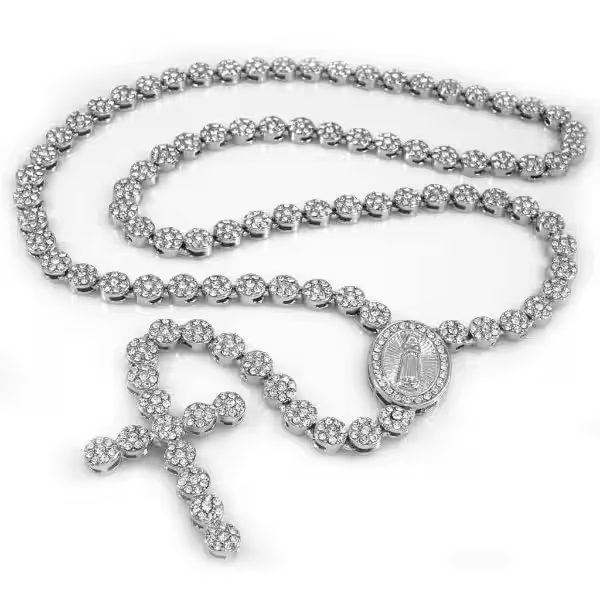
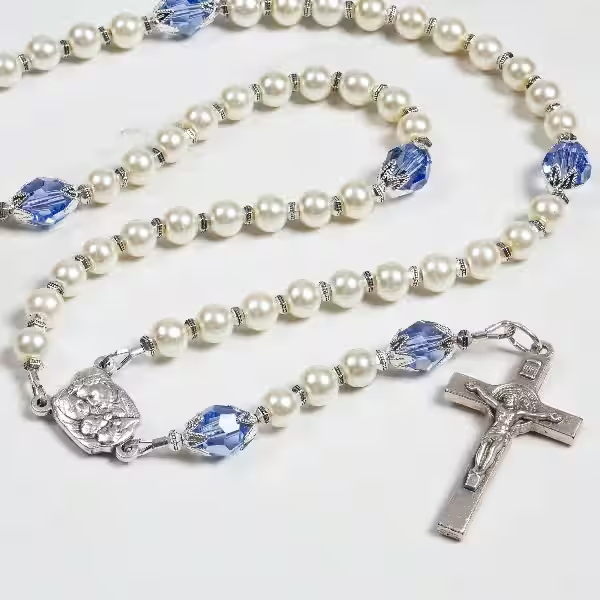
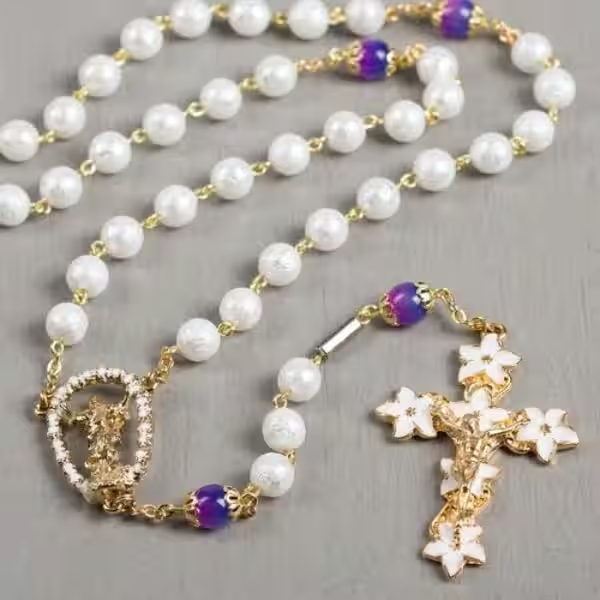
The rosary chain is not merely a counting device; each bead and element carries profound symbolism. The crucifix at the beginning represents the sacrifice of Christ and the foundation of Christian belief. The larger beads, often called Our Father beads, signify the Lord’s Prayer, a direct address to God. The smaller beads, known as Hail Mary beads, represent the Angelic Salutation, a prayer invoking the Blessed Virgin Mary. The medals sometimes incorporated into the rosary chain often depict saints or significant religious events, serving as visual reminders of divine intercession and sacred history. Together, these components create a sacred narrative that unfolds with each recited prayer on the rosary chain.
The Structure of the Rosary: A Meditative Journey
The structure of the rosary chain is meticulously designed to guide the practitioner through a series of meditative prayers and reflections on the mysteries of the life of Jesus and Mary. Typically, a rosary consists of five decades, with each decade comprising ten Hail Marys. Before each decade, an Our Father is recited, and at the end of each decade, a Gloria Patri (Glory Be) is prayed. This rhythmic repetition, facilitated by the rosary chain, allows the mind to quiet down, fostering a state of contemplation.
The heart of the rosary devotion lies in the meditation on the Mysteries. These are events from the lives of Jesus and Mary, divided into four sets: the Joyful Mysteries, the Luminous Mysteries, the Sorrowful Mysteries, and the Glorious Mysteries. As one progresses through the rosary chain, meditating on each mystery – for instance, the Annunciation for the Joyful Mysteries or the Crucifixion for the Sorrowful Mysteries – it allows for a deeper understanding and personal internalization of these pivotal moments in salvation history. The rosary chain becomes a visual and tactile guide through these profound spiritual narratives.
The Joyful Mysteries: Embracing Hope and Humility
The Joyful Mysteries of the rosary focus on the early life of Jesus and Mary, inviting us to contemplate themes of joy, humility, and obedience. As we move through the rosary chain during these meditations, we are transported to the humble beginnings of Christ. We reflect on the Annunciation, where Mary, with profound grace, accepts God’s will. This is followed by the Visitation, where Mary’s love and service to her cousin Elizabeth are highlighted.
The Nativity calls us to marvel at the Incarnation, God becoming man in the most humble of circumstances, often visualized as we hold the rosary chain and imagine the manger scene. The Presentation reminds us of Jesus’ dedication to God and Mary’s purification. Finally, the Finding of Jesus in the Temple showcases Jesus’ early wisdom and his divine mission, reinforcing the importance of seeking God in our lives. Each bead on the rosary chain acts as a stepping stone, leading us to a deeper appreciation for these foundational events of our faith.
The Luminous Mysteries: Illuminating Christ’s Ministry
Introduced by Pope John Paul II, the Luminous Mysteries offer a more focused look at the public ministry of Jesus, highlighting his divine nature and teachings. As you trace the rosary chain through these meditations, you are invited to witness key moments that reveal Christ’s identity. The Baptism of Jesus at the Jordan River marks the beginning of his public ministry and the revelation of the Trinity, a powerful moment to contemplate as you hold your rosary chain.
Next, we consider the Wedding at Cana, where Jesus performs his first public miracle, demonstrating his power and his concern for human needs. The Proclamation of the Kingdom of God, along with the Call to Conversion, emphasizes Jesus’ core message of repentance and the coming of God’s reign. The Transfiguration reveals Jesus’ divine glory to his disciples, a glimpse of his heavenly nature. Finally, the Institution of the Eucharist invites profound contemplation on Christ’s ultimate gift of himself, a central mystery celebrated in the Mass, and a profound experience to reflect upon with the rosary chain in hand.
The Sorrowful Mysteries: Confronting Suffering and Sacrifice
The Sorrowful Mysteries guide us through the passion and death of Jesus, calling for introspection, penance, and a deep understanding of sacrifice. These meditations are often challenging, but they are crucial for comprehending the depth of Christ’s love and the cost of our salvation. As you pray through the rosary chain during these mysteries, you are immersed in the agony and suffering of Jesus. The Agony in the Garden depicts Jesus’ struggle and submission to the Father’s will.
The Scourging at the Pillar and the Crowning with Thorns highlight the brutal physical suffering Jesus endured. The Carrying of the Cross reminds us of the immense burden Jesus bore. Finally, the Crucifixion is the ultimate act of love and sacrifice, where Jesus willingly gave his life for humanity. Each bead on the rosary chain becomes a marker of his pain, fostering a profound sense of gratitude and a desire to follow in his footsteps.
The Glorious Mysteries: Celebrating Victory and Hope
The Glorious Mysteries bring us to the triumphant culmination of Christ’s work, celebrating his resurrection, ascension, and the promise of eternal life. These meditations on the rosary chain offer a powerful sense of hope and spiritual victory. The Resurrection is the cornerstone of our faith, signifying Christ’s triumph over death and the promise of new life for believers. This is a moment of immense joy and celebration as you hold your rosary chain.
The Ascension marks Jesus’ return to the Father, a promise that he has prepared a place for us in heaven. The Descent of the Holy Spirit at Pentecost signifies the empowerment of the Church and the indwelling presence of God within believers. The Assumption of Mary celebrates her bodily elevation to heaven, a testament to her special role. Finally, the Coronation of Mary as Queen of Heaven and Earth highlights her exalted status and her role as intercessor for humanity. These glorious events, contemplated through the rosary chain, fill the believer with hope and assurance of God’s unending love.
The Rosary Chain as a Spiritual Anchor in Modern Life
In the fast-paced and often chaotic modern world, the rosary chain serves as a vital spiritual anchor. It offers a structured and accessible way to disconnect from distractions and reconnect with what truly matters. The repetitive nature of the prayers, guided by the rosary chain, can induce a state of calm mindfulness, reducing stress and promoting inner peace. For many, the tactile sensation of the beads provides a comforting focal point, grounding them in their faith amidst life’s uncertainties.
Beyond its calming effect, the rosary chain is a powerful tool for intercessory prayer. Believers often pray the rosary for specific intentions, for themselves, their loved ones, or for the needs of the world. The act of holding the rosary chain and reciting these ancient prayers is seen as a way to bring these intentions before God, confident in his love and mercy. The rosary chain becomes a conduit for petition, a tangible expression of faith-filled hope.
Integrating the rosary chain into your daily life doesn’t require grand gestures or extensive amounts of time. Even a few minutes spent with your rosary chain can make a significant difference. Consider setting aside a specific time each day, perhaps in the morning to begin your day with prayer or in the evening to reflect and find peace. The rosary chain can be prayed individually, or it can be a beautiful way to bond with family and friends through shared prayer.
There are also numerous resources available to help you deepen your understanding and practice of the rosary. Many churches offer rosary groups where you can pray with others, sharing in the communal strength of faith. Online videos and audio recordings can guide you through the prayers and mysteries, making it easier to learn and engage with the devotion. The rosary chain is a versatile tool, adaptable to individual needs and preferences, always offering a path to spiritual growth.
In conclusion, the rosary chain is far more than just a collection of beads; it is a sacred pathway to a deeper, more meaningful relationship with God. Its rich history, profound symbolism, and structured meditative practice offer a timeless and accessible means of spiritual connection. By embracing the rosary chain, believers can find solace, guidance, and an enduring sense of divine presence in their lives.
Frequently Asked Questions About Prayer Beads
What is a rosary chain?
A rosary chain, often referred to as a rosary, is a set of prayer beads used in various religions for counting prayers and meditations.
What religions use rosary chains?
The rosary chain is most prominently used in Roman Catholicism, but similar prayer beads and meditation tools are found in other religions such as Orthodox Christianity, Islam (as tasbih), Buddhism (as mala), and Hinduism (as japa mala).
What is the purpose of using a rosary chain?
Prayer beads are used to focus the mind during prayer and meditation, to keep track of the number of repetitions of specific prayers or mantras, and to aid in contemplative practices. They can also serve as a devotional item.
Are there different types of rosaries?
Yes, while the Catholic rosary is perhaps the most widely recognized, there are variations in the number of beads, the arrangement of beads, and the specific prayers associated with different traditions and devotions. Other religions have their own distinct prayer bead traditions.
Can non-religious people use rosary chains?
While rosaries are deeply rooted in religious practice, some individuals may use them as a tactile focus for mindfulness or meditation outside of a specific religious context. However, their primary and traditional use is religious.