The imagery of a rose, with its delicate petals, intoxicating fragrance, and sometimes formidable thorns, has captivated humanity for millennia. In the realm of religion, this potent symbol takes on an even deeper significance, particularly in the devotion to the Rosa Mystica. This title, meaning “Mystical Rose,” is not merely a poetic descriptor; it represents a profound theological concept, a testament to the multifaceted nature of divine love and the journey of spiritual transformation. Understanding the Rosa Mystica offers a unique lens through which to explore core tenets of faith, foster personal devotion, and find solace in the divine presence.
Many spiritual traditions, across various faiths, utilize floral imagery to symbolize purity, beauty, and the ephemeral yet powerful nature of the divine. The rose, with its layered structure unfolding gradually, mirrors the soul’s own journey of spiritual development. It’s a journey that often begins with a bud of nascent faith, slowly opening to reveal deeper truths and a more profound connection to the sacred. The Rosa Mystica, in this context, becomes an invitation to explore the unfolding mysteries of faith within ourselves.
The Rosa Mystica is a title particularly prominent within Catholic devotion, often associated with the Blessed Virgin Mary. However, the symbolism of the mystical rose extends beyond a singular figure, encompassing broader spiritual concepts applicable to all seekers. Think of it as an exquisite garden where different flowers bloom, each representing a unique facet of divine grace, and the Rosa Mystica is the most radiant and encompassing bloom of all.
This multifaceted symbolism allows for a rich and personal engagement with the divine. Whether we are drawn to the purity of the rose’s pristine petals, the fragrance that evokes a sense of peace and spiritual presence, or even the thorns that remind us of the sacrifices and challenges inherent in the spiritual path, the Rosa Mystica offers a point of connection. It speaks to our deepest longings for beauty, truth, and ultimate union with the divine.
The Rose as a Metaphor for Divine Love
At its heart, the Rosa Mystica is a powerful metaphor for divine love. Just as a rose unfolds its beauty for all to see, so too does God’s love pour forth, often in ways we might not immediately perceive. This love is not always gentle; like the rose’s thorns, it can sometimes prick and challenge us, pushing us towards growth and purification.
Consider the unconditional nature of a rose’s bloom. It offers its beauty regardless of who beholds it. Similarly, divine love is ever-present and abundant, a constant source of nourishment for the soul. The Rosa Mystica reminds us that this love is not earned but freely given, a gift to be received with an open heart. This concept can be particularly comforting when we feel lost or unworthy; the Rosa Mystica whispers of a love that sees beyond our failings.
Symbolism of the Rose in Religious Art and Iconography
Throughout religious history, the rose has been a recurring motif, adorning churches, manuscripts, and devotional objects. The Rosa Mystica is frequently depicted as pure white, symbolizing purity, or radiant red, representing divine love and sacrifice. Sometimes, it is shown with unopened buds, signifying hope and the potential for spiritual growth.
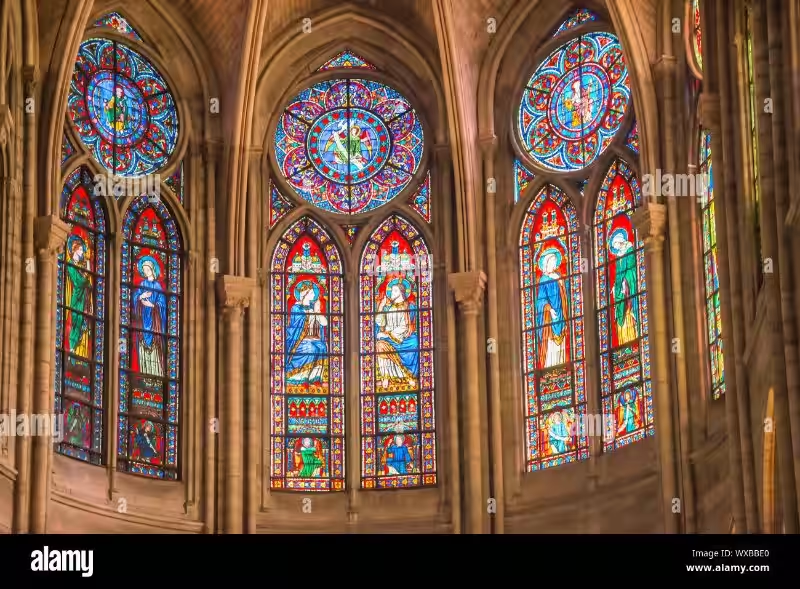
These artistic representations are not mere decoration; they serve as visual prayers, inviting contemplation and spiritual reflection. When we encounter a depiction of the Rosa Mystica, we are being invited into a sacred space, a visual reminder of the divine mysteries. For example, a stained-glass window featuring a rose might inspire a moment of quiet contemplation during a busy day, a silent dialogue with the divine.
The Rosa Mystica and Personal Spiritual Journeys
The devotion to the Rosa Mystica is not confined to grand theological pronouncements; it is deeply personal and transformative. It beckons us to cultivate our own inner garden, nurturing the seeds of faith and allowing them to blossom into a spiritual life of purpose and meaning. This personal journey is akin to tending a delicate rose bush, requiring patience, care, and consistent attention.
Engaging with the Rosa Mystica can manifest in various ways. For some, it might involve reciting specific prayers or litanies that invoke the “Mystical Rose.” For others, it can be a more contemplative practice, meditating on the symbolism of the rose and its connection to their own spiritual aspirations.
Cultivating Inner Purity and Virtue
The white petals of the Rosa Mystica are a potent symbol of purity, both physical and spiritual. This calls us to examine our thoughts, words, and actions, striving for a life lived in accordance with divine principles. It’s about cultivating an inner landscape that is as serene and unblemished as a dewdropped rose petal.
This pursuit of purity is not about perfectionism but about a sincere desire to align ourselves with the divine. It involves practices like prayer, meditation, acts of kindness, and forgiveness. The Rosa Mystica encourages us to weed out negative tendencies and cultivate virtues such as humility, compassion, and gratitude. Think of it as pruning away the dead branches to allow for healthier, more vibrant growth.
Embracing the Mystery and the Thorns
The beauty of the rose is often accompanied by thorns, a reminder that the spiritual path is not always easy. The Rosa Mystica encompasses both the joys of spiritual discovery and the challenges that inevitably arise in life. These thorns can represent suffering, temptation, or the difficult truths we must confront.
However, the presence of thorns on a rosebush also signifies protection and strength. They can teach us resilience and perseverance. When we face adversity, remembering the Rosa Mystica can provide comfort, reminding us that even in difficult times, there is a divine presence guiding and supporting us. The Rosa Mystica teaches us that growth often comes through struggle.
The intoxicating fragrance of a rose is often associated with a sense of peace, joy, and spiritual presence. The Rosa Mystica symbolizes this same divine fragrance, a subtle yet profound awareness of God’s presence in our lives. It’s a scent that lingers in the soul, a constant reminder of the sacred.
This “fragrance” can be experienced through moments of deep prayer, quiet contemplation, or during acts of selfless love. It’s the feeling of deep peace that washes over us, the sense of being connected to something larger than ourselves. The Rosa Mystica invites us to become more attuned to these subtle whispers of the divine, to inhale the sweet aroma of God’s love in our everyday lives.
The Rosa Mystica as a Source of Hope and Consolation
In times of sorrow, doubt, or spiritual dryness, the Rosa Mystica offers a beacon of hope and consolation. Its enduring beauty and symbolic richness serve as a reminder that even amidst darkness, the light of divine love persists. The rose, after all, continues to bloom season after season, a testament to nature’s enduring cycle of renewal.
For individuals navigating personal struggles, the Rosa Mystica can be a powerful source of comfort. It assures us that we are not alone in our challenges and that a loving presence is always near, offering solace and the promise of eventual resurrection or renewal.
Finding Strength in Devotion
Devotion to the Rosa Mystica can provide a structured framework for spiritual practice, offering solace and a sense of belonging within a spiritual community. The shared veneration of this symbol can strengthen faith and provide mutual support. This sense of communal prayer is like a garden tended by many hands, each contributing to its beauty and vitality.
Through hymns, prayers, and shared meditations focused on the Rosa Mystica, believers can find a deeper connection to their faith and to one another. This collective journey reinforces the idea that we are all part of a larger spiritual tapestry, woven together by divine love.
The Promise of Spiritual Renewal
Just as a rose wilts and sheds its petals only to burst forth with new life in the spring, the Rosa Mystica symbolizes the promise of spiritual renewal and resurrection. It reminds us that even in moments of perceived ending or defeat, there is always the possibility of new beginnings and a transformed spiritual life.
This promise is a cornerstone of many religious faiths, offering a profound source of hope for the future. The Rosa Mystica embodies this hope, encouraging us to trust in the divine plan and to believe in the ultimate triumph of love and light, no matter the present circumstances. It is a constant reminder that difficult seasons are temporary, and new growth is always possible.
The Rosa Mystica, or “Mystical Rose,” is a title of the Virgin Mary in Catholic tradition. It emphasizes her purity, beauty, and her role as a spiritual mother.
Where does the devotion to the Rosa Mystica come from?
The devotion to the Rosa Mystica has roots in ancient Christian symbolism that associated the rose with Mary, representing her virtues and her role in salvation history. More recently, private revelations, particularly those attributed to Pierina Gilli starting in the 1940s in Montichiari, Italy, have popularized this specific title and devotion.
What are the key messages associated with the Rosa Mystica devotion, especially from the apparitions in Montichiari?
The messages associated with the Rosa Mystica, particularly from Montichiari, often emphasize prayer, penance, and spiritual motherliness. Key themes include the need for holiness of priests and religious, the importance of unity among Christians, and the call for a return to prayer and sacrifice in families.
Is the Rosa Mystica devotion officially recognized by the Catholic Church?
While the veneration of Mary under the title “Rosa Mystica” is widespread and theologically sound, the specific apparitions and messages attributed to Pierina Gilli in Montichiari have received mixed responses from the Church hierarchy. The local bishop’s approval has varied, and the Holy See has not issued a definitive canonical judgment on the apparitions themselves. However, the title “Rosa Mystica” itself is a legitimate Marian title.
How do Catholics honor the Rosa Mystica?
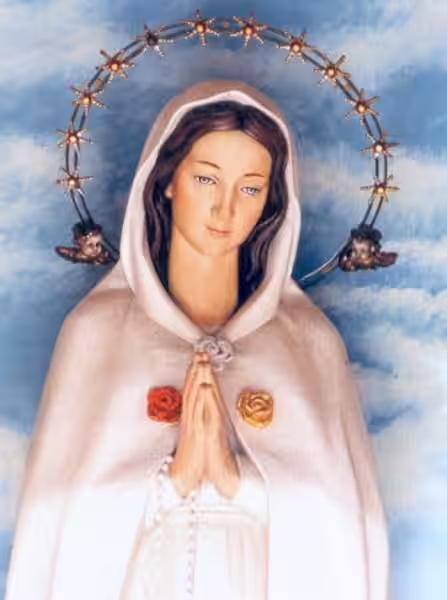
Catholics honor the Rosa Mystica through prayer, especially the Rosary, and through specific novenas and prayers dedicated to her. Many also venerate statues and images of the Rosa Mystica, often depicting her with three roses on her breast (white for purity, red for immolation, and yellow for suffering) and sometimes with tears. Devotion also extends to acts of charity and personal holiness.
What is the significance of the three roses on the breast of the Rosa Mystica as depicted in some images?
The three roses are often interpreted as representing different aspects of Mary’s love and suffering: the white rose symbolizes her purity and immaculate conception, the red rose signifies her sorrow and the immolation of Jesus, and the yellow rose represents her suffering and her love for humanity.
Are there specific prayers or devotions for the Rosa Mystica?
Yes, there are specific prayers and novenas dedicated to the Rosa Mystica, often focusing on intercession for priests, families, and unity. A common prayer includes an invocation to Mary as the Mystical Rose and asks for her intercession.