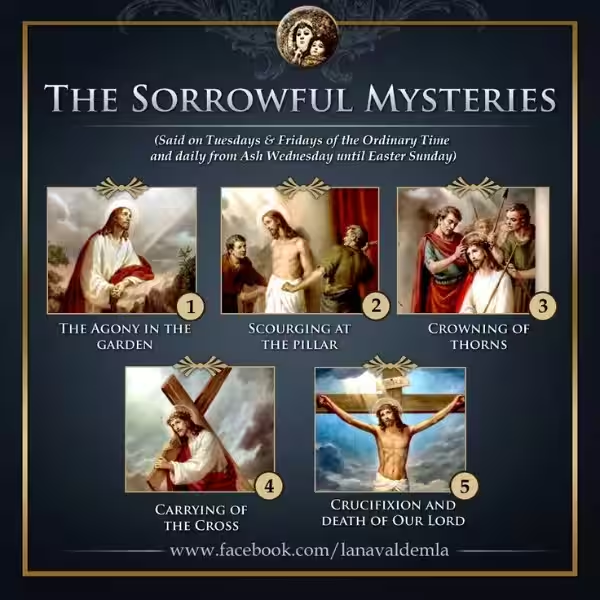
The image of Jesus, weary and bleeding, with a crown of thorns pressed into his scalp, is one of the most visceral and enduring depictions in religious art and scripture. Far more than just a gruesome detail of his Passion, the Jesus crowning with thorns is a profound symbol of suffering, humiliation, and ultimate redemption within the Christian faith. This poignant moment, etched into the hearts of believers, speaks volumes about the nature of sacrifice, the power of love in the face of brutality, and the paradoxical triumph found in apparent defeat. To truly grasp its significance is to delve into the very core of what it means to follow Christ and understand the depth of his love for humanity.
The story of Jesus crowning with thorns is recounting in the Gospels, particularly Matthew, Mark, and John, painting a stark picture of the Roman soldiers’ cruelty. They mocked him, hailed him as “King of the Jews,” and then, with savage irony, forced a crown woven from thorny branches onto his head. This act was not merely physical torment; it was a deliberate, calculated attempt to degrade and belittle Jesus, stripping him of any perceived authority or dignity. Yet, in this very act of degradation, a deeper meaning begins to emerge, transforming the instrument of his torture into a symbol of his kingship and his profound connection to the struggles of everyday people.
The Historical and Cultural Context of the Crowning with Thorns
To fully appreciate the impact of the Jesus crowning with thorns, we must understand the historical and cultural backdrop against which it occurred. Roman soldiers were known for their brutality and for their methods of humiliating conquered peoples and criminals before execution. The act of placing a crown, even a makeshift one of thorns, was a deliberate mockery of royalty and authority. For the Romans, this was a way to assert their dominance and extinguish any hope of an uprising or a messianic figure. They were, in their own minds, demonstrating the futility of Jesus’ claims.
The choice of thorns itself is significant. In ancient Near Eastern lore, thorny plants could symbolize curses, barrenness, and the harsh realities of life. By forcing such a crown upon Jesus, the soldiers were, in essence, associating him with the very curses and difficulties that humanity faced. However, this act of humiliation by the Roman soldiers ironically foreshadowed a different kind of sovereignty. Instead of a crown of gold befitting earthly rulers, Jesus received a crown that would symbolize his reign over suffering and his victory over sin, a far more potent and enduring form of kingship.
The Nature of the Thorns: A Symbol of Human Sin and Suffering
The thorns that pierced Jesus’ brow were not just random sharp objects; they represent the pain and suffering inflicted by humanity’s sin. Each sharp point can be seen as a manifestation of our transgressions, our selfishness, and our rejection of God’s love. When we consider the Jesus crowning with thorns, we are forced to confront the reality that our own actions, our own fallen nature, contributed to his agony. The crown, in this sense, is a tangible representation of the burden of sin that Jesus willingly took upon himself.
Think of it like this: imagine a community collectively deciding to punish someone for their perceived wrongdoings. They might heap insults, spread rumors, and physically prod them with sharp sticks. The Jesus crowning with thorns is an amplified, divine version of this. The soldiers, acting as agents of a fallen world, inflict pain that is a consequence of the spiritual brokenness that permeates human existence. The symbolism of the thorns serves as a constant reminder that our spiritual well-being is intertwined with the suffering and redemption of Christ.
The Paradoxical Nature of Jesus’ Kingship
The Jesus crowning with thorns is a masterclass in paradox. The soldiers intended to crown him as a pathetic, defeated “King of the Jews,” but in doing so, they inadvertently elevated him to a true and eternal King. His kingdom is not of this world, and his authority is not derived from military might or political power. Instead, his kingship is one of selfless love, sacrifice, and ultimate victory over death. The crown of thorns, a symbol of his suffering, becomes the emblem of his reign.
This paradox is central to Christian theology. We see a King who washes his disciples’ feet, a powerful figure who embraces the weak, and a divine being who willingly submits to human cruelty. The crowning with thorns is a stark visual representation of this: the ultimate power willingly embracing the ultimate humiliation. It is in this surrender to suffering, seen so vividly in the Jesus crowning with thorns, that his true strength and divinity are revealed, offering a message of hope to all who feel broken or marginalized.
Redemption Through Suffering: The Transformative Power of the Thorns
The Jesus crowning with thorns is not just about the pain; it’s about what that pain accomplished. Through his suffering, Jesus atoned for the sins of humanity, offering a path to reconciliation with God. The thorns, which symbolized our fallen state, were transformed through his sacrifice into instruments of our salvation. This is the transformative power of the cross and the events leading up to it, including the crowning with thorns.
Consider the example of a doctor who endures long, arduous hours and faces difficult emotional challenges to heal their patients. Their suffering, though real, is ultimately for the benefit of others. Similarly, Jesus, in bearing the weight of the crown of thorns, bore the weight of our sins and offered a path to spiritual healing and eternal life. This act of redemption through suffering is the cornerstone of the Christian message, offering solace and a promise of a brighter future beyond present troubles.
Lessons for the Modern Believer: Embracing Our Own “Thorns”
The Jesus crowning with thorns is not a distant historical event; it offers relevant lessons for believers today. In our own lives, we inevitably face challenges, pain, and moments of perceived defeat. These are our own “thorns.” The symbolism of Jesus’ suffering encourages us to face our difficulties with faith, resilience, and a recognition of God’s presence even in the darkest hours.
When we experience hardship, whether it’s illness, loss, or personal struggle, we can look to the Jesus crowning with thorns and be reminded that we are not alone. Christ understands our pain because he has already experienced it in its most profound form. This allows us to approach our own trials not as insurmountable obstacles, but as opportunities to grow in faith, deepen our reliance on God, and find strength in his enduring love. The crowning with thorns becomes a reminder that even in our deepest suffering, there is the promise of resurrection and ultimate victory.
Frequently Asked Questions: Jesus’ Crowning with Thorns
What happened during Jesus’ crowning with thorns?
After Jesus was scourged (beaten with a whip), Roman soldiers took Him into the Praetorium. There, they stripped Him and clothed Him in a purple robe. They then made a crown of thorns and placed it on His head, and put a reed in His right hand. They mocked Him by kneeling before Him and saying, “Hail, King of the Jews!” and spat on Him.
Why did the Roman soldiers crown Jesus with thorns?
The soldiers crowned Jesus with thorns as a form of mockery and derision. They were taunting Him and the claim that He was a king, as they themselves were under Roman rule and did not acknowledge Jesus as their sovereign. The thorns were likely chosen for their painful and insulting nature.
What is the religious significance of the crowning with thorns?
In Christian theology, the crowning with thorns is a significant event in the Passion of Christ, representing Jesus’ suffering and humiliation for the sins of humanity. It is seen as a fulfillment of prophecy and a symbol of His kingship, not of earthly power, but of spiritual authority and sacrifice. It highlights His love and willingness to endure pain and scorn for the sake of salvation.
Is the crowning with thorns mentioned in the Bible?
Yes, the crowning with thorns is described in the New Testament of the Bible. The accounts can be found in the Gospel of Matthew (27:27-31), the Gospel of Mark (15:16-20), and the Gospel of John (19:1-5).
How is the crowning with thorns commemorated in Christianity?
The crowning with thorns is one of the Stations of the Cross, a series of images or events depicting Jesus’ suffering during His crucifixion. It is also a subject often depicted in Christian art and is contemplated during the Lenten season, leading up to Easter.