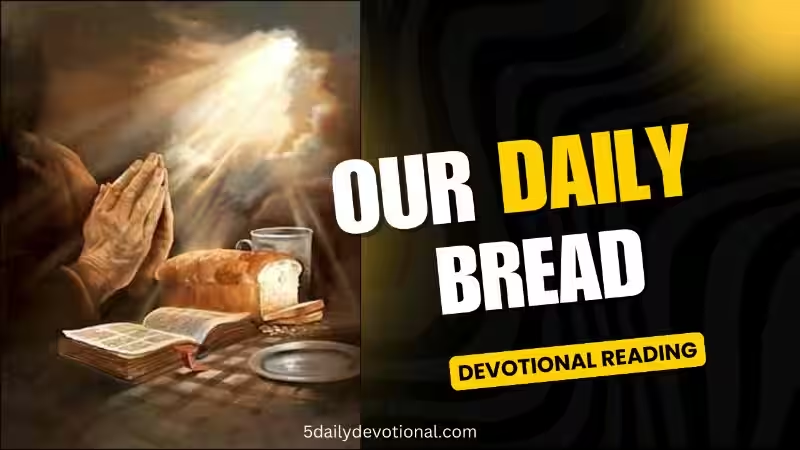
The phrase “our daily bread” resonates deeply within the realm of religion, particularly in the Christian tradition. It’s a cornerstone of prayer, a humble acknowledgment of our dependence on a higher power for both physical and spiritual sustenance. This seemingly simple request, found in the Lord’s Prayer, encapsulates a profound understanding of life’s essentials and our ongoing relationship with the divine. It’s not merely about asking for a loaf of bread to fill our stomachs; it’s about a holistic approach to living, recognizing that true nourishment comes from a source far beyond the tangible.
When we utter the words “give us this day our daily bread,” we are essentially praying for all that we need to thrive, not just survive, for the present moment. This includes not only food, shelter, and clothing but also wisdom, strength, peace, and spiritual guidance. It’s a prayer of faith and trust, a recognition that our Heavenly Father is aware of our needs and is ready to provide. This concept is woven throughout various religious texts, highlighting the universal human need for provision and the divine promise of it.
The most well-known origin of the phrase “our daily bread” is from the Gospel of Matthew (6:11) and the Gospel of Luke (11:3), where Jesus teaches his disciples how to pray. This prayer, often referred to as the Lord’s Prayer, is a foundational text for many Christians. The wording itself, particularly the emphasis on “daily,” suggests a reliance on God’s providence for the immediate future, rather than stockpiling for distant times. It encourages a mindset of living in the present, trusting that provision will be made for each day’s challenges and opportunities.
The concept of daily provision extends beyond the literal interpretation of food. In the Old Testament, we see echoes of this principle in the story of the manna from heaven provided to the Israelites during their journey in the wilderness (Exodus 16). God instructed them to gather just enough manna for each day, and if they tried to hoard it for the next day, it would spoil. This served as a powerful lesson in trust and obedience, teaching them that their sustenance was a direct gift from God, to be received with gratitude each morning. This teaches us a vital lesson about not being consumed by anxiety about the future but rather focusing on the present blessings and responsibilities.
Beyond Physical Hunger: Spiritual and Emotional Nourishment
While the literal interpretation of “our daily bread” is undeniably important, its spiritual and emotional dimensions are equally, if not more, significant in the context of religion. When we pray for “our daily bread,” we are also petitioning for the nourishment of our souls. This can manifest as a daily dose of divine wisdom to make sound decisions, strength to overcome temptations, and peace to navigate life’s inevitable storms. It’s a request for the internal resources that enable us to live a life aligned with our spiritual values.
Consider the example of a student facing a challenging exam. While they need physical energy (their literal bread), they also desperately need clarity of thought and the ability to recall information. These are forms of spiritual bread, granted through prayer and focused study. Similarly, someone going through a difficult relationship might pray not just for tangible solutions but for patience, forgiveness, and understanding, all of which are forms of spiritual nourishment essential for healing and growth. This highlights the multifaceted nature of what we are asking for when we pray for our daily bread.
The Role of Faith and Trust in Receiving Our Daily Bread
The act of praying for “our daily bread” is inherently an act of faith. It requires us to believe that there is a benevolent power that cares for our needs and is capable of meeting them. This is particularly crucial during times of scarcity or uncertainty. When faced with financial hardship, for instance, the prayer for daily bread becomes a powerful expression of trust that God will provide, perhaps through unexpected opportunities, the kindness of others, or inner resilience. It’s about releasing the burden of anxiety and placing our confidence in a higher plan.
This reliance on faith is a recurring theme in scripture. The Book of Proverbs (3:5-6) encourages us to, “Trust in the Lord with all your heart and lean not on your own understanding; in all your ways submit to him, and he will make your paths straight.” This principle directly relates to praying for our daily bread. We are not expected to have all the answers or to meticulously plan every step; rather, we are called to submit our needs and our plans to God, trusting that He will guide and provide. This trust frees us from the paralysis of fear and empowers us to act with courage and hope.
Practical Applications of “Our Daily Bread” in Daily Life
Understanding “our daily bread” as more than just physical sustenance offers a practical framework for living a more intentional and spiritually rich life. It encourages us to pause and acknowledge our dependence on God throughout the day, not just at mealtimes. This can involve:
Mindful Eating: Before consuming our meals, taking a moment to reflect on the source of our food and express gratitude.
Seeking Wisdom: When faced with a decision, consciously asking for divine guidance and wisdom, viewing it as essential spiritual “bread.”
Practicing Patience: During frustrating moments, praying for the grace and patience to respond with love and understanding, recognizing these as vital spiritual provisions.
Acts of Service: Sharing our resources, whether material or spiritual, with those in need, embodying the principle of providing and receiving daily bread within a community.
Furthermore, the concept of “our daily bread” can foster a spirit of contentment and gratitude. Instead of constantly striving for more, it encourages us to appreciate what we have been given each day. This shift in perspective can significantly reduce stress and increase overall well-being. It’s about learning to savor the blessings of today, knowing that tomorrow’s provisions will come in their time. This daily practice cultivates a deeper connection to the divine and a greater appreciation for the simple yet profound gifts of life.
The Communal Aspect of “Our Daily Bread”
The prayer “give us this day our daily bread” emphasizes a communal aspect. The use of “our” signifies that we are not praying solely for ourselves but also for our families, our communities, and even for the wider world. This broad petition highlights the interconnectedness of humanity and the shared responsibility we have to care for one another. It’s a prayer that extends beyond individual needs to encompass the collective well-being of all.
In many religious traditions, charity and mutual support are seen as direct expressions of living out the principle of “our daily bread.” When we share our resources with those less fortunate, we are participating in God’s provision. Conversely, when we are in need, we are encouraged to reach out to our spiritual family for support. This creates a cycle of sustenance and generosity, reinforcing the idea that we are all part of a larger body, dependent on each other and on divine grace.
Living Out the Principle of “Our Daily Bread”: A Call to Action
Ultimately, the concept of “our daily bread” in scripture is not just a passive request; it’s a call to active participation in the divine economy. It’s about living a life of purpose, gratitude, and generosity, recognizing that we are stewards of the gifts we receive. This involves being mindful of our own needs and the needs of others, and actively seeking ways to contribute to the sustenance and well-being of our communities.
By integrating the prayer for “our daily bread” into our daily lives, we cultivate a deeper spiritual awareness and a more profound sense of connection. It reminds us that we are never truly alone, that our needs are seen, and that provision is always available, both physically and spiritually. This humble acknowledgment fosters a life of faith, resilience, and unwavering hope, allowing us to face each day with a grateful heart and a spirit of trust in the divine plan.
Frequently Asked Questions about “Our Daily Bread” Scripture
What does “Our Daily Bread” mean in the context of the Lord’s Prayer?
In the Lord’s Prayer, “Our Daily Bread” is not solely about literal food. It encompasses all that we need for our physical and spiritual sustenance each day, including nourishment, provision, and God’s grace and guidance. It’s a prayer for God’s ongoing care and provision in our lives.
Is “Our Daily Bread” a specific denomination or church?
No, “Our Daily Bread” is a popular daily devotional publication produced by Our Daily Bread Ministries. It is not affiliated with any single Christian denomination. Their goal is to share the hope of the Gospel with people around the world.
Where can I find the scripture references for “Our Daily Bread”?
The scripture references are provided within each daily devotional message. You can find them on the Our Daily Bread Ministries website, in their print publications, and through their various app platforms.
Can I share “Our Daily Bread” devotionals with others?
Yes, Our Daily Bread Ministries encourages the sharing of their devotionals to spread the message of hope. Please refer to their specific copyright and usage guidelines on their website for details on how you can share their content.
Is “Our Daily Bread” a religious organization?
Yes, Our Daily Bread Ministries is a non-profit Christian organization dedicated to sharing the Christian faith through various media, including their widely read daily devotional.
How often is “Our Daily Bread” published?
“Our Daily Bread” devotionals are published daily. They are available in numerous languages and formats to reach a global audience.