The allure of magnificent flowers has captivated humanity for millennia, their vibrant hues and intricate forms speaking a language that transcends words. It is no surprise, then, that these botanical wonders have become deeply woven into the fabric of religious beliefs and practices across the globe. From ancient rituals to contemporary worship, flowers act as potent symbols, offering a tangible connection to the divine, a reminder of beauty, rebirth, and the ephemeral nature of existence. Their presence in sacred spaces and ceremonies elevates the spiritual experience, transforming ordinary moments into opportunities for profound reflection and reverence.
The sheer diversity and breathtaking beauty of flowers lend themselves to a rich tapestry of symbolic interpretations within religious contexts. Each bloom, with its unique characteristics and life cycle, can represent different aspects of faith, from divine love and purity to sacrifice and resurrection. This article will explore how magnificent flowers are not merely decorative elements but integral components of religious expression, offering solace, inspiration, and a pathway to understanding the sacred. We will delve into specific examples from various faith traditions, highlighting the profound ways these natural marvels contribute to our spiritual journeys.
The Symbolic Language of Magnificent Flowers in Worship
Throughout history, magnificent flowers have been imbued with deep symbolic meaning within religious observances. Their ephemeral nature, blooming in glorious splendor only to fade, serves as a powerful metaphor for the cycles of life, death, and divine rebirth. This transience reminds us of our own mortality while simultaneously pointing towards the promise of eternal life or spiritual renewal. The vibrant colors of flowers, from the pure white of lilies to the passionate red of roses, have been interpreted in myriad ways, each hue carrying its own sacred significance.
Consider, for instance, the serene elegance of the lotus flower, a symbol of purity and enlightenment in Buddhism. Its ability to rise from muddy waters, unsullied and radiantly beautiful, represents the spiritual journey of overcoming worldly attachments and achieving inner peace. Similarly, in Christianity, the graceful lily often symbolizes the Virgin Mary’s purity and innocence, its pristine petals a visual testament to divine grace. These magnificent flowers are not just visually appealing; they are vessels of deeply held beliefs, speaking volumes without uttering a sound.
Flowers as Offerings and Sacred Decorations
In many religious traditions, magnificent flowers are offered as a tangible expression of devotion and gratitude. These offerings are not simply gifts; they are acts of sacred surrender, presenting the most beautiful and perfect creations of nature to the divine. The act of tending to, gathering, and arranging these blooms can itself be a form of meditation, a way to quiet the mind and focus on the sacred. The fragrant aroma of certain flowers is also believed to enhance spiritual experiences, purifying the atmosphere and invoking a sense of peace.
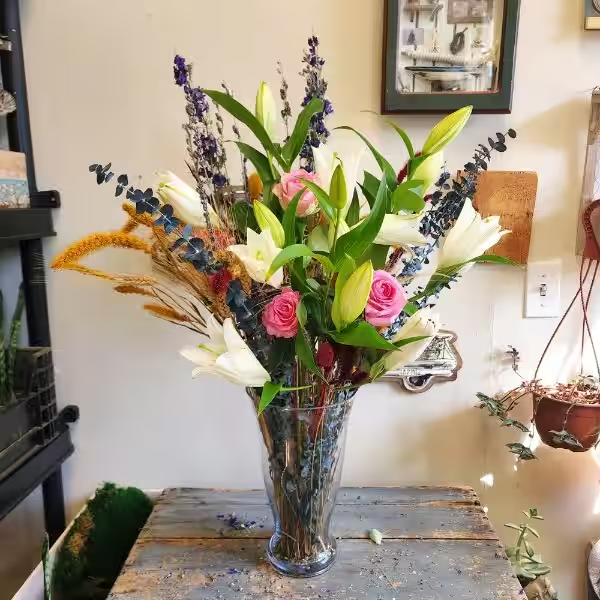
The careful placement of magnificent flowers in temples, churches, mosques, and other sacred spaces serves a dual purpose: to beautify the environment and to guide the worshippers’ focus towards the divine. Imagine walking into a temple adorned with vibrant marigolds during a Hindu festival or seeing an altar draped with delicate roses in a Christian church. These floral arrangements create an atmosphere of reverence, transforming a physical space into a sanctuary for the soul. The meticulous artistry involved in floral design for religious ceremonies underscores the importance placed on these natural treasures.
Magnificent Flowers in Christian Traditions
Within Christianity, magnificent flowers play a significant role, often appearing in depictions of biblical events and adorning places of worship. The graceful lily, as mentioned, is strongly associated with the Virgin Mary, symbolizing her unblemished purity and her role as the mother of Christ. The passionflower, with its intricate structure, is often seen as a representation of the instruments of Christ’s crucifixion, its petals and tendrils interpreted as the crown of thorns, the nails, and the apostles. This intricate symbolism transforms a simple bloom into a profound theological statement.
Furthermore, magnificent flowers are frequently used in Christian liturgical seasons. During Easter, bright daffodils and tulips symbolize the resurrection of Christ and the renewal of life. Advent and Christmas often feature evergreen wreaths adorned with rich red poinsettias, representing the blood of Christ and the joy of the season. Even in everyday church decorations, the simple elegance of a bouquet of fresh blooms can evoke a sense of peace and invite contemplation of God’s creation. The variety of colors and forms available allows for a rich expression of spiritual themes throughout the church calendar.
Magnificent Flowers in Eastern Religions: Buddhism and Hinduism
In the spiritual landscapes of Buddhism and Hinduism, magnificent flowers are not merely adornments but are deeply intertwined with core philosophical tenets and devotional practices. The lotus flower, in Buddhism, is a paramount symbol of enlightenment, purity, and spiritual awakening. Its growth from the muddy depths to a radiant bloom above the water mirrors the soul’s journey from ignorance to wisdom, overcoming the defilements of the material world. Monks and devotees often meditate on the serene beauty of the lotus, finding inspiration for their own path to Nirvana.
Hinduism, too, reveres magnificent flowers with profound significance. Vibrant marigolds, with their sun-like intensity, are frequently used in prayers and ceremonies, symbolizing prosperity, auspiciousness, and the divine. The offering of fragrant jasmine to deities is a common practice, believed to please the gods and convey the devotee’s sincere devotion. The delicate petals of the rose are also highly valued, often associated with the goddess Lakshmi, the deity of wealth and fortune. The richness of color and the sweet perfume of these flowers are seen as direct conduits to the divine, enhancing the spiritual connection.
While the use of representational art is generally discouraged in Islamic religious spaces, magnificent flowers have found a significant and enduring place in Islamic art, architecture, and cultural practices. The geometric patterns found in mosques and illuminated manuscripts often incorporate stylized floral motifs, representing the infinite beauty and order of Allah’s creation. The intricate designs of Persian carpets, for example, frequently feature floral elements, symbolizing paradise and the divine garden. These artistic interpretations serve as a constant reminder of the Creator’s handiwork.
Beyond artistic representation, magnificent flowers are also appreciated for their aesthetic qualities and their association with purity and serenity in everyday life. While not typically used in direct divine worship in the same way as in some other religions, the appreciation for nature’s delicate artistry is a common thread. The sweet scent of rosewater, derived from roses, is used in perfumes and for cleansing, adding a touch of fragrant beauty to personal grooming and ritual purification. The simple yet profound impact of a well-arranged bouquet can bring a sense of calm and reflection, indirectly fostering a spiritual disposition.
The Enduring Legacy of Magnificent Flowers in Our Spiritual Lives
The presence of magnificent flowers in religious traditions is far more than a historical curiosity; it is a testament to their timeless power to connect us with something greater than ourselves. Their ephemeral beauty reminds us to cherish each moment, while their resilience and cyclical renewal offer hope and inspiration. Whether offered as a prayer, contemplated in meditation, or simply admired in a sacred space, these natural wonders continue to enrich our spiritual lives, providing a tangible link to the divine and a constant source of awe and wonder.
As we navigate our own spiritual paths, let us not overlook the profound messages carried by magnificent flowers. Their vibrant hues, intricate forms, and delicate fragrances invite us to pause, reflect, and connect with the sacred beauty that surrounds us. From the symbolism of the graceful lily to the resilient spirit of the lotus, these botanical marvels offer a universal language of devotion, peace, and the enduring promise of renewal. The natural world, in its unassuming splendor, constantly provides us with profound spiritual insights, if only we take the time to observe and appreciate.
Frequently Asked Questions about Magnificent Flowers and Religion
Do specific flowers hold religious significance in different faiths?
Yes, many flowers are deeply intertwined with religious symbolism and practices across various faiths. For instance, the lotus is a sacred flower in Buddhism and Hinduism, representing purity, enlightenment, and spiritual awakening. In Christianity, the lily is often associated with the Virgin Mary and purity, while roses can symbolize love, martyrdom, or the Virgin Mary herself. The olive branch, though not strictly a flower, is a powerful symbol of peace and divine favor in Abrahamic religions.
Are flowers used in religious ceremonies or rituals?
Absolutely. Flowers are integral to religious ceremonies and rituals worldwide. They are used for decoration in temples, churches, mosques, and other places of worship, creating an atmosphere of sanctity and beauty. They are also offered as gifts to deities, used in processions, and incorporated into religious art and iconography. In some traditions, specific flowers are used in prayers, meditation, or as part of devotional practices.
Can the symbolism of a flower change depending on the religious context?
Yes, the symbolism of a flower can indeed evolve and take on different meanings based on the specific religious tradition and its interpretations. While a flower might represent purity in one faith, it could symbolize divine protection, resurrection, or even mourning in another. The cultural and historical context of a religion plays a significant role in shaping the symbolic interpretations of natural elements like flowers.
Are there any prohibitions or restrictions regarding the use of certain flowers in religious settings?
While generally, flowers are welcomed in religious settings, there can be subtle nuances. In some very strict traditions, or for specific ritualistic purposes, there might be preferences for certain types of flowers or aversions to others. However, widespread prohibitions are uncommon. The focus is usually on the intent and reverence with which the flowers are used, rather than a strict list of forbidden blooms.
How can I learn more about the religious symbolism of flowers in my own faith or other faiths?
To learn more, you can consult religious texts, scholarly articles on religious studies and botany, or visit places of worship where you can observe the use of flowers and speak with religious leaders or practitioners. Local libraries and online resources dedicated to comparative religion and cultural studies are also excellent sources of information. Many museums also have exhibits that explore the intersection of art, nature, and religion.