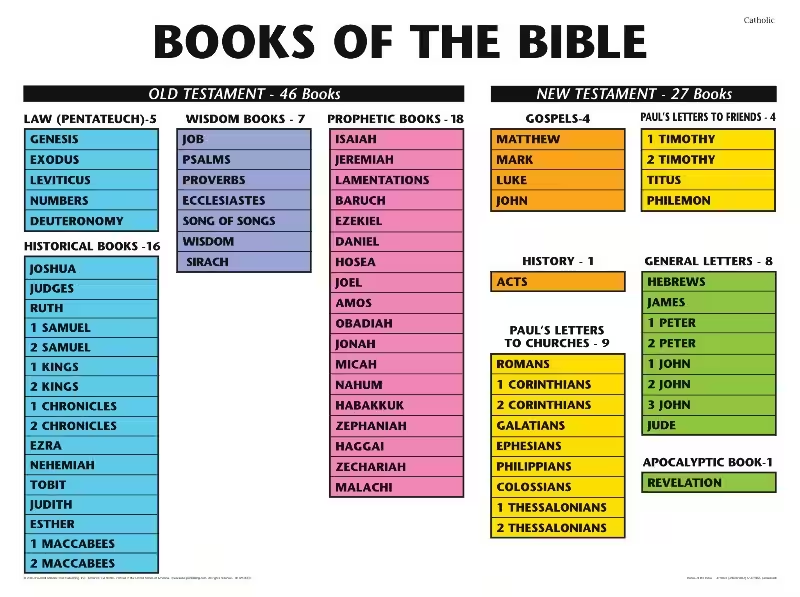
The journey of faith is a lifelong exploration, and for many, the New American Bible Revised Edition (NABRE) serves as a crucial compass and vibrant roadmap. This modern, accessible translation of the Catholic Bible has become a cornerstone for countless individuals seeking a richer, more profound connection with their religion. It’s more than just a book; it’s an invitation to engage with sacred scripture in a way that resonates with contemporary life, offering clarity, context, and inspiration.
Understanding the NABRE isn’t just about appreciating a new translation; it’s about recognizing how it can transform your personal practice of religion. It’s designed to bridge the gap between ancient wisdom and modern understanding, making the timeless messages of the Bible more relatable and applicable to the complexities of our daily lives. Whether you’re a seasoned practitioner or just beginning to explore your spiritual path, the NABRE offers a welcoming and illuminating experience.
Unpacking the Significance of the NABRE in Modern Religion
The New American Bible Revised Edition (NABRE) represents a significant evolution in Catholic biblical scholarship and translation. Its creation was a deliberate effort to provide a translation that is both faithful to the original languages and understandable to the contemporary reader. This dual focus is what makes the NABRE so instrumental in fostering a deeper engagement with religion. Unlike older translations that might feel distant or archaic to some, the NABRE aims to speak directly to the heart and mind.
One of the primary strengths of the NABRE lies in its commitment to scholarly accuracy and theological precision. It incorporates the latest findings from biblical research, ensuring that the text reflects a nuanced understanding of the ancient world and the original intent of the sacred authors. This meticulous approach means that when you read the NABRE, you are engaging with a text that has been carefully vetted and is considered the authoritative translation for the Catholic Church in the United States. This provides a solid foundation for theological reflection and personal prayer.
The NABRE: A Testament to Accessibility and Clarity
The New American Bible Revised Edition (NABRE) was specifically designed with the modern reader in mind. Its language is clear, direct, and avoids the overly complex phrasing that can sometimes be a barrier to understanding in older translations. This accessibility is a game-changer for individuals trying to integrate biblical study into their busy lives. For example, passages from the Old Testament prophets that might have once seemed obscure are rendered in a way that illuminates their enduring relevance to contemporary issues of justice and mercy.
Furthermore, the NABRE often includes helpful footnotes and introductions that provide essential context. These aids can explain historical backgrounds, clarify difficult passages, or offer theological insights, making the scripture come alive. Imagine reading about the parable of the Prodigal Son in the NABRE and finding a footnote that explains the cultural nuances of debt and reconciliation in ancient Israel. This kind of enrichment transforms a reading experience from passive reception to active engagement and deeper comprehension.
Bridging the Gap: How the NABRE Enhances Personal Religious Practice
For many, the New American Bible Revised Edition (NABRE) has become an indispensable tool for personal prayer and spiritual growth. The clarity of its prose allows individuals to connect more readily with the narratives, teachings, and poetic expressions found within its pages. When you can easily grasp the meaning of a Psalm or a passage from the Gospels, you are more likely to meditate on it, internalize its message, and allow it to shape your actions. This is the essence of transformative religion.
The NABRE also plays a vital role in liturgical settings. As the official translation used in Catholic Masses throughout the United States, it ensures a unified and consistent experience for the faithful. Hearing the familiar cadence of the NABRE during Mass helps to reinforce the scriptures and their sacred significance. This consistent exposure, both in personal study and communal worship, builds a stronger connection to the faith community and its shared heritage. It’s a powerful unifying force in the practice of religion.
Exploring Key Themes and Narratives Through the NABRE
The New American Bible Revised Edition (NABRE) offers a rich tapestry of stories, laws, and wisdom literature that form the bedrock of the Judeo-Christian tradition. From the creation accounts in Genesis to the transformative teachings of Jesus in the Gospels, the NABRE presents these foundational narratives with vividness and power. The clarity of its language allows readers to more easily follow the unfolding of God’s plan for humanity.
Consider the book of Exodus. Through the NABRE, the dramatic liberation of the Israelites from slavery and their subsequent journey through the wilderness become more immediate and impactful. The struggles of Moses, the divine pronouncements at Mount Sinai, and the establishment of the covenant are all presented in a way that highlights their enduring lessons about freedom, obedience, and God’s faithfulness. These are not just ancient tales; they are paradigms for understanding our own spiritual journeys and our relationship with the divine.
The Gospels Come Alive with the NABRE
The New American Bible Revised Edition (NABRE) breathes new life into the Gospels of Matthew, Mark, Luke, and John. The words and actions of Jesus Christ are presented with a compelling clarity that makes his message of love, redemption, and the Kingdom of God profoundly accessible. Whether you are reading about the Sermon on the Mount, the miracles of healing, or the events of the Passion and Resurrection, the NABRE helps you to hear Jesus’ voice as if he were speaking to you today.
For instance, when reading the Parable of the Sower in the NABRE, the imagery of the different soils and seeds is rendered in a way that invites personal reflection. You can contemplate which type of soil your own heart resembles and how you can cultivate a disposition for the Word of God to take root and flourish. This personal application is a hallmark of how the NABRE can deepen one’s religious experience and foster a more intentional discipleship. It’s about making the Gospel personal.
Beyond the narrative accounts, the New American Bible Revised Edition (NABRE) also excels in presenting the wisdom literature and prophetic books of the Old Testament. Texts like Proverbs, Ecclesiastes, Isaiah, and Jeremiah offer profound insights into living a righteous life and understanding God’s will. The NABRE makes these often complex texts more digestible and relevant for contemporary readers.
Reading the prophetic warnings and promises in Isaiah, for example, through the NABRE can illuminate the social justice themes that are central to many religious traditions. The prophet’s calls for righteousness, compassion for the poor, and critique of oppression resonate powerfully today. The NABRE helps us to see how these ancient voices continue to speak to our present challenges, urging us towards ethical living and a deeper commitment to our faith.
The NABRE as a Foundation for Catholic Life and Discipleship
The New American Bible Revised Edition (NABRE) is more than just a reading text; it is a vital resource for living out one’s Catholic faith. Its accurate translation and contextual aids empower individuals to understand the teachings of the Church more fully and to engage more meaningfully with the sacraments. This is where the intellectual pursuit of scripture meets the lived reality of religion.
For those preparing for sacraments like Confirmation or Marriage, or for those seeking to deepen their understanding of Catholic doctrine, the NABRE provides a reliable and authoritative source. The clarity of its presentation of the Ten Commandments, the teachings on love and forgiveness, and the narratives of the early Church serve as essential building blocks for a robust Catholic identity. It’s about building a strong spiritual house with the Word of God as the foundation.
Engaging with the NABRE in Community and Tradition
The New American Bible Revised Edition (NABRE) is also a shared treasure within the Catholic community. Its use in parish study groups, religious education classes, and family discussions fosters a sense of shared understanding and communal faith. When people read and discuss the NABRE together, they not only learn from the text but also from each other’s perspectives.
Furthermore, the NABRE stands in continuity with the rich tradition of biblical interpretation that has characterized the Catholic Church for centuries. While it is a modern translation, it is rooted in the same theological principles and historical lineage as its predecessors. This balance of tradition and innovation makes the NABRE a stable and enduring guide for navigating the complexities of faith in the 21st century. It’s a living link to our spiritual heritage.
Ultimately, the New American Bible Revised Edition (NABRE) is a personal invitation to encounter God. Its clear language, scholarly accuracy, and helpful context combine to create an experience that is both intellectually stimulating and spiritually enriching. By engaging with the NABRE, individuals are empowered to hear God’s voice more clearly, to understand His love more profoundly, and to live out their faith with greater conviction and joy. It’s a transformative journey, one passage at a time.
Frequently Asked Questions about the New American Bible Revised Edition (NABRE)
What is the New American Bible Revised Edition (NABRE)?
The New American Bible Revised Edition (NABRE) is the translation of the Bible used in the Catholic Church in the United States for liturgy and personal study. It is a revision of the original New American Bible (NAB) and includes updated translations of both the Old and New Testaments, along with revised notes and introductions.
When was the NABRE published?
The NABRE was published in its entirety in 2011, with the New Testament having been revised in 1986 and the Old Testament in 2010.
Who is responsible for the NABRE?
The translation and revision of the NABRE were undertaken by a team of biblical scholars appointed by the United States Conference of Catholic Bishops (USCCB).
What makes the NABRE different from other Bible translations?
The NABRE is specifically authorized for use in the Catholic liturgy in the United States. It aims to be a faithful translation that is also accessible to contemporary readers. It also includes extensive scholarly notes and introductions that reflect Catholic theological understanding.
Is the NABRE the only Bible translation used by Catholics?
No, while the NABRE is the official translation for liturgical use in the United States, Catholics may use other approved translations for personal study, such as the Revised Standard Version Catholic Edition (RSV-CE) or the New Revised Standard Version Catholic Edition (NRSV-CE).
What kind of revisions were made in the NABRE?
The revisions involved updating the language to be more contemporary, incorporating new biblical scholarship, and ensuring greater fidelity to the original Hebrew, Aramaic, and Greek texts. The introductions and notes were also significantly revised to provide more context and theological insight.
Where can I find the NABRE?
The NABRE can be found in Catholic Bibles published by various religious publishers, often designated as “NABRE” on the cover or within the text. It is also available online through various Catholic websites and apps.
Does the NABRE include the Deuterocanonical books?
Yes, as a Catholic translation, the NABRE includes the Deuterocanonical books (also sometimes referred to as the Apocrypha) in the Old Testament, in accordance with the Catholic canon of Scripture.