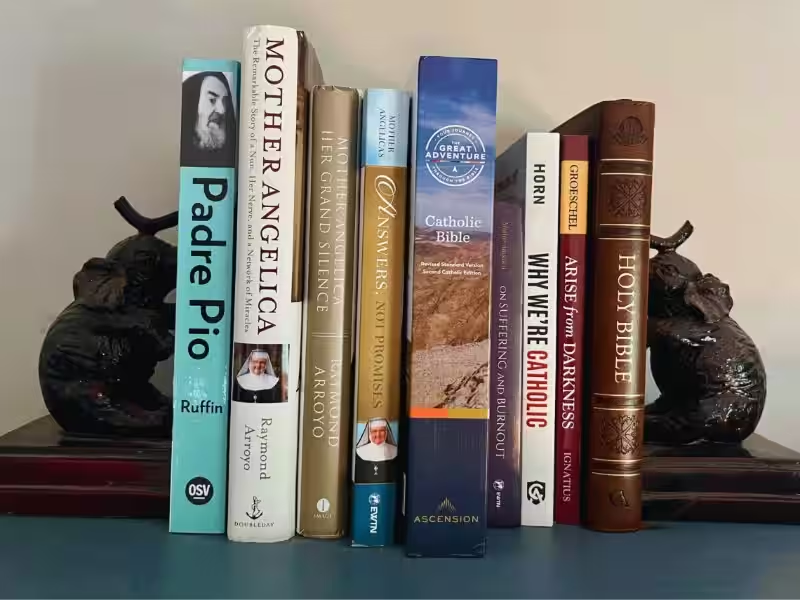
In the vast ocean of religious literature, navigating the currents of Catholic thought can feel overwhelming. Yet, within this rich tradition lies a treasure trove of wisdom, stories, and profound insights that have shaped countless lives. For those seeking to deepen their understanding of the Catholic faith, explore its history, or simply find solace and inspiration, a curated collection of must-read Catholic books offers a guiding light. This article aims to be your compass, pointing you towards influential works that have stood the test of time, providing a relatable and informative pathway into the heart of Catholic spirituality and theology.
Whether you are a lifelong Catholic looking to rekindle your spiritual fire, a curious inquirer on the path to conversion, or someone simply fascinated by the enduring influence of the Church, these books offer accessible entry points and profound explorations. We’ll delve into categories that cater to diverse interests, from foundational texts and personal testimonies to theological explorations and historical perspectives. Prepare to embark on a meaningful intellectual and spiritual adventure, one that promises to enrich your faith and broaden your horizons.
Discovering the Foundations: Essential Catholic Texts
Every faith tradition has its cornerstones, and for Catholicism, these essential Catholic texts are the bedrock upon which centuries of belief and practice have been built. These are not just ancient writings; they are living documents that continue to resonate with timeless truths, offering guidance for navigating the complexities of modern life. Understanding these foundational works provides a crucial context for appreciating the breadth and depth of Catholic teaching.
Among the most impactful are the Scriptures, the divinely inspired Word of God. While not a single book in the traditional sense, the Bible, encompassing both the Old and New Testaments, is the ultimate must-read Catholic book. It tells the grand narrative of God’s relationship with humanity, from creation to redemption. Engaging with the Gospels, in particular, offers a direct encounter with the life, teachings, death, and resurrection of Jesus Christ – the central figure of our faith. Imagine reading the parable of the Prodigal Son; it’s a simple story about a father’s unconditional love, a powerful metaphor for God’s mercy extended to all of us, regardless of our mistakes.
The Catechism of the Catholic Church: A Comprehensive Guide
For a structured and authoritative overview, the Catechism of the Catholic Church stands as an indispensable resource. It’s not a narrative to be read cover-to-cover in one sitting, but rather a comprehensive summary of Catholic doctrine, morals, and prayer life. Think of it as a detailed roadmap for understanding what Catholics believe and why they believe it. It meticulously outlines the Creed, the Sacraments, the Commandments, and the Lord’s Prayer, providing clear explanations for each.
This must-read Catholic book is invaluable for solidifying one’s understanding of core tenets. For example, when discussing the Eucharist, the Catechism doesn’t just state that Catholics believe Christ is truly present; it delves into how and why this belief is central to Catholic worship and spiritual life, explaining the doctrine of transubstantiation in accessible terms. It serves as a reliable and informative reference point for questions of faith and practice, making it a vital companion for anyone serious about their Catholic journey.
The Early Church Fathers: Voices of the First Centuries
Stepping back to the earliest days of Christianity, the writings of the Early Church Fathers offer a unique window into the formation of Catholic doctrine and practice. These men, often bishops, theologians, and scholars of the first few centuries, were instrumental in shaping the Church’s understanding of Scripture, tradition, and liturgy. Their works are not always easy to digest, but they are profoundly rewarding, revealing a vibrant and living faith as it was being articulated and defended.
Reading figures like St. Augustine, St. Jerome, or St. Ignatius of Antioch provides a direct link to the roots of Catholic tradition. Augustine’s Confessions, for instance, is a deeply personal and profoundly spiritual autobiography, detailing his journey from a life of sin and searching to profound conversion. It’s a must-read Catholic book that speaks to the universal human struggle for meaning and the transformative power of God’s grace. These writings help us understand how certain beliefs and practices, like the veneration of saints or the importance of apostolic succession, were understood and lived out by those closest to the Apostles themselves.
Journeys of the Soul: Inspiring Catholic Memoirs and Biographies
Beyond formal doctrine and historical texts, the journeys of the soul captured in Catholic memoirs and biographies offer a deeply personal and relatable dimension to the faith. These are the stories of real people, grappling with doubt, experiencing profound conversion, and living out their faith amidst the challenges of life. They provide inspirational Catholic narratives that can touch our hearts and encourage us in our own spiritual walk.
These accounts are often more accessible than dense theological treatises, allowing readers to connect with the human experience of faith. They demonstrate that the Catholic life is not merely a set of rules, but a dynamic relationship with God, lived out in the messy realities of everyday existence. By reading about the struggles and triumphs of others, we gain hope and perspective for our own lives, recognizing that we are not alone in our spiritual quests.
St. Thérèse of Lisieux: The Little Flower’s Path to Holiness
The autobiography of St. Thérèse of Lisieux, often titled Story of a Soul, is a universally beloved must-read Catholic book. This young Carmelite nun, who died at the age of 24, articulated a profound spirituality known as the “Little Way.” It’s a path of childlike trust in God and a commitment to performing small acts of love and sacrifice with great charity, even in the mundane moments of life. Her writings are characterized by simplicity, sincerity, and an astonishing depth of spiritual insight.
St. Thérèse’s relatable narrative resonates because she wasn’t a grand theologian or a public figure. She was a simple woman who found extraordinary holiness in ordinary things. She teaches us that sanctity is attainable for everyone, not just for the extraordinary. Her reflections on suffering, her intense love for Jesus, and her desire to be a “missionary of love” offer profound encouragement and practical guidance for living a devout life, no matter our circumstances. Her story is a powerful reminder that God can work miracles through the smallest, most humble of souls.
Flannery O’Connor: Faith and the Unflinching Gaze
For those drawn to literature that grapples with faith in often stark and unflinching terms, the works of Flannery O’Connor are essential reading. While known primarily as a short story writer and novelist, O’Connor was a devout Catholic whose faith deeply informed her unique literary vision. Her stories often feature grotesque characters and violent events, but beneath the surface lies a profound exploration of grace, redemption, and the divine presence in even the darkest corners of human experience.
O’Connor’s fiction, such as the collection A Good Man Is Hard to Find, is a must-read Catholic work for its intellectual rigor and spiritual depth. She challenges comfortable notions of faith, forcing readers to confront the reality of sin and the transformative power of God’s often surprising interventions. Her writing is often described as Southern Gothic, but it’s deeply rooted in Catholic theology, illustrating how divine grace can operate in unexpected and even disruptive ways. Her ability to weave profound theological truths into captivating narratives makes her a truly singular voice in Catholic literature.
Exploring Deeper: Theological and Spiritual Classics
For those who wish to delve into the more profound aspects of Catholic theology and spirituality, a selection of theological and spiritual classics offers a rich and rewarding experience. These books, often penned by giants of Catholic thought, explore the intricacies of God, the nature of the soul, and the path to union with the divine. While they may require more focused study, the insights gained are transformative and deeply informative.
These works are the intellectual and spiritual nourishment that has sustained the Church for centuries. They offer frameworks for understanding the mysteries of faith, the sacraments, and the very nature of Christian life. Engaging with these classic Catholic writings can profoundly shape one’s worldview and deepen their appreciation for the intellectual heritage of Catholicism.
St. Thomas Aquinas: The Summa Theologica and Beyond
No discussion of Catholic intellectual heritage would be complete without mentioning St. Thomas Aquinas. His monumental work, the Summa Theologica, is a comprehensive systematic theology that seeks to answer virtually every question a person might have about God and the Christian life. While the full Summa is a massive undertaking, even reading selections or secondary works that explain his thought is highly beneficial. Aquinas was a Dominican friar and philosopher whose synthesis of faith and reason remains a cornerstone of Catholic intellectual tradition.
The Summa is a must-read Catholic book for anyone seeking a rigorous and comprehensive understanding of Catholic doctrine. Aquinas, with his brilliant mind, tackles complex subjects like the existence of God, the nature of angels, the sacraments, and moral theology with unparalleled clarity and logical precision. He demonstrates how faith and reason are not in conflict but are complementary paths to truth. For example, his “Five Ways” to prove God’s existence are elegant philosophical arguments that have been debated and admired for centuries, offering a powerful intellectual defense of belief.
The Imitation of Christ: A Timeless Guide to Spiritual Life
Written by Thomas à Kempis in the 15th century, The Imitation of Christ is a must-read Catholic book renowned for its profound spiritual wisdom and practical guidance for living a devout life. This anonymous author (though often attributed to à Kempis) offers a direct and powerful call to follow Christ, focusing on humility, detachment from worldly desires, and the interior life of prayer. It’s a book that has been cherished by countless saints and faithful for generations.
The relatable and accessible language of The Imitation of Christ makes it a powerful devotional text. It’s filled with pithy sayings and profound reflections that speak directly to the soul. For instance, its emphasis on recognizing Christ in the humble service of others offers a profound lesson in practical charity. The book encourages a deep interior disposition, urging the reader to find contentment in Christ alone, rather than in fleeting earthly pleasures. It’s a simple yet profound guide for anyone seeking to grow in holiness through a deeper relationship with Jesus.
Contemporary Voices and Modern Relevance
While the classics offer timeless wisdom, contemporary Catholic authors continue to engage with the faith in new and relevant ways, offering modern Catholic perspectives that speak to the challenges and opportunities of our time. These must-read Catholic books bridge the gap between ancient tradition and current experience, making the faith relatable and accessible to a new generation.
These authors tackle contemporary issues with theological depth and pastoral sensitivity, providing guidance for living out our faith in the 21st century. They often draw upon the rich heritage of Catholic thought while addressing the specific questions and anxieties of modern life, making the faith feel vibrant and alive.
Dietrich von Hildebrand: The Depth of Christian Living
Dietrich von Hildebrand, a philosopher and theologian of the 20th century, offers profound insights into the nature of love, beauty, and the depth of Christian living. His works, such as The Heart: Autonomy or Transcendence? and Marriage: The Mystery of Faithful Love, delve into the profound beauty and significance of human relationships and the spiritual life. Von Hildebrand championed the idea that the Christian life is a response to the overwhelming beauty and goodness of God, a call to a full and authentic engagement with life.
His philosophy is a must-read for understanding the Catholic worldview on the nature of values and the human person. He emphasizes that true fulfillment comes not from self-assertion but from a humble and loving response to the values God has placed in the world. His writings provide a rich intellectual and spiritual framework for understanding Catholic teaching on marriage, friendship, and the pursuit of holiness, offering a compelling argument for the inherent dignity of every human person. His work is a testament to how philosophy, when guided by faith, can illuminate the path to God.
Father Michael Scanlan: A Practical Approach to Spiritual Growth
For a practical approach to spiritual growth grounded in Catholic tradition, the works of Father Michael Scanlan, founder of the Franciscan University of Steubenville, are highly recommended. Books like His Life, Our Life and The Prayer of an Eager Heart offer clear, accessible, and actionable guidance for deepening one’s relationship with God. Father Scanlan was known for his straightforward, yet profound, teaching style, making complex spiritual concepts understandable for the average believer.
His teachings are a must-read for contemporary Catholics seeking to live out their faith with greater vigor. He emphasizes the importance of prayer, scripture, and the sacraments as the essential tools for spiritual transformation. His approach is rooted in the belief that God desires an intimate relationship with each of us and that this relationship is accessible through consistent spiritual discipline. Father Scanlan’s writings offer encouragement and practical strategies for overcoming spiritual obstacles and experiencing the joy of a life lived in Christ.
Conclusion: Your Literary Pilgrimage Awaits
This curated list of must-read Catholic books represents just a glimpse into the vast and inspiring landscape of Catholic literature. Each book, whether a foundational text, a personal testament, or a theological exploration, offers a unique invitation to deepen your faith and understanding. These are not just books to be read; they are companions for a lifelong journey, offering wisdom, solace, and inspiration.
We encourage you to embark on this literary pilgrimage with an open heart and a curious mind. Allow these voices from the past and present to guide you, challenge you, and ultimately, draw you closer to the heart of the Catholic faith. Your journey into these essential Catholic readings promises to be both enriching and profoundly rewarding, a testament to the enduring power of God’s truth as expressed through the Church.
What are some foundational books for understanding Catholic theology?
For a solid grasp of Catholic theology, consider starting with the Catechism of the Catholic Church. For historical and theological depth, St. Thomas Aquinas’s Summa Theologica is monumental, though it can be dense. A more accessible introduction to core doctrines can be found in books like Bishop Robert Barron’s The New Catholicism or Peter Kreeft’s A Refutation of Moral Theology.
What are good books for Catholic spirituality and prayer?
For deepening your prayer life, The Way of Perfection by St. Teresa of Avila and Introduction to the Devout Life by St. Francis de Sales are classics. The Imitation of Christ by Thomas à Kempis offers profound guidance on spiritual discipline. For modern perspectives, you might explore works by Father Ronald Knox or Father Jacques Philippe.
Are there any recommended books on Catholic social teaching?
Key encyclicals are essential reading for Catholic social teaching. Rerum Novarum by Pope Leo XIII is the foundational document. Other important encyclicals include Quadragesimo Anno (Pius XI), Mater et Magistra (John XXIII), Populorum Progressio (Paul VI), Laborem Exercens (John Paul II), and Caritas in Veritate (Benedict XVI). There are also many scholarly works that analyze and explain these teachings.
What are some excellent Catholic biographies?
Biographies of saints offer inspiring examples of faith. For influential figures, consider biographies of St. Augustine (Confessions is autobiographical and highly recommended), St. Thomas Aquinas, St. Francis of Assisi, St. Teresa of Avila, or St. John Paul II. Contemporary biographies of influential Catholic thinkers and figures are also readily available.
Where can I find books that explain the Catholic faith to converts or those questioning?
For those exploring Catholicism, books like Scott Hahn’s Rome Sweet Home (an account of his conversion) or Bishop Fulton Sheen’s Theology for Beginners are often recommended. Surprised by Truth, a collection of conversion stories, can also be insightful. Many apologetics books address common questions and objections.