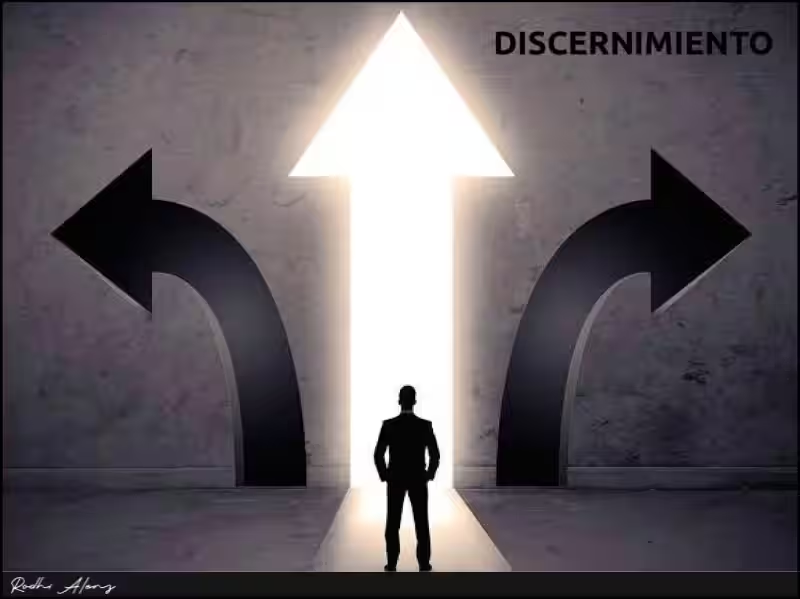
In the tapestry of human experience, few threads are as intricate and as deeply woven as our relationship with the divine. Whether we find ourselves drawn to ancient traditions, contemporary spiritual movements, or a personal, unaligned quest for meaning, the journey of faith is rarely a straight or simple path. It’s often a labyrinth of questions, doubts, moments of profound connection, and periods of quiet searching. Within this landscape, the concept of discernimiento emerges not merely as a theological term, but as a vital, practical tool for navigating the sacred. It is the art of discerning, of perceiving, and of making wise choices in matters of the spirit, allowing us to move forward with greater clarity and conviction on our individual paths.
The word itself, discernimiento, speaks to a careful and thoughtful process. It’s about more than just believing; it’s about understanding why we believe and how those beliefs translate into our lives. This requires an active engagement with our faith, a willingness to look beyond superficial pronouncements and delve into the deeper currents of meaning. Without discernimiento, our faith can become stagnant, a set of inherited doctrines or rituals that, while perhaps comforting, cease to nourish our souls. It’s the difference between passively accepting a truth and actively embracing it, recognizing its resonance within our own lives.
The Inner Compass: Understanding Discernimiento in a Religious Context
At its core, discernimiento in religion is the practice of discovering God’s will or the divine guiding principle in our lives. It’s about listening to the subtle whispers of the sacred, distinguishing them from the loud clamor of our own ego, societal pressures, and external distractions. This isn’t about receiving booming pronouncements from the heavens; rather, it’s about cultivating an inner awareness, a sensitivity to the movements of the spirit within and around us. Think of it as developing a finely tuned spiritual antenna, capable of picking up on signals that might otherwise go unnoticed.
This process often involves looking inward and outward simultaneously. We examine our own desires, motivations, and reactions, discerning what aligns with the values of our faith and what leads us astray. Simultaneously, we consider the external signs and circumstances, seeking to understand how they might be pointing us in a particular direction. It’s a dynamic interplay, a constant dialogue between our inner landscape and the unfolding reality of our lives. This is why discernimiento is so crucial; it empowers us to be active participants in our spiritual journey, rather than passive recipients of spiritual dictates.
Practical Applications of Discernimiento in Daily Religious Life
The practice of discernimiento isn’t confined to moments of major life decisions; it’s a continuous, everyday spiritual discipline. Consider the simple act of choosing how to spend your time. Do you choose to engage in activities that uplift and inspire you, that align with your religious values of compassion and service? Or do you find yourself drawn to distractions that leave you feeling drained and disconnected? Discernimiento helps us to make these choices with intention, recognizing that even the smallest decisions can either draw us closer to or pull us away from our spiritual center.
Another area where discernimiento is invaluable is in interpreting religious teachings. Not all interpretations are created equal, and not all messages, even those delivered in religious settings, are necessarily aligned with divine truth. A mature faith requires the discernment to look critically at what is being taught, to weigh it against scripture, tradition, and the inner voice of conscience. This doesn’t mean becoming cynical or judgmental, but rather developing a discerning mind that can separate the wheat from the chaff, embracing what is nourishing and leaving behind what is not. This ability to discern allows our faith to remain vibrant and relevant, adapting and deepening as we grow.
Discernimiento in Decision-Making: Navigating Ethical Dilemmas and Spiritual Callings
When faced with significant life choices – career paths, relationships, or even where to donate our resources – discernimiento becomes an essential guide. It’s about moving beyond mere logic or personal preference and seeking to understand the deeper calling or purpose at play. This might involve prayer, meditation, seeking counsel from trusted spiritual mentors, and attentively observing the fruits of different potential paths. The goal is to arrive at a decision that not only seems practical but also feels spiritually resonant and aligned with our deepest values.
Imagine a young person feeling called to a ministry that requires significant financial sacrifice. Discernimiento would involve more than just assessing the financial feasibility. It would mean discerning the nature of the calling: Is it ego-driven ambition, or a genuine desire to serve? What are the potential sacrifices, and are they sustainable and aligned with a broader sense of well-being? By engaging in discernimiento, this individual can make a more informed and spiritually grounded decision, rather than impulsively jumping into a situation that might prove detrimental in the long run.
The Role of Community and Counsel in Discernimiento
While discernimiento is an intensely personal journey, it is rarely undertaken in isolation. Our faith traditions often emphasize the importance of community and shared wisdom. Seeking counsel from wise and trusted individuals – spiritual leaders, mentors, or fellow travelers on the faith path – can provide invaluable perspective. These individuals, through their own experiences and understanding, can help us to discern our own blind spots, challenge our assumptions, and offer alternative viewpoints that we might not have considered on our own.
The process of discernimiento can be likened to a group of explorers charting unknown territory. While each explorer has their own compass, discussing their findings and observations with the group helps to create a more accurate map. Similarly, sharing our spiritual experiences and uncertainties with a supportive community allows for collective discernment. This communal aspect doesn’t diminish the individual nature of the journey, but rather enriches it, providing a broader context and a safety net of shared wisdom. Discernment, therefore, thrives in an environment of both personal reflection and communal dialogue.
Cultivating the Art of Discernimiento: A Lifelong Practice
Developing the skill of discernimiento is not a one-time achievement but a lifelong practice. It requires patience, humility, and a consistent commitment to spiritual growth. We must be willing to be wrong, to learn from our mistakes, and to continually refine our ability to perceive the subtle workings of the divine in our lives. This might involve regular practices like journaling, contemplative prayer, engaging with sacred texts, and actively seeking opportunities for service and reflection.
The rewards of cultivating discernimiento are profound. It leads to a deeper, more authentic faith, one that is not easily shaken by doubt or adversity. It empowers us to make choices that are not only good for ourselves but also contribute positively to the world around us. By honing our ability to discern, we move from simply following a path to actively shaping our spiritual journey, guided by an inner wisdom that is increasingly attuned to the divine presence. It is a journey of discernment, where every step taken with intentionality brings us closer to understanding and living out our truest spiritual purpose.
Frequently Asked Questions about Discernment in Religion
What is discernment in a religious context?
Discernment in religion refers to the process of seeking to understand and identify God’s will or guidance in a specific situation, decision, or aspect of life. It involves paying attention to inner promptings, spiritual insights, scripture, community wisdom, and the signs of God’s presence.
How does one practice discernment?
Practicing discernment typically involves prayer, meditation, scripture study, reflection on personal experiences, seeking counsel from trusted spiritual advisors or community members, and observing the outcomes of different paths. It’s a patient and ongoing process, not a one-time event.
What are common tools or methods used for discernment?
Common tools include:
Prayer and Meditation: Quieting the mind to listen for God’s voice.
Scripture Study: Examining religious texts for principles and guidance.
Spiritual Direction: Working with a trained spiritual guide.
Community Input: Discussing decisions with wise and trusted individuals within the religious community.
Journaling: Recording thoughts, feelings, and inspirations to track patterns.
Observing Outcomes: Reflecting on the peace, confusion, or growth that arises from different choices.
Can discernment lead to different conclusions for different people?
Yes. While there are universal principles in many religions, discernment is often a personal journey. God’s will may unfold uniquely for each individual based on their specific circumstances, gifts, and calling. What is discernment for one person might not be for another.
How do I know if I am discerning correctly?
There’s no single checklist, but common indicators of healthy discernment include a sense of peace (though not necessarily ease), clarity, growth in love and virtue, and a deepening relationship with the divine. Conversely, persistent confusion, anxiety, or actions that lead to harm or division might suggest a need to re-examine the discernment process.
Is discernment only for major life decisions?
While crucial for significant choices like vocations or major life changes, discernment can also be applied to everyday decisions. It can help individuals live more intentionally and align their daily actions with their faith values.
What role does the Holy Spirit play in discernment?
In many religious traditions, the Holy Spirit is considered the primary agent of discernment. The belief is that the Spirit guides, illuminates, and prompts individuals towards God’s will, offering wisdom, understanding, and strength.
Can doubt be part of the discernment process?
Yes, doubt can be a natural part of discernment. It can prompt deeper questioning, more thorough reflection, and a more robust seeking of guidance. Healthy doubt, when approached with humility and a desire for truth, can lead to greater clarity.
What if I make a decision that turns out to be wrong?
If a decision, even after discernment, doesn’t lead to the expected outcome, it doesn’t necessarily mean the discernment was flawed. Sometimes, “wrong” turns are opportunities for learning, growth, and redirecting one’s path. It’s an invitation to continue discerning and to trust in God’s redemptive and guiding power.