The Sacred Heart of Faith: What is Corpus Christi?
The feast of Corpus Christi, meaning “Body of Christ” in Latin, is a deeply significant celebration within the Catholic Church. It’s a day dedicated to the real presence of Jesus Christ in the Eucharist, the consecrated bread and wine that Catholics believe become the actual Body and Blood of Christ during Mass. This feast, observed on the Thursday after Trinity Sunday (or the Sunday following in some regions), invites believers to pause and contemplate the profound mystery of Christ’s enduring sacrifice and love. It’s a time for intense devotion and public adoration, a tangible expression of faith in the transformative power of the sacrament.
The origins of Corpus Christi can be traced back to the 13th century, with the mystical visions of Saint Juliana of Cornillon, who felt a strong calling to establish a feast honoring the Eucharist. Her persistence, along with the theological contributions of figures like Saint Thomas Aquinas, who penned beautiful hymns like “O Salutaris Hostia” and “Pange Lingua,” cemented the feast’s place in the liturgical calendar. The celebration is not merely an intellectual assent to doctrine, but a heartfelt embrace of the divine presence among us, a reminder that in the humble elements of bread and wine, we encounter the very source of our salvation. It’s about recognizing that the same Christ who walked the earth, healed the sick, and offered Himself on the cross is made present to us in a unique and intimate way.
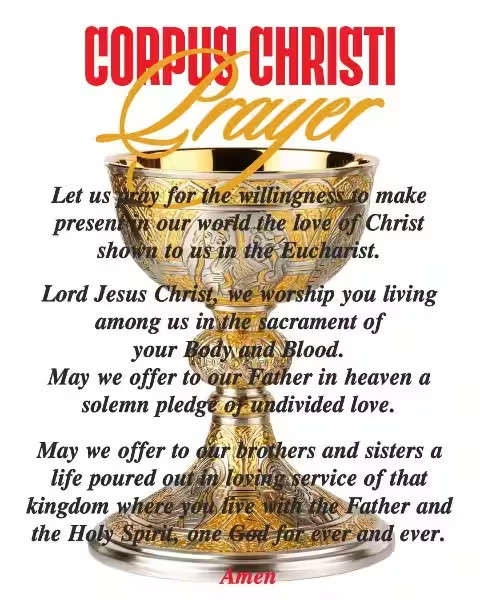
A Prayer for Corpus Christi:
O Sacred Body of Christ, truly present in the Eucharist, we adore You. We give thanks for the boundless love You demonstrate by giving Yourself to us as spiritual nourishment. May our faith in Your real presence deepen, and may we always find solace and strength in Your divine company. Amen.
The Significance of Real Presence
The concept of the real presence is foundational to Catholic belief and central to the Corpus Christi feast. It’s not a symbolic gesture, but a dogma of faith, meaning it’s a truth divinely revealed and to be believed by all Christians. During the consecration at Mass, the words of Jesus, “This is my body… This is my blood of the covenant,” are understood to effect a transubstantiation. This is a complex theological term, but in simple terms, it means that the substance of the bread and wine is changed into the substance of the Body and Blood of Christ, while the outward appearances (accidents) of bread and wine remain.
This belief has profound implications for how Catholics approach the Eucharist. It’s not just a memorial meal; it’s a sacrificial offering and a true communion with Christ Himself. The consecrated host is treated with the utmost reverence, kept in the tabernacle for adoration, and carried in processions. For believers, receiving the Eucharist is the peak of Christian worship, a moment of intimate union with God. It’s like meeting a loved one in the most profound way possible, not just remembering their presence, but actually being in their presence, able to communicate and receive their love directly. This encounter nourishes the soul, strengthens faith, and inspires a deeper commitment to living a Christ-like life.
Experiencing Corpus Christi: Devotions and Traditions
The feast of Corpus Christi is often marked by public processions where the consecrated host, enclosed in a monstrance, is carried through the streets. This is a powerful and visible declaration of faith, a public witness to the world of the belief in Christ’s tangible presence. These processions are often accompanied by hymns, prayers, and the recitation of the Rosary, creating an atmosphere of solemnity and joyful celebration. The faithful gather to walk alongside the Blessed Sacrament, offering their prayers and adoration.
Beyond the processions, many churches also host Eucharistic adoration services throughout the day. This is a time for private prayer and reflection, allowing individuals to spend quiet time in the presence of Christ. It’s an opportunity to unburden our hearts, seek guidance, and express our love and gratitude. Imagine sitting in a quiet room with someone you deeply admire and trust; that’s the essence of adoration – a personal encounter with the Divine, bathed in love and peace. Many also find solace in receiving Holy Communion with renewed faith and devotion, recognizing the immense gift it truly is.
A Prayer for Deeper Faith during Corpus Christi:
Lord Jesus, present in the Blessed Sacrament, increase our faith. Help us to truly believe in Your real presence and to approach You with humble hearts. May this feast of Corpus Christi draw us closer to You, filling us with Your grace and transforming us into reflections of Your love. Amen.
The Eucharist: A Source of Grace and Spiritual Sustenance
The Eucharist is more than just a ritual; it is a divine wellspring of grace. Within the Catholic tradition, receiving Holy Communion is understood to impart spiritual nourishment that strengthens the soul, forgives venial sins, and helps believers resist temptation. It’s the “bread of life,” as Jesus Himself declared, essential for our spiritual journey. This sacrament is a tangible means through which Christ bestows His blessings and His very life upon His followers, making us “sharers in the divine nature.”
Think of it like this: when we are physically hungry, we eat food to regain our strength and energy. Similarly, when our souls are weary or in need of strengthening, the Eucharist provides the supernatural nourishment required to sustain our spiritual lives. It’s a constant reminder of Christ’s sacrifice on the cross, a perpetual re-presentation of His salvific act that offers redemption and reconciliation. The very act of receiving the Body and Blood of Christ connects us intimately with His suffering, death, and resurrection, infusing us with His victorious power.
Preparing Your Heart for Encounter
Approaching the Eucharist with a prepared heart is crucial for receiving its full spiritual benefits. This preparation often involves examining one’s conscience to identify any sins that might impede a worthy reception. This is not about earning God’s favor, but about creating an openness to receive His grace. The Church encourages confession for those who have committed serious sins, ensuring that we come to the altar in a state of sanctifying grace. This act of reconciliation clears the spiritual path, allowing the divine light of Christ to shine more brightly within us.
Beyond confession, a prayerful disposition is essential. Spending a few moments in quiet prayer before Mass, reflecting on the mystery of the Eucharist and expressing a desire to encounter Christ, can significantly deepen the experience. It’s about approaching the sacrament with reverence, humility, and a sincere desire for union with Jesus. This mindful preparation transforms the act of receiving Communion from a routine into a profound spiritual encounter, a sacred moment of intimate dialogue with the Savior of the world.
The Transformative Power of the Eucharist
The ultimate goal of partaking in the Eucharist, especially during the feast of Corpus Christi, is transformation. By receiving Christ into ourselves, we are called to become more like Him. This means embodying His love, His compassion, His forgiveness, and His service to others. The grace received from the sacrament empowers us to live out the Gospel message in our daily lives, becoming instruments of God’s peace and love in the world. It’s a divine infusion that fuels our spiritual growth and enables us to bear “good fruit.”
This transformative power is not always immediate or dramatic, but it is consistent and cumulative. Each reception of the Eucharist, approached with faith, chips away at our imperfections and builds up our virtues. It’s like a sculptor gradually shaping a block of stone into a beautiful statue; with each touch, with each act of receiving Christ, we are being molded into a more perfect image of Him. The Eucharist is the divine sculptor’s tool, constantly refining and perfecting us for His glory.
A Prayer for Transformation through the Eucharist:
Divine Savior, nourished by Your sacred Body and Blood, transform us by Your grace. Help us to live lives that are worthy of this incredible gift, reflecting Your love and mercy to all we meet. May our reception of You in the Eucharist be a constant source of holiness and a pathway to eternal life. Amen.
Living the Mystery: Faith in Action
The feast of Corpus Christi is not just a day of celebration and reflection; it’s a call to action. The belief in the real presence of Christ should permeate every aspect of a believer’s life. This means striving to live according to His teachings, serving the poor and marginalized, and actively participating in the life of the Church. Our faith in the Eucharist should inspire us to embody Christ’s love in tangible ways.
Consider the example of the early Christians, who, after partaking in the breaking of bread (a reference to the Eucharist), were known for their charity, fellowship, and dedication to prayer. This is the ideal that Corpus Christi calls us to emulate. It’s about allowing the divine life we receive in the sacrament to flow outwards, impacting our families, our communities, and the wider world. The Eucharist is not meant to be contained within the church walls, but to radiate outwards, transforming individuals and society.
The Eucharist as a unifying force
The Eucharist is also a powerful symbol of unity within the Church. When Catholics from all walks of life gather to receive the Body of Christ, they are united in a profound way, bound together by their shared faith and their participation in this sacred mystery. Despite our differences in background, opinion, or circumstance, we are all brought together at the altar, one in Christ. This unity is a testament to the unifying power of God’s love, made manifest in the Eucharist.
This unifying aspect is especially important in a world often fractured by division. The Mass becomes a sanctuary of communion, a place where barriers are broken down and a shared spiritual identity is forged. This sense of belonging and shared purpose extends beyond the Mass itself, fostering a spirit of solidarity and mutual support among believers. It’s a constant reminder that we are part of something much larger than ourselves, a universal family united by the love of Christ.
Conclusion: Embracing the Gift of the Eucharist
The feast of Corpus Christi offers a precious opportunity to deepen our understanding and appreciation of the profound gift of the Eucharist. It’s a time to marvel at the mystery of Christ’s enduring presence among us, to draw strength from His divine life, and to be inspired to live out our faith with greater fervor. By embracing the Eucharist, we embrace Christ Himself, allowing His love to transform us and empower us to be His witnesses in the world.
May our lives be a continuous act of adoration and thanksgiving for this divine sacrament. Let us carry the grace of Corpus Christi with us, allowing it to guide our actions, strengthen our resolve, and fill our hearts with an abiding love for our Lord, truly present in the Blessed Sacrament. The prayer for Corpus Christi is not just for the feast day, but a constant prayer of our hearts, seeking to live in perpetual communion with Him.
Lord Jesus, we thank You for the gift of Your Body and Blood, truly present in the Eucharist. We are humbled by Your boundless love and the grace You bestow upon us. May we always cherish this sacred mystery and live as worthy recipients of Your divine presence. We ask this in Your most holy name. Amen.
Frequently Asked Questions: Prayer for Corpus Christi
What is Corpus Christi?
Corpus Christi, meaning “Body of Christ” in Latin, is a solemnity in the Catholic Church that celebrates the real presence of the body and blood of Jesus Christ in the Eucharist. It is observed on the Thursday after Trinity Sunday and is a public declaration of faith in the Eucharist.
What is the purpose of praying for Corpus Christi?
Praying for Corpus Christi is an act of devotion and adoration of the Blessed Sacrament. It’s a time to reflect on the sacrifice of Jesus Christ, His presence among us in the Eucharist, and to express gratitude for this gift. Prayers often focus on deepening faith, seeking spiritual nourishment, and acknowledging the transformative power of receiving communion.
What are some common themes in prayers for Corpus Christi?
Common themes include:
Adoration and worship of Jesus Christ in the Eucharist.
Gratitude for the gift of the Sacrament.
Asking for an increase in faith and love towards Christ’s presence.
Praying for spiritual strength and sustenance from the Eucharist.
Reflection on the sacrifice of the Mass and the Paschal Mystery.
Intercession for the Church and the world, drawing strength from Christ’s presence.
Are there specific prayers recommended for Corpus Christi?
While there are no strictly mandated prayers, many Catholics use traditional prayers of adoration like the Adoro Te Devote (Humbly I Adore Thee) attributed to St. Thomas Aquinas. Other common practices include praying the Rosary, the Chaplet of Divine Mercy, or personal prayers of thanksgiving and petition while contemplating the Blessed Sacrament. The Liturgy of the Mass itself, especially the prayers of thanksgiving after communion, are central to Corpus Christi devotion.
Can I pray for Corpus Christi even if I cannot attend Mass?
Yes, absolutely. While attending Mass and receiving Holy Communion is a central aspect of Corpus Christi, you can still engage in prayer and devotion. You can spend time in quiet prayer, meditate on the Eucharist, read scripture passages related to the Last Supper and the Eucharist, or offer spiritual communion. The intention and devotion of your heart are paramount.
What is spiritual communion?
Spiritual communion is a prayerful desire to be united with Jesus Christ in the Eucharist, especially when one is unable to receive sacramental communion. It involves an act of faith, hope, and love, expressing a deep longing to receive Christ spiritually. The formula often includes phrases like, “O Jesus, I believe that You are truly present in the Most Holy Sacrament. I desire to receive You now with the eyes of my soul, and I embrace You with all my heart. I cannot now receive You sacramentally, but I beg You to come into my heart. I will not let myself be separated from You.”