The Heart of the Eucharist: More Than Just Grape Juice
For Catholics worldwide, the celebration of the Mass is the highest form of worship, a spiritual cornerstone of their faith. At the very heart of this profound ritual lies the Eucharist, often referred to as Communion. This sacred mystery, where bread and wine are transformed into the Body and Blood of Christ, is deeply intertwined with the use of sacramental wine in the Catholic Church. It’s a practice steeped in centuries of tradition, theological significance, and a palpable sense of the divine. But for many, the precise role and meaning of this particular wine can be shrouded in a bit of mystery.
Beyond its simple existence as a beverage, sacramental wine carries an immense theological weight. It’s not just any wine; it’s a vital element chosen and consecrated for a singular, holy purpose: to become the precious Blood of Jesus Christ. This transformation, known as transubstantiation, is the central miracle of the Catholic Mass. The wine, therefore, transcends its earthly origins to become a tangible, albeit symbolic, link to the sacrifice and resurrection of Jesus, offering believers a profound connection to their faith.
Historical Roots: From Ancient Practice to Sacred Rite
The use of wine in religious ceremonies is not exclusive to Christianity; it stretches back to ancient civilizations. From the libations offered to gods in pagan rituals to the symbolic use of wine in Jewish Passover Seder, wine has long been associated with sacrifice, covenant, and spiritual communion. The sacramental wine in the Catholic Church draws upon this rich historical tapestry, but it is Christ Himself who imbues it with its ultimate, unique significance.
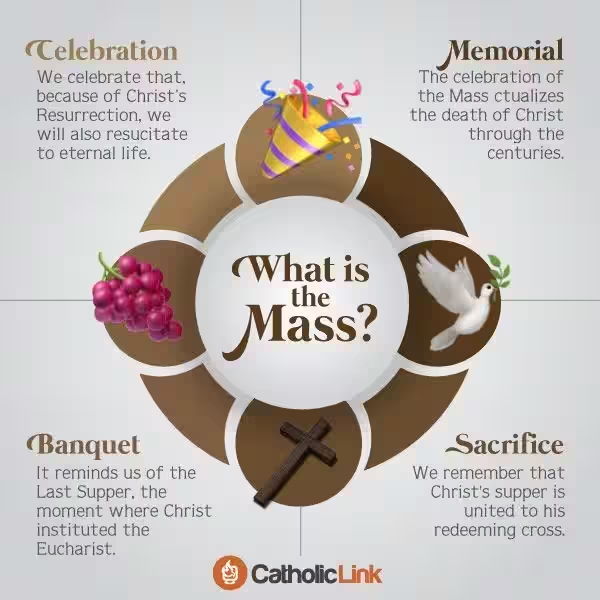
Jesus, during the Last Supper, took a cup of wine and declared, “This is my blood of the covenant, which is poured out for many for the forgiveness of sins” (Matthew 26:28). This pivotal moment, recorded in the Gospels, cemented wine’s role as a sacred element in the Christian tradition. The Catholic Church, adhering to Christ’s command, has faithfully preserved this practice, ensuring that the wine used during the Mass is always a direct continuation of that first, foundational act of divine love and sacrifice.
Theological Significance: The Blood of Christ and Divine Grace
The theological import of sacramental wine in the Catholic Church cannot be overstated. It is believed to be the actual Blood of Christ, poured out for the remission of sins. This belief is not merely symbolic; it is understood to be a real, spiritual presence. When the priest, acting in persona Christi (in the person of Christ), consecrates the wine, it is believed to undergo a miraculous change, becoming the Blood of Christ through the power of the Holy Spirit.
Receiving the consecrated wine, or the Blood of Christ, is seen as a profound act of receiving divine grace. This grace nourishes the soul, strengthens faith, and fosters a deeper union with Christ and the Church. It’s a spiritual sustenance that goes far beyond physical nourishment, offering solace, forgiveness, and the promise of eternal life. The very act of drinking the sacramental wine is an embrace of God’s love and a participation in the ongoing redemptive work of Christ.
Theological Underpinnings: Transubstantiation and Real Presence
Central to understanding the significance of sacramental wine in the Catholic Church is the doctrine of transubstantiation. This complex theological concept explains that during the consecration, the entire substance of the bread and wine is changed into the Body and Blood of Christ, while their outward accidents (appearance, taste, smell) remain the same. It’s a mystery that requires faith to grasp, but it’s the bedrock of Catholic belief regarding the Eucharist.
The concept of the “Real Presence” is intrinsically linked to transubstantiation. Catholics believe that Christ is truly, substantially, and continuously present in the consecrated elements of bread and wine. This isn’t a mere commemoration or a symbolic representation; it is the living, Risen Christ Himself, made present for believers to encounter and receive. The wine, therefore, is not just a reminder of Christ’s sacrifice; it is a vessel through which His very lifeblood is offered to us.
Practical Considerations: What Kind of Wine is Used?
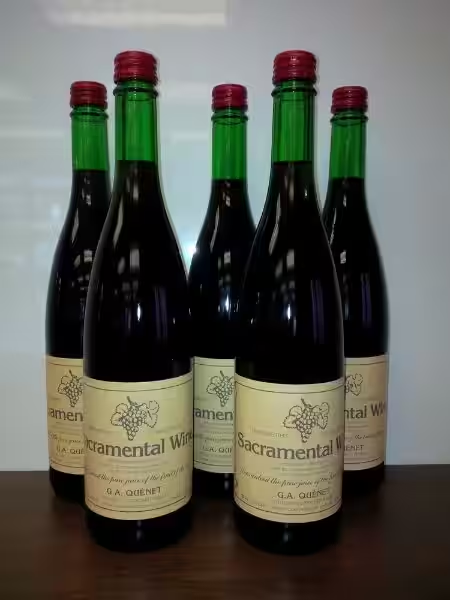
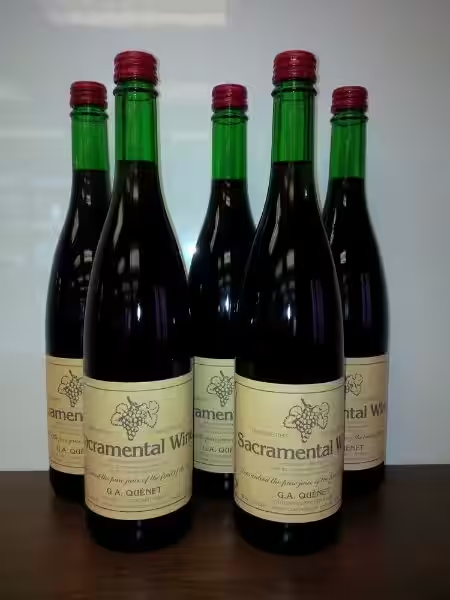
When we speak of sacramental wine in the Catholic Church, a common and practical question arises: what type of wine is actually used? The Church has specific guidelines to ensure the integrity of the sacrament. Canon Law dictates that the wine must be made from grapes, be natural, and not spoiled. This ensures that the wine is pure and unadulterated, fitting for its sacred purpose.
Historically, red wine has been the preferred choice for sacramental use. This is largely due to its symbolic association with blood, a powerful visual reminder of Christ’s sacrifice on the cross. While white wine can be used in certain circumstances by special indult from a bishop, red wine remains the norm and is universally recognized for its profound symbolic connection to the Blood of Christ. The use of a pure, grape-based wine is paramount, as any additives or artificial ingredients would compromise its suitability for consecration.
The Role of Alcohol: Essential for Consecration
A crucial aspect of sacramental wine in the Catholic Church is the presence of alcohol. The Church’s guidelines specify that the wine must be fermented, meaning it must contain alcohol. This is not simply a matter of preference or tradition; it is a theological requirement rooted in the nature of wine as understood by Christ at the Last Supper and throughout history. Alcohol is an essential component of wine that signifies its maturity and transformation.
The presence of alcohol is considered integral to the wine’s ability to undergo consecration. While modern scientific understanding of fermentation is more advanced, the Church’s teaching is rooted in a long-standing understanding of what constitutes “wine” in a sacramental context. This is why, for example, grape juice, while a healthy alternative, cannot be used for the consecration of the Eucharist, as it has not undergone the necessary fermentation process to be considered true wine. This distinction is vital for preserving the integrity of the sacrament.
Beyond the Mass: Special Circumstances and Considerations
While the primary use of sacramental wine in the Catholic Church is during Mass, there are other special circumstances and considerations. For instance, when distributing Holy Communion under both species (bread and wine), the wine is offered to the faithful. This practice, which has seen a resurgence in recent decades, allows for a fuller participation in the Eucharist, as envisioned by Christ.
There are also situations where individuals might be unable to consume the wine directly. In such cases, the Church has provisions to ensure that everyone can receive the sacrament fully. For example, a person might receive the Body of Christ and then dip the consecrated host into the chalice, or receive only the Blood of Christ if they are unable to receive the Body. The unwavering focus remains on ensuring that all who wish to partake in this sacred mystery can do so with dignity and devotion.
Intinction and Alternative Forms of Reception
One common method of receiving the Blood of Christ when both species are offered is through intinction. This involves the priest dipping the consecrated host into the sacramental wine in the Catholic Church before giving it to the communicant. This practice allows the faithful to receive both the Body and Blood of Christ in a single gesture, simplifying the process while still honoring the sacrament.
For those who may have health concerns or simply a preference for receiving only one species, the Church respects these choices. Many Catholics may choose to receive only the consecrated host (the Body of Christ), while others may prefer to receive only the consecrated wine (the Blood of Christ). The essential point is that receiving either the Body or the Blood of Christ, under the guidance of the Church, is considered receiving Christ fully. The intention and faith of the recipient are paramount in their reception of this profound sacrament.
A Spiritual Nourishment for the Faithful
Ultimately, the sacramental wine in the Catholic Church is far more than just a religious beverage. It is a profound symbol, a sacred element, and a tangible conduit of divine grace. It represents the very lifeblood of Christ, offered freely for the salvation of humanity. From its ancient roots to its theological intricacies, the wine used in the Eucharist plays an indispensable role in the spiritual lives of Catholics.
The sip of consecrated wine is an invitation to deeper faith, a reminder of God’s boundless love, and a participation in the ongoing work of redemption. It is a moment of intimate communion with Jesus Christ Himself, a time to be nourished, strengthened, and transformed by His divine presence. The reverence and care with which this sacred element is treated underscore its immense importance in the Catholic journey of faith.
Frequently Asked Questions about Sacramental Wine in the Catholic Church
What is sacramental wine?
Sacramental wine, also known as altar wine or communion wine, is wine specifically designated and consecrated for use in the celebration of the Eucharist (Holy Communion) in the Catholic Church.
According to the Code of Canon Law, the wine used for the Eucharist must be “natural wine.” This means it should be made from grapes, be free from foreign substances, and not have been spoiled. While traditionally red wine is used, white wine is also permissible if it meets these requirements. A small amount of water is always mixed with the wine by the priest during the liturgy.
Why is wine used in the Eucharist?
The use of wine in the Eucharist is rooted in the Last Supper, where Jesus instituted the sacrament and declared that the wine was His blood, which would be shed for the forgiveness of sins. The Church continues this practice as a direct command and memorial of Christ’s sacrifice.
Does the wine have to be alcoholic?
Yes, the wine must be alcoholic. The Church teaches that the wine represents the blood of Christ, and tradition and Church law (Canon 924) specify that it must be natural wine. This implies alcoholic wine, as non-alcoholic grape juice would not be considered “wine” in the traditional sense. However, if a priest or minister has a medical condition that prohibits alcohol, a special dispensation may be sought from the local Ordinary (bishop) for the use of wine with very low alcohol content or a specially prepared wine.
Can any wine be used?
No, not just any wine can be used. Sacramental wine must be natural wine made from grapes and free from spoilage or foreign additives. It is typically purchased from suppliers who specialize in producing wine for liturgical use, ensuring it meets the Church’s standards.
What is the significance of the water mixed with the wine?
The mixing of water with the wine (the “infusion”) is a symbolic act with several traditional interpretations. It can represent the blood and water that flowed from Christ’s side on the cross, the union of Christ with His Church (as water symbolizes the people), or the human nature of Christ united with His divine nature.
What happens to the wine after Mass?
Any consecrated wine remaining after Holy Communion is consumed by the priest or other ministers. If an extraordinary amount remains and cannot be consumed, it is poured into the sacrarium, a special drain that leads directly into the earth, symbolizing its return to God.
Are there specific denominations of sacramental wine?
While there are no specific denominations of sacramental wine in the sense of brands, the wine must be “natural wine” as defined by Canon Law. Producers often label their wines as “altar wine” or “sacramental wine” to indicate their suitability for liturgical use.
Can laypeople drink the sacramental wine?
Yes, all baptized Catholics in a state of grace are invited to receive Holy Communion, which includes both the Body and Blood of Christ, represented by the consecrated bread and wine.