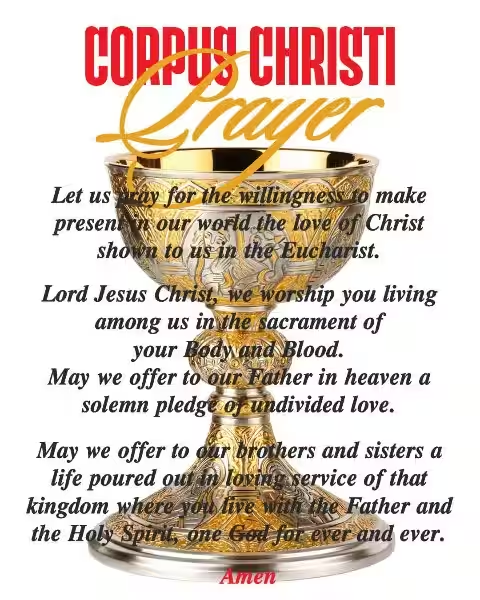
The phrase “Corpus Christi prayer” might evoke images of solemn processions and ancient rites, but its essence lies in a profound and deeply personal encounter with the divine. At its heart, Corpus Christi, meaning “Body of Christ,” signifies the real presence of Jesus Christ in the Eucharist. This belief forms the bedrock of Catholic theology and practice, and the prayers associated with it are not merely recitations, but invitations to a spiritual communion that nourishes the soul and strengthens faith. Understanding the significance of Corpus Christi prayer can unlock a richer, more meaningful spiritual life for believers, fostering a deeper connection with God and a renewed sense of purpose.
This article aims to demystify Corpus Christi prayer, exploring its theological underpinnings, practical applications, and the transformative power it holds. We will delve into the various forms it can take, from the traditional prayers recited during Mass to more personal meditations and eucharistic adoration. By the end, you’ll gain a holistic understanding of how to engage with this powerful devotional practice, making it a vibrant and integral part of your religious journey.
Theological Foundations: Why ‘Corpus Christi Prayer’ Matters
The concept of Corpus Christi prayer is rooted in the teachings of Jesus Christ himself, particularly during the Last Supper. As the Gospels recount, Jesus took bread, broke it, and said, “Take, eat; this is my body.” He then took a cup of wine and said, “This is my blood of the covenant, which is poured out for many for the forgiveness of sins.” These sacred words are the foundation upon which the Catholic understanding of the Eucharist, and by extension, Corpus Christi prayer, is built.
This belief in the transubstantiation – the Catholic doctrine that the bread and wine truly become the actual Body and Blood of Christ while retaining their outward appearance – is central. It’s not a mere symbol; for Catholics, it is Christ himself, truly present. Consequently, any prayer directed towards the Eucharist, or offered in its presence, is a prayer addressed to Jesus Christ in his most intimate sacramental form. This is why Corpus Christi prayer is considered so potent; it’s a direct line to the divine, a way to experience Christ’s love and grace in a tangible, albeit spiritual, way.
The Eucharist as the Source of Divine Grace
The Eucharist is considered the “source and summit” of the Christian life by the Catholic Church. This means that all other sacraments and religious practices flow from and lead back to the Mass and the reception of Holy Communion. When we engage in Corpus Christi prayer, we are acknowledging and participating in this divine wellspring. It’s a conscious act of drawing closer to God, allowing His grace to permeate our lives and transform us.
Think of it like visiting a sacred spring that is known for its healing properties. You wouldn’t just stand by the spring; you would actively drink from it, immerse yourself in it, and allow its power to work within you. Similarly, Corpus Christi prayer is about actively engaging with the real presence of Christ, not just passively observing. This active participation through prayer allows for personal encounters, spiritual nourishment, and a deeper understanding of God’s boundless love.
Meditating on Christ’s Sacrifice and Love
At its core, Corpus Christi prayer is an invitation to meditate on Christ’s sacrificial love. His offering of himself on the cross, and his continuous presence in the Eucharist, is the ultimate act of love for humanity. Prayers associated with Corpus Christi often focus on this profound sacrifice, reflecting on its meaning and how it impacts our lives. This reflection can lead to feelings of gratitude, humility, and a profound desire to live a life worthy of such a gift.
For example, during eucharistic adoration, where the consecrated host is exposed for prayer and contemplation, individuals might meditate on specific aspects of Christ’s passion or his teachings. They might ponder the weight of sin that Christ bore or the depth of his mercy. This focused meditation, often accompanied by reciting specific Corpus Christi prayers or simply remaining in silent contemplation, allows for a personal dialogue with Jesus, fostering a deeper appreciation for his redemptive work.
Forms of Corpus Christi Prayer: Engaging with the Sacred Presence
Corpus Christi prayer is not a monolithic entity; it manifests in a variety of beautiful and meaningful ways, each offering a unique path to encounter Christ. From the solemnity of the Mass to the quiet intimacy of personal prayer, there are numerous avenues to explore and embrace. Understanding these different forms can help individuals tailor their devotional practices to their personal needs and spiritual inclinations.
The beauty of Corpus Christi prayer lies in its adaptability. Whether you are in a bustling church during Mass or seeking quiet reflection in a chapel, the opportunity to connect with the real presence of Christ is always available. These diverse practices are designed to foster a richer spiritual life and to ensure that the transformative power of the Eucharist is accessible to all.
The Liturgy of the Mass: A Communal Encounter
The most common and central expression of Corpus Christi prayer occurs within the celebration of Holy Mass. During this sacred liturgy, the bread and wine are consecrated, becoming the actual Body and Blood of Christ. The prayers recited during Mass, particularly the Eucharistic Prayer, are powerful invocations that acknowledge and celebrate this divine transformation. Communion, the act of receiving the consecrated elements, is the ultimate moment of Corpus Christi prayer, a direct spiritual union with Jesus.
Consider the moment the priest elevates the consecrated host. This gesture, accompanied by words like “Behold the Lamb of God,” is a profound invitation to worship and adoration. The prayers offered by the congregation at this time, and throughout the Mass, are not just words; they are expressions of faith, hope, and love directed towards Christ himself. This communal prayer reinforces the belief that we are united with Christ and with each other in this sacred mystery.
Eucharistic Adoration: Silent Dialogue with the Divine
Beyond the Mass, Eucharistic Adoration offers a dedicated time for personal and communal prayer before the Blessed Sacrament, exposed in a monstrance. This practice allows for extended periods of silent contemplation, personal prayer, and intimate dialogue with Jesus, who is truly present. It’s a time to simply “be” with Christ, to lay our burdens at his feet, and to bask in his divine presence.
During adoration, individuals might recite traditional Corpus Christi prayers like the “O Sacrum Convivium” (O Sacred Banquet) or the “Adoro Te Devote” (I Adore You Devoutly). Alternatively, they can offer spontaneous prayers, pouring out their hearts and minds to Christ. This uninterrupted encounter fosters a deep sense of peace, allows for spiritual healing, and strengthens one’s resolve to live a Christ-centered life. It is a time for unfiltered connection, where words are often secondary to the profound communion of hearts.
Personal Prayer and Meditation: Cultivating Inner Devotion
Corpus Christi prayer is not confined to liturgical settings. Personal prayer and meditation on the Eucharist can be practiced anytime, anywhere. This can involve reflecting on the mysteries of the Eucharist, meditating on scripture passages that speak of Christ’s presence, or simply offering private prayers of thanksgiving and petition to Jesus in the Blessed Sacrament. Even without the physical presence of the consecrated host, the belief in Christ’s ubiquitous presence can inspire profound prayer.
For instance, before starting your day, you might offer a simple prayer like, “Lord Jesus, present in the Eucharist, I offer you this day. May your Body and Blood strengthen and guide me.” Or, during moments of difficulty, you might recall Christ’s promise of his presence and offer a prayer for solace and strength. This consistent internal dialogue, fueled by the understanding of Corpus Christi, keeps Christ at the forefront of your thoughts and intentions, weaving his divine presence into the fabric of your daily life.
Benefits of Engaging in Corpus Christi Prayer: A Transformative Journey
The consistent practice of Corpus Christi prayer offers a multitude of profound benefits, impacting not only one’s spiritual life but also one’s overall well-being. It is a powerful tool for personal growth, fostering virtues and deepening our relationship with God. By actively engaging with the real presence of Christ, individuals can experience tangible transformations in their lives.
These benefits extend beyond mere religious observance; they touch upon emotional, mental, and even physical aspects of our being. The spiritual nourishment derived from such prayer can lead to a greater sense of peace, resilience, and purpose, equipping us to face life’s challenges with renewed strength and faith.
Deepening Faith and Trust in God’s Presence
One of the most significant benefits of Corpus Christi prayer is the deepening of one’s faith and trust in God’s presence. By regularly encountering Christ in the Eucharist, believers develop a more profound understanding that God is not distant or abstract, but intimately present and accessible. This realization can dispel doubts, alleviate anxieties, and foster a sense of unwavering trust.
Imagine a child who knows their parent is always there for them, ready to listen and help. This knowledge provides a sense of security and confidence. Similarly, the consistent practice of Corpus Christi prayer cultivates this childlike trust in God’s ever-present love and support. This unshakeable faith becomes a guiding force, enabling individuals to navigate life’s complexities with greater assurance and peace.
Receiving Spiritual Nourishment and Grace
The Eucharist is often described as spiritual food, and Corpus Christi prayer is the act of consciously partaking in this divine nourishment. Through prayer and communion, believers receive actual grace, which is God’s supernatural assistance that helps us to live in accordance with His will. This grace empowers us to overcome temptations, practice virtues, and grow in holiness.
Think of it like receiving a vital nutrient that your body needs to thrive. Spiritual nourishment from Corpus Christi prayer replenishes our souls, giving us the strength to live out our faith authentically. This influx of grace can manifest in various ways, such as increased patience, greater compassion, and a stronger desire to serve others. It’s a divine infusion that sustains and elevates our spiritual lives.
Cultivating Virtues and a Christ-like Character
Regular engagement with Corpus Christi prayer fosters the development of essential Christian virtues. By meditating on Christ’s perfect example of love, humility, and obedience, individuals are inspired to emulate these qualities in their own lives. This process of spiritual formation helps to cultivate a Christ-like character, transforming us from within.
Consider the process of learning a new skill. The more you practice, the better you become. Similarly, the more we immerse ourselves in Corpus Christi prayer, the more we absorb Christ’s virtues. This leads to tangible changes in our behavior and attitudes, making us more loving, forgiving, and selfless individuals. The ultimate goal is to become living reflections of Christ’s love in the world.
Finding Peace and Solace in Difficult Times
In moments of trial, suffering, or uncertainty, Corpus Christi prayer can be a profound source of peace and solace. Knowing that Jesus is truly present, offering his love and strength, can bring immense comfort and hope. This divine companionship provides an anchor in the storms of life, reminding us that we are never alone.
When facing a difficult situation, it’s natural to feel overwhelmed. However, by turning to Corpus Christi prayer, one can find a sanctuary of peace. The quiet presence of Christ in the Eucharist can calm troubled hearts, soothe anxious minds, and restore a sense of inner tranquility. This spiritual refuge empowers individuals to face challenges with courage and a deep-seated hope, knowing that divine assistance is always available.
Conclusion: Embracing the Grace of Corpus Christi Prayer
The journey of faith is a continuous unfolding, and Corpus Christi prayer offers a profound pathway to deeper spiritual connection. It is an invitation to a sacred encounter, a moment to bask in the transformative presence of Jesus Christ. Whether experienced in the communal setting of Mass, the quiet solitude of adoration, or the intimate space of personal reflection, the essence remains the same: a profound dialogue with the divine.
By embracing the practice of Corpus Christi prayer, individuals embark on a transformative journey. It is a journey that deepens faith, nourishes the soul, cultivates virtues, and provides an unshakeable source of peace. May we all be inspired to greater devotion, recognizing the immense grace and love offered to us in the sacred Body of Christ. Let the words of Corpus Christi prayer be a constant reminder of His enduring presence, guiding and strengthening us in every aspect of our lives.
Frequently Asked Questions about Corpus Christi Prayer
What is the Corpus Christi prayer?
The Corpus Christi prayer is a prayer of devotion to the Real Presence of Jesus Christ in the Eucharist. It typically involves adoration of the Blessed Sacrament and prayers of thanksgiving, petition, and reparation.
What is the significance of Corpus Christi in Catholicism?
Corpus Christi (Latin for “Body of Christ”) is a solemnity in the Catholic Church that celebrates the Real Presence of Jesus Christ in the Eucharist. It emphasizes the belief that the bread and wine consecrated during Mass truly become the Body and Blood of Christ.
How is Corpus Christi prayer observed?
Corpus Christi prayer is often observed through Exposition and Benediction of the Blessed Sacrament, where the consecrated Host is displayed in a monstrance for public adoration. This is accompanied by prayers, hymns, and sometimes a procession.
What are some common prayers associated with Corpus Christi?
Common prayers include the Litany of the Blessed Sacrament, prayers of thanksgiving for the Eucharist, novenas to the Blessed Sacrament, and personal prayers of adoration and devotion to Jesus in the Eucharist.
Can I pray Corpus Christi prayers outside of the liturgical season?
Yes, the devotion to the Real Presence of Christ in the Eucharist is encouraged at any time. While the Solemnity of Corpus Christi is a specific liturgical celebration, prayers of adoration and devotion to the Blessed Sacrament can be offered daily.
What is the theological basis for Corpus Christi prayer?
The theological basis lies in the Catholic doctrine of transubstantiation, which teaches that the substance of the bread and wine is changed into the Body and Blood of Christ while their accidents (appearance, taste, smell) remain. This Real Presence is the object of adoration.
Who can participate in Corpus Christi prayer?
All baptized Christians, particularly Catholics, are invited to participate in Corpus Christi prayer and adoration of the Blessed Sacrament.
What are the benefits of Corpus Christi prayer?
Benefits often cited include deepening one’s faith, fostering a greater love for Jesus in the Eucharist, receiving spiritual graces, and finding peace and solace through union with Christ.