The Feast of Corpus Christi, a solemn and joyous celebration within the Christian calendar, invites us to delve deeper into the profound mystery of the Eucharist. More than just a ritual, the Corpus Christi homily often serves as a beacon, illuminating the transformative power of this sacred meal. It calls us to reflect on the real presence of Christ in the consecrated bread and wine, a cornerstone of our faith that has shaped generations. This feast isn’t merely about historical remembrance; it’s a vibrant invitation to encounter the living God in the most intimate way possible, a spiritual banquet that nourishes our souls and strengthens our connection to one another.
This exploration of the Corpus Christi homily aims to unravel its theological depth and practical relevance for our daily lives. We will move beyond rote recitation and explore the rich symbolism embedded within the Eucharist, considering how the words spoken and the actions performed during Mass translate into tangible spiritual benefits. Understanding the essence of the Corpus Christi homily can transform our participation in the liturgy, making each Mass a more meaningful and life-giving experience. It’s about recognizing that what we receive is not just a symbol, but the very body and blood of Christ, a divine gift offered for our salvation and sanctification.
The Core Message of a Corpus Christi Homily: A Divine Invitation
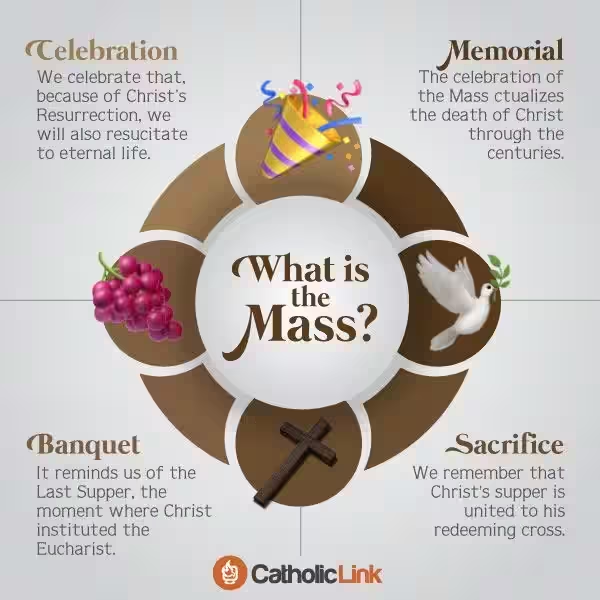
At its heart, any profound Corpus Christi homily centers on the gift of the Eucharist. It’s an invitation, extended by Jesus himself, to partake in his sacrifice and his resurrection. The homily will often begin by recounting the Last Supper, the very moment Jesus instituted this sacred rite. We hear the words, “This is my body… This is my blood…” and the homily unpacks the immense significance of these seemingly simple declarations. It’s not a metaphor, but a divine promise of his abiding presence amongst us, a promise that transcends time and space.
Furthermore, a compelling Corpus Christi homily will emphasize that this isn’t a one-time event, but a continuous offering. Every Mass is a participation in that original sacrifice, a re-presentation of Christ’s love poured out for humanity. The priest, acting in persona Christi, facilitates this profound encounter. The homily helps us grasp that by consuming the Eucharist, we are not just receiving a blessing; we are becoming one with Christ, allowing his grace to permeate our very being. This union is the ultimate purpose of the feast, a mystical communion that empowers us for the journey of faith.
Understanding the Real Presence: More Than Just Bread and Wine
One of the most crucial elements of a Corpus Christi homily is the explanation of the Real Presence. This doctrine, central to Catholic and other Christian traditions, asserts that the bread and wine, through the power of the Holy Spirit and the words of consecration, are truly and substantially changed into the body and blood of Jesus Christ. This isn’t a symbolic representation; it is a miraculous transformation. Think of it like this: a photograph of a loved one evokes memories and feelings, but the actual person brings a tangible presence. The Eucharist is that tangible presence of Christ.
The homily will often use analogies to help us grasp this mystery, acknowledging that human intellect can only go so far. It might speak of the sun’s rays warming our skin – we feel the warmth, but we don’t see the sun’s substance enter us. Similarly, though we consume the physical bread and wine, we are receiving the divine substance of Christ. This profound truth calls for reverence and adoration. It’s why we’re encouraged to approach the altar with humble hearts and why the sacred vessels are treated with such respect, recognizing that they contain the King of Kings.
The Eucharist as Nourishment: Fueling Our Spiritual Journey
A well-crafted Corpus Christi homily will invariably highlight the Eucharist as spiritual nourishment. Jesus himself said, “Whoever eats my flesh and drinks my blood has eternal life, and I will raise them up at the last day” (John 6:54). This isn’t just about satisfying a physical hunger; it’s about feeding our souls for the challenges and joys of life. The Eucharist provides the strength, grace, and divine love we need to overcome temptation, practice virtue, and grow in holiness. It’s the divine sustenance that empowers us to live out our faith in the world.
Consider the analogy of an athlete preparing for a crucial competition. They need proper nutrition to perform at their best. In the same way, as disciples of Christ, we need the Eucharist to be spiritually robust. A Corpus Christi homily often underscores that this sacred meal is not just for the devout or the perfect, but for all who seek to draw closer to God. It’s a banquet for the weary, a source of hope for the disheartened, and a constant reminder of God’s unconditional love and ever-present mercy. Regular reception of this sacred food fortifies us against spiritual weakness and keeps our hearts burning with love for God and neighbor.
Living the Eucharist: From the Altar to Our Everyday Lives
The ultimate aim of a powerful Corpus Christi homily is to inspire us to live the Eucharist beyond the confines of the church building. It’s about taking Christ out into the world with us. The grace we receive at the altar is not meant to remain dormant; it’s meant to transform our actions, our words, and our attitudes. When we receive the Body of Christ, we are called to become the Body of Christ in our communities. This means embodying his love, his compassion, his forgiveness, and his justice in all our dealings.
A practical takeaway from many a Corpus Christi homily is the call to charity and service. If we have truly encountered Christ in the Eucharist, this encounter should compel us to serve the needs of others, especially the poor and marginalized. The bread that nourishes us spiritually should inspire us to share our material blessings and our time with those less fortunate. In essence, the Corpus Christi homily is a perennial reminder that our faith is not meant to be a private affair, but a public witness, a living testament to the transformative power of God’s love, made manifest in the sacred gift of the Eucharist.
Frequently Asked Questions about Corpus Christi Homilies
What is Corpus Christi?
Corpus Christi, which means “Body of Christ” in Latin, is a solemnity in the Catholic Church celebrated on the Thursday after Trinity Sunday. It is a feast day dedicated to the real presence of Jesus Christ in the Eucharist.
A Corpus Christi homily aims to deepen the understanding and appreciation of the Eucharist. It typically explores the theological significance of Christ’s presence in the Blessed Sacrament, its meaning for believers’ lives, and the call to witness to this faith.
What are the key themes usually addressed in a Corpus Christi homily?
Common themes include the institution of the Eucharist at the Last Supper, the Real Presence of Christ (transubstantiation), the Eucharist as a sacrifice and a sacrament, the spiritual nourishment received through communion, and the call to live out the faith in the world as disciples of Christ, inspired by His presence.
How does the Gospel reading influence the homily?
The Gospel readings for Corpus Christi often focus on Jesus’ miracles involving bread (like the feeding of the five thousand) or His discourse on the Bread of Life (John 6). The homily will interpret these readings in light of the Eucharist, showing how Christ’s actions and words prefigure and explain His presence in the Blessed Sacrament.
What is the significance of the procession in Corpus Christi?
The procession, often accompanying the Blessed Sacrament exposed in a monstrance, is a public declaration of faith in Christ’s real presence. The homily might connect the procession to the idea of “carrying Christ into the world” and witnessing to His love and sacrifice.
Can non-Catholics attend a Corpus Christi Mass and homily?
Yes, non-Catholics are welcome to attend Mass and listen to the homily. However, in accordance with Catholic practice, only baptized Catholics who are in a state of grace may receive Holy Communion.
What is the expected takeaway for a parishioner after a Corpus Christi homily?
The homily encourages a renewed sense of awe and reverence for the Eucharist, a deeper commitment to receiving Christ in communion, and a stronger resolve to live out the Gospel message in their daily lives, reflecting Christ’s presence to others.