The vibrant imagery of the Pentecost icon holds a profound place in the heart of Orthodox religion. More than just a beautiful piece of art, it serves as a visual sermon, a tangible reminder of a pivotal moment in Christian history. This icon encapsulates the very essence of the Holy Spirit’s descent upon the Apostles, a transformative event that birthed the Church and empowered its followers. For the Orthodox faithful, the Pentecost icon is not merely decorative; it is a window into divine action, a catalyst for prayer, and a source of spiritual illumination.
The richness of the Pentecost icon lies in its intricate symbolism, a language understood through generations of devotion. Each element, from the colors to the figures, tells a story of God’s presence and the ongoing work of the Holy Spirit in the world. To delve into the Pentecost icon is to engage with a profound theological concept in a deeply accessible and visually compelling way, making the abstract tangible and the divine intimate.
The Divine Infusion: What the Pentecost Icon Depicts
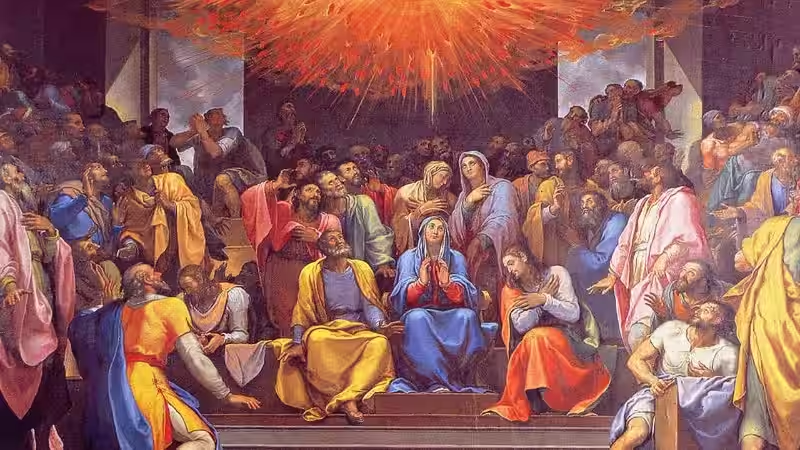
At the core of the Pentecost icon is the depiction of the Apostles gathered together. This isn’t a casual meeting; they are shown united, often in a semicircular arrangement, signifying their shared experience and the burgeoning unity of the nascent Church. Above them, arching over their heads, is a celestial dome, representing the heavens from which the divine power descends. This visual cue immediately directs our attention to the source of the miraculous event: the Holy Spirit.
But the most striking element, and the one that truly defines the Pentecost icon, is the manifestation of the Holy Spirit. It is typically portrayed as a ray of divine light descending from above, or as a fiery, often golden, presence. This fiery aspect is crucial, as it directly references the biblical account of “tongues of fire” resting on each Apostle, signifying the purification, illumination, and empowering nature of the Spirit. The Pentecost icon, therefore, becomes a visual echo of the sound of a rushing wind and the sight of flickering flames that marked the birth of the Church.
The Central Figure: The Mother of God and the Coming of the Spirit
While the Apostles are the direct recipients of the Holy Spirit’s gifts in the Pentecost icon, a central and often overlooked figure is the Mother of God, the Theotokos. She is usually depicted seated, often at the very center of the Apostles’ gathering, or slightly elevated. Her presence here is profoundly significant. In Orthodox theology, she is seen as the first to be filled with the Holy Spirit, even before Pentecost, at the Annunciation. Her inclusion emphasizes the continuity of God’s salvific plan and her role as the vessel through whom humanity received Christ, the very source of the Spirit.
Her serene demeanor in the Pentecost icon suggests her deep communion with the divine. She represents the receptive soul, the embodiment of humility and faith that allows the Holy Spirit to work most powerfully. By placing her at the heart of the scene, the Pentecost icon underscores the idea that the presence of the Theotokos is an integral part of the Church’s spiritual lineage and the ongoing working of the Holy Spirit within it. Her quiet strength anchors the dramatic descent of fire and light.
Unpacking the Symbols: A Deeper Look into the Pentecost Icon
The Pentecost icon is a treasure trove of symbolic meaning, with each element carefully chosen to convey theological truths. The number of Apostles depicted is typically twelve, representing the foundational structure of the Church. Their varied postures and expressions can suggest their individual reception of the Spirit’s gifts, from awe and wonder to fervent prayer. The colors used are also deliberate. Golds and yellows often symbolize divine light and glory, while blues and reds can represent heavenly grace and the burning love of God, respectively.
One of the most fascinating symbolic elements within the Pentecost icon is the figure at the bottom, often a dark-robed, aged individual. This figure is known as “Cosmos” or sometimes “Kosmos,” representing the old world, the realm of darkness and ignorance, before the full revelation of God’s Spirit. His presence signifies the transformative power of Pentecost, the ushering in of a new era where the light of Christ dispels the shadows. He is often shown holding a scroll or a band, representing the limitations of human knowledge without divine inspiration, a stark contrast to the understanding granted by the Holy Spirit illustrated in the Pentecost icon.
The Gifts of the Spirit: Manifestations in the Iconography
The most direct and impactful symbolism of the Pentecost icon relates to the gifts of the Holy Spirit. The tongues of fire are not merely aesthetic; they represent the gift of tongues, allowing the Apostles to preach the Gospel in languages they had never learned, thus enabling the rapid spread of Christianity. This empowering aspect is central to the icon’s message. The Pentecost icon visually asserts that the Church was born with a mission and the divine capacity to fulfill it.
Beyond the miraculous gift of languages, the Pentecost icon implicitly speaks to other spiritual gifts: wisdom, understanding, counsel, fortitude, knowledge, piety, and fear of the Lord, as outlined by the prophet Isaiah. These gifts are not static; they are constantly bestowed by the Holy Spirit upon the faithful. The icon serves as a reminder that the same Spirit that descended with fire and power upon the Apostles is available to all who seek Him, equipping them for lives of faith and service. The Pentecost icon thus becomes a powerful reminder of the Church’s ongoing spiritual vitality.
The Pentecost Icon in Orthodox Worship and Spirituality
Within the context of Orthodox religion, the Pentecost icon is not confined to private devotion. It is a prominent feature of church interiors, particularly in prominent positions on the iconostasis or walls, serving as a constant visual reminder of the Church’s foundational event. During the Feast of Pentecost itself, the icon is often brought out for veneration, and special services are held that retell and re-experience the miracle. The hymns and prayers of the feast often draw directly from the imagery and theological meaning of the Pentecost icon.
The Pentecost icon also plays a crucial role in personal spiritual practice. Many Orthodox Christians keep Pentecost icons in their homes, within their prayer corners. Contemplating the icon can be a powerful form of prayer, allowing the individual to meditate on the presence and work of the Holy Spirit in their own life. It encourages a spirit of receptivity, a desire to be filled with divine grace, and a yearning to live out the transformative power of Pentecost. The Pentecost icon thus bridges the gap between historical event and present spiritual reality.
Living the Spirit: How the Pentecost Icon Inspires Us Today
The message of the Pentecost icon is as relevant today as it was two millennia ago. In a world often characterized by division, confusion, and a lack of spiritual direction, the Pentecost icon offers a powerful reminder of the unifying and illuminating power of the Holy Spirit. It calls us to embrace the gifts of the Spirit, to cultivate a spirit of unity within the Church, and to actively participate in the mission of spreading the Gospel through our words and actions.
The Pentecost icon inspires us to be open to the unexpected workings of God in our lives. Just as the Apostles were transformed by the fiery descent, we too can be empowered by the Holy Spirit to overcome challenges, to love more deeply, and to live lives that bear witness to the transformative power of Christ. The Pentecost icon is not a relic of the past; it is a living testament to the enduring presence of God’s Spirit, a constant invitation to experience His divine infusion. It is a cornerstone of Orthodox religion, offering comfort, guidance, and a profound connection to the divine.
Frequently Asked Questions: The Pentecost Icon in Orthodox Christianity
What is the Pentecost icon?
The Pentecost icon, also known as the Descent of the Holy Spirit icon, is a depiction of the event described in the Book of Acts, chapter 2, where the Holy Spirit descended upon the Apostles in the form of tongues of fire. It is a central and important icon in Orthodox Christianity, commemorating this pivotal moment in the history of the Church.
What are the main elements depicted in the Pentecost icon?
The icon typically features the twelve Apostles seated in a semi-circle, often with the Virgin Mary in the center among them. Above them, descending from the heavens, are rays of light or flames representing the Holy Spirit. Below the Apostles, there is often a figure in a dark robe, representing the cosmos or the world being enlightened by the Spirit.
What does the figure below the Apostles represent?
The figure at the bottom of the icon, often depicted as an aged king or emperor in dark robes, represents the Old Testament or the cosmos before the coming of the Holy Spirit and the full revelation of God’s plan. Sometimes this figure is interpreted as Adam, representing humanity’s fallen state, or as the Roman Emperor, symbolizing the worldly powers. The gifts of the Holy Spirit are then shown as being poured out upon the Apostles, who will then go forth to preach to the world.
What is the symbolic meaning of the flames or tongues of fire?
The flames or tongues of fire symbolize the presence and power of the Holy Spirit. In the biblical account, the Holy Spirit appeared as “tongues of fire” that rested on each of the Apostles, enabling them to speak in different languages and to preach the Gospel. The fire represents purification, illumination, and the burning zeal of the Holy Spirit.
Why is Mary sometimes depicted in the center of the Apostles?
While the biblical account focuses on the Apostles, the inclusion of the Virgin Mary in the center of the Pentecost icon is a significant theological development in Orthodox tradition. Her presence signifies her central role in salvation history and her being the “Throne of God” from whom Christ was incarnate. Her presence among the Apostles also emphasizes her receiving the Holy Spirit along with them, signifying her unity with the Church.
What is the significance of the Apostles being depicted with books or scrolls?
The books or scrolls held by the Apostles represent the teachings of Christ and the Word of God. They symbolize the mission of the Apostles to preach the Gospel and to spread the teachings of Christianity throughout the world, empowered by the Holy Spirit.
What is the color palette used in Pentecost icons and what does it represent?
The colors in Pentecost icons are rich in symbolism. Gold or yellow is often used for the rays of light and the flames, representing divine light, glory, and the presence of God. Blues and reds are common for the garments of the Apostles and Mary, signifying heavenly grace and divine love or sacrifice, respectively. The dark robe of the figure at the bottom can represent the darkness of ignorance or the fallen world.
How is the Pentecost icon used in Orthodox worship and devotion?
The Pentecost icon is venerated in Orthodox churches and homes. It is often displayed prominently during the Feast of Pentecost services. Believers venerate the icon through prayer, kissing, and sometimes by lighting candles before it, meditating on the descent of the Holy Spirit and its ongoing work in the Church and in their lives.
What theological truths does the Pentecost icon convey?
The Pentecost icon conveys several key theological truths: the divinity of the Holy Spirit, the establishment of the Church by the Apostles, the empowering of believers by the Holy Spirit for mission and witness, the universality of the Gospel, and the ongoing presence of the Holy Spirit in the life of the Church.