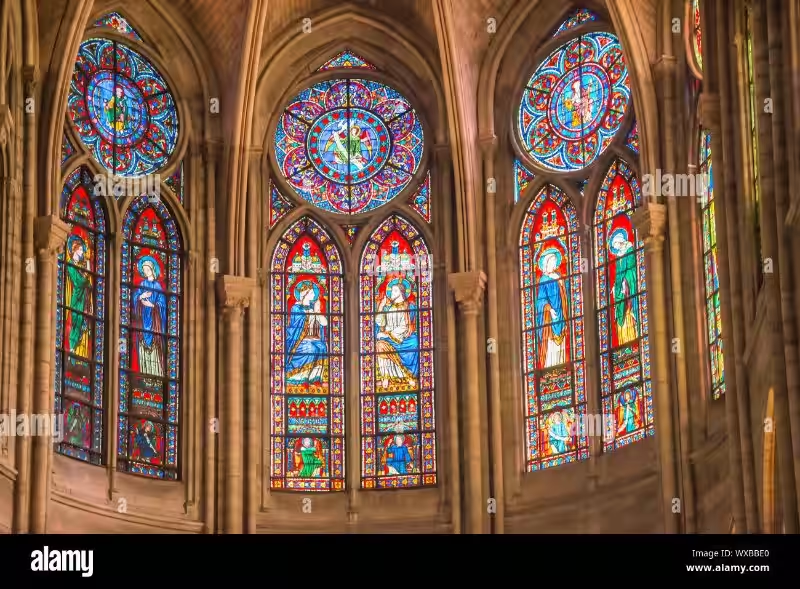
The concept of saints often conjures images of individuals centuries removed, their lives etched in stained glass windows and ancient texts. We picture ascetics in the desert, martyrs facing lions, or mystics receiving divine visions. While these historical figures are undeniably inspirational, the idea of sainthood isn’t solely confined to the past. In our fast-paced, contemporary world, the whispers of holiness are still present, often found in the most unexpected places and in the lives of individuals we might overlook. These are the modern-day saints, people whose lives, though lived amidst the complexities of the 21st century, embody the enduring principles of faith, compassion, and selfless service that have always defined sanctity.
The very definition of a saint has, in many traditions, evolved beyond mere miraculous occurrences or extreme asceticism. It speaks to a profound dedication to God and humanity, a life lived in conscious alignment with spiritual values, and a tangible impact that brings light into the world. These aren’t necessarily individuals seeking public adoration or canonization; rather, they are people who, through their ordinary actions performed with extraordinary love, illuminate what it means to live a truly holy life in our current era. Understanding and recognizing these modern-day saints can offer us profound inspiration and practical guidance for our own spiritual journeys.
Who Are Modern-Day Saints? Defining Holiness in the 21st Century
At its core, a modern-day saint is someone who actively strives to live out their faith not in isolation, but in the messy, vibrant arena of modern life. They are the educators who go the extra mile to nurture a struggling student, the healthcare professionals who offer comfort and dignity to the dying, the volunteers who dedicate their weekends to feeding the hungry, and the parents who patiently guide their children with unwavering love. These individuals demonstrate that holiness isn’t about escaping the world, but about transforming it through acts of radical love and unwavering commitment. Think of the activist who tirelessly champions for justice, the scientist dedicated to finding cures for diseases, or the artist who uses their talents to inspire hope and reflection – these are all potential expressions of modern sanctity.
The key distinction lies in the intentionality and depth of their actions. A modern-day saint isn’t just doing good deeds; they are doing them with a profound sense of purpose, often rooted in a deep spiritual conviction. Their lives are characterized by virtues like patience, humility, perseverance, forgiveness, and compassion, not as abstract ideals, but as lived realities. They face the same challenges as the rest of us – financial worries, interpersonal conflicts, personal doubts – yet they choose to respond with grace and a commitment to something greater than themselves. This resilience in the face of adversity, coupled with a consistent demonstration of love, is what truly sets them apart.
Everyday Virtues: The Foundation of Modern Sanctity
The bedrock of any saintly life, past or present, is the cultivation of fundamental virtues. For modern-day saints, these virtues are not performed in cloistered monasteries but are woven into the fabric of daily interactions. Patience, for instance, is no longer just about enduring long sermons, but about navigating the frustrations of traffic, the demands of a busy workplace, or the challenges of raising a family. It’s the quiet grace of the customer service representative who calmly de-escalates a heated situation, or the parent who chooses a gentle response instead of an angry outburst. These are acts of quiet heroism, demonstrating a profound inner strength cultivated through spiritual discipline.
Furthermore, humility takes on new dimensions in our culture of self-promotion. A modern-day saint might be the colleague who consistently gives credit where it’s due, the leader who prioritizes the needs of their team over their own ambition, or the individual who quietly serves without seeking recognition. This unassuming service is a powerful testament to a spirit unburdened by ego. We also see perseverance in the tireless efforts of those who work to alleviate poverty, combat environmental degradation, or advocate for marginalized communities, often facing setbacks and discouragement but refusing to give up. These everyday virtues, when practiced consistently and with genuine love, form the unseen pillars of modern holiness.
Examples of Modern-Day Saints in Action
When we look around, the evidence of modern-day saints is all around us, often in individuals whose names we may not know but whose impact we can feel. Consider Sister Helen Prejean, a Catholic nun who dedicated her life to ministering to death row inmates. Her work, characterized by profound empathy and a commitment to the inherent dignity of every human being, even those who have committed heinous crimes, exemplifies the transformative power of divine love in action. She doesn’t preach condemnation but offers compassion and a path towards reconciliation, demonstrating that sainthood can be found in the most challenging and often overlooked corners of society.
Another powerful example is Malala Yousafzai, the Pakistani activist for female education and the youngest Nobel Prize laureate. Despite facing extreme violence and threats, she has continued to speak out with courage and unwavering conviction for the right of every girl to learn. Her dedication to justice and her fearless advocacy for a fundamental human right, even at immense personal risk, showcases a modern form of martyrdom and a profound commitment to a cause greater than herself. These individuals, through their lived experiences and their unshakeable faith, offer tangible proof that the spirit of sainthood continues to thrive in our world.
Saints of Service: Transforming Communities Through Love
The spirit of service is a hallmark of many modern-day saints. Think of individuals like Muhammad Yunus, the Nobel Peace Prize winner who pioneered microcredit, empowering millions of impoverished people to lift themselves out of poverty through small loans. His innovative approach, driven by a deep desire to foster economic justice and human dignity, demonstrates how faith and practical action can profoundly transform communities. He didn’t just offer charity; he offered a pathway to self-sufficiency and empowerment, embodying a holistic approach to alleviating suffering.
We also see the spirit of service in the countless unassuming volunteers who dedicate their time and energy to local charities, hospitals, and shelters. They are the ones who deliver meals to the elderly, mentor at-risk youth, or clean up local parks. Their actions, though often unseen by the wider world, are acts of radical love and selfless devotion that build stronger, more compassionate communities. These individuals, often working behind the scenes, are the unsung heroes who embody the practical application of faith in the modern world, proving that holiness is not a distant aspiration but an accessible reality.
The Role of Religion in Cultivating Modern Saints
Religion, in its various forms, provides a crucial framework and spiritual nourishment for the development of modern-day saints. While the outward expressions of faith may adapt to contemporary contexts, the core principles remain constant: love for God and neighbor, the pursuit of truth, and the commitment to ethical living. Religious traditions offer teachings, practices, and communities that can help individuals cultivate the virtues necessary for a saintly life. This includes prayer, meditation, scripture study, and communal worship, all of which can deepen one’s connection to the divine and strengthen their resolve to live a life of purpose.
Moreover, religious communities can serve as vital support systems and incubators for holiness. They offer a space for accountability, encouragement, and shared mission. When individuals are surrounded by others striving for similar goals, they are more likely to remain steadfast in their commitment, even when faced with challenges. The shared rituals and narratives within religious traditions also provide a sense of continuity and tradition, connecting modern aspirants to the long lineage of those who have sought to live a life dedicated to the sacred. This sense of belonging and shared purpose is invaluable in the journey of becoming a modern-day saint.
Finding Your Own Path to Sainthood
The most encouraging aspect of modern-day saints is that their lives are not reserved for a chosen few. The path to holiness is open to everyone, regardless of their background or circumstances. It begins with a conscious decision to align one’s life with spiritual values and to actively seek opportunities for love and service in the world. Start by examining your own life: where can you cultivate more patience? How can you extend greater compassion to those around you? What small acts of service can you incorporate into your daily routine?
The journey of a modern-day saint is not about achieving perfection overnight, but about a continuous process of growth and dedication. It involves embracing imperfections, learning from mistakes, and consistently striving to do better. Small, consistent efforts are often more impactful than grand, sporadic gestures. Whether it’s offering a listening ear to a friend, volunteering at a local shelter, or simply choosing kindness over judgment in your daily interactions, you are already walking the path of holiness. By recognizing and celebrating the modern-day saints among us, we are reminded that sanctity is an ongoing, dynamic process that enriches both our individual lives and the world around us.
Frequently Asked Questions about Modern-Day Saints
Who are considered “modern-day saints”?
The understanding of “modern-day saints” can vary depending on religious tradition. In some Christian denominations, particularly Catholicism and Orthodoxy, it refers to individuals recognized for their exceptional holiness and virtue who lived in more recent history, often within the last few centuries. In other contexts, it might more broadly refer to individuals who embody saintly qualities in their contemporary lives through their faith, actions, and charitable works.
What criteria are used to recognize a modern-day saint?
In traditions with formal canonization processes, such as the Catholic Church, recognized criteria include a life of heroic virtue, often involving the practice of theological and cardinal virtues to a heroic degree. Miracles attributed to their intercession after their death are also a significant factor. For a broader understanding of “modern-day saints,” the criteria often involve living a life deeply committed to their faith, demonstrating profound compassion, acting with integrity, and making significant positive contributions to society or their communities.
Are there saints from all major religions?
The concept of sainthood is most prominent and formally defined within Christianity, particularly in Catholic and Orthodox traditions. However, other religions have figures who are venerated for their spiritual attainment, moral example, and exemplary lives. These might include prophets, enlightened beings, or highly revered spiritual teachers. While the terminology and specific processes may differ, the underlying idea of recognizing individuals who have achieved a high spiritual or moral status is present across various faiths.
How can someone live a “saintly” life today?
Living a “saintly” life today involves cultivating virtues such as love, compassion, forgiveness, humility, and justice. It means striving to live according to one’s religious or spiritual principles, engaging in acts of service and charity, treating others with respect and dignity, and seeking to grow in one’s spiritual understanding and practice. It’s about consistently embodying positive ethical and spiritual values in everyday life.
Do modern-day saints perform miracles?
In religious traditions that believe in divine intervention, miracles are sometimes associated with recognized saints. The process of canonization often requires evidence of miracles attributed to the intercession of the candidate after their death. For individuals who are not formally canonized but are seen as embodying saintly qualities, their impact on others’ lives through inspiration, guidance, or acts of profound kindness can be considered miraculous in a broader sense of transforming lives and circumstances.