In the quiet corners of history, and sometimes in the very fabric of our daily lives, lie hidden artifacts that speak volumes without uttering a sound. These are the message stones, tangible fragments of human experience, hope, and, most profoundly, faith. For millennia, individuals and communities have turned to the enduring nature of stone to preserve their beliefs, transmit sacred knowledge, and offer prayers and intentions to the divine. From ancient petroglyphs etched by early civilizations to modern-day tributes left at sacred sites, these stones serve as poignant messengers of religion, bridging the gap between the earthly and the spiritual.
The power of a message stone lies in its permanence and simplicity. Unlike fleeting spoken words or easily lost manuscripts, a carved stone endures, a silent witness to the generations that have passed. They are physical testaments to the universal human need to connect with something larger than ourselves, to find meaning in the cosmos, and to articulate the profound mysteries of existence. This article will explore the multifaceted role of message stones in religious traditions, examining their historical significance, their diverse forms, and the enduring spiritual resonance they hold for us today.
Long before the advent of written alphabets as we know them, humanity communicated through symbols and images. Message stones were among the earliest canvases for these expressions, particularly when it came to matters of the spirit. Consider the prehistoric cave paintings found etched onto rock faces; many are believed to depict shamanic journeys, mythological narratives, or invocations for fertility and protection – all deeply rooted in early religious thought. These weren’t mere decorations; they were often sacred ritual sites, imbued with spiritual power and intended to communicate with the unseen world.
The act of carving itself often held symbolic meaning. The effort, the precision, and the physical engagement with the stone mirrored the devotion and commitment required for religious practice. Imagine a hunter carefully etching a symbol of a powerful animal spirit onto a rock before a hunt, seeking its favor and protection. Or a community marking a significant celestial event, a cosmic message interpreted through their religious lens, onto a communal stone monument. These early message stones are not just historical curiosities; they are the foundational texts of human spirituality, written not with ink, but with the very earth itself.
As civilizations developed, so did the complexity and purpose of religious message stones. In many ancient cultures, inscriptions on temples, tombs, and monuments served as a form of divine communication and a record of religious doctrine. The Ten Commandments, famously etched onto stone tablets and delivered to Moses, are perhaps one of the most iconic examples of divine message stones in the Abrahamic faiths. These weren’t simply rules; they were the cornerstone of a covenant between God and his people, meant to guide their lives and define their relationship with the sacred.
Beyond grand pronouncements, countless smaller message stones served as personal or communal devotional markers. Think of the Buddhist prayer stones found along pilgrimage routes, often carved with mantras or symbols of enlightenment. Each stone, placed with intention, becomes a silent prayer, an offering of good will, and a reminder of the path to spiritual awakening. Even today, in many traditions, people leave small offering stones at shrines or natural landmarks, inscribing them with prayers or the names of loved ones, turning a simple piece of rock into a potent symbol of their faith and devotion.
Message Stones in the Modern Religious Landscape
While the grand monuments of antiquity might be the most visible, the tradition of using message stones for religious purposes is far from extinct. In fact, it continues to evolve, finding new expressions in the contemporary world. The inherent tactile and enduring nature of stone still appeals to those seeking a more grounded and lasting form of spiritual expression, a counterpoint to the ephemeral nature of digital communication.
The modern era has seen a resurgence of interest in personalizing religious artifacts, and message stones are a perfect fit. From engraved rosaries to custom-made memorial stones bearing scripture, individuals are increasingly seeking ways to imbue their religious objects with personal meaning. This trend reflects a broader desire for authenticity and a deeper connection to one’s spiritual journey, where a simple stone can become a powerful personal testament to belief.
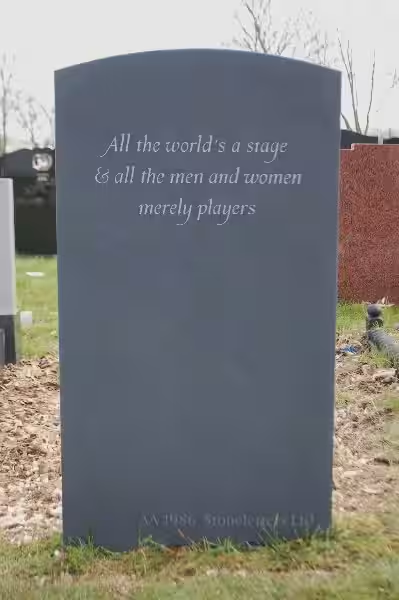
One of the most prevalent contemporary uses of message stones is in the realm of memorialization and remembrance. Families often commission memorial stones for loved ones who have passed, not only to mark their final resting place but also to inscribe comforting scripture, prayers, or messages of enduring love. These stones become silent carriers of comfort and faith, offering solace to the bereaved and serving as a permanent tribute to a life lived.
Furthermore, the practice of leaving prayer stones at sacred sites, pilgrimage destinations, or even natural wonders continues to thrive. Many individuals find profound meaning in this act, viewing it as a tangible way to send their intentions, gratitude, or pleas heavenward. A simple pebble, carefully chosen and perhaps inscribed with a single word like “Hope” or “Peace,” can become a powerful focal point for prayer, a physical anchor for spiritual aspirations. These modern-day message stones, though often humble, carry the same weight of devotion and the same profound human desire to connect with the divine that has characterized this practice for millennia.
The Enduring Appeal of Message Stones in Religion
The enduring appeal of message stones in religious contexts stems from a deep-seated human need for permanence, tangibility, and connection. In a world that often feels fleeting and insubstantial, a stone offers a sense of grounding and continuity. The act of carving or placing a message stone is inherently mindful, a deliberate act of faith that imbues the object with personal significance and spiritual energy.
Whether it’s an ancient inscription on a temple wall or a small painted stone left on a hiking trail, these objects serve as powerful reminders of our shared spiritual heritage. They connect us to those who came before, their hopes, their fears, and their unwavering faith. Message stones are not just inert objects; they are carriers of intention, whispers of devotion, and enduring testaments to the human spirit’s eternal quest for meaning and connection with the divine.
Message stones are small, typically flat stones that have been inscribed with a message, symbol, or design. They are often used as a form of personal expression, remembrance, or as a small gift.
What religions are associated with message stones?
While message stones can be used by people of any faith or no faith, they are sometimes incorporated into spiritual practices. Some individuals may use them to leave prayers or intentions at sacred sites, or to create personal altars. There isn’t a single religion that exclusively uses message stones; their use is more personal and can align with various spiritual beliefs.
Can message stones be used for religious purposes?
Yes, message stones can be used for religious or spiritual purposes. People might inscribe prayers, affirmations, or symbols meaningful to their faith on them. They can be placed in natural settings, used in meditation, or as part of personal devotional practices. The meaning and use are determined by the individual’s beliefs.
Are there specific religious rituals involving message stones?
There are no universally prescribed religious rituals that specifically mandate the use of message stones across major religions. However, individuals and small spiritual communities may develop their own practices that incorporate them, such as leaving them at pilgrimage sites, using them in blessing ceremonies, or as offerings.
Where can I find message stones for religious purposes?
Message stones can be found or created by individuals. You can purchase plain stones from craft stores or collect them from nature. Many people choose to paint or engrave their own messages or symbols that hold religious significance for them.