In the tapestry of religious life, few practices hold as much profound significance as the act of confession. It’s more than just admitting wrongdoing; it’s a sacred dialogue, a pathway to healing, and a cornerstone of spiritual growth within many faith traditions. Understanding how to engage in making a good confession isn’t just about following a ritual; it’s about actively participating in a transformative experience that can renew your spirit, deepen your faith, and restore your relationship with the divine and with yourself. This journey, while sometimes daunting, is ultimately one of liberation and profound peace.
Many of us approach confession with a mixture of trepidation and hope. We might recall childhood memories of rote pronouncements or feel the weight of past indiscretions pressing down. However, the essence of making a good confession lies in its potential to be a deeply personal and meaningful encounter. It’s an opportunity to unburden your soul, to seek forgiveness, and to receive guidance that will help you navigate life’s challenges with greater wisdom and grace. This article will explore the multifaceted nature of confession, offering practical insights and relatable examples to help you embrace this sacred practice.
Understanding the Purpose of Confession in Religious Practice
At its core, confession within religious contexts serves a dual purpose: reconciliation and purification. It’s a recognition that, as human beings, we inevitably stumble. We fall short of the ideals set forth by our faith, we hurt others, and we stray from the path of righteousness. Making a good confession acknowledges these failings not as insurmountable barriers, but as opportunities for divine intervention and personal growth. It’s a testament to the belief that mercy and forgiveness are not finite resources but are abundantly available to those who genuinely seek them.
Think of it like this: imagine a cherished piece of pottery that has chipped or cracked. Simply hiding the damage doesn’t fix it. However, a skilled artisan can carefully mend the pieces, not just restoring the object to its former state, but often adding a unique beauty through the repair. Similarly, making a good confession is the spiritual equivalent of seeking that divine artisan. It’s about presenting the broken pieces of your life – your sins, your regrets, your shortcomings – to a higher power, trusting in its capacity to heal, restore, and even beautify your soul. This process allows for spiritual cleansing and a fresh start, empowering you to move forward with a lighter heart.
The Foundational Elements of a Meaningful Confession
Embarking on the path of making a good confession requires more than just showing up. It involves intentional preparation, sincere repentance, and a firm resolve to change. These are not mere checkboxes; they are the living threads that weave together a truly transformative experience. Without them, confession can feel hollow, a ritual performed without its intended spiritual impact. Cultivating these elements is key to unlocking the profound benefits of this sacred practice.
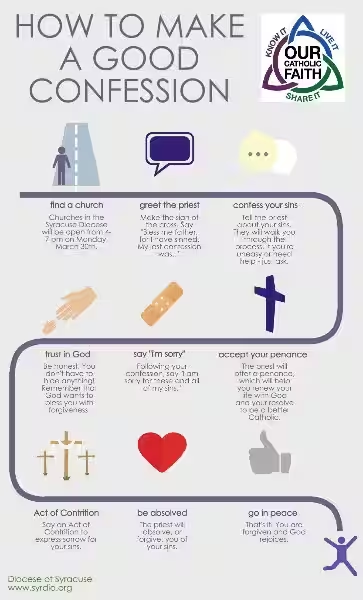
The first crucial element is self-examination. Before you even approach the confessional, you must engage in honest introspection. This means taking time to reflect on your actions, words, and thoughts since your last confession. What did you do that you know was wrong? Where did you fail to live up to your religious ideals? Did you act out of anger, greed, or pride? For instance, if you’ve been tempted to gossip, that’s something to confess. If you’ve neglected your prayer life, that warrants acknowledgment. Making a good confession begins with a clear and unvarnished understanding of where you have fallen short. This isn’t about self-flagellation, but about accurate spiritual accounting.
Preparation is the fertile ground upon which genuine repentance can grow. It involves setting aside distractions and quieting the noise of the world to listen to your inner voice and the promptings of your conscience. Many find it helpful to use a confession guide or to meditate on scripture that speaks to the nature of sin and forgiveness. This initial step is about creating sacred space within yourself, dedicating your attention to the spiritual work at hand. It’s an act of reverence and humility, signaling your readiness to engage with the divine.
Consider preparing as you would before an important meeting with a revered figure. You wouldn’t go unprepared, would you? You might review notes, anticipate questions, and ensure you are presenting yourself appropriately. Similarly, making a good confession benefits from this level of care. This might involve keeping a “sin journal” (a private record of actions you wish to confess) or dedicating time to prayer and contemplation specifically for this purpose. The more thoughtfully you prepare, the more likely you are to approach the act of confession with a clearer conscience and a deeper sense of purpose, ensuring that your confession is not superficial but profoundly impactful. This preparation is about honoring the sacredness of the moment.
Sincere Repentance: The Heartbeat of Confession
Repentance is the emotional and spiritual core of confession. It’s not simply saying “I’m sorry”; it’s a deep, heartfelt sorrow for your sins, coupled with a genuine desire to turn away from them. This isn’t about feeling guilty; it’s about feeling contrite – a profound sadness that your actions have wounded your relationship with God, yourself, and others. Making a good confession is powered by this genuine remorse, this internal shift that recognizes the gravity of sin and longs for its correction.
Imagine you’ve broken a promise to a dear friend. Simply saying “oops” might not be enough. True repentance involves understanding the hurt you’ve caused, feeling the weight of that broken trust, and genuinely regretting your actions. You would want to express that regret sincerely, perhaps even offering to make amends. In confession, this translates to acknowledging the harm your sins have done to the divine order, to your own spiritual well-being, and to the community. It’s about feeling that pang of regret that motivates a desire for change, a true turning of the heart away from sin and towards God.
The Act of Confessing: Honesty and Humility
When you stand in the presence of a spiritual guide, whether in a confessional booth or a designated space, the act of speaking your sins aloud is a crucial step in making a good confession. This involves honesty and humility. It’s about speaking the truth of your actions, without embellishment or downplaying their significance. Humility is vital because it acknowledges your dependence on God’s grace and mercy. It’s about recognizing that you cannot save yourself but are in need of divine assistance.
Think of confessing as being a witness to your own life. A good witness doesn’t omit details or try to paint themselves in a better light; they present the facts as they are. In confession, making a good confession means naming your sins specifically. Instead of saying “I’ve been bad,” it’s more effective to say, “I spoke unkindly about my neighbor” or “I was dishonest in my dealings.” This specific articulation allows for a more focused absolution and provides clearer guidance for future behavior. The act of vulnerability in confessing your sins is itself a powerful step toward healing, as it brings what was hidden into the light of God’s love.
Perhaps the most forward-looking aspect of making a good confession is the resolution to amend. This is not a vague wish for improvement, but a firm commitment to change your behavior. It’s about actively planning how you will avoid future temptations and how you will live a life more in line with your faith’s teachings. This commitment is the practical application of your repentance and the assurance that your confession is not a one-time event but a catalyst for ongoing spiritual transformation.
Imagine you’ve committed to eating healthier. Simply saying “I want to eat healthier” is a start, but it’s the plan of action – like stocking your fridge with fruits and vegetables, or avoiding the bakery aisle – that makes it achievable. Similarly, after confessing, making a good confession involves creating a plan to avoid repeat offenses. This might mean praying for strength when facing a specific temptation, avoiding situations that lead you into sin, or actively seeking out positive influences. This resolution is the promise you make to yourself and to God that you are serious about living a holier life, turning your confession into a lasting change.
The Role of Guidance and Absolution
In many religious traditions, making a good confession involves interaction with a designated spiritual leader, such as a priest or minister. This individual acts as a mediator of God’s mercy. They listen with compassion and non-judgment, offering spiritual counsel and, in many faiths, the sacrament of absolution, which signifies God’s forgiveness. This aspect of confession highlights the communal and relational nature of faith, where we are not alone on our spiritual journey.
The guidance received during confession can be invaluable. A spiritual director can help you identify patterns of sin, offer practical advice for overcoming obstacles, and provide encouragement when you feel discouraged. Absolution, in turn, is a powerful affirmation of God’s unconditional love and boundless forgiveness. It’s the official pronouncement that your sins are forgiven, allowing you to leave the confessional with a renewed sense of peace and spiritual freedom. This interaction underscores that making a good confession is a process that involves both personal responsibility and the grace offered through the Church.
Making Confession a Habit of Spiritual Health
Confession is not a tool to be used only in times of grave crisis. Rather, making a good confession a regular practice can be a cornerstone of ongoing spiritual health and well-being. Just as regular check-ups with a doctor are important for physical health, regular confession can help maintain the spiritual vitality of your soul. It acts as a preventative measure, addressing minor infractions before they become major spiritual ailments.
Consider the analogy of tending a garden. Weeding regularly keeps the garden healthy and prevents invasive plants from choking out the good growth. Similarly, making a good confession regularly helps to weed out sinful tendencies from your life, allowing your spiritual life to flourish. This consistent engagement with the sacrament fosters greater self-awareness, strengthens your resolve to live virtuously, and deepens your connection with the divine. By embracing confession as a habit of spiritual discipline, you cultivate a life of continuous growth, grace, and gratitude.
In conclusion, the journey of making a good confession is a rich and rewarding one. It’s an invitation to unburden yourself, to experience profound forgiveness, and to renew your commitment to living a life of faith. By understanding its purpose, embracing its core elements – preparation, repentance, and resolution – and engaging with the guidance and absolution offered, you can transform confession from a daunting obligation into a sacred encounter that leads to lasting spiritual renewal. May your confessions be always good, bringing you closer to God and to the peace that surpasses all understanding.
Frequently Asked Questions about Making a Good Confession
What is the purpose of Confession?
Confession, also known as the Sacrament of Reconciliation or Penance, is a sacrament in the Catholic Church where individuals confess their sins to a priest and receive absolution, or forgiveness, from God. Its purpose is to restore one’s relationship with God and the Church after sinning.
What are the essential steps for making a good Confession?
A good Confession generally involves examination of conscience, contrition (sorrow for sins), a firm purpose of amendment (the intention to sin no more), confession of sins to a priest, and the reception of absolution and penance.
How do I examine my conscience?
Examining your conscience involves reflecting on your thoughts, words, and actions in light of God’s commandments and Jesus’ teachings. You can use prayer, scripture, or examination of conscience guides to help you identify sins you may have committed.
What if I can’t remember all my sins?
It is not necessary to remember every single sin. The Church teaches that what is important is to confess all mortal sins that you can recall with a sincere effort. If you forget a sin, it is still forgiven if you intended to confess all your sins.
What is contrition?
Contrition is a feeling of sorrow and hatred for sin, and a resolution not to sin again. There are two types: perfect contrition, which arises from love of God, and imperfect contrition, which arises from fear of punishment. Both are sufficient for a valid confession.
What is mortal sin?
A mortal sin is a grave offense against God that destroys charity in the heart of the person and turns them away from God. For a sin to be mortal, it must involve grave matter, full knowledge that the act is sinful, and deliberate consent.
What is venial sin?
A venial sin is a less serious offense against God that weakens but does not destroy charity. While not as grave as mortal sins, venial sins should still be confessed.
Do I have to confess venial sins?
While it is not strictly required for the validity of the sacrament, confessing venial sins is highly recommended. It helps to grow in virtue and strengthens one’s relationship with God.
What should I do if I feel ashamed or embarrassed to confess my sins?
The priest is bound by the seal of confession and cannot reveal anything you say. They are there to offer God’s mercy and guidance, not to judge. Approaching confession with humility and trust in God’s forgiveness can help alleviate these feelings.
What is absolution?
Absolution is the prayer offered by the priest, acting in the person of Christ, which forgives your sins. It is the sign that God, through the ministry of the Church, has reconciled you to Himself.
What is penance?
After absolution, the priest will assign a penance, which is usually a prayer or a good work. This is a way to make amends for the sins committed and to help repair the damage caused by sin.