The hushed reverence of a confessional booth, the quiet murmur of prayers, the weight of unspoken burdens – these are images that often come to mind when we speak of sinful confessions within the realm of religion. This act, deeply embedded in the spiritual practices of many faiths, is far more than a ritualistic recounting of wrongdoing. It’s a profound journey of self-reflection, a plea for divine mercy, and a vital component of spiritual growth. However, the concept of confession, and the very definition of what constitutes a “sinful” act, can be complex and fraught with personal interpretation, extending beyond the strictly religious into the everyday fabric of our lives.
For many, the idea of making sinful confessions can evoke a range of emotions, from shame and fear to relief and catharsis. It speaks to the universal human experience of falling short, of making mistakes, and of grappling with the consequences of our actions. This article will delve into the multifaceted nature of sinful confessions, exploring their religious significance, their psychological impact, and how the principles behind them can resonate even in a secular world.
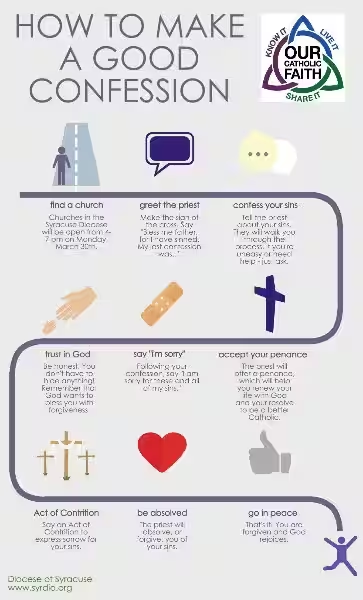
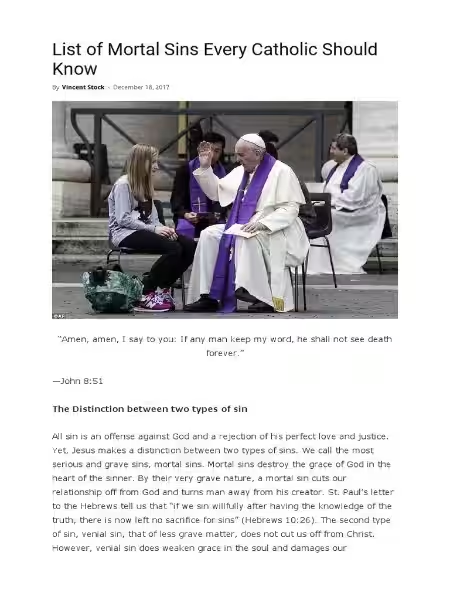
Across various religious traditions, the practice of confession serves a fundamental purpose: the reconciliation between the individual and the divine, and often, between the individual and their community. In Christianity, particularly within the Catholic, Orthodox, and some Anglican traditions, the Sacrament of Penance, or Reconciliation, is a cornerstone for addressing sin. This isn’t merely about confessing to a priest; it’s about acknowledging one’s sinful deeds, seeking forgiveness, and committing to amendment. The priest, acting as an intermediary, represents God’s boundless mercy, offering absolution and spiritual guidance. This structured approach provides a clear pathway for believers to address transgressions, ranging from minor failings to grave offenses.
Consider the simple act of lying. While a small white lie might seem inconsequential in everyday interactions, in a religious context, it can be viewed as a betrayal of truth, a sinful confession that requires acknowledgement. The act of confessing such a transgression, even if it feels small, reinforces the importance of honesty as a divine commandment. Similarly, acts of greed, anger, or envy, when acknowledged and confessed, are seen as opportunities to purify the soul and realign one’s intentions with spiritual ideals. The act of confession, therefore, is a proactive engagement with one’s spiritual health, an ongoing dialogue with the sacred to maintain a clear conscience and a closer relationship with God.
The concept of “sin” itself can be a point of contention and varying interpretation. While often understood as any transgression of divine law or moral principle, a deeper understanding reveals that sinful confessions often stem from a recognition of a broken connection – a disconnect from God, from one’s true self, or from others. It’s not just about the act itself, but the underlying intention, attitude, and the impact it has. For instance, a person might be tempted to indulge in gluttony, not just out of hunger, but out of a deeper emotional void or a desire for comfort. Confessing this sinful indulgence involves understanding the root cause, not just the outward manifestation.
Many religions emphasize that sin is not merely a list of forbidden actions but a state of being, a deviation from a path of love, compassion, and righteousness. The act of making sinful confessions is, therefore, an acknowledgment of this deviation and a desire to return to that path. It’s about recognizing our inherent fallibility and actively seeking to rectify our errors. This can involve a spectrum of actions: from confessing a moment of impatience with a loved one to admitting to a more serious act of betrayal. The core principle remains the same: an honest assessment of one’s actions and a sincere desire for atonement and spiritual cleansing.
The Personal and the Profound: Confession Beyond the Pew
While religious institutions provide a formal framework for sinful confessions, the underlying principles of acknowledging wrongdoing, seeking forgiveness, and striving for betterment are universal. In our secular lives, we might not call it “confession,” but we engage in similar processes. Think about the difficult conversations we have with friends or partners after a misunderstanding, where we admit our part in the conflict and ask for their grace. This is a form of personal confession, a recognition of a sinful misstep in our interpersonal relationships.
The act of journaling, of writing down our thoughts and feelings, can also serve as a form of private confession. It allows us to confront our internal struggles, acknowledge our sinful impulses, and gain clarity on our motivations. Similarly, seeking therapy involves openly discussing personal challenges and past mistakes in a safe and confidential environment. While devoid of religious dogma, this process mirrors the cathartic and transformative aspects of religious confession. It’s about confronting our shadows, understanding our patterns, and ultimately, finding a path towards healing and personal growth. The desire to unburden ourselves and to be understood, to have our sinful experiences acknowledged, is a deeply human need.
The ultimate goal of making sinful confessions is not to dwell in guilt, but to facilitate a process of healing and growth. When we confess our sins, we are not just admitting to mistakes; we are actively choosing to learn from them and to become better versions of ourselves. This journey of reconciliation involves several key components:
Acknowledgement: Honestly recognizing the wrongness of our actions, without making excuses.
Remorse: Feeling genuine sorrow for the harm caused, both to ourselves and to others.
Repentance: A sincere commitment to change our behavior and avoid repeating the same mistakes.
Amends: Where possible, making restitution or seeking to repair the damage caused by our actions.
Forgiveness: Both seeking divine forgiveness and, crucially, extending forgiveness to ourselves and to those who may have wronged us.
The process of making sinful confessions can be challenging, demanding vulnerability and courage. However, the rewards are immense. By confronting our failings, we open ourselves to the possibility of divine grace and profound personal transformation. It’s a testament to the resilience of the human spirit, our innate capacity for change, and our enduring quest for redemption. This ongoing dialogue with our conscience, whether guided by religious doctrine or personal ethical frameworks, is the bedrock of a meaningful and virtuous life. Each sinful confession, in its own way, is an act of hope, a step towards a more authentic and spiritually aligned existence.
Frequently Asked Questions about Sinful Confessions and Religion
What is a sinful confession?
A sinful confession, in a religious context, is the act of admitting one’s wrongdoings or sins to a spiritual authority, often a priest or minister, as a way of seeking forgiveness and reconciliation with God or the divine.
Confession is a practice found in several major religions. In Christianity, it is a central sacrament in denominations like Catholicism, Orthodoxy, and Anglicanism. Some Protestant denominations may have forms of confession or accountability to a pastor or congregation. Within Judaism, while not a formal sacrament, practices of repentance and seeking forgiveness are important. In Islam, individuals are encouraged to seek Allah’s forgiveness directly for their sins.
Why is confession important in some religions?
In religions that practice confession, it is often seen as a means to:
* Acknowledge and take responsibility for one’s actions.
* Receive divine forgiveness and absolution.
* Obtain spiritual guidance and counsel to avoid future sin.
* Repair one’s relationship with God and the religious community.
* Promote personal growth and moral development.
What qualifies as a “sinful” act that requires confession?
The definition of a sin varies among religious traditions and denominations. Generally, sins are considered actions, thoughts, or omissions that go against divine law, teachings, or moral principles established by the religion. This can include acts like lying, stealing, harming others, or harboring malicious thoughts. Specific lists of sins are often found in religious texts or teachings.
Is confession a private or public act?
The nature of confession can be private or communal. In many Christian traditions, particularly Catholicism, confession is a private, one-on-one interaction between the penitent and the priest. In other settings, there might be communal prayers of repentance or services where individuals confess sins as part of a larger congregation.
What happens after a confession?
The outcome of a confession typically involves receiving absolution or forgiveness from God through the spiritual leader. The penitent may also be given a penance, such as specific prayers or acts of charity, to perform as a sign of repentance and to help atone for the sin. The goal is spiritual healing and renewed commitment to living according to religious principles.