Religion, a cornerstone of human civilization, offers a rich tapestry of narratives, beliefs, and moral frameworks. For many, these stories are deeply personal, shaping their worldview and guiding their actions. But how do we connect with these ancient texts in a tangible, experiential way? One remarkable avenue is through the Bible tour at the Met Museum. This isn’t simply about looking at old artifacts; it’s about stepping into the very historical and cultural context that birthed some of the world’s most influential religious narratives.
Imagine walking through halls filled with objects that have witnessed centuries of human devotion and intellectual struggle. The Metropolitan Museum of Art, a treasure trove of global art and history, offers a unique lens through which to understand the Bible. The Bible tour at the Met Museum provides an opportunity to see biblical history come alive, not just through written words, but through the very objects that were part of its world. It’s a chance to bridge the gap between abstract faith and concrete reality, making the stories we read feel more immediate and profound.
The Met Museum: A Sanctuary of Sacred Art and History
The Metropolitan Museum of Art is far more than just a collection of beautiful pieces; it’s a vast repository of human endeavor, including a significant section dedicated to religious art and artifacts. For those interested in exploring the historical and cultural underpinnings of the Bible, the Met offers an unparalleled experience. Navigating this immense collection can be daunting, which is precisely why a Bible tour at the Met Museum can be so transformative.
These tours are meticulously curated to guide visitors through specific periods and themes relevant to biblical narratives. You might find yourself standing before ancient Mesopotamian cuneiform tablets that predate the earliest biblical writings, offering a glimpse into the broader cultural landscape from which Abraham and the patriarchs emerged. Or perhaps you’ll encounter Egyptian reliefs depicting pharaohs and their deities, providing context for the Israelites’ sojourn in Egypt, a pivotal event in the Old Testament. The sheer variety of objects, from intricately carved sarcophagi to delicate papyrus fragments, allows for a multi-sensory engagement with the past.
Connecting Faith and Art: Tangible Expressions of Belief
When we think about religion, we often focus on the spiritual and the theological. However, religion has always been intertwined with material culture. The Bible tour at the Met Museum excels at highlighting this connection, showcasing how people throughout history expressed their faith through art, architecture, and everyday objects. This tangible aspect can be incredibly powerful for believers and those curious about religious history alike.
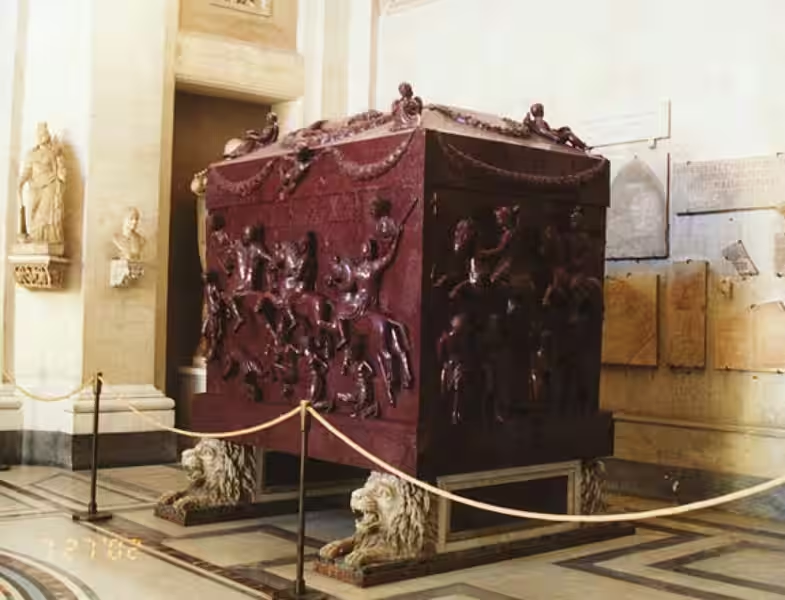
Consider, for example, the early Christian sarcophagi, often adorned with scenes from the Old and New Testaments. These weren’t just burial containers; they were declarations of faith, visual sermons for those who would see them. A Bible tour at the Met Museum might point out the symbolism within these carvings – the story of Jonah being swallowed and regurgitated, a prefiguration of Christ’s resurrection, or the figure of Daniel in the lion’s den, representing deliverance through divine intervention. These objects serve as visual anchors for complex theological concepts, making them more accessible and relatable.
Navigating the Sacred Landscape: What to Expect from a Bible Tour
A well-guided Bible tour at the Met Museum is more than just a walk through galleries; it’s an educational journey that illuminates the historical, cultural, and artistic contexts of the Bible. These tours are often led by experts who can draw connections between seemingly disparate objects, weaving a narrative that enriches the visitor’s understanding of sacred texts. They might focus on specific periods, such as the Hellenistic era when Greek culture influenced the Jewish diaspora, or the Roman period which witnessed the birth of Christianity.
The tour might begin with artifacts from the Ancient Near East, providing a foundational understanding of the world of the early Israelites. You could see artifacts from the Kingdom of Israel and Judah, offering glimpses into their daily lives, religious practices, and political interactions. For instance, a bullae, a small clay seal used for authenticating documents, might be displayed, a reminder of the administrative structures and the importance of written records in ancient societies. Understanding these aspects helps to ground biblical narratives in historical reality, moving them from myth to recorded history.
The Old Testament Unveiled: Echoes of Ancient Worlds
The Old Testament is a vast and complex collection of books, detailing the covenant between God and his people, their journeys, their struggles, and their laws. The Bible tour at the Met Museum offers a unique opportunity to see the material evidence that corroborates and contextualizes these ancient narratives. Imagine standing before Assyrian reliefs depicting military campaigns that might have impacted the northern kingdom of Israel, or Babylonian artifacts that shed light on the period of the Babylonian exile, a significant event in Jewish history.
These tours can illuminate the lives of key figures. You might learn about the archaeological evidence for the existence of King David, or see tools and pottery from the Bronze Age that allow us to visualize the daily lives of the people described in Genesis. The Metropolitan Museum of Art’s collection spans millennia, offering insights into the cultural milieu that shaped the very language and thought processes of the biblical authors. It’s about seeing the world of the prophets, the psalms, and the lawgivers in a tangible way.
The New Testament and Early Christianity: From Humble Beginnings to Global Faith
The transition from the Old Testament to the New Testament marks a pivotal shift in religious history, and the Bible tour at the Met Museum can powerfully illustrate this evolution. The early days of Christianity, often depicted in the Gospels and the Acts of the Apostles, are brought to life through Roman artifacts, early Christian art, and inscriptions. You might see Roman coins from the time of Jesus, bearing the likeness of emperors who ruled during that era, or fragments of early Christian manuscripts that offer insights into the development of the New Testament texts.
The spread of Christianity throughout the Roman Empire is a story of profound cultural and social change, and the Met’s collection provides visual cues to this narrative. Imagine encountering early Christian symbols like the fish (ichthys) or the anchor, used discreetly by believers in a sometimes hostile environment. The Bible tour at the Met Museum can highlight Byzantine mosaics, showcasing the artistic styles that developed as Christianity became the dominant religion of the Roman Empire. This journey through art and artifacts helps to understand the historical roots of a faith that continues to shape the lives of billions.
Beyond the Text: Experiencing the Enduring Legacy of the Bible
Ultimately, a Bible tour at the Met Museum offers a unique and enriching experience that goes far beyond simply reading the text. It allows us to connect with the human stories, the historical contexts, and the artistic expressions that are inextricably linked to the Bible. By engaging with physical objects that have survived centuries, we gain a deeper appreciation for the enduring legacy of these sacred narratives and their profound impact on art, culture, and civilization.
Whether you are a devout believer, a student of history, or simply someone curious about the origins of major world religions, the Bible tour at the Met Museum provides an invaluable opportunity for learning and reflection. It’s a chance to see, touch, and understand the tangible manifestations of faith, transforming abstract concepts into vivid realities. This immersive experience can deepen your understanding and appreciation of the Bible, offering a fresh perspective on stories you may have thought you knew.
Frequently Asked Questions: Bible Tour at The Met Museum
What is the Bible Tour at The Met Museum?
The Bible Tour at The Met Museum is a guided exploration of artworks in its collection that depict or are inspired by stories, figures, and themes from the Hebrew Bible (Old Testament) and the New Testament.
The tour will likely feature a diverse range of art, including paintings, sculptures, illuminated manuscripts, decorative arts, and artifacts that illustrate biblical narratives. These can span various periods and cultures represented in The Met’s vast holdings.
Is the tour religious in nature?
The tour focuses on the historical and cultural context of biblical art, examining how these stories have been interpreted and depicted across different artistic traditions and time periods. While the artworks are religious in subject matter, the tour is an art historical and cultural exploration, not a religious service or sermon.
Who is the tour for?
The tour is open to anyone interested in art, history, and the cultural impact of the Bible, regardless of their religious background or beliefs. It’s suitable for individuals, families, students, and anyone curious about the intersection of art and religious texts.
Do I need to know the Bible well to enjoy the tour?
No, prior knowledge of the Bible is not required. Tour guides are skilled in explaining the relevant biblical narratives and their artistic representations in an accessible way for a general audience.
How long is the Bible Tour?
Tour durations can vary, but typically range from 60 to 90 minutes. It’s advisable to check The Met’s official website for the most current schedule and tour length.
Is there an additional cost for the Bible Tour?
The Bible Tour is often included with museum admission, but it’s important to verify this information on The Met’s website, as special exhibitions or specific tour offerings might have separate ticketing requirements.
How do I find out when the Bible Tours are offered?
Information on tour schedules is usually available on The Metropolitan Museum of Art’s official website under their “Visit” or “Tours” sections. You can also inquire at the museum’s information desk upon arrival.
Can I take the tour in a language other than English?
The availability of tours in languages other than English can vary. Check The Met’s website for the most up-to-date information on language offerings.
Are there any restrictions on photography during the tour?
Photography policies can differ within The Met Museum. Generally, non-flash photography is permitted in many galleries, but it’s always best to follow the instructions of your tour guide and posted museum signage.