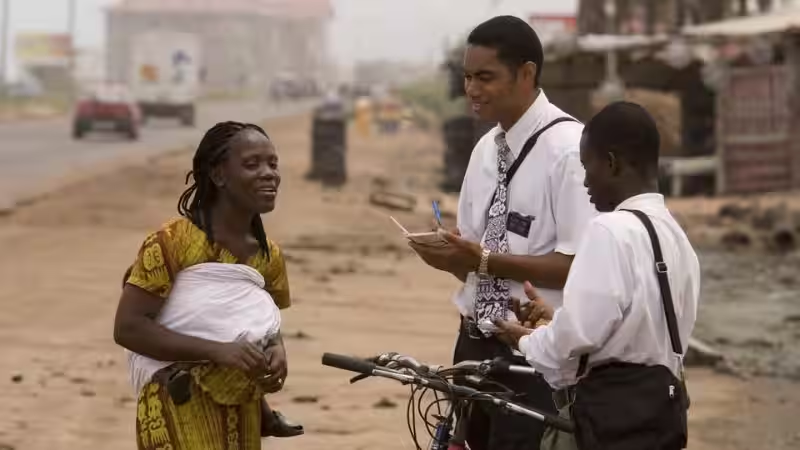
The image of the Catholic missionary often conjures up scenes of distant lands, fervent prayers, and selfless dedication. For centuries, these individuals have been the hands and feet of their faith, venturing beyond familiar borders to share the Gospel and, in doing so, profoundly impacting diverse cultures and communities. This enduring commitment to spreading religious belief, rooted in the core tenets of Catholicism, is far more than just proselytization; it’s a story of faith in action, of humanitarian service, and of a global interconnectedness that continues to resonate today.
The Catholic Church, with its vast and ancient history, has always viewed evangelization as a central mission. From the apostles themselves to the modern-day Catholic missionary, the driving force has been a deep-seated belief in the transformative power of their religion and a mandate to share it with all of humanity. This isn’t about imposing beliefs, but rather about offering a message of hope, love, and salvation, a message that has, throughout history, found fertile ground in the hearts of people from all walks of life and every corner of the globe.
The Heart of the Mission: More Than Just Religious Doctrine
The work of a Catholic missionary extends far beyond the recitation of prayers or the administration of sacraments. While these are undoubtedly vital aspects of their calling, the mission encompasses a much broader spectrum of human need and development. Often, the initial engagement with a community begins with addressing tangible challenges, demonstrating the practical application of their faith through works of charity and compassion.
Consider, for instance, the establishment of hospitals and clinics in remote areas where access to healthcare is virtually nonexistent. A Catholic missionary might be instrumental in setting up these facilities, not only providing medical care but also offering spiritual comfort and solace to the sick and suffering. Similarly, the focus on education has been a cornerstone of missionary efforts. Schools founded by Catholic orders have educated generations, equipping individuals with literacy, critical thinking skills, and a moral compass, thereby fostering socio-economic advancement within their societies.
Education as Liberation: Opening Doors to a Brighter Future
Education, as championed by many Catholic missionary orders, is viewed as a powerful tool for human empowerment. It’s about more than just imparting academic knowledge; it’s about nurturing the whole person, fostering a sense of dignity, and providing the tools necessary to break cycles of poverty and ignorance. These educational institutions often become vibrant centers of community life, promoting cultural exchange and understanding.
The impact of Catholic schools, whether in bustling urban centers or remote rural villages, is undeniable. They have often served as havens for learning, offering opportunities to individuals who might otherwise have been denied them. Think of a young girl in a developing nation, unable to attend school due to societal norms or lack of resources. A Catholic missionary-run school, with its dedicated teachers and welcoming atmosphere, could be the very place that unlocks her potential and paves the way for a life of opportunity and self-determination.
Healthcare as Compassion: Healing Bodies and Souls
The commitment to healing, a core Christian value, is a tangible manifestation of the Catholic missionary‘s dedication. In regions plagued by disease and lacking adequate medical infrastructure, these healthcare initiatives have saved countless lives. The presence of a clinic or hospital, often staffed by dedicated medical professionals who are also driven by their faith, provides not only physical healing but also a source of hope and comfort during times of vulnerability.
The Catholic missionary doctor or nurse, working tirelessly in challenging conditions, embodies the principle of serving the least among us. Their work is a testament to the belief that every human life is precious and deserving of care. Beyond the immediate medical treatment, these encounters often provide opportunities for spiritual guidance and pastoral care, addressing the deeper anxieties and fears that accompany illness and suffering.
Challenges and Triumphs: The Unfolding Narrative of the Catholic Missionary
The path of a Catholic missionary is rarely an easy one. It is often fraught with obstacles, misunderstandings, and even persecution. Yet, the unwavering resolve and profound faith of these individuals have allowed them to overcome immense difficulties and achieve remarkable successes. Their stories are interwoven with the tapestry of global history, reflecting both the complexities of cultural encounters and the enduring power of faith to inspire sacrifice and dedication.
Throughout history, Catholic missionaries have navigated diverse political landscapes, adapted to vastly different cultural norms, and learned numerous languages. This adaptability and respect for local traditions have been crucial to their effectiveness. They have often worked to preserve indigenous cultures while simultaneously introducing new perspectives and opportunities, a delicate balance that requires deep understanding and empathy.
Cultural Encounters: Bridging Divides with Understanding
The interaction between Catholic missionaries and the cultures they encounter is a dynamic and multifaceted process. It requires a profound respect for existing traditions, beliefs, and social structures. Rather than seeking to erase these, the missionary often endeavors to find common ground, to understand the spiritual yearnings of a people, and to present the Gospel within a context that is comprehensible and meaningful.
This can involve learning local languages, participating in community celebrations, and even adapting religious practices to resonate with indigenous customs, while always staying true to the core tenets of Catholicism. For example, a Catholic missionary might work with local artisans to incorporate traditional artistic styles into church architecture, creating sacred spaces that feel both familiar and sacred to the community. This approach fosters a sense of shared ownership and deepens the integration of faith into the fabric of daily life.
Facing Adversity: Resilience in the Face of Hardship
The journey of a Catholic missionary has historically been, and continues to be, one that demands immense courage and resilience. They have faced political instability, natural disasters, and sometimes outright hostility. Yet, their commitment to their calling has often seen them persevere through unimaginable hardships, driven by their belief in the transformative power of their faith and their dedication to serving others.
Think of missionaries who have continued their work in war-torn regions, providing humanitarian aid and spiritual support amidst chaos and destruction. Their presence, often a beacon of hope and stability, demonstrates a profound commitment to humanity that transcends conflict. These acts of bravery and selflessness are powerful testaments to the enduring spirit of the Catholic missionary.
The Modern Missionary: Adapting to a Changing World
The concept of the Catholic missionary has evolved significantly over time. While the traditional image of a lone individual venturing into uncharted territories persists, modern missionary work encompasses a wider array of roles and contexts. Today’s missionaries are often found working within their own countries, addressing social justice issues, promoting interfaith dialogue, and engaging in global solidarity efforts.
The digital age has also opened up new avenues for evangelization and support. Online platforms, social media, and virtual communication tools allow missionaries to connect with a global audience, share their experiences, and inspire others to get involved. This digital mission offers a unique opportunity to reach people who may never have direct contact with a Catholic missionary in person, yet can still be touched by the message of faith and the call to service.
Global Solidarity: A Connected Mission in the 21st Century
In the contemporary world, the Catholic missionary effort is increasingly characterized by a spirit of global solidarity. This means recognizing the interconnectedness of all people and working together across national and cultural boundaries to address shared challenges. Missionaries are often involved in advocating for the poor and marginalized, promoting fair trade practices, and raising awareness about global issues such as climate change and human trafficking.
This collaborative approach involves partnerships between religious orders, dioceses, and lay organizations, pooling resources and expertise to maximize their impact. The Catholic missionary is not just an individual; they are part of a vast network dedicated to building a more just and compassionate world, a world where the principles of their religion are lived out in tangible ways.
Embracing New Technologies: Reaching Hearts in the Digital Age
The 21st century presents both challenges and opportunities for the Catholic missionary. While the core mission remains the same, the methods of engagement are constantly adapting. Digital evangelization has become an increasingly important tool, allowing for the dissemination of religious teachings, the sharing of inspirational stories, and the fostering of online faith communities.
From captivating YouTube channels to interactive social media campaigns, missionaries are finding innovative ways to connect with people of all ages and backgrounds. This tech-savvy approach ensures that the message of faith remains relevant and accessible in an increasingly digitalized world, extending the reach of the Catholic missionary far beyond geographical limitations.
The legacy of the Catholic missionary is a rich and complex one, marked by profound dedication, selfless service, and an unwavering commitment to spreading faith and fostering human development. Their stories, woven into the fabric of global history, continue to inspire and demonstrate the enduring power of religion to shape lives and transform communities for the better. The call to mission, in its many evolving forms, remains a vital and vibrant aspect of the Catholic Church’s identity.
Frequently Asked Questions About Catholic Missionaries and Religion
What is a Catholic missionary?
A Catholic missionary is an individual who, inspired by their faith, dedicates themselves to spreading the teachings of Catholicism and serving communities, often in areas where the Church has a less established presence. They may engage in activities such as evangelization, education, healthcare, social justice work, and pastoral care.
What is the primary goal of Catholic missionary work?
The primary goal is to share the Gospel of Jesus Christ and to help people encounter God. This is often expressed through acts of service and love, aiming to build up the Church and promote human dignity and well-being.
What are some common activities of Catholic missionaries?
Common activities include preaching and teaching about Catholic doctrine, administering sacraments, providing education in schools, offering medical assistance in clinics and hospitals, working with the poor and marginalized, and fostering interfaith dialogue.
Are Catholic missionaries only sent to foreign countries?
Not exclusively. While many missionaries are sent to countries different from their own, missionary work also occurs within a country, in areas with diverse cultural backgrounds or where there is a need for evangelization and support.
What motivates someone to become a Catholic missionary?
The primary motivation is a deep love for God and a desire to share that love with others. This often stems from a personal experience of faith and a calling to serve humanity in a profound way, following the example of Jesus and the Apostles.
How does Catholic missionary work relate to the concept of “religion”?
Catholic missionary work is an outward expression of the Catholic religion. It embodies the core tenets of Catholicism, such as evangelization (the Great Commission), love of neighbor, and the universal call to salvation, actively living out the faith in the world.
What is the Catholic understanding of “religion”?
In Catholicism, religion is understood as the formal observance of, and devotion to, a divine power, particularly God. It encompasses belief, worship, moral conduct, and a commitment to living according to God’s will as revealed through Jesus Christ and the teachings of the Catholic Church. It is seen as a relationship with God and a way of life.
How does missionary work contribute to the broader understanding of religion?
Missionary work demonstrates how religious faith can be a transformative force in individuals’ lives and in societies. It showcases the practical application of religious principles in addressing human needs and promoting spiritual growth, offering a living example of faith in action.