The Maranta leuconeura, affectionately known as the prayer plant, captivates with its velvety leaves that fold upwards each evening, mimicking hands in prayer. This natural wonder, with its intricate patterns and dynamic movement, often finds a place in our homes, not just for its aesthetic appeal but perhaps for its subtle nod to deeper spiritual practices. However, like any living thing, and indeed, like our own spiritual journeys, the prayer plant can encounter its share of difficulties. Understanding these prayer plant problems can be an insightful metaphor for navigating the challenges we face in our own lives and faith.
This article delves into the common ailments and struggles that can befall your prayer plant, drawing parallels to the human experience of spiritual growth. We’ll explore how addressing these issues can not only revive your plant but also offer valuable lessons in patience, observation, and the persistent pursuit of well-being, much like we strive for in our personal spiritual lives. From wilting leaves to pest infestations, each challenge presents an opportunity for learning and renewed care.
Just as we might question our faith during times of hardship, our prayer plants can exhibit distress through physical symptoms. These signs are not arbitrary; they are a communication, a quiet plea for understanding and adjustment. Recognizing these signals is the first step towards fostering a thriving environment for both your plant and your spiritual connection.
When we encounter difficulties, whether it’s a personal crisis or a nagging doubt, we often seek guidance. Similarly, a wilting prayer plant might be signaling a fundamental need that’s not being met. Are its leaves drooping like a discouraged spirit? This could point to underwatering, a common culprit, but also a reminder to check our own spiritual hydration. Are we taking in enough nourishment, be it through scripture, meditation, or community?
Wilting Woes: The Parched Soul and the Thirsty Plant
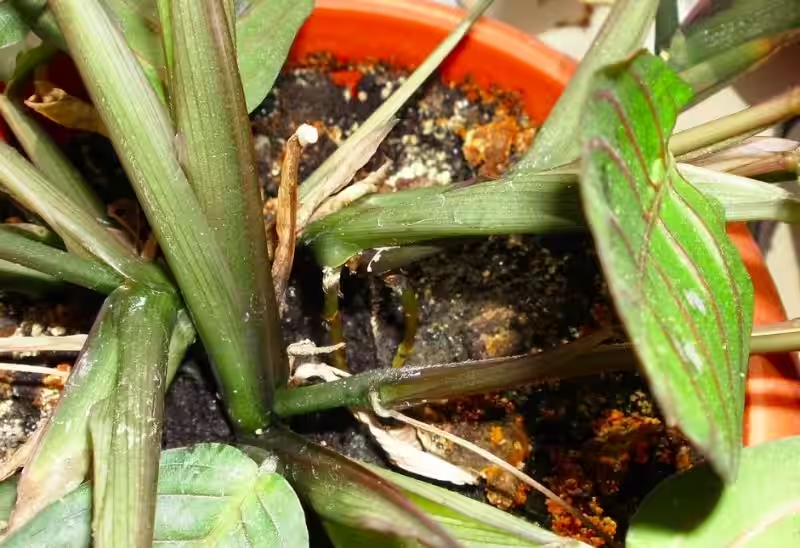
One of the most immediate and disheartening prayer plant problems is wilting. The once vibrant leaves, which elegantly rise and fall with the sun, suddenly droop, lacking their usual turgor. This can feel like a personal failure, a sign that we’re not providing adequate care. It’s a stark visual cue mirroring the feeling of spiritual exhaustion or dryness, where our inner well feels depleted.
The primary cause of wilting in prayer plants is often insufficient watering. When the soil becomes too dry, the plant cannot transport water to its leaves, leading to collapse. This is akin to feeling spiritually depleted; if we neglect our spiritual practices, we can feel a similar sense of wilting, a loss of vitality. It’s crucial to maintain consistent moisture, not waterlogged, but damp to the touch, much like tending to our spiritual discipline with regular, mindful engagement. We must remember that just as a plant needs regular replenishment, our souls benefit from consistent spiritual nourishment.
Crispy Edges: The Scorch Marks of Neglect and External Forces
Another common issue, often appearing as brown, crispy leaf edges, can be a source of frustration. These dry, brittle margins are a tell-tale sign that something is amiss. This can be a powerful metaphor for how external pressures or a lack of nurturing can leave us feeling brittle and worn down, our spirits “scorched” by harsh conditions.
For prayer plants, low humidity is a frequent antagonist leading to crispy edges. These tropical plants thrive in moist air, and dry indoor environments, especially those with heating or air conditioning, can be detrimental. Just as we might seek solace and gentler environments when feeling overwhelmed, our prayer plants crave humidity. We can combat this by misting regularly, placing the plant on a pebble tray filled with water, or grouping it with other plants to create a microclimate. This mirrors the importance of creating supportive spiritual communities and environments that nurture our well-being, shielding us from the “dryness” of a harsh world.
When Unwanted Guests Arrive: Pests and Spiritual Purity
The appearance of tiny, unwelcome visitors can be incredibly disheartening, both in our homes and in our spiritual lives. Pests on a prayer plant are not just an aesthetic nuisance; they are a sign of imbalance and can, if left unchecked, severely damage the plant’s health. This can be a potent reminder of how negative influences or unaddressed “inner pests” – such as doubt, resentment, or fear – can erode our spiritual well-being.
Common culprits include spider mites, mealybugs, and aphids. These tiny creatures feed on the plant’s sap, weakening it and often leaving behind sticky residue or webbing. Their presence is a call to action, demanding immediate attention and a thorough cleansing. Likewise, in our spiritual journeys, we must be vigilant against the “pests” that can infest our hearts and minds. Allowing negativity to fester is like letting aphids multiply unchecked; it weakens our spiritual fortitude.
The Subtle Invasion: Identifying and Eradicating Pests
Identifying pests often requires careful observation, much like discerning subtle spiritual temptations. A close look at the undersides of leaves, stems, and new growth can reveal the tell-tale signs of an infestation. Spider mites leave fine webbing and tiny stippling marks, while mealybugs appear as small, cottony masses, and aphids are tiny, often green or black, clustered insects.
The eradication process for these prayer plant problems typically involves a multi-pronged approach. Firstly, isolating the affected plant prevents further spread. Then, a thorough manual removal with a damp cloth or cotton swab dipped in soapy water can be effective for minor infestations. For more persistent issues, insecticidal soap or neem oil are excellent natural solutions that disrupt the pests’ life cycles. This process mirrors the spiritual task of confession, repentance, and actively seeking to remove negative thought patterns or behaviors. Just as we purify our homes from pests, we must strive for purity of heart and mind.
The Sticky Residue of Sin: Honeydew and Spiritual Clutter
A common byproduct of aphid and mealybug infestations is a sticky substance called honeydew. This sugary excretion not only makes the plant leaves feel unpleasantly tacky but also attracts sooty mold, a black fungal growth that can further inhibit the plant’s ability to photosynthesize. This sticky residue is a vivid analogy for the lingering effects of our missteps and spiritual “clutter.”
The honeydew and subsequent sooty mold are a visual representation of how unaddressed problems can lead to further complications. In our spiritual lives, these might manifest as guilt, shame, or a feeling of being weighed down by past actions. Cleaning the plant regularly with a damp cloth helps remove the honeydew and the mold, allowing the leaves to breathe and regain their luster. Similarly, through acts of service, forgiveness (both given and received), and consistent spiritual discipline, we can cleanse ourselves of the “sticky residue” of our past, allowing for renewed spiritual growth and clarity.
Environmental Imbalances: Seeking Harmony in Our Homes and Hearts
Prayer plants, much like us, are sensitive to their surroundings. An imbalanced environment can lead to a cascade of prayer plant problems, mirroring how discord in our lives can impact our emotional and spiritual well-being. Achieving harmony in our plant’s environment is a testament to our ability to create nurturing spaces, both externally and internally.
The right balance of light, water, and temperature is crucial for a thriving prayer plant. When these elements are askew, the plant will show signs of distress. This is a gentle reminder that we too need a balanced approach to life, ensuring we are not overexposed to harsh “light” (stress) or left in perpetual “darkness” (neglect).
The Light and Shadow Dichotomy: Too Much, Too Little
Prayer plants prefer bright, indirect light. Direct sunlight can scorch their delicate leaves, causing brown patches and fading the vibrant patterns. Conversely, too little light can lead to leggy growth and a lack of vibrant color, hindering their characteristic upward movement at night.
This duality of light exposure offers a profound spiritual parallel. Too much intense “light” – overwhelming pressure, constant demands, or harsh criticism – can “scorch” our spirits, leaving us feeling burnt out and damaged. Conversely, a lack of sufficient “light” – insufficient spiritual reflection, isolation, or a void of positive influence – can lead to a spiritual dormancy, a feeling of being lost or uninspired. Finding the “bright, indirect light” in our lives means cultivating a space for balanced spiritual practice, healthy boundaries, and supportive relationships that illuminate without overwhelming.
Temperature Turmoil: The Chill of Neglect and the Heat of Stress
Prayer plants are sensitive to extreme temperatures. Cold drafts can cause leaf drop and wilting, while excessively hot environments can lead to crispy edges and overall decline. They thrive in consistent, comfortable temperatures, much like we flourish when our emotional and physical environments are stable and nurturing.
The “chill of neglect” can be felt when we are isolated or lack consistent support, leading to a spiritual wilting. Similarly, the “heat of stress” can burn us out, leaving us brittle and unable to function. Maintaining a stable, comfortable temperature for your prayer plant is akin to establishing consistent spiritual routines, practicing self-care, and seeking community to provide warmth and stability. It’s about creating an environment where growth is not threatened by sudden, disruptive changes, allowing for steady, resilient development.
The Art of Observation and the Practice of Patience
Ultimately, addressing prayer plant problems, and indeed, navigating spiritual growth, boils down to two fundamental practices: keen observation and unwavering patience. Just as a gardener learns to read the subtle cues of their plants, we can learn to discern the whispers of our inner selves and the guidance of the divine.
When we notice yellowing leaves, drooping stems, or the tell-tale signs of pests, we are being invited to look closer, to understand the root cause, and to respond with thoughtful action. This is a mirror of our spiritual lives; when we feel a lack of peace or a sense of spiritual stagnation, we are called to pause, to observe our thoughts and feelings, and to seek the underlying reasons. Both require a commitment to looking beyond the surface and tending to the deeper needs.
Seeing the Unseen: The Gardener’s Intuition and the Seeker’s Insight
A seasoned gardener develops an almost intuitive understanding of their plants. They can spot a problem before it becomes severe by noticing subtle changes in leaf color, texture, or growth patterns. This observational skill is paramount to preventing minor issues from escalating into major prayer plant problems.
This parallels the development of spiritual discernment. As we deepen our faith, we learn to recognize the subtle nudges of the Holy Spirit, the quiet voice of conscience, and the patterns of our own hearts. This insightful awareness allows us to address potential conflicts or challenges before they take root and cause significant damage. It’s about cultivating a mindfulness that extends to both our physical surroundings and our inner landscape, fostering a proactive approach to well-being.
The Slow Bloom: Cultivating Faith and Flourishing Plants
Finally, both plant care and spiritual growth demand patience. Plants do not grow overnight, and spiritual maturity is a lifelong journey. Rushing the process, being overly critical, or expecting immediate results can be detrimental to both.
When you’re dealing with prayer plant problems, remember that recovery takes time. Adjusting watering schedules, treating pests, or finding the ideal light conditions won’t yield instant results. You must trust the process and continue with consistent care. In the same way, our spiritual journey is marked by seasons of growth and periods of apparent stillness. Trusting in the divine timing and the unfolding of God’s plan, even when progress seems slow, is a testament to our enduring faith. The most beautiful blooms, both botanical and spiritual, are often the result of consistent, patient dedication.
Frequently Asked Questions: Prayer Plant Problems and Religion
What are common prayer plant problems?
Common prayer plant problems include:
* Yellowing leaves: This can be caused by overwatering, underwatering, or insufficient light.
* Brown, crispy leaf edges: Often a sign of low humidity, underwatering, or water with high mineral content.
* Wilting: Usually indicates watering issues (too much or too little) or temperature stress.
* Pests: Spider mites and mealybugs are common, appearing as webbing or white, cottony masses.
* Leaf spots: Can be fungal or bacterial, often exacerbated by water sitting on leaves and poor air circulation.
How does prayer plant care relate to religious practices or beliefs?
There is no direct or inherent connection between the care of prayer plants (Maranta leuconeura) and any specific religious practices or beliefs. Prayer plants are named for the way their leaves fold upwards at night, resembling praying hands, but this is a botanical observation and not tied to religious doctrine. Their care involves understanding their needs for humidity, light, and water, which are horticultural rather than spiritual considerations.
Can prayer plants be used in religious ceremonies?
No, prayer plants are not traditionally used in religious ceremonies across any major religions. Their name is descriptive of their leaf movement, not indicative of a sacred or ceremonial function.
Are there any spiritual meanings associated with prayer plants in different religions?
While the “praying” aspect of the plant’s name might evoke a spiritual image, there are no widely recognized spiritual meanings or symbolism attributed to prayer plants within established religious traditions. Their significance remains primarily botanical and aesthetic.
How can I ensure my prayer plant thrives, and does this have any metaphorical religious significance?
Ensuring your prayer plant thrives involves providing consistent care:
* Light: Bright, indirect light.
* Watering: Keep soil consistently moist but not waterlogged.
* Humidity: High humidity is essential; misting, a pebble tray, or a humidifier can help.
* Temperature: Average room temperatures, avoiding drafts.
Metaphorically, one might draw parallels between dedicated plant care and religious devotion, such as the patience, consistency, and attention required to nurture something living, reflecting a commitment to growth and well-being. However, this is a personal interpretation rather than a religious tenet.