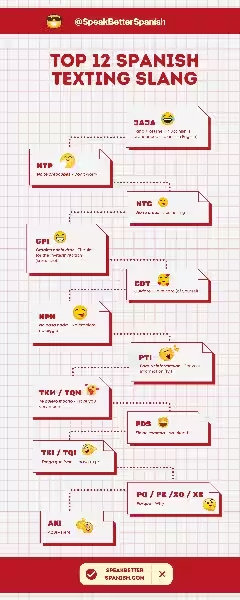
The digital age has revolutionized communication, making instant messages a staple of our daily lives. But when you’re navigating the vibrant world of Spanish speakers, understanding the nuances of asking someone to send you a message is key. So, how do you say text me in Spanish? The most direct and common way is “mándame un mensaje” or the even more casual “mándame un texto.” However, like many aspects of language, the context and the relationship you share with the person can influence the best phrasing. This isn’t just about a simple translation; it’s about connecting with people, and sometimes, that connection can even touch upon deeper, spiritual themes.
Exploring how to say text me in Spanish opens a window into cultural practices, social etiquette, and even how faith intersects with modern communication. Whether you’re sending a quick note about meeting for coffee or sharing a deeply personal reflection, the way you phrase your request can carry subtle but significant meaning. This article will delve into the practicalities of asking someone to text you in Spanish, while also exploring the unexpected ways religion and spirituality can weave into our everyday conversations, even through our phones.
The Everyday Ways to Ask: Practical Spanish Phrases
When you’re looking for the most straightforward way to ask someone to send you a message, the phrase mándame un mensaje reigns supreme. This literally translates to “send me a message” and is universally understood. It’s akin to the English “send me a text” or “message me” and works in almost any informal or semi-formal situation. You might use this with friends, colleagues, or even acquaintances you’re comfortable communicating with via phone.
Another very common and slightly more direct option for how do you say text me in Spanish is mándame un texto. This specifically refers to a text message, often understood as an SMS or instant message. It’s particularly prevalent in regions where “texto” is the common term for a written digital message. For instance, if you’re planning an outing, you might say, “¿Nos vemos esta tarde? Mándame un texto para confirmar.” (Are we meeting this afternoon? Send me a text to confirm.) Remember to use the informal “tú” form (mándame) when speaking to friends or peers. If you need to be more formal, you would use the “usted” form: “mándeme un mensaje.“
Beyond the Literal: Nuances of “Text Me” in Spanish
While mándame un mensaje and mándame un texto are your go-to phrases, the richness of Spanish allows for more colorful and context-dependent ways to convey the same idea. Sometimes, the emphasis isn’t just on receiving a message, but on the anticipation and importance of that communication. For example, you might hear someone say, “Escríbeme cuando puedas.” This means “Write to me when you can,” and it carries a slightly softer, more patient tone than a direct command. It implies you’re open to receiving their message at their convenience.
In some contexts, especially among younger generations or in very informal settings, you might even hear variations like “Pásame tu número y te escribo” which translates to “Give me your number and I’ll write to you,” implying a text or message. The core of how do you say text me in Spanish is about initiating digital contact, and the specific phrasing can subtly shift the feeling of the request. A good rule of thumb is to listen to how native speakers around you communicate and adapt accordingly.
Connecting Through Faith: Spiritual Significance in Communication
In many cultures, including those where Spanish is spoken, religion and spirituality play a profound role in daily life. Our communication, even through digital means, can sometimes reflect these deeply held beliefs. When you ask how do you say text me in Spanish, it’s worth considering how these spiritual undertones might manifest. For instance, a simple request to “text me” can evolve into a deeper plea for connection or support, especially when shared within a religious community.
Imagine a situation where a friend is going through a difficult time. While they might still ask “mándame un mensaje,” the underlying sentiment could be a prayer for comfort and guidance, channeled through a digital request. The act of sending a text message can become a small, modern-day ritual, a way of reaching out for spiritual solidarity. The digital space, though seemingly secular, can become a conduit for faith, prayer, and mutual encouragement. Many religious communities use messaging apps to organize events, share scripture, and offer support to members, making the act of sending a “text me” request a building block of their spiritual fellowship.
Sacred Messages and Divine Guidance in a Digital World
The concept of receiving a message, whether a simple text or a profound spiritual insight, is deeply ingrained in many religious traditions. Throughout history, prophets and believers have sought divine communication. Today, this yearning for connection can find expression even in the seemingly mundane act of asking someone to text you. For example, someone might say, “Mándame un mensaje con tus oraciones” (Send me a message with your prayers). Here, the request to text isn’t just for information; it’s for spiritual support and shared faith.
Religious leaders and congregations often encourage members to stay connected, and messaging is an integral part of this. A pastor might send out a group text with an inspiring verse or a reminder of a prayer meeting. In turn, a member might respond by asking a fellow congregant, “¿Me puedes mandar un mensaje con el versículo de hoy?” (Can you send me a message with today’s verse?). These exchanges, while framed as simple requests to text me in Spanish, become acts of spiritual nourishment and community building. The digital envelope can hold sacred content, fostering a sense of divine presence and connection.
Understanding how do you say text me in Spanish is more than just a linguistic exercise; it’s an opportunity to bridge cultural gaps and appreciate the diverse ways people connect. When you use the correct phrasing, you show respect for the language and the people who speak it. This can lead to more meaningful interactions, whether you’re discussing everyday matters or sharing deeper, more personal sentiments.
Moreover, recognizing the potential spiritual dimensions of communication allows us to approach our interactions with greater empathy and understanding. Even a simple text message can be a gesture of care, support, or shared faith. By learning the nuances of Spanish communication, we open ourselves up to richer relationships and a deeper appreciation for the human experience, in all its forms. So, the next time you need to ask someone to send you a digital note, remember the various ways to say text me in Spanish, and consider the potential for connection that lies within every message.
Frequently Asked Questions
How do you say “text me” in Spanish?
The most common and natural way to say “text me” in Spanish is “mándame un mensaje” or “mándame un texto.” If you want to be more informal, you can also say “mándame un DM” (Direct Message), especially in online contexts.
What are some common religions in Spanish-speaking countries?
The predominant religion in most Spanish-speaking countries is Catholicism, a legacy of Spanish colonization. However, other religions are also present and growing, including Protestantism (various denominations), Islam, Judaism, and indigenous spiritual beliefs. There is also a significant and growing population of non-religious individuals.