Religion is a cornerstone of human experience, shaping our understanding of the world, our purpose within it, and our connection to the divine. For millions, the Tigrinya language serves as a vital conduit for these deeply held beliefs. Understanding Tigrinya translation within a religious context is not merely an academic exercise; it is about unlocking the spiritual heart of a community, ensuring that sacred texts, prayers, and teachings resonate with authenticity and power. This article delves into the multifaceted world of Tigrinya translation in religion, exploring its importance, challenges, and the profound impact it has on the faithful.
The Indispensable Role of Tigrinya Translation in Faith
The word of God, as revealed in scripture, is meant to be accessible. For speakers of Tigrinya, this accessibility hinges entirely on the quality and accuracy of Tigrinya translation. When sacred texts are translated, they become living documents, capable of inspiring, guiding, and comforting individuals. Without precise translation, the nuances of divine messages can be lost, leading to misunderstandings or a diminished spiritual connection. This is particularly true for foundational religious texts, whether they be the Holy Bible, the Quran, or other sacred writings that form the bedrock of faith for Tigrinya speakers.
Consider the profound impact of a well-translated prayer. A prayer in Tigrinya, accurately conveying the intended supplication or praise, can evoke a powerful sense of communion. Conversely, a poorly translated prayer might feel hollow or misdirected, hindering the believer’s ability to connect with the divine. The accuracy of Tigrinya translation in liturgical settings, sermons, and personal devotional practices is therefore paramount. It ensures that the spiritual message is preserved, allowing believers to engage with their faith on a deeply personal and meaningful level, fostering a stronger and more authentic relationship with their beliefs.
Bridging the Gap: From Ancient Texts to Modern Hearts
Many of the world’s most revered religious texts originated in languages far removed from Tigrinya, such as Hebrew, Greek, Aramaic, or Arabic. The journey of these texts into the hands of Tigrinya-speaking communities is a testament to the power and necessity of Tigrinya translation. This process is not simply about swapping words; it involves a deep understanding of both the source language’s cultural and historical context and the target language’s linguistic and cultural sensibilities. A successful translation bridges the temporal and linguistic chasm, making ancient wisdom relevant and understandable to contemporary believers.
The art of religious Tigrinya translation requires a delicate balance. Translators must be linguistically adept, possessing a thorough command of both the original scriptural language and Tigrinya. More importantly, they must be theologically astute, understanding the complex doctrines and spiritual concepts embedded within the texts. For instance, translating the concept of “grace” in a way that accurately reflects its theological weight in Christian theology, or conveying the essence of “submission” (Islam) in a manner that resonates with its Islamic context, requires more than just lexical knowledge. It demands a profound appreciation for the spiritual and philosophical underpinnings of the faith, ensuring that the translated word carries its intended spiritual weight.
The Nuances of Faith: Preserving Meaning in Translation
The complexity of religious language presents unique challenges for Tigrinya translation. Religious texts often employ metaphors, allegories, and symbolic language that may not have direct equivalents in Tigrinya. The translator’s role is to find equivalent expressions that capture the original intent without distorting the spiritual message. This often involves extensive research, consultation with religious scholars, and a deep sensitivity to the cultural nuances of both the source and target audiences.
For example, a biblical parable about a sower and seeds might require careful consideration. A literal translation might not convey the intended meaning of spiritual growth and the varied reception of God’s word. An effective Tigrinya translation would seek to use imagery and concepts that are relatable to the Tigrinya-speaking audience, perhaps drawing parallels to familiar agricultural practices or community life, while still faithfully representing the spiritual lesson. These nuances in translation are crucial for ensuring that the meaning of sacred texts is not diluted, but rather enhanced and made more accessible to the faithful.
Key Religious Texts and Their Tigrinya Translations
The impact of Tigrinya translation is most vividly seen in the availability of major religious scriptures. Numerous religious traditions have invested significant effort in making their foundational texts accessible in Tigrinya, thereby empowering believers to engage directly with divine revelation.
The Holy Bible in Tigrinya: A Foundation of Faith
For the large Christian population that speaks Tigrinya, the Tigrinya translation of the Holy Bible is an indispensable resource. This undertaking has been a long and meticulous process, involving generations of scholars and translators. The availability of the Bible in Tigrinya allows individuals to study scripture, participate in church services with greater understanding, and nurture their personal relationship with God. Different denominations and translations may exist, each striving for accuracy and clarity in conveying the message of salvation.
The impact of the Tigrinya Bible extends beyond mere reading. It informs preaching, theological education, and the daily lives of believers. When a pastor delivers a sermon or a Sunday school teacher explains a passage, they are drawing directly from the Tigrinya translation, ensuring that the spiritual teachings are conveyed with precision. This direct access to scripture fosters a more informed and engaged laity, capable of understanding and articulating their faith.
The Holy Quran in Tigrinya: Guiding Principles for Muslims
Similarly, for the Muslim communities that speak Tigrinya, the Tigrinya translation of the Holy Quran serves as the ultimate guide for life. While the Quran is revered in its original Arabic, translations are essential for understanding its profound teachings for non-Arabic speakers. The Tigrinya Quran translation aims to convey the divine guidance on matters of faith, practice, ethics, and law, enabling Muslims to live according to God’s will.
The process of translating the Quran into Tigrinya is a sacred trust. It requires not only linguistic expertise but also a deep understanding of Islamic jurisprudence, history, and theology. The goal is to produce a translation that is both accurate and accessible, reflecting the beauty and wisdom of the original text while ensuring that its message of peace, justice, and submission to Allah is clearly understood. This faithful rendering of the Quran empowers individuals to deepen their understanding of Islam and to live out its principles in their daily lives.
Challenges and Considerations in Tigrinya Religious Translation
Despite the immense importance of Tigrinya translation in the religious sphere, the process is not without its challenges. These hurdles require careful navigation to ensure that the translated word remains true to its sacred origins.
Linguistic and Cultural Equivalence
One of the most significant challenges is achieving linguistic and cultural equivalence. Words often carry connotations and cultural baggage that are difficult to transfer directly between languages. For instance, certain terms related to worship, sacrifice, or spiritual authority might have deeply ingrained meanings in one culture that are not immediately apparent or resonate differently in another. A successful Tigrinya translation must grapple with these differences, finding phrases or explanations that convey the intended meaning in a way that is comprehensible and meaningful to the Tigrinya-speaking audience.
Consider the concept of “atonement.” While the theological meaning is clear in its original context, finding a Tigrinya phrase that fully captures the sacrificial aspect, the remission of sin, and the reconciliation with God requires careful deliberation. It might necessitate using descriptive phrases or even employing a widely understood metaphor within the Tigrinya culture to convey the depth of spiritual meaning. This meticulous attention to cultural sensitivity in translation is what elevates a good translation to a great one.
Theological Accuracy and Interpretation
Maintaining theological accuracy is paramount in religious translation. Different interpretations of scripture exist within various faith traditions, and a translator must be aware of these distinctions to avoid misrepresenting theological doctrines. This is particularly true when translating texts that are central to the identity and practice of a specific religious group. The integrity of religious translation depends on its fidelity to accepted theological frameworks.
For example, when translating passages related to the nature of God, the person of Jesus Christ, or the concept of the Holy Spirit in Christian texts, translators must be mindful of established Christian theology. Similarly, when translating passages concerning the oneness of God (Tawhid), the prophethood of Muhammad, or the pillars of Islam, adherence to Islamic theological principles is essential. This necessitates collaboration with religious scholars to ensure that the translated text reflects established theological understanding, preventing the introduction of unintended heresies or misinterpretations.
The Evolving Nature of Language
Language is not static; it evolves over time. As Tigrinya language develops, so too does the need to update existing religious translations to ensure they remain relevant and understandable to new generations. This means that Tigrinya translation is an ongoing process, not a one-time event. New vocabulary emerges, and older terms may fall out of common usage, necessitating periodic revisions to maintain clarity and impact.
Think about the way we use language today compared to a century ago. The same applies to Tigrinya. Religious texts that were translated decades ago might contain phrasing that, while once clear, is now less accessible to younger speakers. Therefore, a commitment to ongoing linguistic adaptation is crucial. This ensures that the sacred word continues to speak to contemporary audiences, fostering a vibrant and enduring faith for years to come. The dynamic nature of Tigrinya translation is key to its long-term effectiveness.
The Future of Tigrinya Religious Translation
The future of Tigrinya translation in religion is bright, fueled by advancements in technology and a continuing commitment to making spiritual knowledge accessible. The digital age has opened new avenues for translation and dissemination, further empowering Tigrinya-speaking communities.
Technological Advancements and Accessibility
Modern technology, including sophisticated translation software and online resources, is playing an increasingly significant role. While human translators remain indispensable for their nuanced understanding of religious and cultural contexts, technology can assist in the translation process, accelerating the speed and potentially increasing the reach of translated religious materials. Digital Tigrinya Bible apps, online Quranic resources in Tigrinya, and accessible devotional materials online are transforming how people engage with their faith.
These technological tools can facilitate wider access to religious texts and teachings. Imagine a devout individual in a remote village having instant access to a Tigrinya translation of a sermon or a theological treatise on their smartphone. This democratizes religious education and fosters a more connected global faith community. The digital transformation of Tigrinya religious content is a powerful force for spiritual empowerment.
Ultimately, the goal of Tigrinya translation in religion is to empower individuals and communities. By providing access to sacred texts and teachings in their own language, it fosters deeper understanding, stronger faith, and a more vibrant spiritual life. The transformative power of Tigrinya translation lies in its ability to connect people to the divine and to each other through the shared language of faith.
Whether it’s a child learning biblical stories for the first time, an adult seeking guidance in their daily life, or a scholar delving into theological complexities, accurate and accessible Tigrinya translation is the key. It ensures that the sacred word remains a living, breathing force, guiding hearts and minds, and nurturing the spiritual well-being of millions. The ongoing dedication to quality Tigrinya translation in religion is a testament to the enduring human quest for meaning and connection.
Tigrigna Translation: Frequently Asked Questions
This section addresses common questions about Tigrigna translation.
What is Tigrigna?
Tigrigna is a Semitic language spoken primarily in Eritrea and the Tigray Region of Ethiopia. It is the official language of Eritrea and a working language in the Tigray Region.
What are the most common uses for Tigrigna translation?
Common uses include translating religious texts, legal documents, business communications, personal correspondence, and educational materials.
Are there different dialects of Tigrigna?
Yes, there are regional variations in Tigrigna, particularly between the dialects spoken in Eritrea and those spoken in Ethiopia. However, these dialects are generally mutually intelligible.
What are the challenges in translating Tigrigna?
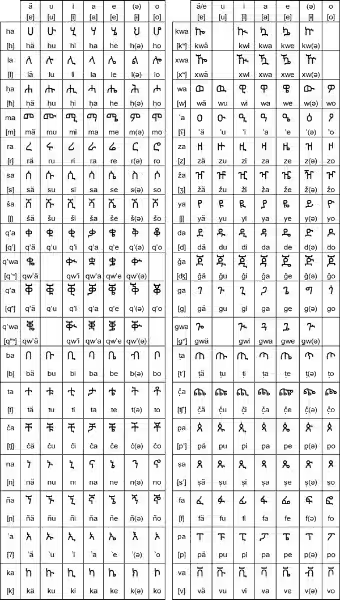
Challenges can include the script (Ge’ez script), grammatical complexities, nuanced vocabulary, and cultural context that may not have direct equivalents in other languages.
How do I find a professional Tigrigna translator?
You can find professional Tigrigna translators through translation agencies, freelance platforms, or by seeking recommendations from individuals or organizations that have used such services.
What information should I provide to a Tigrigna translator?
When seeking a translation, it’s helpful to provide the source text, the target language, the purpose of the translation, any specific terminology or glossary, and the desired turnaround time.
Religion in Tigrigna Culture: Frequently Asked Questions
This section answers common questions about religion within Tigrigna-speaking communities.
What are the predominant religions among Tigrigna speakers?
The predominant religions are Christianity and Islam. The majority of Tigrigna speakers are adherents of the Ethiopian Orthodox Tewahedo Church or Islam.
What is the Ethiopian Orthodox Tewahedo Church?
This is the largest Oriental Orthodox Christian church in Ethiopia and Eritrea. It has a rich history, unique traditions, and a distinct theological understanding.
What role does religion play in Tigrigna culture?
Religion plays a central and pervasive role in the lives of many Tigrigna speakers, influencing daily practices, social customs, festivals, art, and community life.
Are there specific religious traditions or holidays important to Tigrigna speakers?
Yes, major Christian holidays like Easter (Fasika) and Christmas (Genna), and Islamic holidays like Eid al-Fitr and Eid al-Adha are widely celebrated. Fasting is also a significant religious practice for both Christians and Muslims.
How does religion influence social interactions and community life?
Religious institutions often serve as community hubs. Religious teachings and values can shape moral codes, family structures, and interpersonal relationships. Religious leaders often hold positions of respect within the community.
Is religious tolerance common among Tigrigna speakers?
Historically, and in many contemporary settings, religious tolerance and coexistence have been characteristic of Tigrigna-speaking societies, with communities of both faiths often living side-by-side.