The Catholic faith, with its profound history and intricate doctrines, offers a compelling landscape for exploration, and at the heart of this exploration lie Catholic theology courses. These academic and spiritual journeys are not merely for aspiring priests or theologians; they are accessible pathways for anyone seeking a deeper understanding of God, humanity, and the universe as revealed through the lens of Catholic tradition. Whether you’re a lifelong Catholic looking to rekindle your faith, a curious individual from another tradition, or simply someone fascinated by the enduring influence of religion on human civilization, delving into Catholic theology can be an incredibly enriching experience. Think of it as unlocking a vast library of wisdom, where each course is a chapter inviting you to contemplate fundamental questions about life, love, and salvation.
In a world often characterized by fleeting trends and superficial answers, the study of Catholic theology provides a grounding in timeless truths. It’s an invitation to engage with complex ideas, to wrestle with challenging questions, and to discover a framework for living a meaningful and purposeful life. The beauty of these courses lies in their ability to connect ancient wisdom with contemporary concerns, offering a robust intellectual and spiritual toolkit for navigating the modern world. From understanding the sacraments to exploring the nature of grace, Catholic theology courses offer a structured and supported environment for this profound engagement.
The motivations for pursuing Catholic theology courses are as diverse as the individuals who undertake them. For many, it’s a deeply personal quest for spiritual growth. They might be seeking to deepen their prayer life, understand the sacraments more fully, or simply to feel a stronger connection to God. Imagine someone struggling with a difficult life event; a course on the theology of suffering might offer not just intellectual answers but a spiritual framework for finding hope and meaning amidst hardship. This kind of personal transformation is a cornerstone of the theological journey.
Beyond personal piety, there’s a significant intellectual dimension to studying Catholic theology. The tradition boasts a rich intellectual heritage, from the philosophical explorations of Thomas Aquinas to the nuanced scriptural interpretations of countless scholars. Engaging with these thinkers through dedicated Catholic theology courses allows individuals to develop critical thinking skills, to articulate their faith with clarity, and to engage in respectful dialogue with differing viewpoints. It’s about building a robust intellectual foundation that complements the emotional and spiritual aspects of faith, equipping individuals to be confident and articulate witnesses to their beliefs in any setting.
Bridging Faith and Reason: The Intellectual Heart of Catholic Theology
One of the most compelling aspects of Catholic theology is its enduring commitment to the harmonious relationship between faith and reason. This isn’t a system that demands blind adherence; rather, it encourages intellectual curiosity and rigorous inquiry. Catholic theology courses often emphasize how faith, far from being irrational, can illuminate and be illuminated by philosophical inquiry. Consider the classic question of the existence of God; Catholic theology doesn’t shy away from reasoned arguments, exploring concepts like the First Cause or the teleological argument, not as definitive proofs, but as pathways for understanding. This intellectual rigor is a hallmark of genuine theological exploration.
Furthermore, these courses delve into the rich philosophical underpinnings of Catholic doctrine, exploring how concepts like natural law, human dignity, and the nature of the soul have been articulated and defended over centuries. For example, understanding the theological concept of divine providence, explored in many Catholic theology courses, can offer a profound perspective on the seemingly chaotic events of the world, suggesting an underlying order and purpose that aligns with both faith and reasoned observation. This integration of intellectual exploration with spiritual conviction is what makes Catholic theology so enduringly relevant.
Exploring the Curriculum: What Do Catholic Theology Courses Cover?
The scope of Catholic theology courses is vast and varied, designed to offer a comprehensive understanding of the faith from multiple perspectives. Foundational courses often begin with an introduction to Sacred Scripture, exploring the Old and New Testaments, their historical contexts, and their theological significance. Imagine learning about the story of creation not just as a narrative, but as a theological statement about God’s power and love, a common theme in introductory scripture courses.
Beyond scripture, a rich array of specialized courses awaits. These can include the study of Christology (the nature and person of Jesus Christ), Soteriology (the doctrine of salvation), Ecclesiology (the theology of the Church), Sacramental Theology (the study of the seven sacraments), and Moral Theology (the ethical teachings of the Church). Each of these areas offers a unique window into the core beliefs and practices of Catholicism. For instance, a course on Sacramental Theology would go far beyond simply describing the rituals of Baptism or the Eucharist; it would explore their theological meaning, their salvific efficacy, and their role in the Christian life, providing a deeper appreciation for these central acts of worship and grace.
Foundational Pillars: Scripture and Tradition
At the bedrock of all Catholic theology courses lie the twin pillars of Sacred Scripture and Sacred Tradition. Understanding the Bible as the inspired Word of God, divinely guided in its human authorship, is paramount. Courses dedicated to this topic equip students with the tools for responsible biblical interpretation, moving beyond literal readings to grasp the deeper theological messages. It’s like learning to read a complex poem; you need to understand the language, the context, and the poet’s intent to truly appreciate its beauty and meaning. This approach ensures that scripture is not just a historical document, but a living source of divine revelation.
Complementing scripture is Sacred Tradition, the living transmission of the Gospel message within the Church under the guidance of the Holy Spirit. This encompasses the teachings of the Church Fathers, the pronouncements of ecumenical councils, and the ongoing life of the Magisterium. Catholic theology courses often explore how Tradition acts as a safeguard and interpreter of Scripture, ensuring that the authentic message of Christ is preserved and communicated throughout history. For example, understanding the development of the Nicene Creed, a key topic in courses on Church history and doctrine, illustrates how Tradition has clarified essential truths of the faith in response to specific challenges and questions.
The Practical Application: Living Out the Faith
While the intellectual journey is vital, Catholic theology courses are ultimately oriented towards living out the faith in the world. Moral theology, for instance, isn’t just about memorizing rules; it’s about understanding the principles that guide ethical decision-making in everyday life. Courses in this area often explore concepts like virtue ethics, natural law, and the dignity of the human person, providing a framework for making choices that align with God’s will and promote the common good. Imagine a student grappling with an ethical dilemma at work; a moral theology course could provide them with the theological principles and reasoned arguments to approach the situation with integrity and compassion.
Furthermore, many Catholic theology courses emphasize the importance of the sacraments, prayer, and spiritual disciplines as means of encountering God and growing in holiness. These courses often encourage participation in the liturgical life of the Church and provide guidance on developing a personal prayer life. They help students understand that theology is not just an academic pursuit confined to classrooms but a living, breathing reality that should permeate every aspect of their lives, transforming them into more authentic disciples of Christ. This integration of intellectual understanding with lived experience is what truly makes Catholic theology a powerful force for personal and societal good.
From Classroom to Community: Impact and Engagement
The knowledge gained through Catholic theology courses has a profound impact beyond the individual. It equips individuals to be more informed and engaged members of their communities, whether within the Church or in broader society. Understanding the Church’s social teachings, for example, can empower individuals to advocate for justice, peace, and the dignity of all people. These courses provide the theological grounding for being active participants in building a more just and compassionate world, reflecting the Gospel message in tangible ways. Think of individuals inspired by their theological studies to volunteer at a homeless shelter or to engage in environmental advocacy – this is the practical fruit of theological learning.
Moreover, a solid theological foundation enables individuals to engage in meaningful conversations about faith with others, fostering understanding and dispelling misconceptions. In a pluralistic world, the ability to articulate core beliefs with clarity and charity, a skill honed in many Catholic theology courses, is invaluable. It allows for bridge-building, for sharing the richness of Catholic tradition in a way that is both intellectually sound and deeply personal, inviting others to explore the profound truths that have guided and inspired millions for centuries.
Frequently Asked Questions about Catholic Theology Courses
What is Catholic theology?
Catholic theology is the systematic study of the beliefs, doctrines, and practices of the Roman Catholic Church. It explores the nature of God, Jesus Christ, the Holy Spirit, salvation, the Church, and the sacraments, drawing from Scripture, Tradition, and reason.
What kind of topics are covered in Catholic theology courses?
Courses can cover a wide range of subjects, including:
Introduction to Catholic Theology
Sacred Scripture (Old and New Testaments)
Christology (the study of Jesus Christ)
Mariology (the study of Mary, the mother of Jesus)
Ecclesiology (the study of the Church)
Sacramental Theology
Moral Theology
Spirituality
Church History
Liturgy
Who typically takes Catholic theology courses?
These courses are suitable for a diverse group of individuals, including:
Individuals seeking to deepen their understanding of their Catholic faith.
Lay people interested in religious education and formation.
Those discerning a vocation to ministry or religious life.
Students pursuing degrees in theology, religious studies, or ministry.
Anyone interested in the intellectual and spiritual dimensions of Catholicism.
Do I need to be Catholic to enroll in these courses?
Generally, no. Most Catholic theology courses are open to individuals of all faiths and backgrounds who are interested in learning about Catholic beliefs and practices. Some advanced or specialized programs might have prerequisites, but introductory courses are typically inclusive.
What are the benefits of taking a Catholic theology course?
Benefits include:
A deeper and more informed understanding of Catholic doctrine and tradition.
Enhanced spiritual growth and personal faith development.
Improved ability to articulate and defend one’s faith.
Development of critical thinking skills in relation to religious matters.
Opportunities for intellectual engagement with profound questions about life, God, and humanity.
Are these courses offered online or in person?
Catholic theology courses are available in both formats. Many universities, seminaries, and religious organizations offer online programs, providing flexibility for students. Traditional in-person courses are also widely available at Catholic institutions.
What are the prerequisites for enrolling in a Catholic theology course?
For introductory courses, there are usually no prerequisites beyond a high school diploma or equivalent. For more advanced or graduate-level courses, a bachelor’s degree and sometimes prior theological study may be required.
Can these courses lead to degrees or certifications?
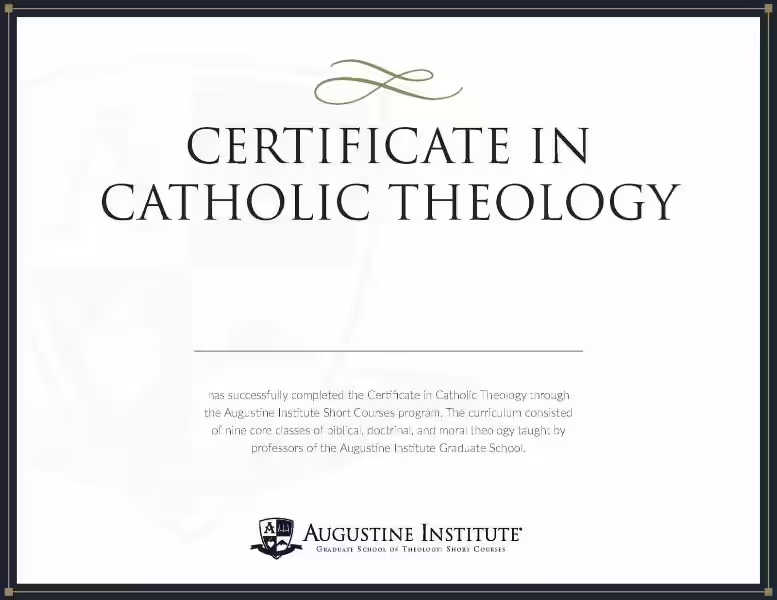
Yes, many Catholic theology courses are part of degree programs, such as Bachelor’s, Master’s, or Doctoral degrees in Theology or Divinity. Additionally, some institutions offer certificates in religious education or specific areas of theological study.