For anyone who has ever attended a Catholic Mass, the experience is more than just a spiritual service; it’s a carefully orchestrated symphony of prayer, scripture, and sacrament. At the very core of this profound ritual lie the Catholic liturgical books, the essential guides that shape and define Catholic worship. These aren’t just dusty tomes confined to sacristies; they are living documents, breathed into life by the prayers and actions of the faithful, connecting us across centuries to the very origins of our faith. Understanding these books offers a window into the soul of Catholicism, revealing the richness and depth of its devotional life.
Imagine a seasoned conductor carefully studying a complex musical score before leading an orchestra. Similarly, priests, deacons, and even lay ministers rely on these sacred texts to ensure the liturgy is celebrated with clarity, reverence, and faithfulness to tradition. Each book represents a specific facet of Catholic worship, from the grand pronouncements of the Mass to the intimate moments of prayer and the solemn pronouncements of sacraments. They are the bedrock upon which the visible and invisible dimensions of Catholic worship are built, ensuring a consistent and meaningful experience for believers worldwide.
The Foundation of Faith: The Bible and the Liturgy
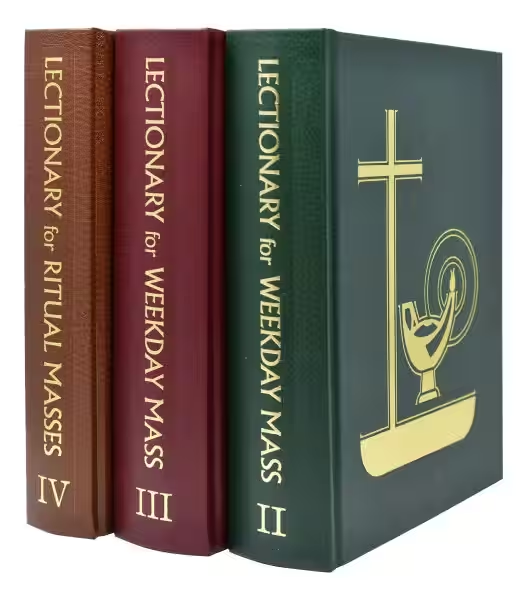
While not exclusively Catholic liturgical books in the same sense as a Missal, the Holy Bible stands as the ultimate source and inspiration for all Catholic worship. The liturgy is, in essence, a living proclamation and enactment of God’s Word. Every Sunday, the readings from the Old and New Testaments are meticulously chosen to form a cohesive narrative arc throughout the liturgical year. This intentional selection, presented in lectionaries, ensures that the faithful are continually nourished by the foundational stories, teachings, and covenants of our faith. Even the prayers and hymns often echo the language and themes found within scripture, weaving a seamless tapestry of divine revelation.
Consider the profound impact of hearing the same gospel, perhaps the parable of the Sower, read in a small parish church in Rome and a bustling cathedral in New York. This shared experience, facilitated by the standardized readings found in the lectionaries, fosters a powerful sense of unity within the global Catholic Church. The lectionary, therefore, is more than just a collection of Bible passages; it’s a carefully curated pathway for encountering God’s message, guiding both clergy and laity in understanding and internalizing its transformative power. It’s a crucial component of how the Bible actively shapes and energizes our liturgical prayer.
The Heart of the Mass: The Roman Missal
The undisputed king of Catholic liturgical books is the Roman Missal. This comprehensive volume contains everything necessary for the celebration of the Holy Eucharist, the central act of Catholic worship. From the opening rites and the liturgy of the Word to the liturgy of the Eucharist and the concluding blessings, the Missal provides the prayers, responses, and rubrics (instructions for performing the rites) that guide the priest in offering Mass. Its pages are filled with the ancient prayers of the Church, refined and promulgated by papal authority, ensuring a profound connection to centuries of tradition.
For the congregation, the Missal is often presented in a simplified form, often called a “pew Missal” or “Mass booklet,” which mirrors the priest’s Missal, allowing everyone to follow along with the prayers and readings. This accessibility is vital, enabling active participation rather than passive observation. Imagine attending a concert where the audience is handed the sheet music for the entire symphony; the Roman Missal, in its various forms, offers a similar opportunity for the faithful to engage with the divine music of the liturgy, understanding the words and gestures that make up this sacred offering. It is truly the most visible and frequently used of all the Catholic liturgical books.
Beyond the Altar: Other Essential Liturgical Books
While the Roman Missal is central, the Catholic Church’s rich liturgical life is further enriched by a family of other specialized Catholic liturgical books. These volumes cater to different aspects of pastoral care and sacramental life, ensuring that the Church’s ministry is comprehensive and deeply rooted in prayer. Each book serves a distinct purpose, contributing to the holistic spiritual formation and guidance of the faithful. They are the tools that equip ministers to serve God’s people in myriad ways.
Think of a skilled artisan who possesses a variety of specialized tools for different crafts. Similarly, the Church’s ministers utilize a range of liturgical books to fulfill their diverse roles. From the solemn rituals of baptism to the comforting rites of anointing the sick, these books provide the precise words and actions required to administer these sacraments effectively and reverently. This allows for a consistent and meaningful experience of God’s grace across different communities and circumstances.
The Sacraments in Detail: Rituals and Rites
Within the broad category of Catholic liturgical books, the Book of Blessings and the Rituale Romanum (Roman Ritual) hold significant importance. The Rituale Romanum is a comprehensive collection of rites for various sacraments and pastoral ministrations not found within the Roman Missal, such as baptism (for children and adults), confirmation, marriage, reconciliation, and anointing of the sick. Each rite within the Rituale Romanum is meticulously crafted, offering prayers, scripture readings, and procedural guidance to ensure that these encounters with God’s grace are celebrated with fitting solemnity and joy.
The Book of Blessings, a more recent development, specifically addresses the many occasions in life where Catholics seek God’s favor and protection through blessings. This includes blessings for homes, families, new ventures, and even objects. These blessings, guided by the principles outlined in the Book of Blessings, serve as tangible reminders of God’s presence and love in the everyday moments of our lives. It’s a beautiful testament to how the Church seeks to sanctify all aspects of human experience, from the grandest sacraments to the simplest gestures of faith.
The Divine Office: A Symphony of Prayer Throughout the Day
While the Mass is the pinnacle of Catholic worship, the Liturgy of the Hours, often referred to as the Divine Office, constitutes the “public prayer of the Church.” This is a structured cycle of prayers recited by clergy, religious, and lay people throughout the day. The main components include:
Morning Prayer (Lauds)
Daytime Prayer (Terce, Sext, None)
Evening Prayer (Vespers)
Night Prayer (Compline)
The Liturgy of the Hours draws heavily from the Psalms, scripture readings, and the writings of Church Fathers, offering a continuous stream of prayer that sanctifies the hours of the day and night. It’s a way for the Church to offer perpetual prayer to God, fulfilling the scriptural injunction to “pray without ceasing.”
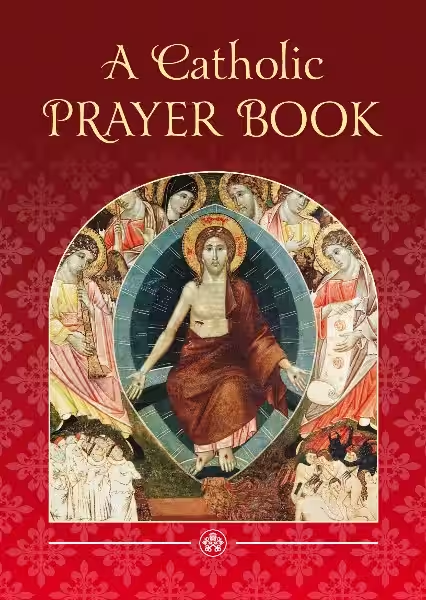
Imagine the constant hum of a well-oiled machine, each part working in harmony to achieve a greater purpose. The Liturgy of the Hours functions in a similar way for the Church. By praying these prayers at appointed times, individuals and communities join their voices with countless others around the world. This shared prayer, often facilitated by accessible versions of the Liturgy of the Hours such as the “Christian Prayer” booklet, creates a powerful spiritual current that underpins the life of the Church. It’s a constant offering of praise and petition, a testament to the enduring commitment to seeking God’s will in every moment.
The Evolution and Unity of Catholic Liturgical Books
The Catholic liturgical books we use today are not static relics of the past; they have undergone evolution, particularly following the Second Vatican Council. These reforms aimed to make the liturgy more accessible, understandable, and relevant to the modern faithful while remaining deeply rooted in tradition. The careful study and revision of these Catholic liturgical books ensure that they continue to serve as vibrant instruments for encountering God’s grace. This ongoing process reflects the Church’s commitment to both fidelity to its origins and its responsiveness to the needs of its people.
Think of a master craftsman who meticulously restores an ancient artifact, preserving its historical integrity while making it functional for a new generation. The post-Vatican II reforms of the Catholic liturgical books followed a similar spirit. While the core prayers and theological understanding remained, the language was updated, and the participation of the laity was emphasized. This careful stewardship ensures that these sacred texts continue to foster a profound and meaningful encounter with the divine for Catholics across the globe, bridging the past, present, and future of our faith.
Catholic liturgical books are official books containing the prayers, rites, and instructions used in the celebration of the Mass and other sacraments and liturgical services of the Catholic Church. They are essential for ensuring uniformity and correctness in worship.
What is the most important liturgical book?
The most important liturgical book is the Roman Missal (Missale Romanum). It contains the texts and rubrics for the celebration of the Mass, including the prayers, readings, and instructions for the priest.
What are some other important Catholic liturgical books?
Other important liturgical books include:
The Lectionary: Contains the scripture readings for Mass and other liturgical celebrations throughout the year.
The Book of the Gospels: Specifically for the proclamation of the Gospel reading.
The Liturgy of the Hours: Contains the prayers and psalms for the Divine Office, prayed by clergy, religious, and many laity.
The Book of Blessings: Contains the rites for various blessings given by priests or deacons.
The General Instruction of the Roman Missal (GIRM): While part of the Roman Missal, it’s often discussed separately as it provides detailed explanations and norms for the celebration of the Mass.
Who determines the content of these books?
The content and revisions of Catholic liturgical books are determined by the Holy See (the Pope and the relevant Vatican congregations), following the teachings and decrees of ecumenical councils and papal pronouncements. National bishops’ conferences may also have responsibilities for adapting certain aspects within the norms set by Rome.
Are there different editions of these books?
Yes, there are different editions. Over time, revisions are made to liturgical books to reflect changes in theology, pastoral practices, and language. For example, there have been significant revisions to the Roman Missal and the Lectionary, particularly after the Second Vatican Council.
Can a priest use any liturgical book he wants?
No, priests must use the officially promulgated liturgical books approved by the competent ecclesiastical authority. Using unauthorized texts or rites is not permitted.
Where can one find these liturgical books?
Catholic liturgical books can be purchased from Catholic bookstores, online retailers specializing in religious goods, and sometimes directly from publishers. Official versions and translations are usually available.