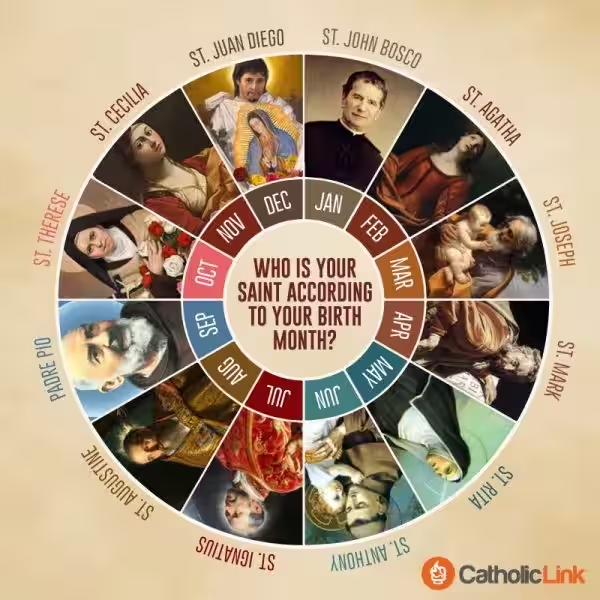
In the tapestry of faith, the concept of a patron cristiano offers a profound and personal connection to the divine. It’s more than just a historical figure or a saint’s name; it’s a spiritual anchor, a protector, and a model for living a life dedicated to Christ. For many, understanding their patron cristiano is a journey of discovery, revealing a rich heritage of devotion and a direct conduit to God’s grace. This article will delve into the meaning, significance, and practical application of having a patron cristiano, illuminating how this practice enriches our religious experience.
The idea of a patron cristiano is deeply embedded within the fabric of Christianity, particularly in traditions that venerate saints. This devotion is not about worshipping the saint but about recognizing their exemplary life of faith and their continued intercession on our behalf. Think of it like having a wise and beloved elder in your extended family who has walked a righteous path; you reach out to them for advice and they, in turn, offer their prayers and support from a place of deep wisdom and love. Similarly, our patron cristiano acts as a spiritual advocate, standing with us before God.
What is a Patron Cristiano? Unveiling the Spiritual Connection
At its core, a patron cristiano is a saint or a divine figure whom an individual, a family, a community, or even a profession has chosen to honor and seek protection and guidance from. This choice is often made based on a personal affinity with their story, their virtues, or a particular aspect of their life that resonates with the devotee. It’s a deeply personal commitment, a recognition that this particular holy person has a special connection to our journey of faith and can offer unique intercessions.
The practice of seeking a patron cristiano is not a novel one; it stretches back to the early centuries of Christianity. Early Christians often looked to martyrs and prominent figures of faith for inspiration and protection, especially during times of persecution. Over time, this evolved into a more formalized system where individuals would choose a saint whose life and deeds mirrored their own aspirations or their particular struggles. For instance, someone facing a difficult illness might seek the patronage of a saint known for healing, like Saint Luke or Saint Raphael.
The Significance of Patronage in the Christian Life
The significance of having a patron cristiano extends far beyond mere symbolism. It provides a tangible point of connection in the vastness of the religious realm, offering a relatable human example of faith in action. This saint becomes a spiritual mentor, someone we can look to for inspiration when our own faith falters, or when we find ourselves facing trials and temptations. Their witness serves as a powerful reminder that even amidst hardship, a life lived in devotion to Christ is a life of purpose and ultimate victory.
Moreover, the patron cristiano acts as an intercessor. This means they are believed to have a special ability to pray for us before God, bringing our concerns and petitions directly to the divine throne. This isn’t to suggest that the saint has independent power, but rather that through their holiness and closeness to God, their prayers are particularly efficacious. Imagine a close friend who knows the king personally; their heartfelt plea for you would likely carry more weight than a stranger’s. This is a simplified analogy for the powerful intercessory role of our patron cristiano.
Choosing Your Patron Cristiano: A Personal Pilgrimage
The process of selecting a patron cristiano is often a deeply personal and prayerful journey. There isn’t a single, rigid rulebook; rather, it’s guided by intuition, prayer, and a sincere desire to connect with a holy individual who inspires you. One might feel drawn to a saint whose feast day aligns with their birthday, or perhaps a saint whose life story mirrors a particular challenge they are currently facing.
Consider a young artist struggling with self-doubt. They might research saints known for their creative endeavors or those who overcame significant adversity to pursue their God-given talents. Perhaps Saint Luke, traditionally associated with painting, or Saint Francis of Assisi, who embraced a life of simplicity and service, could become their patron cristiano. The key is to research, reflect, and pray for guidance.
Research the lives of various saints: Look for stories that resonate with your values, struggles, and aspirations.
Reflect on your own faith journey: What virtues do you admire? What challenges are you facing that a particular saint might have overcome?
Pray for discernment: Ask the Holy Spirit to guide you in your choice.
Ultimately, the relationship with your patron cristiano is a living, breathing aspect of your religious life. It’s a source of comfort, strength, and inspiration, a constant reminder of God’s love and the enduring power of faith lived out in the world. By embracing this tradition, you invite a powerful ally into your spiritual journey, a heavenly friend who walks with you every step of the way.
Frequently Asked Questions about Christian Patron Saints
What is a patron saint?
A patron saint is a saint who is recognized as a special intercessor and protector of a particular person, place, company, occupation, or in the case of many, of the Catholic Church itself. They are seen as spiritual guides and advocates for those they protect.
How are patron saints chosen?
Patronage can arise in several ways:
By tradition or legend: Many patronages are rooted in ancient traditions or stories associated with the saint’s life and ministry.
Through attributes or symbols: A saint might be chosen as a patron because of the tools they used, the way they died, or symbols associated with them that relate to a particular group or activity. For example, St. Peter, with his keys, is the patron of the papacy.
By popular devotion: Sometimes, a particular group or place will develop a strong devotion to a saint, leading to their informal recognition as a patron.
By official designation: In some cases, the Church has officially declared a saint as the patron of a specific cause or group.
Can I have more than one patron saint?
Yes, it is common for individuals to have multiple patron saints. You might have a baptismal patron saint, a saint you’ve chosen for personal devotion, or a saint associated with your profession or a particular need.
Patron saints serve as examples of Christian living and intercessors. They are believed to pray for us in heaven, bringing our petitions to God. They remind us of the communion of saints and that we are part of a larger spiritual family.
Does having a patron saint mean I am worshiping the saint?
No. In Christianity, particularly in Catholic and Orthodox traditions, worship (latria) is due to God alone. Veneration (dulia) is given to saints, which is a form of honor and respect, recognizing their holiness and their role as intercessors. You are asking the saint to pray for you, not worshipping them.
How can I learn more about patron saints?
You can learn about patron saints through various resources:
Reading books and encyclopedias on saints.
Consulting with priests or religious educators.
Exploring Catholic and Orthodox websites and libraries.
Praying and reflecting on the lives of different saints to see who might resonate with you.