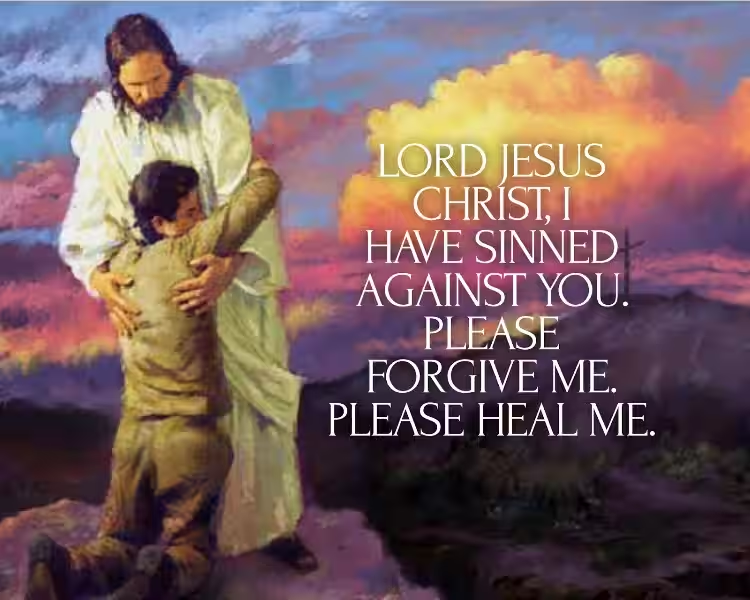
For centuries, across diverse cultures and belief systems, the concept of a higher power has offered solace, guidance, and a profound sense of hope. At the heart of many religious traditions lies a fundamental promise: that God will forgive all sins. This isn’t merely a theological abstraction; it’s a message of immense power and liberation that resonates deeply within the human experience. We are all, by our very nature, imperfect beings, prone to mistakes, misjudgments, and moments of weakness. The realization that a benevolent force exists, one capable of unconditional forgiveness, can be a transformative force in our lives.
This inherent human fallibility is what makes the promise of forgiveness so vital. Think about it: even in our closest human relationships, apologies are often met with hesitation, and trust, once broken, can be incredibly difficult to rebuild. Yet, the divine promise suggests a different order of love and understanding. It speaks to a divine capacity that transcends our own limitations. This article will explore the profound implications of this central tenet of religion, delving into its meaning, its accessibility, and the ways it can guide us toward a more purposeful and peaceful existence.
The Nature of Sin and the Divine Offer of Forgiveness
The word “sin” can evoke feelings of guilt, shame, and separation. In many religious contexts, it’s understood as an act that disobeys divine law, harms oneself or others, or distances us from the sacred. These actions can range from seemingly small transgressions, like a hasty word spoken in anger, to more significant moral failings. Regardless of severity, the weight of these actions can burden our conscience, leading to anxiety and a feeling of being unworthy. It is precisely in this space of human imperfection that the comforting assurance of God’s forgiveness enters.
However, understanding sin isn’t about dwelling in perpetual self-condemnation. Instead, it’s about acknowledging our human limitations and recognizing that God’s boundless love is always available. This divine offer of forgiveness isn’t a passive waiting game; it often involves a genuine desire for reconciliation. It’s about understanding that even when we stumble, God will forgive all sins when we turn towards Him with a sincere heart. This doesn’t mean our actions have no consequences, but rather that the ultimate judgment is tempered with infinite mercy.
What Constitutes a “Sin” in Religious Understanding?
The scope of what constitutes a “sin” varies across different religious doctrines, but a common thread emphasizes actions that violate love, compassion, justice, and integrity. This can include:
Intentional wrongdoing: Deliberately choosing to harm another person, whether physically, emotionally, or financially.
Neglect of duty: Failing to uphold responsibilities towards family, community, or the divine.
Selfishness and greed: Prioritizing one’s own desires at the expense of others or the common good.
Dishonesty and deceit: Lying, cheating, or engaging in any form of deception.
Lack of faith or spiritual apathy: Turning away from the divine or neglecting one’s spiritual growth.
It’s crucial to remember that religious teachings on sin are often nuanced. They rarely paint individuals as inherently evil but rather as struggling human beings who can, and will, make mistakes. The good news of God’s forgiveness underscores the belief that these mistakes do not have to define us permanently.
The Divine Capacity for Forgiveness: Beyond Human Comprehension
The divine capacity for forgiveness is often described as infinite and unconditional. Unlike human forgiveness, which can be conditional, earned, or limited by our own emotional capacity, divine forgiveness is seen as a fundamental attribute of God’s nature. It’s a gift offered freely, not something we can fully merit or earn through our own efforts alone. This is where the profound truth that God will forgive all sins truly shines.
Imagine a parent whose child has repeatedly made poor choices. While the parent may be hurt and disappointed, their love often remains steadfast, always open to reconciliation when the child shows genuine remorse and a desire to change. This analogy, while imperfect, hints at the depth of divine love. It signifies a willingness to overlook our failings, not out of ignorance, but out of profound compassion. This unfathomable grace is what offers a path to healing and redemption.
The Path to Receiving Divine Forgiveness
While the promise that God will forgive all sins is a gift, it’s often presented as something that requires a genuine engagement from the individual. This engagement typically involves several key elements, all rooted in a heartfelt desire for reconciliation with the divine. It’s about actively choosing to turn away from what has caused separation and turning towards a path of righteousness and love.
The journey of seeking forgiveness is not about performing a perfect act of atonement, but rather about sincere repentance and a commitment to transformation. It’s an acknowledgement that we have strayed and a desire to realign our lives with divine principles. This often involves introspection, humility, and a willingness to accept the grace offered through forgiveness.
Repentance: A Heartfelt Turning Away
Repentance is a cornerstone of receiving divine forgiveness in many religions. It’s not simply saying “I’m sorry”; it’s a deep and profound change of heart and mind. It involves:
Acknowledging one’s wrongdoing: Honestly recognizing the specific actions or attitudes that have caused harm or led to spiritual separation.
Feeling genuine remorse: Experiencing sincere sorrow for the pain caused and the distance created from the divine.
A firm resolve to change: Committing to not repeat the harmful actions and to actively pursue a more virtuous path.
Think of a traveler who realizes they’ve taken a wrong turn. Repentance is the moment they stop, admit the mistake, feel regret for the wasted time and effort, and decide to retrace their steps or find a new, correct path. This turning away from error is essential for God’s forgiveness to take root.
Faith and Trust: Believing in the Promise
Faith and trust are equally crucial. It requires believing that God will forgive all sins, even those that feel overwhelming or unforgivable to us. This involves:
Trusting in God’s character: Believing in God’s inherent goodness, mercy, and love.
Accepting the sacrifice or atonement: In some traditions, this involves faith in a specific act of divine intervention that makes forgiveness possible.
Releasing the burden of guilt: Allowing oneself to be freed from the weight of past mistakes, knowing that the divine offer is real.
It’s like someone who has been promised a life raft after falling overboard. They must have faith that the raft will arrive and trust that it will hold them. This active belief is what allows them to reach out and grasp the offered salvation.
Seeking Reconciliation: The Role of Prayer and Ritual
Many religions provide structured ways to seek reconciliation and express one’s desire for forgiveness. These can include:
Prayer: Direct communication with the divine, expressing remorse, seeking guidance, and reaffirming faith.
Confession: A formal acknowledgment of sins, often to a religious leader or directly to God, as a step towards absolution.
Acts of service and charity: Demonstrating a commitment to a life of love and compassion as a way of living out one’s repentance.
Sacraments or rituals: Specific religious ceremonies designed to facilitate forgiveness and spiritual renewal.
These practices are not mere formalities; they are tangible expressions of an inner transformation. They serve as visible anchors for our faith and provide a framework for our journey towards receiving the full measure of God’s forgiveness.
The Transformative Power of Knowing God Will Forgive All Sins
The profound truth that God will forgive all sins is not just a theological concept; it is a powerful catalyst for personal transformation. When we truly internalize this message, it releases us from the paralyzing grip of guilt and shame, opening the door to a life lived with greater freedom, purpose, and compassion. This divine promise offers a radical perspective on our own imperfections, suggesting that our past does not have to dictate our future.
Understanding this unconditional love and forgiveness allows us to shed the heavy burdens we often carry. It empowers us to move forward, not by pretending our mistakes never happened, but by integrating them into our growth and using them as lessons learned. This liberating truth can reshape our interactions with ourselves and with others, fostering a more empathetic and forgiving spirit.
Freedom from Guilt and Shame
The weight of guilt and shame can be crushing, leading to self-sabotage, isolation, and a diminished sense of self-worth. The knowledge that God will forgive all sins offers a path to liberation from these debilitating emotions. It allows us to:
Release the past: No longer be defined by past mistakes, but embrace the opportunity for a fresh start.
Heal emotional wounds: Begin the process of mending the internal damage caused by regret and self-recrimination.
Embrace self-acceptance: Recognize our inherent worth, even in our imperfection, knowing that we are loved and forgiven.
Imagine a child who broke a treasured vase. They feel terrible, but when their parent lovingly forgives them and helps them clean up the mess, the child is finally free to play again without the constant fear of that mistake. This is the freedom that divine forgiveness offers.
Far from encouraging recklessness, the assurance that God will forgive all sins often serves as a profound motivation for living a life of purpose and compassion. Knowing that our efforts are met with divine grace can inspire us to:
Strive for goodness: Actively seek to do what is right, not out of fear of punishment, but out of gratitude for forgiveness.
Extend forgiveness to others: Embody the same mercy we have received, fostering healthier relationships and a more harmonious society.
Live with gratitude: Approach life with a deep sense of appreciation for the divine gift of forgiveness.
This transformative power empowers us to move beyond self-centeredness and embrace a life dedicated to serving others and reflecting the divine love we have experienced.
The Ongoing Journey of Spiritual Growth
The promise that God will forgive all sins is not a one-time event but the foundation for an ongoing journey of spiritual growth. It’s a continuous process of learning, evolving, and deepening our relationship with the divine. This journey involves:
Continuous repentance and renewal: Regularly examining our lives and recommitting to ethical and spiritual principles.
Seeking wisdom and understanding: Continuously learning about divine will and how to live in accordance with it.
Living a life of love and service: Actively participating in the world in ways that reflect divine values.
This ever-present possibility of forgiveness means that we are never truly beyond hope. Even in our moments of greatest failure, the door to divine grace remains open, inviting us to continue our journey towards wholeness and spiritual maturity. The message is clear: God will forgive all sins, and this truth is a beacon of hope for all humanity.
Frequently Asked Questions: God’s Forgiveness and Religion
Will God forgive all sins?
The concept of God’s forgiveness varies significantly across different religions and theological interpretations. Some traditions teach that God’s mercy is boundless and extends to all who genuinely repent and seek forgiveness. Others may have specific conditions or pathways to atonement that must be followed. It’s often understood that the sincerity of one’s repentance and their commitment to changing their ways are crucial factors.
What is religion?
Religion is a complex and multifaceted phenomenon that generally involves a set of beliefs, practices, and values concerning the sacred or divine. It often provides a framework for understanding the meaning of life, humanity’s place in the universe, and moral guidelines. Religions typically include rituals, ceremonies, sacred texts, and a community of followers who share these beliefs and practices. There are thousands of different religions worldwide, each with its unique doctrines and traditions.