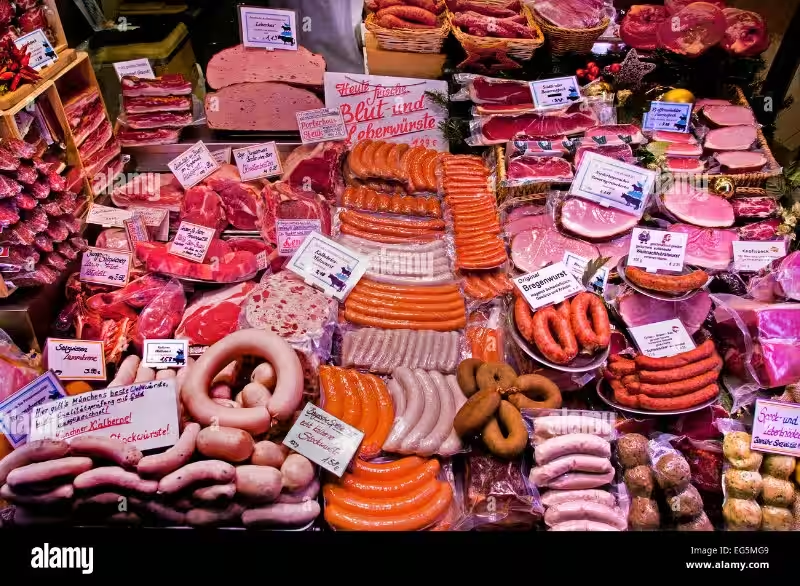
Understanding the Deep Roots of German Butchery and its Religious Significance
The world of German butchery is far more than just the skillful preparation of meat; it’s a rich tapestry woven with centuries of tradition, community, and, surprisingly, religion. For generations, the butcher’s shop was a central hub in German villages, a place where not only sustenance but also social bonds were forged. This wasn’t a secular endeavor; the very act of transforming an animal into nourishing food often carried a spiritual dimension, deeply intertwined with the prevailing religious beliefs of the time. Think of it as a sacred trust, a responsibility to honor the life given for the community’s sustenance.
In many historical contexts, especially in rural Germany, the slaughter of an animal was a significant event, often accompanied by rituals. This wasn’t about superstition, but about acknowledging the gravity of taking a life and ensuring nothing was wasted. German butchery practices, therefore, often reflected a profound respect for the animal and a desire to utilize every part, a concept that resonates with many religious tenets emphasizing stewardship and gratitude. The meticulousness and reverence seen in traditional German butchery can be seen as a form of culinary prayer, turning a necessity into an act of devotion.
From Farm to Altar: How Religious Practices Shaped German Butchery
The influence of religion on German butchery is palpable when examining historical practices surrounding harvest festivals and feast days. These celebrations, often deeply rooted in Christian traditions, were prime times for communal slaughter and feasting. The preparation of specific dishes for these occasions, like the meticulously cured hams or the intricately spiced sausages, became a form of culinary artistry that honored both the bounty of the land and the sanctity of the religious calendar. These weren’t just meals; they were offerings, celebrations of divine provision.
Consider the concept of kosher or halal preparation in other cultures; while not directly equivalent, the underlying principle of ritualistic preparation to ensure the purity and acceptability of food finds echoes in the careful and often religiously-influenced methods of German butchery. Certain cuts might have been reserved for specific religious observances, or the timing of slaughter might have been dictated by the liturgical year. This deep integration meant that the butcher was not merely a tradesperson, but an integral part of the community’s spiritual and physical well-being, their skills honed with an almost priestly dedication to quality and tradition.
The Butcher as a Community Pillar: A Sacred Duty
Historically, the village butcher held a position of immense respect and trust. Their skills were essential, and their access to fresh meat made them a focal point for communal life, especially during times of religious observance. The German butcher was often called upon to prepare special meats for church festivals, weddings, and funerals, transforming the act of butchery into a service that directly supported the community’s spiritual and social fabric. This wasn’t just about providing food; it was about participating in the sacred rituals of life and death.
The meticulousness evident in German butchery traditions, from the precise cutting techniques to the careful curing and smoking processes, can be seen as a reflection of a disciplined approach to life, a value often emphasized in religious teachings. The idea of “Handwerk,” or craftsmanship, in German butchery elevates the skill beyond mere labor, imbuing it with a sense of purpose and dedication akin to a religious vocation. Even the cleanliness and orderliness of a traditional butcher shop often spoke to a deeper respect for the materials and the process, a silent acknowledgment of the value of the life being transformed.
The Art of Preservation: Faith in Future Abundance
The strong tradition of German butchery is intrinsically linked to the art of preservation. In times before refrigeration, the ability to cure, smoke, and ferment meats was not just a culinary skill, but a vital necessity that ensured food security for families and communities, especially through the lean winter months. This reliance on preservation techniques fostered a deep sense of faith – faith in the skill of the butcher, faith in the bounty of past harvests, and faith in the promise of future abundance, all concepts that resonate with religious themes of provision and hope.
Think of the iconic German sausages, many of which are fermented or cured. This process, which transforms raw meat into something stable and flavorful, requires patience and trust. The butcher, through their expertise, was essentially creating a tangible symbol of future sustenance, a stored blessing for the community. This meticulous attention to detail in German butchery, ensuring that meat could be enjoyed long after the slaughter, was a testament to a worldview that valued foresight, resourcefulness, and a profound appreciation for the gifts of nature, often seen through a religious lens.
From Brühwurst to Dauerwurst: A Culinary Testament to Faith and Ingenuity
The diverse array of German sausages is a direct result of this emphasis on preservation, each type representing a unique approach to extending the shelf-life of meat. From the quickly cooked Brühwurst (scalded sausage) to the long-lasting Dauerwurst (hard sausage), the range showcases an incredible understanding of how to manipulate ingredients and processes. This culinary ingenuity, honed over generations, can be viewed as a practical application of the religious principle of avoiding waste and ensuring that every resource is utilized to its fullest potential, a form of gratitude expressed through culinary mastery.
The fermentation process, in particular, is fascinating. It relies on a delicate balance of microbes, time, and temperature, a process that often feels almost alchemical. The butcher, in expertly guiding this transformation, was demonstrating a deep understanding of natural processes, akin to a farmer understanding the cycles of the earth. This mastery over fermentation in German butchery wasn’t just about taste; it was about creating a shelf-stable food source that provided security and sustenance, a silent prayer of thanks for the ability to overcome scarcity and provide for the future.
The Butcher’s Table: Communal Feasts and Religious Observance
The act of sharing food has always been a cornerstone of religious practice across cultures, and German butchery played a vital role in facilitating these communal meals. The butcher’s shop was often the source of the centerpiece for many celebrations, from the succulent roasts prepared for Sunday dinners to the special cuts of meat for holidays like Christmas and Easter. These meals weren’t just about satisfying hunger; they were about fellowship, reconciliation, and reinforcing community bonds, all themes deeply embedded in religious teachings.
Imagine a bustling village on a feast day, the aroma of roasting pork or simmering sausages wafting from the butcher’s shop. This was a time when families would gather, sharing the bounty provided by the butcher’s skill. German butchery, in this context, became an intrinsic part of the liturgical calendar, marking the rhythm of the year and the celebrations of faith. The shared experience of enjoying these specially prepared meats fostered a sense of unity and collective gratitude, a tangible manifestation of religious community.
Beyond the Plate: Rituals, Blessings, and the Ethics of German Butchery
While explicit religious rituals surrounding slaughter might have faded for many, the ethical considerations inherent in German butchery continue to echo religious values. The concept of treating animals with respect and ensuring their humane treatment, a principle gaining increasing traction today, has historical roots in a desire to avoid cruelty and waste, which were often seen as morally reprehensible from a religious standpoint. A butcher committed to the highest standards was, in a way, upholding a moral code that transcended mere commerce.
The meticulousness of German butchery also speaks to a broader philosophy of dedication and responsibility. Whether it was ensuring the meat was perfectly aged, skillfully cut, or expertly seasoned, the butcher’s commitment to excellence can be seen as a form of devotion to their craft and to their community. This pursuit of quality, often passed down through apprenticeships, was a way of honoring tradition and ensuring that the sustenance provided was not only good but also a source of pride and well-being, a culinary testament to a life lived with purpose and integrity, often guided by deeply held religious convictions.
Frequently Asked Questions about German Butchery and Religion
What is the religious significance of specific cuts of meat in German butchery?
Historically, certain cuts might have been associated with religious observances or festivals. For example, pork, a staple in German cuisine, has no religious restrictions in mainstream German Christianity, which is predominantly Lutheran and Catholic. However, in regions with historical Jewish or Muslim populations, or for individuals adhering to those faiths, pork would be avoided. Specific religious holidays might have lent themselves to particular preparations or cuts, often related to feasting and communal meals, rather than inherent religious symbolism of the cut itself.
Are there religious dietary laws that influence traditional German butchery practices?
For the majority of Germans, who are Christian, there are no strict dietary laws that directly influence butchery practices beyond the common Christian observance of fasting during Lent. During this period, the consumption of meat was traditionally reduced or abstained from. For Jewish communities in Germany, Kashrut laws are paramount, dictating specific slaughtering (shechita), inspection, and preparation methods for all meat to be considered kosher. Similarly, halal practices for Muslim communities would require specific slaughtering methods and avoidance of certain animal parts. These religious dietary laws would necessitate separate butchery practices or specialized butchers within those communities.
How has the presence of different religious communities in Germany impacted the variety of meat available or butchery techniques?
The historical and ongoing presence of diverse religious communities has certainly influenced the availability of certain meats and, to some extent, butchery techniques. For instance, demand from Jewish communities would support the availability of kosher beef, lamb, and poultry, requiring butchers to understand and adhere to shechita principles. Similarly, halal practices would influence the availability of halal-certified meats. While many core German butchery techniques are secular, the need to cater to religious dietary requirements has led to specialized knowledge and practices within specific community-focused butcher shops or divisions within larger establishments.
Are there any traditional German butchery practices that are linked to Christian holidays or traditions?
While not directly dictated by religious doctrine, certain butchery practices and the types of meat prepared have become strongly associated with Christian holidays in Germany. For example, roast pork, goose, or duck are traditional centerpieces for Christmas and Easter feasts. The preparation of these larger roasts, often involving specific curing or brining techniques developed over centuries, can be seen as a culinary tradition deeply interwoven with the celebration of these significant Christian holidays. Sausages, a cornerstone of German butchery, are also often prepared in abundance for festive occasions.
Does the concept of “cleanliness” or “purity” in religious contexts have any impact on German butchery standards?
The concept of cleanliness and purity is a fundamental aspect of all reputable butchery, regardless of religious context. However, for observant Jewish and Muslim communities, these concepts are religiously mandated. Kashrut and halal laws have very specific and stringent requirements regarding the cleanliness of the animal, the slaughtering process, and the preparation of the meat to ensure it is considered ritually pure. These religious standards often exceed general hygiene practices and are central to ensuring the meat is permissible for consumption according to their faith.