The concept of Florida clemency is more than just a legal process; for many, it’s a beacon of hope, a tangible manifestation of second chances. Within the Sunshine State, the journey through the clemency system often intersects with profound personal transformations, and for a significant portion of those seeking this relief, their faith plays an indispensable role. This article delves into the intricate relationship between religion and Florida clemency, exploring how spiritual beliefs can empower individuals, shape their applications, and ultimately contribute to their successful reintegration into society.
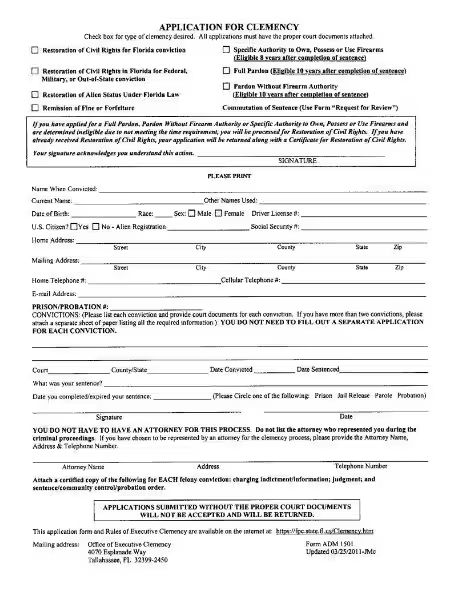
Understanding Florida clemency involves recognizing its purpose: to restore civil rights to individuals with past felony convictions. This can include the right to vote, serve on a jury, or possess firearms. The process, administered by the Florida Board of Executive Clemency, is designed to be thorough and deliberates on each case carefully. For those who have served their time and demonstrated accountability, clemency offers a pathway to reclaim their full citizenship.
For countless individuals navigating the complexities of Florida clemency, their faith provides a moral compass and a source of strength. The principles of forgiveness, redemption, and personal growth, central to many religious traditions, resonate deeply with the goals of clemency. This spiritual bedrock often fuels the motivation and resilience required to successfully complete the application process.
Many individuals find that their religious communities offer invaluable support throughout their journey. Churches, synagogues, mosques, and other places of worship can provide not only spiritual guidance but also practical assistance, such as counseling, mentorship, and even help with the paperwork involved in Florida clemency applications. This holistic approach acknowledges that rehabilitation is not solely a legal matter but also a deeply personal and spiritual one.
Faith as a Catalyst for Personal Transformation
The transformative power of faith is often a cornerstone of successful clemency applications. Many individuals report that their religious awakening or renewed commitment to their faith occurred during or after their incarceration. This spiritual renewal can lead to a profound shift in perspective, fostering a genuine desire to atone for past mistakes and contribute positively to society.
Consider the example of Maria, who was convicted of a felony years ago. While incarcerated, she found solace and direction in her faith. She actively participated in religious services, studied scripture, and engaged in community service within the prison. Her newfound spiritual discipline translated into a consistent pattern of responsible behavior and a deep remorse for her actions. This demonstrable change, often rooted in her faith, became a powerful testament in her Florida clemency application.
Navigating the Application with Spiritual Guidance
The Florida clemency application process can be daunting, requiring meticulous attention to detail and a clear articulation of an applicant’s rehabilitation. For those with a strong religious conviction, this process can be approached with a sense of purpose and integrity. Their faith can inform how they present their case, emphasizing their sincere remorse, their commitment to ethical living, and their desire to be a contributing member of society.
Key elements that often stand out in applications where faith is a significant factor include:
Testimonials from religious leaders: Letters of support from pastors, imams, rabbis, or other spiritual mentors can carry considerable weight. These testimonials often speak to the applicant’s character development, changed heart, and active participation in their faith community.
Evidence of community involvement: Many religious organizations are deeply involved in outreach and service. Demonstrating participation in these activities, such as volunteering at soup kitchens or mentoring at-risk youth, showcases an individual’s commitment to serving others, a principle often echoed in religious teachings.
Personal narrative of redemption: The applicant’s own written statement can powerfully convey their spiritual journey. Describing how their faith has guided them towards accountability, empathy, and a desire to make amends can be incredibly compelling for the clemency board.
The Practical Implications of Faith in the Clemency Process
Beyond the spiritual aspect, religion often plays a tangible role in the practicalities of seeking Florida clemency. Religious organizations frequently offer programs and resources that directly assist individuals in meeting the requirements for clemency or in preparing for life after release.
Many faith-based organizations operate re-entry programs that provide crucial support to individuals transitioning back into society. These programs can offer:
Job placement assistance: Helping individuals find stable employment is a critical step in successful reintegration. Religious groups often have established connections with employers who are willing to give individuals with past convictions a chance.
Housing support: Finding safe and affordable housing can be a significant challenge. Some faith-based initiatives provide temporary housing or connect individuals with resources for securing long-term accommodation.
Counseling and mentorship: Addressing underlying issues that may have contributed to past offenses is vital. Religious counselors and mentors can offer guidance and support in areas such as anger management, substance abuse, and developing healthy coping mechanisms.
Faith as a Moral Compass for Future Conduct
For individuals granted Florida clemency, their faith often serves as a guiding principle for their future conduct. The ethical framework provided by their religious beliefs can help them navigate the challenges of re-entry and resist the temptations that might lead them back down a path of criminal activity. This internal moral compass is a powerful tool for long-term success.
Imagine John, who received clemency after years of diligent effort, largely fueled by his commitment to his church. He now works at a local non-profit, regularly attends services, and mentors young people struggling with similar issues he once faced. His faith instills in him a sense of responsibility and a desire to give back, making him a testament to the redemptive power of both clemency and faith.
The Board’s Consideration of Faith-Based Rehabilitation
While the Florida Board of Executive Clemency operates on legal statutes and established criteria, the demonstrated impact of faith on an applicant’s rehabilitation is often a significant factor in their decision-making. The board seeks evidence of genuine change and a commitment to a law-abiding life. When an applicant can convincingly articulate how their faith has been the driving force behind their transformation, it can paint a powerful picture of their likelihood of future success.
The board understands that personal growth is multifaceted. They are not just looking for an absence of further criminal activity; they are looking for individuals who have actively worked to become better citizens. A faith journey that has led to increased empathy, stronger moral character, and a dedication to community service is precisely the kind of evidence that can positively influence their deliberations on Florida clemency.
Conclusion: A Symbiotic Relationship for a Brighter Future
The intersection of Florida clemency and religion highlights a profound truth: that redemption is often nurtured by both legal processes and deeply held spiritual beliefs. For those seeking a second chance, their faith can provide the inner strength, the moral framework, and the community support necessary to navigate the path towards regaining their civil rights and rebuilding their lives.
The Florida clemency system, by offering a mechanism for restoring rights, empowers individuals to move forward. When this process is intertwined with the transformative power of faith, it creates a symbiotic relationship that benefits not only the individual but also the broader community. It’s a testament to the human capacity for change, the enduring strength of belief, and the possibility of a brighter future for all. The journey through Florida clemency, when guided by faith, can indeed be a journey towards true redemption.
Florida Clemency – Frequently Asked Questions
What is the role of religion in Florida clemency decisions?
The Florida clemency process, like other governmental decisions, is intended to be secular. Decisions are based on statutory requirements, the applicant’s record, and the recommendation of the Clemency Board. While personal beliefs or religious affiliations of an applicant are not directly considered as a determining factor for or against clemency, an applicant’s demonstrated rehabilitation, which may include positive changes in their life that could be influenced by religious conviction, can be a relevant aspect of their application. However, the focus remains on objective criteria related to the offense, sentence, and post-release conduct.