Beyond Brick and Mortar: The Sacred Geometry of Churches’ Interiors
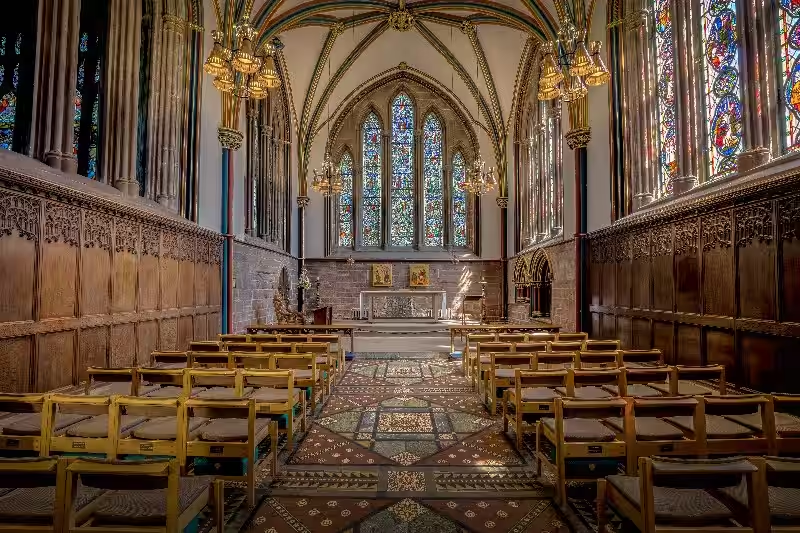
The word “church” often conjures images of towering spires and sturdy facades, but the true heart of these sacred spaces lies within their meticulously crafted interiors. These aren’t merely buildings; they are architectural vessels designed to elevate the spirit, to draw us closer to the divine through a symphony of light, form, and symbolism. The design of a church’s interior is a deliberate act of faith, a physical manifestation of theological concepts that have evolved over centuries, each element speaking a silent language of devotion.
From the grandest cathedrals to the humblest chapels, the intention behind the churches’ interiors is remarkably consistent: to create an atmosphere conducive to reflection, prayer, and community. This is achieved through a careful orchestration of elements, including the placement of windows, the use of specific materials, and the arrangement of seating. Consider the soaring naves of Gothic churches, designed to draw the eye upwards towards heaven, a visual metaphor for aspiration and divine connection. The very act of entering these spaces can feel like stepping into another realm, a deliberate pause from the mundane realities of the outside world.
The Dance of Light and Shadow: Illuminating Faith
Light plays an absolutely crucial role in shaping our experience of churches’ interiors. Think about the difference between a brightly lit, modern worship space and the hushed, diffused glow of a medieval basilica. In older traditions, stained glass windows are not just decorative; they are theological narratives told in light. Each pane, depicting saints, biblical scenes, or abstract symbols, transforms sunlight into a kaleidoscope of color, imbuing the interior with a spiritual luminescence. This dappled light can feel like a tangible manifestation of God’s presence, a gentle reminder that even in darkness, there is divine illumination.
The strategic use of light in churches’ interiors is designed to evoke specific emotions and guide our focus. High, arched windows often flood the altar area with light, drawing attention to the focal point of worship. Conversely, dimmer areas might encourage introspection and personal prayer. The interplay of light and shadow can create a sense of awe and mystery, prompting us to contemplate the intangible aspects of religion. Imagine standing in a vast cathedral, the sunlight streaming through intricate rose windows, casting ethereal patterns on the stone floor – it’s an experience that transcends the visual, touching something deeper within us.
Sacred Materials and Symbolism: A Language of the Divine
The choice of materials used in churches’ interiors is far from arbitrary. Stone, wood, and metal are often chosen for their durability, their natural beauty, and their symbolic resonance. The cool solidity of stone can represent the enduring nature of faith, while warm wood can evoke a sense of community and tradition. Precious metals, like gold used in altarpieces or decorative elements, speak of the divine glory and the richness of spiritual truth. Every material is selected to contribute to the overall sacred atmosphere of the churches’ interiors.
Beyond the primary materials, countless symbolic details enrich the spiritual narrative within churches’ interiors. Crosses, altars, pulpits, fonts, and even the arrangement of pews all carry profound meaning. The altar, for instance, is not just a table; it’s the central point of communion, representing sacrifice and divine love. The font, where baptism takes place, symbolizes new beginnings and purification. Even the orientation of the church, often facing east towards the rising sun, carries symbolic weight, representing the resurrection of Christ. Understanding these subtle cues enhances our appreciation for the layers of meaning embedded within the churches’ interiors.
The Human Element: Community and Connection within Churches’ Interiors
While the architectural grandeur of churches’ interiors can inspire awe, their ultimate purpose is to foster human connection and communal worship. The layout and design of these spaces are intrinsically linked to the gathering of people for shared religious experiences. The central nave, for example, is designed to bring the congregation together, facing the altar as a unified body. The very act of sitting together, listening to sermons, singing hymns, and participating in rituals creates a powerful sense of belonging and shared purpose.
The design of churches’ interiors often subtly guides our interactions. The proximity of the pews encourages a sense of shared space, while the acoustics are carefully engineered to ensure that voices blend harmoniously during hymns or that the spoken word of the sermon can be heard clearly by all. Consider how the arrangement of seating in many churches’ interiors facilitates eye contact and a sense of togetherness, fostering a more intimate and personal connection among congregants. This deliberate spatial planning is crucial for nurturing the spiritual community.
Fostering Introspection: Personal Journeys within Shared Spaces
Even within the communal embrace of a church’s interior, there is ample room for personal reflection and individual spiritual journeys. The quiet corners, side chapels, and the sheer scale of some interiors can offer a sense of sanctuary for solitary contemplation. The visual cues and symbolic elements, discussed earlier, serve as prompts for personal meditation and prayer. A particular stained-glass image or a carved relief might resonate deeply with an individual, sparking a personal dialogue with their faith.
The churches’ interiors are designed to accommodate both the collective and the individual. While the main sanctuary is for communal worship, smaller chapels or quiet alcoves can provide a space for private prayer and introspection. This duality allows individuals to connect with their faith on a personal level while still being part of a larger spiritual community. The very atmosphere, often characterized by a hushed reverence, encourages a turning inward, allowing for deep personal engagement with spiritual matters within the welcoming embrace of the churches’ interiors.
The Evolving Tapestry: Modern Interpretations of Churches’ Interiors
While historical traditions heavily influence the design of churches’ interiors, contemporary architecture has brought fresh perspectives and innovative approaches to sacred spaces. Modern churches’ interiors often prioritize inclusivity, adaptability, and a more minimalist aesthetic. This doesn’t diminish their spiritual significance; rather, it seeks to make them more relevant and accessible to contemporary society. Think of churches that incorporate flexible seating arrangements for diverse community events or utilize natural light and sustainable materials to reflect a stewardship of creation.
The evolution of churches’ interiors reflects a changing understanding of religious practice and community engagement. Some modern designs might feature open-plan layouts to foster a greater sense of connection, or incorporate multimedia technology to enhance the worship experience. These adaptations are not about abandoning tradition but about finding new ways to express timeless spiritual truths within the context of the 21st century. The enduring power of churches’ interiors lies in their ability to adapt while remaining sacred, offering a space for faith to flourish in ever-evolving ways.
Conclusion: The Enduring Resonance of Churches’ Interiors
Ultimately, the churches’ interiors serve as profound anchors for our spiritual lives. They are more than just aesthetically pleasing spaces; they are carefully constructed environments designed to facilitate our connection with the divine and with each other. The interplay of light, the deliberate choice of materials, the rich tapestry of symbolism, and the intentional design for community all contribute to an experience that can be deeply transformative.
Whether you find solace in the soaring arches of a medieval cathedral or the clean lines of a modern sanctuary, the churches’ interiors offer a consistent promise: a space set apart, a place to ponder, to connect, and to grow in faith. They are enduring testaments to humanity’s innate desire for the sacred, providing a tangible framework for the intangible yet powerful nature of religion and spirituality. The next time you find yourself within the walls of a church, take a moment to truly observe its interior – you might just discover a deeper layer of meaning waiting to be unveiled.
Frequently Asked Questions about Church Interiors and Religion
What are the common architectural styles found in church interiors?
Church interiors exhibit a wide range of architectural styles, often reflecting the historical period and regional influences of their construction. Some of the most prevalent include:
Romanesque: Characterized by rounded arches, massive stone structures, thick walls, and often a sense of grandeur and solidity.
Gothic: Known for its pointed arches, ribbed vaults, flying buttresses, large stained-glass windows, and an emphasis on verticality and light.
Renaissance: Features classical elements such as domes, columns, pediments, and a more balanced and symmetrical design.
Baroque: Employs dramatic ornamentation, elaborate decoration, curved forms, and often a theatrical atmosphere with rich colors and gold accents.
Neoclassical: Draws inspiration from classical Greek and Roman architecture, emphasizing order, symmetry, and clean lines.
Modern/Contemporary: Can vary greatly, from minimalist designs to structures that incorporate innovative materials and forms, often prioritizing functionality and light.
What is the significance of stained-glass windows in churches?
Stained-glass windows have profound religious and artistic significance. Historically, they served as a visual bible for a largely illiterate population, depicting stories from scripture, lives of saints, and theological concepts. They also serve to:
Illuminate the interior with colored light: This creates a sacred and transcendent atmosphere, evoking a sense of the divine.
Symbolize divine presence: The light filtering through the glass can be seen as a manifestation of God’s presence.
Enhance beauty and artistry: They are often considered masterpieces of craftsmanship and artistic expression.
Focus attention: The rich colors and imagery can draw the eye and encourage contemplation.
What is the purpose of the altar in a church?
The altar is the central focal point of a church’s interior and holds immense religious significance. Its primary purpose is to serve as the table for the celebration of the Eucharist (Holy Communion or Mass), which is the central sacrament in many Christian traditions. It is where:
Sacred bread and wine are consecrated: These elements are believed by Christians to become the body and blood of Christ.
Offerings are made: Both literal offerings of gifts and the spiritual offering of oneself to God.
Sacrifices are remembered: It commemorates the sacrifice of Jesus Christ.
Blessings and prayers are offered: It is the place where the community gathers to offer prayers and receive blessings.
What do the different parts of a church’s interior represent?
Many elements within a church’s interior carry symbolic meaning:
Nave: The main body of the church where the congregation sits, representing the journey of the faithful towards God.
Chancel/Sanctuary: The area around the altar, often elevated, representing the holiest space, closest to God.
Pulpit/Ambo: The raised platform from which scripture is read and sermons are delivered, symbolizing the proclamation of God’s word.
Font: The basin containing consecrated water used for baptism, symbolizing purification and new birth in Christ.
Crucifix: A cross with the figure of Christ, a powerful symbol of Christ’s sacrifice and redemption.
Images/Statues: Often depict Jesus, Mary, saints, or biblical scenes, serving as visual aids for devotion and remembrance.
Candles: Represent the light of Christ, prayer, and eternal life.