Faith, at its core, is about caring for our neighbors, a principle deeply woven into the fabric of religious traditions worldwide. This inherent drive to alleviate suffering and uplift those in need often manifests in tangible ways, providing not just spiritual solace but also practical assistance. Among the most impactful and consistent expressions of this compassionate outreach are the Church World Service hygiene kits. These seemingly simple collections of essential items carry immense power, restoring dignity, promoting health, and demonstrating the active love that religious communities are called to embody.
The journey from a local congregation’s desire to help to a person receiving a hygiene kit in a time of crisis is a remarkable testament to organized faith. It’s a system that bridges geographical divides, connecting the generosity of believers with the urgent needs of individuals and families facing displacement, disaster, or poverty. Understanding the significance of Church World Service hygiene kits goes beyond merely recognizing them as bundles of soap and toothbrushes; it’s about appreciating the profound restoration of self-worth and the practical foundation for health they provide.
The Foundation of Dignity: More Than Just Soap and Water
Imagine the sheer helplessness of losing everything in a natural disaster – your home, your belongings, your sense of security. In such moments of profound vulnerability, the most basic necessities can become unimaginable luxuries. This is where the Church World Service hygiene kits step in, offering a crucial lifeline of restored dignity. For someone who has experienced trauma and displacement, the ability to wash, to feel clean, and to maintain personal hygiene can be a powerful step towards reclaiming a sense of self.
These kits are not just about physical cleanliness; they are about acknowledging the inherent worth of every human being, a principle central to most religious teachings. When a person receives a Church World Service hygiene kit, they are not just receiving a collection of items; they are receiving a tangible message of care and respect. This message can be incredibly healing, reminding individuals that they are not forgotten and that their well-being matters. For a child who has lost their home, a new toothbrush can represent a sliver of normalcy in a world turned upside down, a small but significant piece of their routine that has been preserved.
What’s Inside and Why It Matters
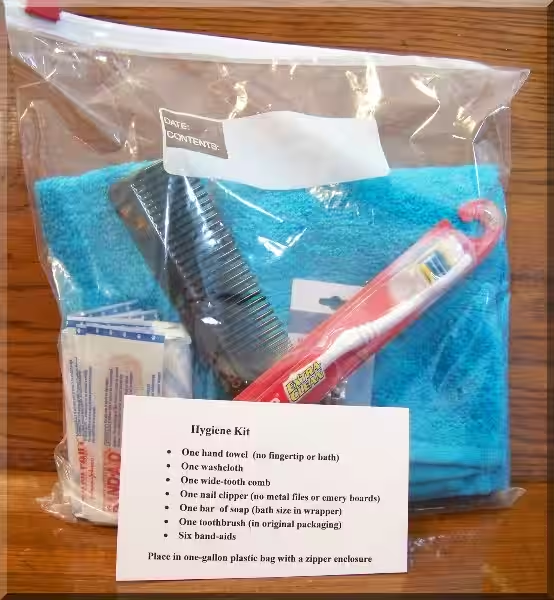
A typical Church World Service hygiene kit is thoughtfully assembled to meet immediate and critical needs. While the exact contents can vary slightly based on regional requirements and availability, the core components are designed for maximum impact. These kits generally include:
Soap:A bar of soap is fundamental for preventing the spread of disease and for basic personal cleanliness. This simple item is often one of the first things lost in a crisis.
Toothbrush and Toothpaste: Maintaining oral hygiene is vital for overall health and can contribute significantly to a person’s feeling of well-being and confidence.
Comb: A comb helps with hair grooming, which is another aspect of personal presentation that can be severely impacted by displacement.
Nail Clippers: Keeping nails clean and trimmed is a hygiene practice that can prevent injuries and infections.
Deodorant: This item, often overlooked, can have a significant impact on a person’s sense of comfort and social interaction, especially when living in close quarters.
Washcloth: Essential for bathing and general cleaning, a washcloth makes using the soap more effective and is a comforting tool for cleanliness.
Sanitary Napkins (for women and girls): This is a particularly crucial item, addressing specific needs that are often unmet in emergency situations, ensuring dignity and health for women and girls.
The inclusion of these items reflects a deep understanding of practical needs and a commitment to providing comprehensive care. For a family displaced by conflict, having these essentials readily available can mean the difference between succumbing to preventable illnesses and maintaining a basic level of health. This foresight in assembling the Church World Service hygiene kits is a direct result of the collective wisdom and experience of faith-based organizations working on the front lines of humanitarian aid.
Theological Roots: Faith in Action
The impulse to create and distribute Church World Service hygiene kits is not merely a charitable act; it is a deeply rooted expression of religious conviction. Across diverse faiths, scriptures and traditions emphasize the importance of compassion, mercy, and service to the vulnerable. These kits become a tangible manifestation of these theological imperatives. For Christians, the teachings of Jesus, particularly his parables of the Good Samaritan and his call to love one’s neighbor, directly inspire such actions. The idea of meeting practical needs, like providing for the hungry and the thirsty, extends naturally to ensuring basic hygiene.
Similarly, in Islam, the concept of Zakat (charity) and Sadaqah (voluntary charity) are pillars of the faith, encouraging believers to share their blessings and alleviate the suffering of others. The Quran and Hadith frequently highlight the importance of caring for the poor, the needy, and those afflicted by hardship. For Jewish communities, the commandment of Tzedakah (righteousness, justice, charity) is paramount, urging individuals to act justly and to support those in need. The ethos of Tikkun Olam (repairing the world) also drives many Jewish organizations to engage in humanitarian work, including the provision of essential supplies.
These are not isolated examples; similar mandates for empathy and mutual aid can be found in Buddhist, Hindu, and other spiritual traditions. The Church World Service hygiene kits serve as a unifying force, allowing people of various faith backgrounds to come together under a shared banner of humanitarian service. It’s a beautiful illustration of how religious principles translate into concrete actions that benefit all of humanity, regardless of their faith. When a congregation rallies to assemble these kits, they are not just packing boxes; they are actively living out their spiritual beliefs and contributing to a more just and compassionate world.
From Congregation to Crisis Zone: The Supply Chain of Compassion
The journey of a Church World Service hygiene kit is a fascinating logistical and spiritual undertaking. It begins with congregations mobilizing, often at the local church level. Churches, synagogues, mosques, and temples organize donation drives and assembly events. Volunteers, ranging from young Sunday school children to seasoned elders, carefully pack the individual items, often imbuing each kit with prayers and well wishes. This hands-on participation fosters a deep sense of connection to the recipients, transforming a charitable act into a deeply personal one.
These meticulously assembled kits are then transported to Church World Service warehouses. From there, they are distributed through a network of partners and affiliates to areas experiencing crises. This could be a community devastated by a hurricane, a refugee camp housing those fleeing conflict, or an area struggling with extreme poverty. The sheer scale of the operation is impressive, involving planning, coordination, and often significant financial resources. Yet, the underlying motivation remains consistent: to provide immediate relief and restore a sense of normalcy and dignity to those who have lost so much. The enduring success of the Church World Service hygiene kits lies in this robust and compassionate supply chain, fueled by faith and a commitment to service.
Beyond the Kit: A Symbol of Enduring Hope
The impact of Church World Service hygiene kits extends far beyond the immediate relief they provide. They serve as a potent symbol of enduring hope and solidarity. In moments of profound despair, the arrival of these kits signifies that the world has not forgotten them. This message of hope can be incredibly powerful, empowering individuals and communities to begin the long process of rebuilding and recovery. It reassures them that they are not alone in their struggles and that there are people who care deeply about their well-being.
Furthermore, the act of assembling and donating these kits strengthens the faith communities themselves. It provides opportunities for fellowship, shared purpose, and practical application of religious teachings. It reminds members that their faith is not just about personal belief but also about active engagement with the world and a commitment to alleviating suffering. The Church World Service hygiene kits are therefore more than just essential supplies; they are potent instruments of faith, dignity, and hope, demonstrating the transformative power of religion when put into action for the good of all. This commitment to providing practical aid with spiritual intention is what makes these initiatives so vital and impactful.
Frequently Asked Questions: Church World Service Hygiene Kits and Religion
What is a Church World Service (CWS) hygiene kit?
A CWS hygiene kit is a collection of essential personal care items assembled by volunteers to provide dignity and promote health to people affected by disaster or displacement. These kits typically include items such as soap, shampoo, toothbrushes, toothpaste, combs, and washcloths.
What is the religious significance of providing hygiene kits?
Many religions emphasize the importance of caring for the poor, the sick, and those in need. Providing hygiene kits can be seen as a practical application of these religious values, demonstrating compassion, love for one’s neighbor, and a commitment to upholding the dignity of all individuals, regardless of their circumstances.
How does assembling hygiene kits align with religious teachings?
Assembling hygiene kits often involves communal volunteer efforts, which can foster a sense of fellowship and shared purpose, often encouraged in religious communities. The act of preparing these kits can be viewed as a form of service, sacrifice, and tangible expression of faith, reflecting religious mandates to act justly and show mercy.
Can people of any religion contribute to or receive CWS hygiene kits?
Yes, Church World Service is a humanitarian organization committed to serving all people in need, regardless of their religious affiliation, race, or nationality. Contributions and volunteer efforts are welcomed from individuals and faith communities of all backgrounds.
Are there specific religious traditions that particularly encourage hygiene kit donations?
While various religious traditions emphasize charitable giving and meeting basic needs, organizations like Church World Service often partner with diverse faith-based groups. This includes denominations within Christianity, Jewish congregations, Muslim organizations, and others who find the mission of providing essential aid to align with their core religious tenets.
How does hygiene relate to religious concepts of purity and well-being?
Many religious traditions associate cleanliness with spiritual purity and overall well-being. Providing access to hygiene items can therefore be seen as supporting not only physical health but also a person’s sense of dignity and their ability to participate fully in their community and spiritual practices.