Marriage, for many, is the ultimate expression of love and commitment. Within the Roman Catholic tradition, this commitment is elevated to the status of a sacrament, a visible sign of God’s grace. At the heart of this sacred union lie the Roman Catholic marriage vows, a series of promises exchanged between two individuals before God and their community. These aren’t just pretty words; they are the bedrock upon which a lifelong partnership is built, infused with deep theological meaning and practical guidance for navigating the joys and challenges of married life. Understanding the weight and beauty of these vows can profoundly enrich a couple’s journey together, offering a roadmap for a flourishing, faith-filled marriage.
The beauty of these vows lies in their simplicity and their profound depth. They are spoken aloud, often with a trembling voice and a hopeful heart, marking a definitive turning point in a couple’s relationship. More than a legal contract, they represent a spiritual covenant, a promise to love, cherish, and support one another through all circumstances, with God as their constant witness and guide. This article will delve into the core of these vows, exploring their significance, their inherent challenges, and how they serve as a powerful foundation for a lifelong, Christ-centered marriage.
The Roman Catholic marriage vows are not merely personal declarations; they are a solemn covenant entered into in the presence of God and the Church. This distinction is crucial. Unlike secular marriages, which may focus on earthly happiness and personal fulfillment, a Catholic marriage is understood as a sacrament that reflects the love between Christ and His Church. This sacramental nature imbues the vows with an enduring, grace-filled power. When a couple pronounces their vows, they are inviting God’s presence and His strength into their union, recognizing that their love, while human, is meant to be a participation in divine love.
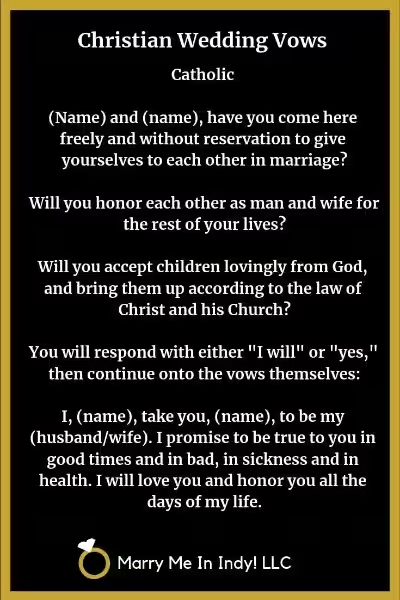
Consider the common phrasing: “I, [Name], take you, [Name], to be my lawfully wedded wife/husband, to have and to hold from this day forward, for better, for worse, for richer, for poorer, in sickness and in health, until death do us part.” This powerful declaration encapsulates the totality of the commitment. It’s a promise of unconditional love and unwavering support, acknowledging that life will inevitably bring both periods of joy and hardship. This isn’t a superficial promise to stay together as long as things are easy; it’s a profound commitment to endure, to support, and to grow together through every season of life, anchored in faith.
“For Better, For Worse”: Embracing the Full Spectrum of Life
The phrase “for better, for worse” is perhaps the most poignant and realistic element of the Roman Catholic marriage vows. It acknowledges that no marriage, no matter how deeply in love the couple, will be a perpetual honeymoon. Life is a tapestry woven with threads of joy, triumph, and profound love, but also with challenges, disappointments, and even suffering. This vow is a commitment to stand by each other through all of it, to be a source of strength and comfort when the “worse” inevitably arrives.
For example, a couple might vow “for better, for worse” at the altar, full of youthful optimism. Years later, when facing a significant financial setback, the loss of a loved one, or a serious illness, this vow takes on a new, profound meaning. It’s not just a phrase; it’s a lifeline. It’s the quiet understanding that, despite the pain, the commitment remains, and they will face these trials together, drawing strength from their shared faith and their enduring love. This resilience is a hallmark of marriages deeply rooted in the sacrament of matrimony.
“In Sickness and in Health”: Vigilance and Compassion
The promise “in sickness and in health” speaks to the unwavering dedication and compassionate care that true marital love demands. It’s a commitment to tending to each other’s physical and emotional well-being, especially during times of vulnerability. This vow is not only about grand gestures but also about the quiet, consistent acts of love and support that sustain a relationship through illness.
Imagine a scenario where one spouse develops a chronic illness. The vow “in sickness and in health” transforms from spoken words into daily actions: the gentle touch, the patient listening, the tireless caregiving, the shared burdens. It’s about being present, not just physically, but emotionally and spiritually, offering solace and practical help. This commitment to care for one another, even when it’s difficult and demanding, is a powerful testament to the unconditional nature of the love celebrated in Catholic marriage.
“For Richer, For Poorer”: Financial and Material Stability
The inclusion of “for richer, for poorer” in the Roman Catholic marriage vows addresses the practical realities of life, acknowledging that financial circumstances can fluctuate dramatically. This vow is a commitment to mutual support and shared responsibility in managing resources, whether they are abundant or scarce. It’s about ensuring that financial pressures don’t become a wedge that drives the couple apart.
This might manifest in several ways. In times of prosperity, it means being wise stewards of God’s blessings, avoiding excessive materialism and remembering to be generous. In times of financial struggle, it means working together, supporting one another through job loss or unexpected expenses, and maintaining open communication about finances. The core principle is that their material well-being is a shared concern, and they will navigate it as a team, trusting in God’s providence.
“Until Death Do Us Part”: The Permanence of the Union
The final, and perhaps most profound, element of the Roman Catholic marriage vows is the promise “until death do us part.” This declaration signifies the indissolubility of the marital bond within the Catholic Church. It’s a commitment to a lifelong union, a covenant that is meant to be permanent and unbreakable, mirroring the eternal love of God. This is a stark contrast to many secular understandings of marriage, which may view divorce as a viable option when difficulties arise.
This permanency offers a powerful sense of security and stability. It means that challenges, while difficult, are not reasons to abandon the commitment. Instead, they are opportunities for deeper growth and a renewed commitment to the vows exchanged. It is a call to perseverance and reconciliation, understanding that the strength of the union lies not in its perfection, but in its enduring fidelity. The Church teaches that this permanence is a reflection of Christ’s unwavering love for His Church, a love that is steadfast and eternal.
Beyond the Words: Living the Vows in Daily Life
While the Roman Catholic marriage vows are spoken with great solemnity during the wedding ceremony, their true power is revealed in how they are lived out day by day. These vows are not static pronouncements; they are dynamic promises that require ongoing effort, intentionality, and a deep reliance on God’s grace. The wedding day is just the beginning of the journey of living out these sacred commitments.
To truly embody the spirit of these vows means actively choosing to love, to forgive, and to support one another, even when it’s challenging. It involves cultivating virtues such as patience, kindness, humility, and perseverance. It means making time for one another, fostering open communication, and regularly seeking God’s guidance through prayer and participation in the sacraments. The daily practice of love is where the sacramental grace of marriage truly flourishes.
The Role of Prayer and Sacraments
For couples seeking to live out their Roman Catholic marriage vows faithfully, prayer and the sacraments are indispensable tools. Regular prayer, both individually and as a couple, helps to keep God at the center of the marriage. It’s a way to communicate with the divine, to seek His wisdom and strength, and to express gratitude for the gifts of their union. The Rosary, the Divine Mercy Chaplet, or simply quiet reflection on Scripture can be powerful ways to nurture their spiritual life together.
Furthermore, the frequent reception of the Sacraments of Reconciliation (Confession) and the Eucharist (Holy Communion) provides essential spiritual nourishment. Confession offers opportunities for forgiveness and renewal, helping couples to address their shortcomings and to recommit to their promises. The Eucharist, the very Body and Blood of Christ, strengthens them in their union and reminds them of Christ’s sacrificial love, which they are called to emulate. These sacramental encounters are vital for maintaining the sacredness of their marriage.
Communication and Conflict Resolution
The commitment “for better, for worse” inherently involves navigating disagreements and conflicts. Effective communication is paramount in ensuring that these challenging moments do not erode the foundation of the marriage. The Roman Catholic marriage vows, while emphasizing permanence, also implicitly call for healthy conflict resolution, guided by love and respect.
This means learning to listen actively, to express oneself honestly and kindly, and to seek understanding rather than simply trying to win an argument. It involves practicing forgiveness, both for oneself and for one’s spouse, and being willing to apologize. When faced with conflict, couples are encouraged to recall their vows and remember their shared commitment to each other, seeking solutions that honor their love and their faith. This is where the practical application of vows truly shines.
Building a Shared Spiritual Life
Central to the enduring strength of a Catholic marriage is the cultivation of a shared spiritual life. The Roman Catholic marriage vows are not just about two individuals making promises to each other; they are about two souls embarking on a spiritual journey together, with Christ as their ultimate guide. This shared journey strengthens their bond and provides a common purpose.
Activities such as participating in Mass together, engaging in regular Bible study, attending marriage enrichment programs, or even praying the Liturgy of the Hours can deepen their spiritual connection. When couples prioritize their faith and their relationship with God, their marriage becomes a witness to God’s love in the world. This intentional effort to build a shared spiritual life is a powerful way to live out the promises made at the altar.
The Enduring Power of the Roman Catholic Marriage Vows
The Roman Catholic marriage vows are far more than simply a traditional exchange of words. They are a profound and sacred commitment, a covenant entered into before God, reflecting the unbreakable love between Christ and His Church. These vows provide a robust framework for a lifelong partnership, guiding couples through the inevitable ups and downs of married life with promises of fidelity, support, and enduring love.
By understanding the depth of meaning within each phrase – “for better, for worse,” “in sickness and in health,” “for richer, for poorer,” and “until death do us part” – couples can gain a clearer vision of the commitment they are making. Living out these vows requires intentionality, reliance on God’s grace, and a continuous effort to nurture their spiritual and relational connection. The enduring power of these vows lies not only in their solemn pronouncement but in the daily, lived reality of two people striving to love each other as Christ loves the Church, creating a marriage that is a source of strength, joy, and a testament to divine love.
Frequently Asked Questions about Roman Catholic Marriage Vows
What are Roman Catholic marriage vows?
Roman Catholic marriage vows are solemn promises exchanged by a man and a woman during the Sacrament of Matrimony. They are public declarations of their commitment to love, honor, and cherish each other throughout their lives, in accordance with the teachings of the Catholic Church. These vows are considered a sacred covenant before God.
The purpose of Catholic marriage vows is to establish a lifelong, exclusive, and indissoluble union between a baptized man and a baptized woman. The vows signify their consent to give themselves freely to each other for the good of their spouse and for the procreation and education of children, reflecting the love of Christ for His Church.
What are the essential elements of Catholic marriage vows?
The essential elements of Catholic marriage vows include:
Free Consent: Both individuals must freely and without coercion agree to marry each other.
Indissolubility: The vows are understood to create a bond that cannot be broken by human will.
Exclusivity (Fidelity): The vows pledge faithfulness to one spouse alone.
Openness to Children: The vows implicitly include a willingness to accept and raise children as a gift from God.
Are there specific words that must be used for Catholic marriage vows?
While the specific wording can vary slightly depending on the liturgical rite or translation used, the core of the vows typically expresses the commitment to take the other person as spouse, for better or for worse, in sickness and in health, until death do us part. The essential intention behind the vows is what matters most to the Church.
Can Catholic marriage vows be conditional?
No, Catholic marriage vows cannot be conditional. They must be given freely and without reservation. Any condition imposed on the vows would render the marriage invalid in the eyes of the Church because it would indicate a lack of full and total consent.
What does “until death do us part” mean in Catholic marriage?
“Until death do us part” signifies the indissolubility of a valid Catholic marriage. The Church teaches that marriage is a lifelong commitment, and only the death of one spouse can dissolve the marital bond. Divorce is not recognized as dissolving a sacramental marriage, though annulment is possible when the marriage was never validly contracted.
How do Catholic marriage vows relate to religion and faith?
Catholic marriage vows are deeply rooted in religion and faith. They are considered a sacrament, a visible sign of God’s invisible grace. The vows are made before God and the Church community, and the couple seeks God’s blessing and strength to live out their marital commitment according to His will. The faith of the couple is essential in understanding and living out the covenantal nature of their marriage.
What is the role of God in Catholic marriage vows?
God is the ultimate witness and source of the covenant of marriage. The couple’s vows are a response to God’s love and a commitment to live out their married life in His presence, seeking His guidance and grace. The Church believes that God’s grace sustains the marriage and helps the couple to live out their vows faithfully.
What is an annulment in the context of Catholic marriage vows?
An annulment (or declaration of nullity) is a decree by the Church that a marriage was never validly contracted from the beginning, despite a ceremony having taken place. This does not mean the marriage “didn’t happen,” but rather that one or more of the essential requirements for a valid sacramental marriage were absent at the time of the vows. Reasons can include lack of free consent, lack of commitment to indissolubility, or lack of openness to children.