In the vast tapestry of religious practice, certain prayers stand out for their profound simplicity and enduring spiritual resonance. For Catholics, the Hail Mary and the Our Father are not mere recitations; they are cornerstones of faith, offering solace, guidance, and a direct connection to the divine. These prayers, woven into the fabric of daily life for millions, represent a deep well of comfort and a powerful means of expressing devotion, seeking forgiveness, and fostering a spirit of humility and trust in God’s providence.
Understanding the significance and proper invocation of these sacred words can unlock a richer, more meaningful prayer life. They serve as both a personal dialogue with God and a communal expression of shared belief. Whether whispered in a moment of quiet reflection, chanted in a bustling church, or recited in times of great joy or sorrow, the Hail Mary and the Our Father offer a consistent and unwavering source of spiritual strength and connection.
The Hail Mary: A Dialogue of Love and Intercession
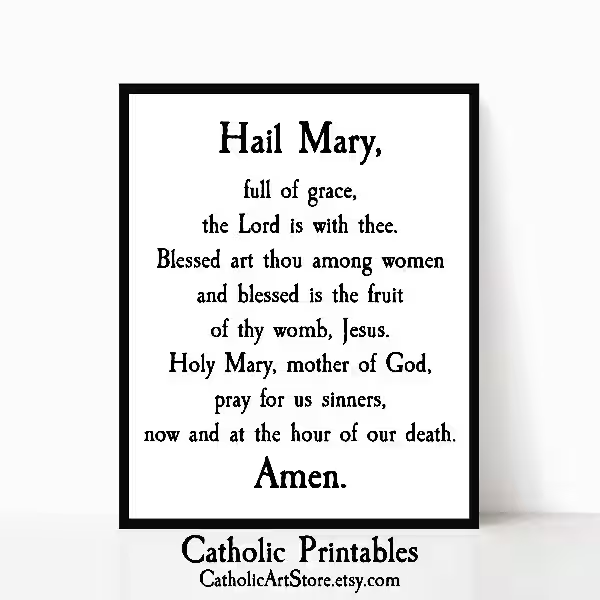
The Hail Mary, often referred to as the Angelic Salutation, is a beautiful prayer that intertwines praise for the Blessed Virgin Mary with petitions for her intercession. It begins with the words of the Archangel Gabriel, “Hail, full of grace, the Lord is with thee.” This initial greeting sets a tone of profound reverence and acknowledges Mary’s unique role in salvation history. The subsequent phrase, “Blessed art thou amongst women, and blessed is the fruit of thy womb, Jesus,” directly references her immaculate conception and her role as the Mother of God. This part of the prayer is a powerful act of adoration, recognizing Mary’s purity and her divine maternity.
The second part of the Hail Mary is a petition: “Holy Mary, Mother of God, pray for us sinners, now and at the hour of our death. Amen.” This is where the prayer shifts from adoration to supplication. Catholics believe that Mary, as the Mother of Jesus, has a special place in God’s heart and can powerfully intercede on our behalf. She is seen not as an object of worship, but as a loving mother who understands our struggles and can guide us towards her Son. Imagine asking a loving mother to pray for you when you are facing a difficult challenge; in a similar, though divinely elevated, way, Catholics turn to Mary. This prayer is often recited multiple times, particularly in the Rosary, fostering a deep and personal relationship with the Mother of Christ, deepening our understanding of her role in our faith journey.
The Significance of Mary’s Intercession
The concept of intercessory prayer, asking someone to pray for you, is a fundamental aspect of many Christian traditions. In Catholicism, Mary’s intercession is particularly emphasized due to her closeness to Jesus. She witnessed his life, his suffering, and his resurrection firsthand. This intimate connection grants her a unique perspective and a profound empathy for our human condition. When we pray the Hail Mary, we are not asking Mary to forgive our sins or to grant salvation; rather, we are asking her to bring our needs and our prayers before her Son, who is the ultimate source of all grace and mercy. She is like a trusted messenger, carrying our heartfelt requests to the King of Heaven.
This understanding brings immense comfort. In times of personal struggle, doubt, or temptation, knowing that Mary is praying for us can be a source of unwavering strength. It fosters a sense of community within the Body of Christ, as we are united in prayer with the saints and especially with the Blessed Mother. The repetition of the Hail Mary, far from being monotonous, can lead to a meditative state, allowing the words to sink deeper into the heart and mind. It’s an invitation to contemplate her virtues – her humility, her obedience, her profound faith – and to strive to emulate them in our own lives. The prayer reminds us that we are never alone; we have a heavenly mother who watches over us with infinite love and compassion.
The Our Father: A Model of Prayer from Jesus Himself
The Our Father, also known as the Lord’s Prayer, holds a unique and central place in Catholic devotion. Jesus himself taught this prayer to his disciples when they asked him how to pray. “Pray then in this way,” He instructed them, and the words that followed are a perfect blueprint for approaching God. This prayer is considered a model, encompassing all the essential elements of prayer: adoration, thanksgiving, petition, and confession. It is a direct address to God, whom Jesus calls “Our Father,” establishing a deeply personal and relational connection. The opening, “Our Father who art in heaven, hallowed be thy name,” immediately directs our focus to God’s holiness and sovereignty, acknowledging His transcendent nature and inviting us to revere Him.
The subsequent petitions in the Our Father are both spiritual and practical, covering a spectrum of human needs. “Thy kingdom come, thy will be done, on earth as it is in heaven” expresses our desire for God’s reign to be fully realized in our lives and in the world. We then move to requests for daily sustenance (“Give us this day our daily bread”), forgiveness of our sins (“and forgive us our trespasses, as we forgive those who trespass against us”), and protection from evil (“and lead us not into temptation, but deliver us from evil”). This prayer is a comprehensive guide, teaching us what to ask for and how to approach God with humility and trust. Reciting the Our Father is not just a rote memorization; it is an engagement with core tenets of our faith, a declaration of dependence on God’s love and power.
One of the most profound and challenging petitions within the Our Father is “and forgive us our trespasses, as we forgive those who trespass against us.” This phrase carries immense weight and reveals a crucial aspect of God’s mercy. It establishes a clear, reciprocal relationship between receiving God’s forgiveness and extending forgiveness to others. Jesus understood that our ability to receive His boundless mercy is intricately linked to our willingness to let go of grudges and resentments towards those who have wronged us. It’s a powerful reminder that true reconciliation with God necessitates reconciliation with our fellow human beings. Imagine a closed door; if we refuse to open it to others, we are also preventing God’s grace from fully entering our hearts.
This petition is not merely an instruction; it is an invitation to spiritual growth. Practicing forgiveness, even when it’s difficult, is a transformative act. It frees us from the burden of anger and bitterness, allowing space for peace and healing. When we sincerely pray this line of the Our Father, we are implicitly committing ourselves to the challenging but liberating work of reconciliation. It’s a call to humility, recognizing our own imperfection and our need for God’s grace, just as others need ours. The practice of forgiving others, therefore, becomes a vital component of our own spiritual well-being and our relationship with the divine.
Integrating Catholic Prayers into Daily Life
The beauty of the Hail Mary and the Our Father lies in their accessibility and adaptability. They can be incorporated into our lives in countless ways, transforming ordinary moments into opportunities for spiritual connection. Many Catholics begin and end their day with these prayers, offering them as acts of devotion and seeking protection and guidance. A simple morning prayer of the Our Father can set a positive and God-centered tone for the hours ahead, while a quiet evening recitation of the Hail Mary can bring a sense of peace and entrustment to Mary’s care. For busy individuals, even a brief, heartfelt prayer during a commute or a lunch break can be profoundly impactful.
Furthermore, these prayers are integral to the communal worship of the Church. They are recited during Mass, during the Rosary, and in various liturgical celebrations. Participating in these communal prayers strengthens our sense of belonging and reminds us that we are part of a larger faith family, united in our love for God and for one another. The consistent and sincere recitation of the Hail Mary and the Our Father is not about achieving some mystical state, but about building a consistent, loving relationship with God and His Mother. It’s about cultivating a heart that is open to divine grace, ready to embrace God’s will, and eager to extend His love and forgiveness to all those we encounter. These timeless prayers are a constant invitation to draw closer to the heart of God, offering a pathway to deeper faith, enduring hope, and boundless love.
The Hail Mary is a popular Catholic prayer that invokes the Virgin Mary. It consists of three parts: the salutation from the Angel Gabriel, the greeting from Elizabeth, and a petition for her intercession. It is often prayed repeatedly, particularly in the Rosary.
What are the words to the Hail Mary prayer?
The traditional Hail Mary prayer is:
“Hail Mary, full of grace, the Lord is with thee. Blessed art thou amongst women, and blessed is the fruit of thy womb, Jesus. Holy Mary, Mother of God, pray for us sinners, now and at the hour of our death. Amen.”
What is the Our Father prayer in Catholicism?
The Our Father (also known as the Lord’s Prayer) is a central Christian prayer that Jesus taught his disciples. It is a model prayer that addresses God as “Our Father” and asks for his will to be done on earth as it is in heaven, for daily needs, forgiveness, and protection from evil.
What are the words to the Our Father prayer?
The traditional Our Father prayer is:
“Our Father, who art in heaven, hallowed be thy name. Thy kingdom come, thy will be done, on earth as it is in heaven. Give us this day our daily bread. And forgive us our trespasses, as we forgive those who trespass against us. And lead us not into temptation, but deliver us from evil. For thine is the kingdom, and the power, and the glory, for ever. Amen.”
Why are these prayers important in Catholicism?
The Hail Mary and Our Father are important because they are foundational prayers that connect Catholics to Jesus Christ and the Blessed Virgin Mary. The Our Father teaches discipleship and reliance on God, while the Hail Mary honors Mary as a model of faith and asks for her intercessory prayers. Both are integral to Catholic devotion and spiritual life.