In the tapestry of Christian devotion, certain prayers stand out not just for their frequency, but for their profound spiritual resonance and their ability to connect us to the divine. The Our Father, the Hail Mary, and the Glory Be are more than just words; they are vessels of meaning, anchors of faith, and constant companions on the spiritual journey. For countless individuals, reciting these prayers offers solace in times of trouble, strength in moments of doubt, and a profound sense of belonging within the larger narrative of God’s love. They are the foundational stones of prayer for many, accessible to the young and old, the novice and the seasoned believer alike.
These prayers, when offered with sincerity, can transform the mundane into the sacred, turning a quiet moment into a profound encounter. They are the vocal embodiment of our hopes, our fears, our gratitude, and our humble petition. Each repetition, whether in a grand cathedral or a quiet bedroom, carries its own weight and beauty, a testament to their enduring efficacy in the lives of believers. Let’s explore the unique contributions of each prayer and how they weave together to form a robust and deeply personal prayer life.
The Our Father, also known as the Lord’s Prayer, is Jesus’ own model of prayer, given to his disciples on the Mount. It’s not merely a set of words to memorize, but a comprehensive guide to approaching God. This prayer begins with an address of profound intimacy and reverence: “Our Father, who art in heaven.” This opening immediately establishes a loving, paternal relationship with God, emphasizing His transcendence and His personal care for us. It reminds us that we are not alone, but children of a loving Creator who resides in a realm of perfect holiness.
The subsequent petitions within the Our Father then unfold a roadmap for a life lived in alignment with God’s will. We pray for His name to be hallowed, for His kingdom to come, and for His will to be done on earth as it is in heaven. These are not selfish requests; they are a surrender of our own desires to a higher, more perfect plan. Following this, we ask for our daily bread, symbolizing our reliance on God for all our needs, both physical and spiritual. The prayer then moves to forgiveness, asking for our debts to be forgiven as we forgive others, highlighting the crucial link between divine mercy and our own capacity for compassion. Finally, we seek protection from temptation and deliverance from evil, acknowledging our vulnerability and God’s power to shield us.
The Hail Mary: A Dialogue of Grace and Intercession
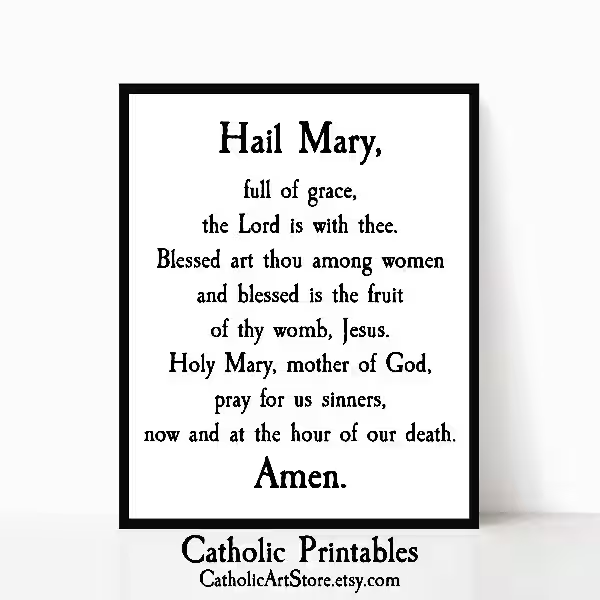
The Hail Mary is a prayer deeply cherished in Catholic tradition, a beautiful invocation of Mary, the Mother of Jesus. It begins with a greeting that echoes the angel Gabriel’s announcement: “Hail Mary, full of grace, the Lord is with thee.” This opening acknowledges Mary’s unique and privileged role in salvation history, her profound closeness to God, and her blessedness among all women. The words themselves are a meditation on her sanctity and her role as a bearer of divine favor.
The second part of the Hail Mary expands on this, entreating her: “Blessed art thou amongst women, and blessed is the fruit of thy womb, Jesus.” This recognizes her motherhood of Jesus, the Son of God, and through her, connects us to the source of all grace. The petitionary part, “Holy Mary, Mother of God, pray for us sinners, now and at the hour of our death,” is a profound expression of trust. We ask Mary, who experienced human suffering and joy, who walked with Jesus from his birth to his crucifixion, to intercede for us. This isn’t about worshipping Mary, but about recognizing her as a powerful advocate and a loving spiritual mother who understands our struggles as sinners and can guide us towards her Son. It’s like asking a wise and loving mother to speak to the King on your behalf, knowing she has his ear and his heart.
The Glory Be: A Hymn of Trinitarian Praise
The Glory Be, or the Minor Doxology, is a radiant expression of praise and adoration directed towards the Holy Trinity. It begins with the resounding declaration, “Glory be to the Father, and to the Son, and to the Holy Spirit.” This simple yet profound statement encapsulates the core of Christian belief: the existence of one God in three co-equal Persons. It is a constant reminder of the divine mystery that underpins our faith, a celebration of God’s eternal nature and His manifold perfections.
As it continues, “As it was in the beginning, is now, and ever shall be, world without end. Amen,” the Glory Be extends this praise into eternity. It signifies the unchanging and everlasting nature of God’s glory. This prayer is a powerful antidote to the fleeting nature of worldly concerns, grounding us in the eternal truth of God’s being. Whether recited individually or in a group, it fosters a sense of cosmic worship, uniting us with all of creation in acknowledging God’s supreme majesty. It’s a timeless song of thanksgiving, a recognition that all goodness and being flow from this Trinitarian source.
Weaving the Prayers into the Fabric of Daily Life
The true power of the Our Father, Hail Mary, and Glory Be lies in their integration into our everyday lives. They are not reserved for moments of crisis or special occasions; rather, they serve as consistent touchstones for spiritual grounding. Many find solace in starting their day with the Our Father, setting a tone of reliance and surrender for the hours ahead. The Hail Mary can be a comforting prayer during times of personal struggle or when seeking guidance, a gentle reminder of Mary’s compassionate presence. And the Glory Be is a perfect way to conclude a prayer, a moment of pure, unadulterated praise, or to offer thanks throughout the day.
Consider the simple act of driving. A quick recitation of the Our Father can be a mindful way to acknowledge God’s presence and protection during your journey. A Hail Mary might be whispered before a difficult conversation, seeking courage and wisdom. And a Glory Be can be a spontaneous expression of gratitude for a beautiful sunset or a moment of peace. These prayers are flexible and adaptable, offering a profound spiritual anchor in the midst of life’s inevitable ups and downs. They provide a consistent framework for prayer, allowing us to deepen our relationship with God through structured yet deeply personal devotion.
Furthermore, these prayers offer a sense of communal prayer, even when we are physically alone. Knowing that millions of others around the world are reciting the same words creates a powerful sense of spiritual solidarity. When we pray the Our Father, we are joining a chorus of believers asking for God’s will to be done. When we pray the Hail Mary, we are part of a lineage of those who have sought Mary’s intercession. And when we offer the Glory Be, we are contributing to an eternal symphony of praise. This shared experience strengthens our faith and reminds us that we are part of something much larger than ourselves. The Our Father, Hail Mary, and Glory Be are not just individual prayers; they are the heartbeat of a global faith community.
The Our Father, also known as the Lord’s Prayer, is a central prayer in Christianity. It is believed to have been taught by Jesus to his disciples and is found in the Gospels. It is a prayer of petition, praise, and surrender to God’s will.
What is the Hail Mary prayer?
The Hail Mary is a traditional Catholic prayer that invokes the Virgin Mary. It consists of two parts: the first part, taken from the angel Gabriel’s greeting to Mary (Luke 1:28), and the second part, a petition asking for Mary’s intercession.
What is the Glory Be prayer?
The Glory Be, also known as the Doxology, is a short prayer of praise to the Holy Trinity: the Father, the Son, and the Holy Spirit. It is often recited at the end of prayers and in the Rosary.
What is the purpose of these prayers in religion?
These prayers serve various purposes in religious practice. The Our Father is a model for prayer and an expression of our relationship with God. The Hail Mary is a devotion to Mary, seeking her intercession and acknowledging her role in salvation. The Glory Be is an act of worship and adoration of God. Together, they help believers to focus their minds and hearts on God, express their faith, and seek spiritual guidance and strength.