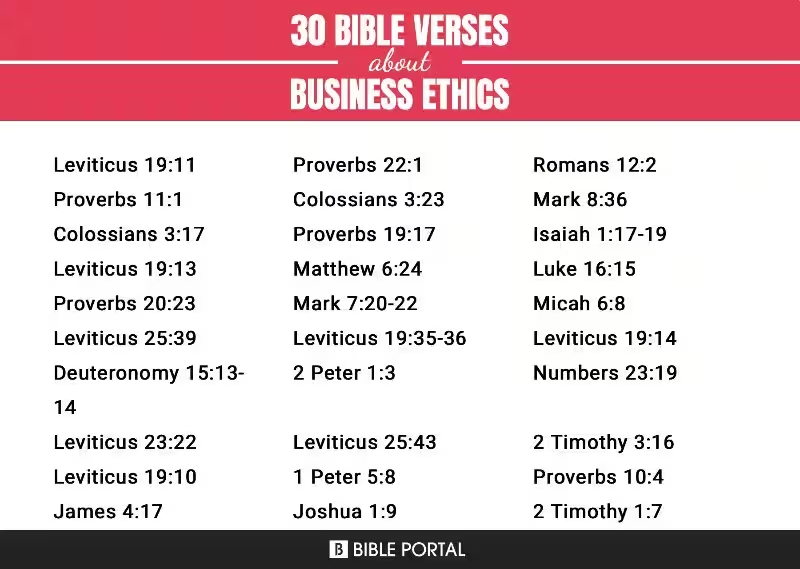
In the bustling arena of commerce, where profits and principles often seem to dance a precarious tango, the question of ethics in business is more than just a buzzword; it’s a fundamental pillar for sustainable success and personal integrity. For many, faith provides a powerful framework for navigating these complex decisions, offering timeless wisdom through religion and its sacred texts. The Bible, a cornerstone of many ethical systems, is replete with guidance that, while ancient, remains remarkably relevant to the modern workplace. These divine pronouncements aren’t abstract theological debates; they are practical, actionable directives for how we conduct ourselves in the marketplace, fostering trust, fairness, and a legacy that extends beyond the balance sheet. Whether you’re a seasoned entrepreneur, a budding startup founder, or an employee striving to make a difference, understanding these Bible verses on ethics in business can illuminate your path and solidify your commitment to a business built on solid moral ground.
The pursuit of wealth is a natural human endeavor, and the Bible itself acknowledges the necessity and even the blessing of prosperity. However, it consistently warns against the pitfalls of greed and the corrosive influence of unethical practices. This ancient wisdom reminds us that the “love of money is a root of all kinds of evil” (1 Timothy 6:10), a sentiment that resonates deeply in an era often characterized by relentless competition and the temptation to cut corners. This foundational principle underscores the importance of prioritizing integrity over immediate gain, ensuring that our business dealings are not just profitable but also righteous.
The Foundation of Fairness: Honesty and Integrity in Every Transaction
At the heart of ethical business practices lies the unwavering commitment to honesty and integrity. The Bible repeatedly emphasizes the importance of truthfulness, not just in grand pronouncements but in the everyday details of our commercial lives. This means being transparent with clients, suppliers, and employees, even when the truth might be inconvenient or potentially costly in the short term. A business built on a foundation of deceit or misrepresentation is ultimately fragile, destined to crumble under the weight of its own dishonesty, much like a house built on sand.
Proverbs 11:1, for instance, states, “Honest scales are His delight, but dishonest weights are an abomination to Him.” This simple yet profound verse speaks to the core of fair dealing. Imagine a shopkeeper who subtly mislabels products or inflates prices – this is a form of dishonest weight. In today’s world, this translates to everything from accurate advertising and transparent pricing to truthful financial reporting. The principle is clear: fairness in every transaction is not just good business; it is a moral imperative. When we operate with integrity, we build trust and reputation, invaluable assets that attract loyal customers and dedicated employees, far exceeding any fleeting gains from unethical shortcuts.
Furthermore, the commitment to honesty extends to our promises and commitments. The Bible teaches us to be people whose word is their bond. Matthew 5:37, Jesus said, “Simply let your ‘Yes’ be ‘Yes,’ and your ‘No,’ ‘No’; anything beyond this comes from the evil one.” This means keeping our word in contracts, deadlines, and agreements. For a business, this translates to delivering on promises, meeting deadlines, and honoring commitments, even when circumstances change. A company known for its reliability and trustworthiness will naturally thrive, as clients and partners feel secure in their dealings.
The Dignity of Labor: Treating Employees with Respect and Justice
The ethical treatment of employees is another paramount aspect of Bible verses on ethics in business. The scriptures consistently advocate for the dignity and fair compensation of workers. This principle challenges any business model that exploits labor for maximum profit, reminding us that every individual has inherent worth and deserves to be treated with respect. The modern equivalent of “hiring slaves” or “underpaying workers” is far more subtle, yet the ethical violation remains.
James 5:4 issues a stern warning: “Listen! The wages you failed to pay the workmen who harvested your fields are crying out against you. The cries of the harvesters have reached the ears of the Lord Almighty.” This powerful imagery underscores the gravity of unjust wages or withholding earned compensation. It’s a clear call for businesses to ensure that their employees are paid fairly and on time. This isn’t just about meeting legal requirements; it’s about upholding a fundamental ethical standard that acknowledges the value of hard work and the right to receive what is earned.
Beyond fair wages, the Bible also promotes a culture of respect and consideration for employees. This includes providing a safe working environment, fostering a culture of mutual respect, and avoiding oppressive or abusive management practices. Treating employees as mere cogs in a machine, rather than as valuable individuals, is a direct violation of this ethical guidance. A company that prioritizes the well-being and development of its people will naturally foster higher morale, increased productivity, and a stronger sense of loyalty, creating a truly thriving workplace.
The Stewardship of Resources: Responsible Financial Management and Generosity
Ethical business practices also encompass the responsible stewardship of resources – both financial and environmental. The Bible teaches that we are accountable for how we manage the assets entrusted to us, and this responsibility extends to our business finances and our impact on the world around us. This involves not only prudent financial management but also a commitment to generosity and social responsibility.
Proverbs 3:9-10 encourages us to “Honor the Lord with your wealth and with the firstfruits of all your harvest; then your barns will be filled to overflowing, and your vats will brim with new wine.” While this refers to literal harvests, the underlying principle of honoring God with our resources and being generous is deeply relevant to business. This can manifest in various ways, such as ethical investment decisions, avoiding excessive debt, and contributing to the community. A business that is solely focused on accumulating wealth without regard for its impact or a willingness to share its blessings is missing a crucial ethical dimension.
Furthermore, the concept of stewardship extends to the environment. While the Bible wasn’t written with modern industrial pollution in mind, the principle of caring for creation is evident. Businesses have a moral obligation to operate in ways that minimize their environmental footprint and conserve natural resources. This could involve adopting sustainable practices, investing in eco-friendly technologies, and taking responsibility for the environmental impact of their operations. Being a good steward of the earth is not just a matter of corporate social responsibility; it is a reflection of our ethical commitment to the world we inhabit.
Conclusion: Building a Legacy of Integrity and Faith
In conclusion, the Bible verses on ethics in business offer a timeless and practical guide for navigating the complexities of the marketplace. From the fundamental importance of honesty and integrity in every transaction to the dignity and fair treatment of employees, and the responsible stewardship of resources, these principles provide a robust framework for building a business that is not only successful but also morally sound. Embracing these religious teachings allows us to move beyond mere compliance with laws and regulations, fostering a genuine commitment to doing what is right.
Ultimately, a business founded on ethical principles, guided by faith, is more than just an economic engine; it’s a testament to a life lived with purpose and integrity. By weaving these Bible verses on ethics in business into the fabric of our daily operations, we can build organizations that are trusted, respected, and enduring, leaving a positive and lasting legacy for generations to come. This approach ensures that our pursuit of profit is aligned with our moral compass, creating a harmonious balance between success and significance.
Frequently Asked Questions: Bible Verses on Ethics in Business
What does the Bible say about honesty in business?
The Bible strongly emphasizes honesty in all dealings. Proverbs 11:1 states, “False scales are an abomination to the Lord, but a just weight is His delight.” This highlights God’s displeasure with deception and his approval of integrity. Colossians 3:23 encourages, “Whatever you do, work heartily, as for the Lord and not for men.” This implies that our business practices should reflect a commitment to truthfulness and diligence, as if we are directly accountable to God.
How does the Bible address fairness in business transactions?
Fairness is a cornerstone of biblical business ethics. Deuteronomy 25:15-16 commands, “You shall have a perfect and just weight, a perfect and just measure shall you have, that your days may be long in the land that the Lord your God is giving you. For all who do these things, all who act iniquity, are an abomination to the Lord your God.” This passage stresses the importance of equitable dealings to ensure prosperity and favor. Micah 6:8 is a summary of what God requires: “He has shown you, O man, what is good; and what does the Lord require of you but to do justice, and to love kindness, and to walk humbly with your God?” This includes treating all parties in a business transaction with justice and kindness.
What are the biblical principles regarding treating employees?
The Bible advocates for fair and just treatment of employees. Ephesians 6:9 instructs, “Masters, do the same to them, leaving off threatening: knowing that he which is in heaven is both Master and theirs also: neither is there respect of persons with him.” This means employers should not exploit or mistreat their workers, recognizing that both employer and employee have a heavenly Master. James 5:4 warns, “Behold, the wages of the laborers who mowed your fields, which you have kept back by fraud, are crying out against you, and the cries of those who harvested have reached the ears of the Lord of hosts.” This clearly condemns withholding fair compensation.
Does the Bible offer guidance on greed and wealth accumulation?
While the Bible does not condemn wealth itself, it strongly warns against greed and the love of money. 1 Timothy 6:10 states, “For the love of money is a root of all kinds of evils. It is through this craving that some have wandered away from the faith and pierced themselves with many pangs.” Jesus also cautioned in Luke 12:15, “Take care, and be on your guard against all kinds of greed, for one’s life does not consist in the abundance of his possessions.” The emphasis is on a healthy perspective, prioritizing spiritual well-being over material accumulation.
What is the biblical perspective on fulfilling contracts and promises?
Fulfilling promises and contracts is a matter of integrity in the Bible. Psalm 15:4 describes a righteous person as one “who does not take an oath but keeps his word, even when it hurts him.” Jesus himself said in Matthew 5:37, “Let what you say be simply ‘Yes’ or ‘No’; anything more than this comes from evil.” This highlights the importance of being trustworthy and honoring commitments made in business.
How does religion, specifically the Bible, view the purpose of business?
From a biblical perspective, business can be seen as a way to serve God and others. Beyond profit, it can be an avenue for stewardship, innovation, and contributing to the common good. Proverbs 22:29 suggests diligence leads to success: “Do you see a man skillful in his work? He will stand before kings; he will not stand before obscure men.” This implies that excellence in work, including business, can be a way to bring honor and contribute positively. Ultimately, the Bible teaches that all we do, including our business endeavors, should be done for the glory of God (1 Corinthians 10:31).