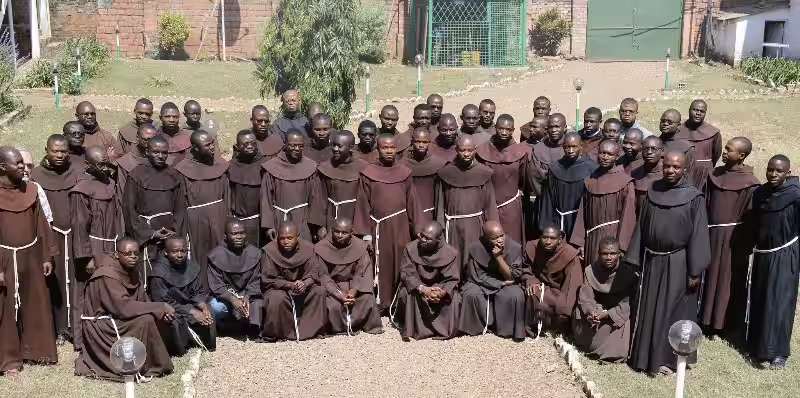
The very word “missionary” often conjures images of a bygone era: weathered individuals venturing into uncharted territories, armed with faith and a desire to spread the tenets of their religion. While these historical narratives are undeniably powerful, the concept of the missionary has evolved, adapting to the complexities of our interconnected world. Today, the modern missionary operates within a landscape vastly different from their predecessors, yet the core impulse remains the same: to share deeply held beliefs and foster spiritual growth. Understanding this enduring drive, the motivations behind it, and the varied forms it takes, offers a profound glimpse into the dynamic nature of religion itself.
This article aims to demystify the role of the contemporary missionary, exploring their motivations, the diverse ways they engage with communities, and the profound impact they have, both on those they serve and on their own spiritual journeys. We will delve into the essence of what it means to be a missionary in the 21st century, moving beyond stereotypes to appreciate the nuanced and often deeply personal nature of this religious calling.
The Heart of the Calling: Why Become a Missionary?
At its core, the decision to become a missionary stems from a profound sense of conviction and love. For many, it’s a direct response to a deeply ingrained religious teaching that emphasizes the importance of sharing their faith. This isn’t merely about proselytizing; it’s often about a genuine desire to offer what they believe to be a source of hope, purpose, and salvation to others. Think of it like discovering a life-saving remedy and feeling compelled to share it with those who are suffering. The missionary believes their faith offers that kind of profound benefit, and they feel a moral imperative to extend it.
Beyond theological motivations, personal experiences often fuel the missionary drive. A transformative encounter with their faith, a personal revelation, or a feeling of being called to serve can ignite a passionate commitment. This can manifest as a desire to alleviate suffering, promote social justice, or build community when these align with their religious ideals. For instance, a missionary might be drawn to a region facing poverty or lack of education, seeing their religious principles as a framework for providing practical assistance and spiritual comfort simultaneously. It’s a powerful blend of spiritual conviction and humanitarian impulse.
Personal Transformation and Spiritual Growth
The journey of a missionary is rarely a one-way street. While they aim to impact others, the experience is inherently transformative for the missionary themselves. Stepping outside of familiar cultural contexts and confronting diverse worldviews often leads to a deepening of their own faith. They are challenged, tested, and ultimately, can emerge with a more profound understanding of their beliefs and their place in the world. This personal growth is a significant, often understated, aspect of the missionary endeavor.
Living and working alongside people from different backgrounds forces missionaries to re-evaluate their assumptions and broaden their perspectives. They learn resilience, adaptability, and a deeper empathy. This constant process of learning and reflection can solidify their commitment, making their faith not just an inherited belief, but a lived and tested reality. The challenges faced – from language barriers to cultural misunderstandings, and sometimes even personal danger – forge a character defined by perseverance and unwavering dedication.
The Evolving Landscape of Missionary Work
The image of the lone missionary venturing into the wilderness is largely a relic of the past, though pockets of this work still exist. Today, missionary efforts are far more diverse and often integrated into broader community development and humanitarian initiatives. This shift reflects a growing understanding that faith is intertwined with the practical needs of life. A missionary might now be involved in setting up schools, providing medical aid, facilitating clean water projects, or teaching vocational skills, all while grounding their work in their religious values.
Furthermore, the rise of the internet and global connectivity has opened up new avenues for missionary engagement. Digital missionaries can now reach vast audiences through online platforms, sharing messages, offering virtual support groups, and even conducting online evangelism. This multimedia approach allows faith communities to connect with individuals across geographical boundaries, fostering a sense of global fellowship and extending the reach of their religious message in unprecedented ways. This modern approach emphasizes accessibility and broad engagement.
Beyond Traditional Evangelism: Holistic Approaches
The concept of “missionary” today often encompasses a holistic approach to ministry. It’s not solely about converting individuals to a particular doctrine, but about living out religious principles through acts of service and compassion. This might involve working with marginalized communities, advocating for human rights, or engaging in interfaith dialogue to promote understanding and peace. The emphasis is on demonstrating faith through action, making the religious message tangible and relatable.
For example, a missionary group might partner with local organizations to address issues like climate change, seeing environmental stewardship as a core religious responsibility. Or they might establish programs to support refugees, offering a tangible expression of their faith’s teachings on love and hospitality. These integrated efforts demonstrate that the missionary spirit thrives not just in grand pronouncements, but in the quiet, consistent work of improving lives and fostering dignity.
Challenges and Ethical Considerations for the Modern Missionary
Despite the noble intentions, the path of a missionary is not without its complexities and potential pitfalls. Cultural sensitivity is paramount. What may be considered acceptable practice in one culture can be deeply offensive in another. A missionary must invest considerable time in understanding local customs, traditions, and social hierarchies to avoid causing unintended harm or alienating the very people they wish to connect with. Respect for local autonomy and cultural integrity is a crucial ethical guideline.
Moreover, the history of missionary work is often marred by instances of cultural imperialism and the imposition of foreign values. Modern missionaries are increasingly aware of this legacy and strive to engage in ways that empower local communities rather than seeking to replace their existing cultural frameworks. This involves listening more than speaking, collaborating rather than dictating, and ensuring that their efforts are sustainable and genuinely beneficial to the recipients. The focus shifts from “saving” to “serving” and “partnering.”
Navigating Cultural Differences and Avoiding Imposition
A key challenge for any missionary is the art of effective cross-cultural communication. This goes beyond simply learning a new language; it involves understanding non-verbal cues, social etiquette, and the underlying values that shape behavior. A missionary who fails to grasp these nuances risks misinterpretation, offense, and ultimately, the failure of their mission. Humility and a willingness to learn are essential tools for bridging these divides.
The goal is to foster genuine understanding and connection, not to force one’s own worldview onto others. This means respecting that people may have different spiritual paths and that their journey of faith is their own. A successful missionary endeavors to build bridges of mutual respect, allowing their faith to be a source of inspiration and support without being a tool of coercion. This requires patience, empathy, and a deep commitment to ethical engagement.
The Lasting Impact: A Legacy of Faith and Service
The impact of missionary work, both historically and in the present day, is undeniable. While the methods and contexts have transformed, the core impulse to share faith and serve humanity continues to drive individuals to dedicate their lives to this calling. The modern missionary, armed with a greater understanding of cultural complexities and a commitment to holistic service, plays a vital role in the ongoing narrative of religion.
Their efforts, whether through direct evangelism, community development, or humanitarian aid, often leave a lasting legacy of hope, empowerment, and spiritual connection. They are a testament to the enduring power of faith to inspire selfless action and to foster a sense of global community. The missionary spirit, in its many modern manifestations, continues to shape the religious landscape, reminding us of the profound human desire to connect, to share, and to make a difference in the world.
Frequently Asked Questions about Missionaries and Religion
What is a missionary?
A missionary is a person who is sent to spread religious beliefs and teachings to others, often in a foreign country or a different cultural group. They may also be involved in humanitarian work such as education, healthcare, or social services.
What is the purpose of missionary work?
The primary purpose of missionary work is to share and promote a particular religion with those who do not practice it. This can involve evangelism (spreading the faith), discipleship (teaching and guiding new believers), and often includes providing practical assistance to communities.
What religions involve missionary work?
While many religions have individuals who share their faith, missionary work is most prominently associated with Christianity (various denominations), Islam (Dawah), and Buddhism.
Are missionaries always religious?
In the context of religious proselytization, yes, missionaries are associated with a specific religion. However, the term “missionary” can sometimes be used more broadly to describe someone dedicated to a cause or belief, even if it’s not religious in nature.
What kind of activities do missionaries undertake?
Missionary activities can vary widely. They might include:
Preaching and teaching religious doctrines.
Conducting religious services.
Providing religious literature.
Offering humanitarian aid (e.g., medical care, education, food distribution).
Learning and engaging with local cultures.
Establishing religious institutions like churches, mosques, or temples.
Is missionary work always welcomed?
No, missionary work is not always welcomed. It can sometimes be met with resistance due to cultural differences, historical contexts, perceptions of imposition, or existing religious beliefs. Some communities or governments may restrict or prohibit missionary activities.
What are some ethical considerations surrounding missionary work?
Ethical considerations often revolve around:
Respect for local cultures and traditions.
Avoiding coercion or manipulation.
Ensuring humanitarian aid is not conditional on religious conversion.
The impact on existing religious and social structures.
The rights of individuals to choose their own beliefs.