For centuries, the Catholic Church has been an inextricable part of the story of art. More than just a patron, the Church has acted as a vibrant muse, a profound storyteller, and a powerful architect of visual culture. From the hushed reverence of ancient catacombs to the overwhelming grandeur of Baroque cathedrals, religion and art have danced together in a timeless embrace, creating masterpieces that continue to inspire, educate, and move us. This relationship is not merely historical footnote; it is a living, breathing testament to the human desire to express the ineffable, to grapple with the divine, and to find meaning through beauty.
The Catholic Church’s influence on art is so pervasive that it’s often taken for granted. Think of the iconic images that come to mind when you picture religious scenes: the serene face of Jesus, the gentle gaze of Mary, the dramatic narratives of saints. These are not accidental creations; they are the result of a deliberate and sustained engagement between faith and artistic expression, a partnership that has enriched both realms immeasurably. This article will delve into the multifaceted ways the Catholic Church has fostered, commissioned, and been inspired by art, revealing how these two forces have shaped our understanding of faith and the world around us.
From Humble Beginnings: Art as a Catechism for the Early Church
In its nascent stages, the Catholic Church faced a significant challenge: communicating its beliefs and stories to a largely illiterate populace. Art, therefore, became an essential tool for religious instruction, a visual catechism that transcended language barriers. The early Christian communities, often meeting in secret, utilized simple yet powerful imagery to convey core tenets of their faith.
Consider the catacombs of Rome, where the earliest surviving Christian art can be found. These underground burial sites are adorned with frescoes depicting scenes from the Old and New Testaments. You’ll find the story of Jonah and the whale, a prefiguration of Christ’s resurrection, and the Good Shepherd carrying a lost sheep, symbolizing Christ’s care for his flock. These images were not just decorative; they were powerful reminders of salvation, hope, and divine love, offering solace and reinforcing shared beliefs within these hidden communities. The symbolism was often coded, understood by believers and invisible to outsiders, adding another layer of meaning to these sacred spaces.
As Christianity grew and eventually became the official religion of the Roman Empire, the scale and ambition of its artistic endeavors expanded dramatically. The construction of grand basilicas, modeled after Roman public buildings, provided new canvases for artistic expression. These monumental structures were intended to convey the glory of God and the power of the Church.
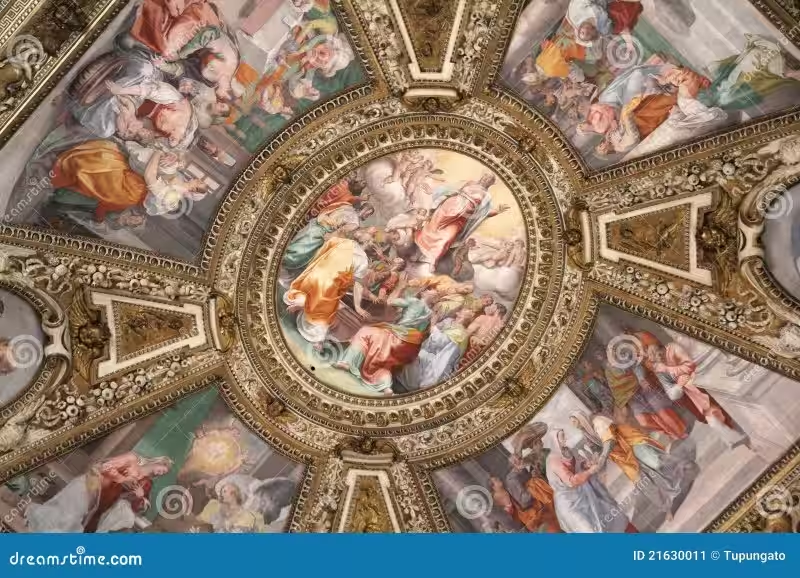
These early churches featured mosaics that shimmered with gold and vibrant colors, depicting Christ Pantocrator (Ruler of All), the Virgin Mary, and key figures from biblical history. The intricate details and luminous quality of these mosaics were meant to evoke a sense of the celestial and the eternal, transporting worshippers beyond the earthly realm. This was art with a purpose: to visually manifest the divine and to foster a profound sense of awe and devotion.
The Renaissance Flourishes Under the Church’s Patronage
The Renaissance, a period of unparalleled artistic innovation, owes an immeasurable debt to the Catholic Church. The Church, particularly the papacy, became one of the most significant patrons of the arts, commissioning breathtaking works that continue to define our understanding of this era. This patronage was not merely about aesthetics; it was deeply intertwined with the Church’s desire to assert its authority, celebrate its history, and inspire faith through magnificent creations.
Popes and powerful cardinals recognized the ability of art to communicate theological concepts with unparalleled force. They commissioned masterpieces from artists like Leonardo da Vinci, Michelangelo, Raphael, and Botticelli, transforming Rome and Florence into flourishing centers of artistic activity. The Sistine Chapel ceiling, with Michelangelo’s awe-inspiring frescoes depicting scenes from Genesis, is a prime example of this ambitious patronage. It’s a visual sermon on the creation of the world, the fall of man, and the promise of redemption, rendered with a masterful understanding of human anatomy and dramatic composition.
This period saw a remarkable fusion of religious devotion and artistic genius. Artists were not just decorating churches; they were actively engaging with theological ideas, interpreting scripture, and exploring the human condition through a spiritual lens. The idealized human form, so prevalent in Renaissance art, was often seen as a reflection of God’s perfect creation, and the emotional depth of paintings aimed to stir the viewer’s soul and encourage contemplation of divine mysteries. The Church’s investment in these artists and their creations was an investment in its own narrative and its ability to connect with believers on a visceral level.
The Baroque: Drama, Emotion, and the Counter-Reformation’s Artistic Might
Following the Protestant Reformation, the Catholic Church embarked on a period of renewal and reassertion, and art played a crucial role in this Counter-Reformation movement. The Baroque style emerged as a powerful artistic language, characterized by its drama, emotion, and grandeur. It was designed to overwhelm the senses, to inspire fervent devotion, and to draw believers back to the heart of Catholic tradition.
The Baroque artist aimed to create an immersive experience for the worshipper. Churches were transformed into theaters of faith, with dramatic lighting, elaborate ornamentation, and dynamic compositions. Think of Gian Lorenzo Bernini’s Ecstasy of Saint Teresa, a sculpture that captures a moment of intense spiritual rapture with such visceral realism that it seems to vibrate with divine energy. This was art designed to evoke a powerful emotional response, to make the spiritual tangible and deeply felt.
The use of chiaroscuro, the stark contrast between light and shadow, became a hallmark of Baroque painting, enhancing the drama and emotional intensity of religious scenes. Artists like Caravaggio used this technique to highlight moments of divine intervention or profound human struggle, drawing viewers into the narrative with an almost cinematic effect. The grandeur and theatricality of Baroque art were not just for show; they were a deliberate strategy to reaffirm the Catholic faith’s enduring power and to create a compelling counter-narrative to the austerity of some Protestant movements.
Art as a Continual Conversation: Modern Expressions of Catholic Faith
The relationship between the Catholic Church and art has not remained static; it has evolved and adapted through the centuries, continuing to find new forms of expression in the modern era. While the grand commissions of the Renaissance and Baroque may be less frequent, the Church’s engagement with art remains vibrant and essential for communicating its message and fostering spiritual connection in a contemporary world.
Today, contemporary artists, often drawing inspiration from their Catholic faith, explore a wide range of themes and mediums. These artists engage with traditional iconography in new ways, questioning, reinterpreting, and personalizing sacred narratives. They might use photography to capture the quiet devotion in a parish church, create abstract sculptures that evoke the mysteries of creation, or produce digital art that explores the intersection of faith and technology. The key is that art continues to serve as a vehicle for spiritual exploration and expression.
Furthermore, the Church itself actively supports and showcases contemporary art through galleries, exhibitions, and the integration of art into parish life. This allows for a continual dialogue between faith and artistic practice, ensuring that the visual language of Catholicism remains relevant and engaging for new generations. It’s a testament to the enduring power of art to translate complex spiritual ideas into forms that resonate with the human heart, proving that the canvas of faith is always being repainted, always in conversation with the times.
Frequently Asked Questions: The Catholic Church and Art
What is the role of art in the Catholic Church?
Art has played a central and integral role in the Catholic Church for centuries. It serves as a powerful tool for evangelization, education, and inspiration. Through visual art, music, architecture, and literature, the Church communicates its teachings, narrates biblical stories, venerates saints, and evokes a sense of the divine. Art helps to make abstract theological concepts tangible and emotionally resonant for believers, fostering a deeper connection to their faith.
How has art been used to teach the illiterate?
In periods when literacy was not widespread, art served as a visual catechism. Churches were often adorned with frescoes, mosaics, and sculptures depicting scenes from the Bible, the lives of Christ and the saints, and key moments in salvation history. These visual narratives allowed even those who could not read to understand the core tenets of Christian belief and morality. The imagery provided a constant reminder of God’s presence and the path to salvation.
What are some of the most significant periods or styles of Catholic art?
Throughout history, various artistic periods have significantly shaped Catholic art. These include:
Early Christian Art: Characterized by catacomb paintings and early basilica designs, often with symbolic imagery.
Byzantine Art: Known for its rich mosaics, icons, and stylized religious figures, emphasizing the divine and ethereal.
Romanesque Art: Marked by massive stone churches, often with sculpted portals and frescoes, conveying a sense of strength and grandeur.
Gothic Art: Famous for its soaring cathedrals with stained-glass windows, intricate sculpture, and a focus on light and verticality, symbolizing aspiration towards heaven.
Renaissance Art: A golden age of Catholic art, featuring masterpieces by artists like Leonardo da Vinci, Michelangelo, and Raphael, which combined classical ideals with Christian themes, emphasizing humanism and naturalism.
Baroque Art: Characterized by dramatic movement, intense emotion, and grandeur, used to reassert the Church’s power and inspire devotion during the Counter-Reformation.
Contemporary Catholic Art: Encompasses a wide range of styles and mediums, continuing to explore faith themes in modern contexts.
How does Catholic theology influence artistic expression?
Catholic theology profoundly influences artistic expression by providing the subject matter and guiding principles. The Incarnation (God becoming human in Jesus Christ) is a central theme, leading to realistic depictions of Christ and the saints. The belief in the sacraments, the veneration of Mary and the saints, and the concept of the Church as the Body of Christ all find expression in religious art. Furthermore, Catholic teachings on beauty, truth, and goodness often inspire artists to create works that reflect these divine attributes.
What is the significance of religious symbols in Catholic art?
Religious symbols are a vital language within Catholic art, conveying complex theological ideas in a concise and universally recognizable manner. Common symbols include the cross (representing Christ’s sacrifice), the fish (Ichthys, an early Christian acronym for Jesus Christ, Son of God, Savior), the lamb (representing Christ as the sacrificial Lamb of God), the dove (representing the Holy Spirit), and the anchor (representing hope). These symbols enrich the visual narrative and deepen the viewer’s understanding of the faith.
How does the Catholic Church view the use of music in worship?
Music has always been an essential element of Catholic worship. Sacred music, particularly Gregorian chant, has been a cornerstone of liturgical practice for centuries, fostering a contemplative and prayerful atmosphere. The Church recognizes the profound power of music to elevate the spirit, express devotion, and unite the congregation. While traditional forms are cherished, the Church also embraces contemporary sacred music that is theologically sound and conducive to worship.
Are there specific guidelines or doctrines regarding the creation of Catholic art?
Yes, the Catholic Church has historically provided guidance and sometimes issued doctrines that influence the creation of art. The Council of Trent, for example, in response to the Protestant Reformation, emphasized clarity, doctrinal accuracy, and the inspirational nature of religious art. The Catechism of the Catholic Church also affirms the importance of sacred art and its role in communicating the faith, encouraging art that is beautiful, reverent, and aligned with Church teachings.
What is the relationship between architecture and Catholic worship?
Catholic church architecture is intrinsically linked to worship and theology. The design of a church is intended to create a sacred space that facilitates prayer and communal worship. Elements such as the altar (the focal point of the Eucharist), the pulpit (for preaching), the nave (where the congregation gathers), and the sanctuary are all designed to guide the faithful in their spiritual journey. The soaring heights of Gothic cathedrals, for instance, are meant to draw the eyes and hearts upward to God, while the rich ornamentation of Baroque churches aims to inspire awe and devotion.