Unveiling the Divine Through Masterpieces in the Vatican Museums
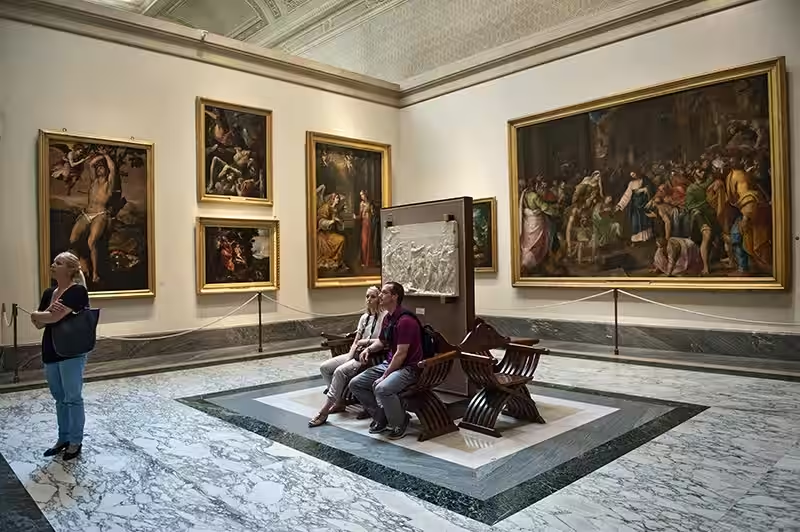
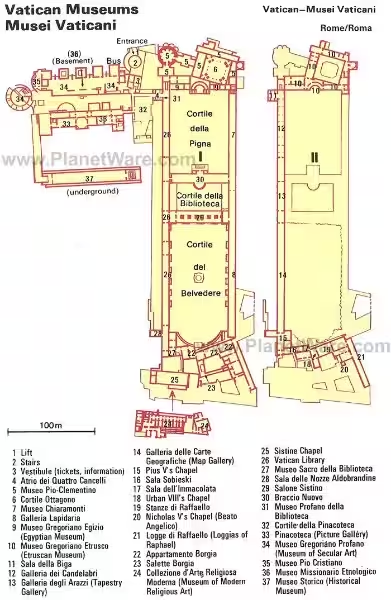
When we speak of the Pinacoteca Vaticana, we are not merely referring to a collection of paintings; we are stepping into a sacred repository of faith and artistic devotion. Nestled within the sprawling Vatican Museums, this gallery stands as a testament to centuries of religious expression, offering a profound visual narrative of the Catholic Church’s history, its spiritual journeys, and its unwavering connection to art. The Pinacoteca Vaticana is more than just a museum; it’s a pilgrimage for the soul, where every brushstroke whispers tales of divine inspiration and human reverence.
Imagine walking through halls where masterpieces, saturated with religious significance, unfold before your eyes. From early Christian mosaics to the grand works of the Renaissance masters, the Pinacoteca Vaticana presents a curated journey that illuminates the evolution of religious iconography and theological understanding. It provides an unparalleled opportunity to connect with faith on a visceral, visual level, allowing the stories of saints, prophets, and Christ himself to come alive through the genius of artists who dedicated their lives to glorifying the divine. This is not a detached academic exercise; it’s an invitation to experience religion through a breathtaking artistic lens.
A Journey Through Faith: The Pinacoteca Vaticana’s Religious Narrative
The Pinacoteca Vaticana acts as a powerful visual sermon, guiding visitors through key moments in Christian history and doctrine. Each artwork is chosen to convey a specific theological message, to inspire contemplation, and to foster a deeper understanding of the core tenets of Catholicism. The collection is meticulously arranged, not just chronologically, but thematically, allowing for a coherent and deeply affecting exploration of religious themes. You’ll find yourself drawn into narratives of creation, the life of Christ, the sacrifices of martyrs, and the enduring hope of salvation, all rendered with unparalleled artistic skill.
Consider the impact of Raphael’s “Transfiguration,” a monumental work that dominates a significant portion of the Pinacoteca Vaticana. This painting doesn’t just depict a biblical event; it captures the divine revelation and the transformative power of faith. The luminous brilliance of Christ against the earthly struggles below speaks volumes about spiritual transcendence and the promise of eternal glory. Similarly, Caravaggio’s dramatic “The Entombment of Christ” evokes the profound sorrow and sacrifice of the crucifixion, inviting viewers to reflect on the immense love and redemption offered through Christ’s death. The Pinacoteca Vaticana thus becomes a space for personal reflection and spiritual growth, where art serves as a conduit for divine connection.
Echoes of the Divine: Key Religious Masterpieces and Their Significance
Within the Pinacoteca Vaticana, certain artworks stand out as beacons of religious artistry, each carrying a profound spiritual weight. These are not merely paintings to be admired for their technical prowess, but visual sermons that have shaped devotional practices for centuries. Their enduring power lies in their ability to connect with viewers on an emotional and spiritual level, transcending time and cultural barriers. Each masterpiece is a window into the heart of religious belief, offering solace, inspiration, and a profound sense of the sacred.
Let’s delve into a few examples that exemplify the religious narrative of the Pinacoteca Vaticana:
Raphael’s “The Transfiguration”: As mentioned, this is a cornerstone of the collection. It powerfully illustrates the divine nature of Christ and the importance of faith in overcoming earthly trials. The contrasting scenes of heavenly glory and earthly turmoil serve as a potent reminder of our spiritual aspirations. This painting is a visual representation of the promise of salvation and the ultimate triumph of good over evil.
Leonardo da Vinci’s “Saint Jerome in the Wilderness”: Though unfinished, this work is a profound depiction of asceticism, penance, and spiritual struggle. Jerome’s gaunt, emaciated form and intense gaze convey a deep inner battle, reflecting the human desire for purification and a closer connection to the divine. It highlights the importance of self-denial and inner contemplation in one’s religious journey.
Melozzo da Forlì’s “Musicians”: While seemingly secular, these figures, originally part of a larger fresco, were intended to adorn the papal apartments, signifying the sacredness of music in religious ceremonies. Music has always been an integral part of worship, and this artwork subtly reminds us of the divine harmony that permeates religious practice.
These works, and countless others within the Pinacoteca Vaticana, serve as powerful reminders of the central role religion has played in art and human culture. They offer a tangible connection to the history of faith and its enduring impact on our lives.
Beyond the Brushstroke: The Role of Religion in Art and the Pinacoteca Vaticana
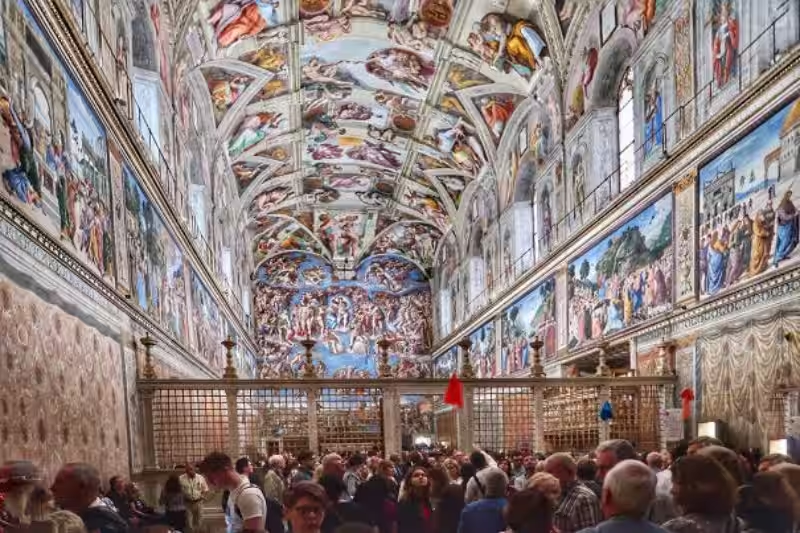
The relationship between religion and art is as old as civilization itself. For millennia, artists have found their greatest inspiration in the divine, using their talents to illustrate sacred texts, venerate saints, and express the ineffable mysteries of faith. The Pinacoteca Vaticana is a prime example of this symbiotic relationship, showcasing how art has been used not only to adorn sacred spaces but also to educate, inspire, and deepen the spiritual lives of believers. The very act of creating and displaying religious art within the Vatican is an affirmation of its enduring importance.
Consider how the stories of the Bible, abstract theological concepts, and the lives of holy figures are made accessible and relatable through visual art. A painting depicting the Annunciation, for instance, transforms the miraculous event into a scene of tender intimacy and profound spiritual significance, making the mystery of the Incarnation comprehensible and moving. In the Pinacoteca Vaticana, these visual narratives serve as a constant sermon, speaking to the heart and mind of every visitor, regardless of their background or familiarity with the specific religious doctrines. It’s a universal language that transcends words, fostering understanding and emotional resonance with the divine.
Art as a Pathway to Understanding: The Informative Power of Religious Art
The Pinacoteca Vaticana is an invaluable educational resource, offering a visual curriculum on Christian theology, history, and iconography. For those seeking to understand the depth and breadth of religious belief, the collection provides concrete examples and visual narratives that are far more engaging than mere textual descriptions. The artworks act as historical documents, reflecting the artistic styles, cultural contexts, and theological interpretations prevalent during their creation. This makes the gallery not just a place of worship-inspired art, but also a vibrant historical archive of faith.
For example, the evolution of depictions of the Madonna and Child across different eras within the Pinacoteca Vaticana can illustrate changing artistic conventions and devotional practices. Early Byzantine icons might emphasize the divine universality of Mary, while later Renaissance works might focus on her human tenderness and maternal love, offering a nuanced understanding of Mary’s multifaceted role in Christian tradition. This visual storytelling makes complex theological ideas accessible, allowing viewers to grapple with profound concepts in a deeply personal and intuitive way. The Pinacoteca Vaticana truly transforms learning about religion into an immersive, aesthetic experience.
Conclusion: The Enduring Legacy of the Pinacoteca Vaticana
The Pinacoteca Vaticana stands as a powerful testament to the enduring connection between art and religion. It is a place where masterpieces are not just admired for their aesthetic beauty, but also revered for their capacity to convey profound spiritual truths and to inspire faith. The collection offers a unique opportunity to engage with the sacred narratives of Christianity in a deeply personal and enriching way, providing a visual sermon that resonates long after the visit.
Ultimately, the Pinacoteca Vaticana is more than just a gallery; it is a sanctuary of sacred art, a place where the divine is made manifest through the genius of human hands. It continues to draw pilgrims and art lovers alike, offering a glimpse into the soul of a faith that has shaped civilizations and continues to inspire millions. The Pinacoteca Vaticana remains an indispensable destination for anyone seeking to understand the profound and beautiful intersection of art and religion.
Frequently Asked Questions: Pinacoteca Vaticana and Religion
What is the Pinacoteca Vaticana?
The Pinacoteca Vaticana is a Vatican art gallery that houses a significant collection of paintings and other artworks, gathered over centuries by the Catholic Church. It showcases masterpieces from the 3rd to the 19th centuries, including works by Raphael, Leonardo da Vinci, Caravaggio, and Giotto.
How does the Pinacoteca Vaticana relate to religion?
The collection in the Pinacoteca Vaticana is intrinsically linked to religion as it primarily features religious art. The artworks depict biblical scenes, lives of saints, portraits of popes, and allegorical representations of Christian themes. These pieces were often commissioned by religious institutions or patrons with deep religious convictions, serving didactic, devotional, and artistic purposes within the context of the Catholic faith.
What kind of religious subjects are depicted in the Pinacoteca Vaticana?
The artworks cover a wide range of religious subjects, including:
* The life of Jesus Christ: Events such as the Annunciation, Nativity, Crucifixion, Resurrection, and Last Supper.
* The Virgin Mary: Her life, Immaculate Conception, and various Marian devotions.
* Saints and Martyrs: Depictions of their lives, miracles, and martyrdoms.
* Old Testament stories: Narratives from the origins of humanity and the covenant with God.
* Theological concepts: Representations of virtues, vices, and the sacraments.
* Papal history: Portraits of popes and events significant to the papacy.
Are there any specific masterpieces in the Pinacoteca Vaticana that highlight religious themes?
Yes, several key masterpieces strongly embody religious themes:
* Raphael’s “Transfiguration”: A monumental work depicting the Transfiguration of Christ, a pivotal moment in Jesus’ ministry.
* Raphael’s “Coronation of the Virgin”: Illustrates the ascension of Mary into heaven.
* Leonardo da Vinci’s “St. Jerome in the Wilderness”: An unfinished but powerful depiction of the penitent saint.
* Caravaggio’s “The Entombment of Christ”: A dramatic and emotionally charged portrayal of Christ’s burial.
* Giotto’s “Stefaneschi Triptych”: A significant early Renaissance work with complex theological symbolism.
Can visiting the Pinacoteca Vaticana deepen one’s understanding of religious art and history?
Absolutely. The Pinacoteca Vaticana offers a unique opportunity to explore the evolution of religious art through various periods and styles. By viewing these masterpieces, visitors can gain insights into the theological beliefs, devotional practices, and historical context of Christianity as interpreted and expressed by artists over centuries. It serves as a visual testament to the enduring influence of faith on artistic creation.