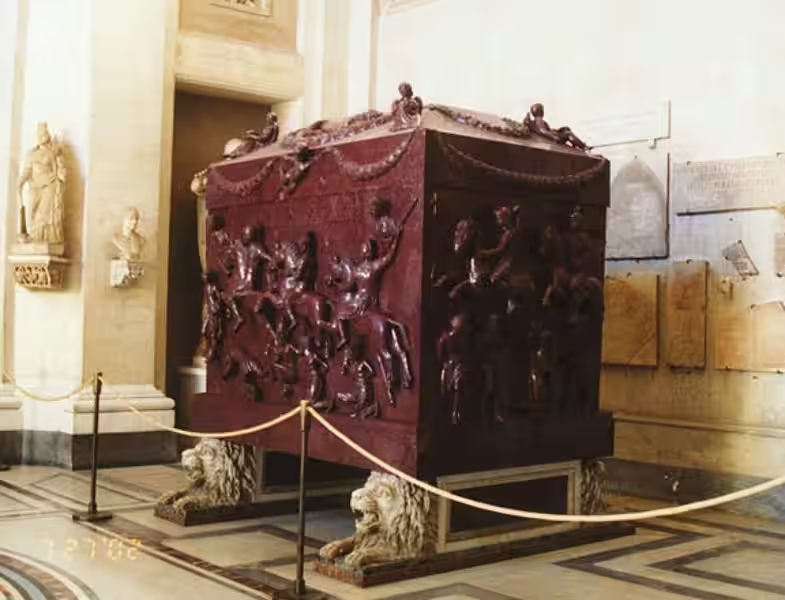
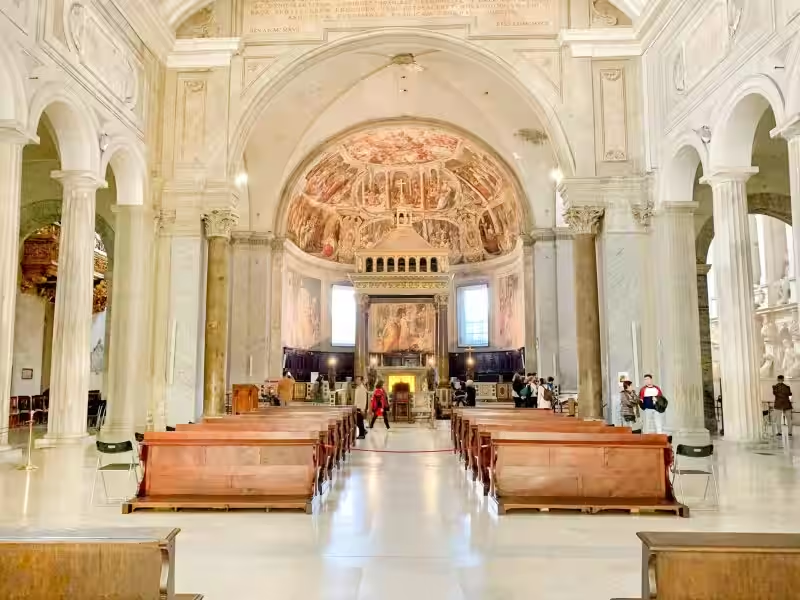
For centuries, the Catholic Church has held a deep reverence for objects that have been touched by, belonged to, or are remnants of individuals who lived lives of exceptional holiness. These are known as relics Catholic, and they are far more than mere historical artifacts. They represent a tangible connection to the divine, a bridge between the earthly and the heavenly, and a potent source of inspiration and spiritual devotion for millions worldwide. Understanding the role and significance of relics within the Catholic faith offers a window into a rich tapestry of history, theology, and personal piety.
The concept of venerating relics is not a recent invention; its roots stretch back to the earliest days of Christianity. The early Christians, facing persecution, would gather to commemorate the martyrs, often at their tombs. These burial sites, holding the physical remains of those who died for their faith, became sacred spaces, imbuing the very earth and bone with a spiritual significance. This practice laid the groundwork for the enduring tradition of respecting and honoring the physical remnants of saints and holy figures within the Catholic religion.
Theological Foundations: Why Relics Matter in Catholicism
The veneration of relics in the Catholic religion is firmly rooted in a profound theological understanding of the human person and the nature of sanctity. It’s not about worshipping the relic itself, but rather about honoring the saint or holy person to whom it belonged, and through them, honoring God. The belief is that just as a cherished photograph or a beloved heirloom can evoke powerful memories and emotions, so too can a relic serve as a focal point for prayer and a reminder of the virtues and sacrifices of the holy individual. This physical connection is seen as a conduit for God’s grace, drawing believers closer to Him.
A key theological principle underpinning the veneration of relics is the belief in the communion of saints. This doctrine teaches that all the faithful, both living and dead, are united in Christ. The saints, having achieved heavenly glory, are seen as active participants in the life of the Church on earth, interceding for believers. Therefore, relics become a tangible expression of this spiritual solidarity, allowing the faithful to feel a closer connection to these heavenly patrons. Think of it like a child holding a favorite toy passed down from a beloved grandparent – the toy is special not in itself, but because of the love and memories it represents. Similarly, relics Catholic gain their sacredness from the saint’s holiness and their closeness to God.
Types of Relics and Their Classification
Within the Catholic tradition, relics are generally categorized into three distinct classes, each holding a unique place in devotional practice. This classification helps to differentiate their historical significance and the level of veneration they typically receive. Understanding these categories provides further insight into the careful discernment and respect accorded to these sacred objects.
First-Class Relics: These are the most direct physical remnants of a saint, such as bone fragments, blood, hair, or even the dust from their tomb. These are considered the most sacred and are often housed in prominent altars or reliquaries. For example, a fragment of bone from Saint Francis of Assisi would be a first-class relic.
Second-Class Relics: These are items that the saint personally owned or frequently used, like clothing, a crucifix they prayed with, or a book they read. These objects have absorbed some of the saint’s sanctity through prolonged contact. A stole worn by Saint John Vianney would be an example of a second-class relic.
Third-Class Relics: These are items that have been touched to a first-class relic. While considered less direct, they still carry a spiritual charge and serve as a reminder of the saint’s intercession. A cloth that has been placed upon the tomb of a saint is a common example of a third-class relic.
The careful classification of relics ensures that their veneration is conducted with appropriate reverence and understanding. It’s a system that emphasizes not just the object, but the profound spiritual journey of the individual it represents. The accessibility of third-class relics, for instance, allows for a broader participation in devotional practices, enabling more people to feel a connection to the saints. The very act of relics Catholic being presented or distributed is often accompanied by prayer and blessings, reinforcing their sacred purpose.
The Journey of Relics: From Saints to Sanctuaries
The journey of relics Catholic from the earthly lives of saints to their veneration in churches and homes is often a fascinating and sometimes arduous one. It involves meticulous preservation, careful authentication, and a deep respect for the sacred trust placed in those who handle them. The history of these objects is interwoven with the history of the Church itself, with many relics weathering centuries of change and upheaval.
The discovery and preservation of relics were particularly significant in the early Church. As Christianity spread, the desire to honor martyrs and early saints grew, leading to the careful collection and safeguarding of their physical remains. This often involved exhuming bodies, carefully extracting bone fragments, and placing them in ornate containers called reliquaries. The authenticity of these relics was, and remains, a crucial aspect of their veneration. The Catholic religion has established protocols for the authentication and handling of relics to ensure their integrity and prevent fraud, emphasizing that these sacred objects should be treated with the utmost respect and devotion.
Pilgrimage and Devotion: Experiencing Relics Today
Today, relics continue to draw countless individuals on journeys of faith. Pilgrimages to shrines and churches housing significant relics are a central aspect of Catholic devotional life. These journeys are not merely tourist excursions; they are deeply spiritual quests undertaken with the hope of experiencing God’s grace more profoundly, seeking intercession from the saints, and strengthening one’s own faith. The experience of standing before a reliquary, knowing that it contains a piece of someone who walked with God, can be incredibly moving.
For many, encountering relics Catholic is an opportunity for personal prayer and reflection. Whether it’s a large public display in a cathedral or a small personal devotional item kept at home, these objects serve as powerful reminders of the lives of extraordinary faith that have shaped Christianity. The stories associated with these relics – tales of miracles, acts of profound charity, and unwavering commitment to God – inspire believers to live more virtuous lives. The very presence of these tangible links to holiness can ignite a desire for greater spiritual connection and a deeper understanding of the Catholic religion.
Misconceptions and the Church’s Stance on Relics
It is important to address some common misconceptions surrounding the veneration of relics. Some may mistakenly believe that Catholics worship the relics themselves, or that the practice is a form of superstition. However, the official teachings of the Catholic Church are very clear on this matter: veneration is directed towards God and the saint, not the object itself. The relic is a means to an end, a tangible reminder that aids devotion.
The Church has always emphasized that the power and grace do not reside in the relic but in God. The veneration of relics is a practice that encourages love for God and for those who have lived exemplary lives in His service. The Council of Trent, a significant ecumenical council in the 16th century, reaffirmed the legitimacy of the veneration of saints and their relics, stating that the saints who reign with Christ offer their prayers to God for us, and that it is good and beneficial to humbly implore their aid. This ensures that the practice remains firmly rooted in sound theology and genuine spiritual devotion within the Catholic religion.
The Enduring Power of Sacred Objects
In a world that often feels increasingly secular and detached from the sacred, the enduring power of relics Catholic offers a profound connection to something larger than ourselves. These physical remnants serve as a powerful testament to the reality of faith, the power of prayer, and the transformative grace of God working through human lives. They remind us that holiness is not an abstract concept but a lived reality, embodied by individuals who, like us, faced challenges and made choices in their pursuit of God.
Whether one is a lifelong Catholic or simply curious about the traditions of the Catholic religion, exploring the significance of relics opens up a fascinating dimension of faith. It’s a journey into the heart of devotion, a glimpse into the lives of those who have gone before us, and a tangible reminder of the enduring presence of God in the world. The humble fragments of bone, the worn pieces of cloth, and the simple objects imbued with history and faith continue to inspire, comfort, and guide believers on their spiritual paths, echoing the sacred through the ages.
In the Catholic Church, relics are physical objects that have a connection to saints or to Jesus Christ. These connections can be through direct contact (like a bone or piece of clothing) or through association (like an object the saint used or touched).
What are the different classes of relics?
There are generally three classes of relics:
First-class relics: These are parts of the saint’s body, such as bones, hair, or blood.
Second-class relics: These are items that the saint owned or frequently used, like clothing, a cross, or a book.
Third-class relics: These are objects that have been touched to a first-class relic of a saint.
Why are relics venerated in the Catholic Church?
Catholics do not worship relics; rather, they venerate them as a way to honor the saint and to draw closer to God. The relics serve as tangible reminders of the saint’s life, their faith, and their closeness to Jesus. Veneration is an act of respect and honor, reminiscent of how one might cherish an object belonging to a beloved family member.
Are relics biblical?
The Bible contains accounts that foreshadow or support the veneration of relics. For example, in the Old Testament, the bones of the prophet Elisha brought a dead man back to life when they touched him (2 Kings 13:20-21). In the New Testament, people sought to touch Jesus’ cloak to be healed (Matthew 14:36), and handkerchiefs and aprons that had touched St. Paul’s body were used to cure illnesses and cast out demons (Acts 19:11-12).
Are relics still important today?
Yes, relics continue to be important for many Catholics. They serve as powerful reminders of the communion of saints, the reality of heaven, and the example of holy lives lived in imitation of Christ. Many churches house relics, and pilgrimages to these sacred sites are common.
Can anyone have a relic?
Relics are typically housed in churches, shrines, or in the possession of religious orders. While it is possible for private individuals to own relics, the Church has regulations regarding their acquisition and display to ensure they are treated with reverence and respect.
What is the difference between veneration and worship?
In Catholic theology, veneration is a form of honor and respect shown to saints and their relics, acknowledging their holiness and their role as intercessors. Worship (or adoration) is reserved for God alone. Catholics venerate saints and relics, but they worship God.