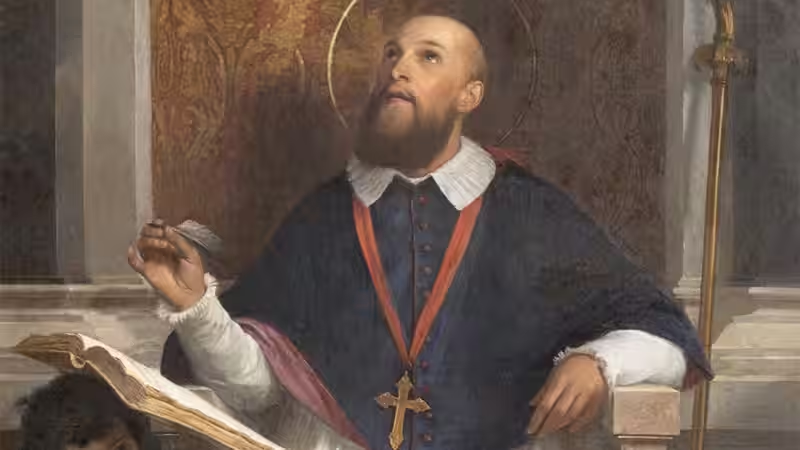
In the vast landscape of religious history, certain figures emerge not just as paragons of virtue, but as enduring sources of practical wisdom and profound spiritual insight. Among these luminaries, Saint Francis de Sales stands out as a particularly accessible and deeply influential saint. His life and teachings offer a refreshing perspective on faith, particularly within the realm of Catholic Christianity, that resonates across centuries and continues to guide countless individuals on their spiritual journeys. But who is Saint Francis de Sales, and why does his legacy continue to hold such weight in the world of religion and beyond?
Born in Savoy in 1567, Francis de Sales lived during a period of intense religious upheaval in Europe. The Protestant Reformation had fractured the Christian world, and in his own region, Calvinism was gaining a strong foothold. It was in this environment of division and sometimes harsh theological debate that Francis found his calling, not to engage in acrimonious disputes, but to offer a message of gentle persuasion and profound love. His approach was revolutionary for its time, emphasizing God’s boundless mercy and the possibility of spiritual growth for all, regardless of their background or perceived imperfections.
Francis de Sales was born into a noble family, destined for a life of privilege and influence. He received an excellent education, excelling in law and theology. However, a profound spiritual crisis in his youth, a period of intense anxiety and doubt about his eternal salvation, led him to a decisive turning point. This deeply personal struggle, which many can relate to in their own moments of questioning, ultimately forged his understanding of God’s grace. He discovered that true faith wasn’t about intellectual certainty alone, but about trusting in God’s love even in the midst of uncertainty. This experience profoundly shaped his pastoral approach, making him exceptionally empathetic to the spiritual struggles of others.
His ordination as a priest and subsequent appointment as Bishop of Geneva marked the formal beginning of his public ministry. The diocese was a challenging one, still reeling from the effects of religious division and facing the resurgence of Calvinist influence. Instead of resorting to condemnation or force, Francis de Sales embarked on a mission of re-evangelization and spiritual renewal. He understood that true conversion was not a forced march, but a gradual unfolding of the heart, nurtured by understanding and compassion. He would often travel tirelessly, preaching, ministering to the sick, and offering spiritual direction, becoming known far and wide for his kindness and unwavering faith.
One of the most significant contributions of Saint Francis de Sales to the realm of religion is his seminal work, “Introduction to the Devout Life.” This book, written for laypeople rather than solely for clergy or religious, was groundbreaking. It demystified the concept of holiness, asserting that true devotion is not reserved for monks and nuns in cloisters, but is attainable by everyone, regardless of their vocation or social standing. He argued that ordinary people, living in the world, could and should strive for spiritual perfection.
Francis de Sales provided practical advice for integrating faith into everyday life. He recognized that the demands of family, work, and social responsibilities could seem like obstacles to spiritual growth. However, he taught that these very circumstances could be transformed into opportunities for virtue and closer union with God. For instance, he suggested that a busy mother could practice devotion by performing her household duties with patience and charity, seeing each task as an act of service to God. Similarly, a businessman could cultivate a devout life by acting with honesty and integrity in all his dealings. His message was clear: the devout life is a life lived with God at its center, in whatever circumstances one finds oneself.
Key Principles of Salesian Spirituality
The teachings of Saint Francis de Sales, often referred to as Salesian spirituality, are characterized by several key principles that continue to inspire. At its heart is a profound emphasis on divine love and God’s infinite goodness. He believed that God’s love is not conditional, but a constant and overflowing gift, and that our response should be one of loving trust and gratitude. This perspective provided immense comfort and encouragement, especially to those who felt burdened by guilt or a sense of inadequacy.
Another cornerstone of his spirituality is the concept of “gentle persuasion”. Saint Francis de Sales was a master of communication, and he believed that truth and love were far more effective than coercion or harsh criticism in leading people to God. This is evident in his correspondence and his published works, where he consistently employed a tone of warmth, reason, and understanding. He advocated for a spiritual direction that was patient, encouraging, and tailored to the individual’s needs, much like a skilled gardener nurturing a delicate plant. This approach fostered a sense of personal responsibility and growth, empowering individuals to actively participate in their own spiritual development.
What makes Saint Francis de Sales so enduringly relevant is his ability to bridge the gap between abstract theological concepts and the lived realities of human experience. He didn’t just preach about faith; he showed people how to live it. His advice was practical and actionable, addressing common challenges and offering concrete solutions. For example, when discussing the virtue of patience, he didn’t simply define it; he offered strategies for cultivating it, such as practicing small acts of self-denial and consciously choosing to respond with kindness when provoked. This practical application of faith made spiritual growth feel achievable.
His emphasis on humility and self-knowledge also resonates deeply. Saint Francis de Sales understood that true spiritual progress begins with an honest appraisal of oneself, not in a spirit of self-condemnation, but with a clear-eyed recognition of both our strengths and our weaknesses. He encouraged a loving acceptance of our imperfections, seeing them not as insurmountable barriers, but as opportunities for God’s grace to work more powerfully. This balanced perspective fostered a sense of realistic hope and perseverance in the spiritual journey, reminding believers that they are loved and supported by God, even in their struggles.
A Legacy of Love and Gentleness
In conclusion, when we ask who is Saint Francis de Sales, we discover a figure of immense spiritual stature, renowned for his gentle approach to religion and his practical wisdom. His life and teachings offer a powerful testament to the enduring strength of love, patience, and unwavering faith. He demonstrated that the devout life is not an unattainable ideal, but a vibrant and achievable path for all people. By focusing on God’s boundless mercy and encouraging individuals to live their faith in the midst of their daily lives, Saint Francis de Sales continues to be a beloved guide and an inspirational beacon for those seeking a deeper, more meaningful connection with the divine.
His legacy is one of hope, encouragement, and profound spiritual insight. In a world that can often feel overwhelming, the gentle voice of Saint Francis de Sales reminds us that holiness is found in the ordinary, and that God’s love is always present. Whether you are deeply involved in your religious tradition or simply exploring questions of faith, his writings and his example offer a profound and welcoming invitation to a richer spiritual life. His impact on Catholic thought and practice is undeniable, but his message of kindness, reason, and love transcends denominational boundaries, offering timeless wisdom for anyone seeking to live a more purposeful and God-centered life.
Frequently Asked Questions: Who is Saint Francis de Sales?
Who was Saint Francis de Sales?
Saint Francis de Sales was a Roman Catholic bishop, writer, and doctor of the Church. He lived from 1567 to 1622 and is remembered for his gentle approach to evangelization and his profound spiritual writings.
What religion was Saint Francis de Sales?
Saint Francis de Sales was Roman Catholic.
What is Saint Francis de Sales known for?
He is known for his writings on spirituality, particularly his book “Introduction to the Devout Life” (1608), which offered practical advice on how to live a devout Christian life in the world. He was also instrumental in bringing many back to the Catholic faith in the region of Chablais.
When was Saint Francis de Sales canonized?
He was canonized in 1665 by Pope Alexander VII.
What are some key teachings of Saint Francis de Sales?
Key teachings include the idea that holiness is possible for everyone, not just monks or nuns, and that devotion should be lived out in everyday life through acts of charity, prayer, and a focus on God’s love. He emphasized gentleness, patience, and a positive approach to faith.