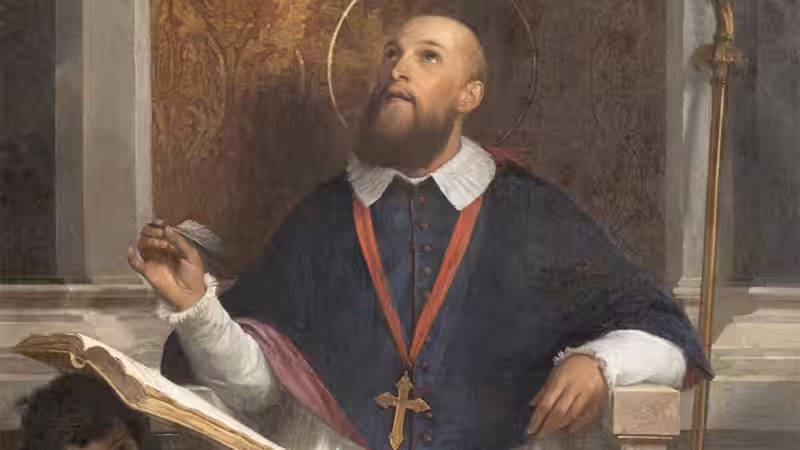
The name “Francis” often conjures images of gentle creatures, sun-drenched Italian hillsides, and a profound love for all creation. But the St. Francis story is far more than a quaint fable; it’s a powerful and deeply relevant testament to a life lived in radical devotion, a beacon for anyone seeking meaning, purpose, and a deeper connection to the world around them. In a time often characterized by anxiety, materialism, and a growing disconnect from nature, the religion and life of St. Francis of Assisi offer a refreshing and profoundly human perspective that continues to resonate.
This charismatic figure, born into a wealthy merchant family in the late 12th century, underwent a dramatic transformation that would redefine religious devotion and inspire millions. His journey, from a pleasure-seeking youth to a humble servant of God and all of humanity, is a narrative that still speaks to the yearning for authenticity and the possibility of profound change. The St. Francis story is not just about a saint; it’s about the universal human experience of searching for something more.
From Riches to Renunciation: The Genesis of the St. Francis Story
Francis was not born into poverty or hardship. He was the son of a prosperous cloth merchant, accustomed to the finer things in life, including elaborate parties and military ambitions. His early years were marked by a youthful exuberance, a desire for worldly success, and a fascination with chivalry and knightly pursuits. He dreamt of glory on the battlefield, an aspiration common for young men of his era. This initial chapter of his life highlights the stark contrast with the man he would become, emphasizing the transformative power of spiritual awakening.
However, this seemingly secure and privileged existence began to unravel. A period of illness and a stint as a prisoner of war during a conflict between Assisi and Perugia deeply impacted his perspective. It was during these challenging times, particularly after his release, that a profound spiritual crisis began to take hold. The St. Francis story emphasizes that this wasn’t an overnight conversion, but a gradual, wrestling process with his conscience and a growing dissatisfaction with the superficiality of his previous life. He started to perceive the hollowness of material possessions and the fleeting nature of worldly acclaim in the face of eternal truths.
The Call to a New Way of Life
A pivotal moment in the St. Francis story occurred when Francis, riding his horse, encountered a leper. In a society that shunned and feared lepers, viewing them as outcasts and symbols of divine punishment, Francis’s reaction was extraordinary. Instead of recoiling in disgust, he dismounted, embraced the leper, and kissed his hand. This act of profound compassion, a direct defiance of social norms and personal fear, is often cited as the first clear indication of his radical transformation. It was a powerful demonstration of his burgeoning love for the marginalized and his commitment to living out the Gospel in its most practical and challenging form.
This encounter marked a significant turning point, propelling him further down a path of spiritual discernment. He began to spend more time in prayer and contemplation, often in deserted chapels and caves, listening for a divine calling. The famous incident in the dilapidated church of San Damiano, where he heard Christ speak to him from the crucifix saying, “Francis, go and repair my church, which you see is falling into ruin,” became a cornerstone of his mission. Initially, Francis took this literally, physically rebuilding the crumbling walls of the church. However, he eventually understood that the “church” Christ referred to was the spiritual body of believers, and his mission was to revitalize faith through a life of radical poverty and evangelical living. The religion he embraced was one of action, not just contemplation.
Embracing Poverty and Preaching to All Creation
The decision to embrace absolute poverty was perhaps the most radical element of the St. Francis story. Francis famously renounced his inheritance, stripping himself naked before his father and the bishop of Assisi, symbolizing his complete surrender to God and his detachment from worldly possessions. This was not an act of self-deprecation, but a profound affirmation of his trust in divine providence. He believed that by owning nothing, he could possess everything in God. This commitment to mendicant poverty was a revolutionary concept within the church of his time, which was often perceived as wealthy and entrenched.
Francis and his early followers, known as the Friars Minor, lived lives of extreme simplicity, begging for food and lodging, and dedicating themselves to serving the poor, the sick, and the outcasts. Their message of love, peace, and repentance was delivered not just from pulpits, but through their very lives. They preached to crowds, but also to animals and birds, seeing all of creation as a reflection of God’s glory. The famous St. Francis story of preaching to the birds is a beautiful illustration of his deep ecological sensibility, a concept far ahead of its time. He saw God in the smallest sparrow and the fiercest wolf, advocating for a harmonious relationship between humanity and the natural world. This is a cornerstone of his religion.
The Simplicity of the Gospel in Practice
Francis’s approach to religion was characterized by an unwavering commitment to the simplest interpretation of the Gospel. He didn’t engage in complex theological debates or seek positions of power within the church hierarchy. Instead, he focused on living out the teachings of Christ in their most fundamental form: love, humility, obedience, and service. His famous prayer, the “Prayer of St. Francis,” encapsulates this ethos, starting with “Lord, make me an instrument of your peace…” This emphasis on humility and service, rather than personal gain or recognition, is a powerful antidote to the ego-driven tendencies that can plague any pursuit, including religious ones.
His understanding of religion was intensely personal yet universally applicable. He believed that true spiritual fulfillment came not from adherence to rigid rules or the accumulation of spiritual merit, but from a genuine love for God that manifested as love for all creation, especially the most vulnerable. This radical inclusivity, which extended to lepers, outcasts, and even animals, challenged the established social and religious norms of his day. The St. Francis story continues to inspire because it offers a vision of faith that is both deeply personal and profoundly communal, grounded in tangible acts of love and compassion.
The Enduring Legacy: A Modern Resonance of the St. Francis Story
Centuries after his death, the St. Francis story remains remarkably relevant. In an era grappling with environmental degradation, social inequality, and a pervasive sense of spiritual emptiness, his life offers a compelling model for a more sustainable and compassionate existence. His profound love for nature, his advocacy for the poor, and his radical commitment to peace continue to inspire movements and individuals seeking to create a better world. The religion he embodied is one that prioritizes the health of the planet and the well-being of all its inhabitants.
Francis’s emphasis on simplicity as a path to spiritual freedom is a powerful counterpoint to the consumerist culture that often defines modern life. His willingness to shed material possessions reminds us that true happiness is not found in accumulation, but in detachment and gratitude. The St. Francis story encourages us to question our own values and to consider what truly nourishes our souls. Are we chasing fleeting pleasures, or are we cultivating a deeper connection to something greater?
Franciscan Principles for Today’s World
The core principles of the St. Francis story – simplicity, humility, compassion, and reverence for creation – are not relics of the past but vital tools for navigating the complexities of the 21st century. Consider the ongoing climate crisis: Francis’s deep ecological awareness, his understanding that all creatures are interconnected and deserving of respect, offers a profound spiritual framework for environmental stewardship. His religion was inherently ecological.
Furthermore, his unwavering commitment to serving the marginalized speaks directly to the persistent issues of poverty, injustice, and social exclusion that plague our world. The St. Francis story calls us to look beyond our own immediate needs and to extend our empathy and assistance to those who are suffering. His life is a powerful reminder that true religion is not about abstract dogma, but about concrete action undertaken with a heart full of love. The St. Francis story is an invitation to a life of intentionality, a life lived in service, and a life deeply connected to the miraculous tapestry of existence.
Frequently Asked Questions about St. Francis and Religion
Who was St. Francis of Assisi?
St. Francis of Assisi was an Italian Catholic friar, mystic, and preacher. He founded the Franciscan Order, one of the most popular religious orders in the Catholic Church. He is known for his deep love for God, nature, and all of creation, as well as his commitment to poverty and service to the poor.
What are the core tenets of the religion that St. Francis belonged to?
St. Francis was a devout member of the Roman Catholic Church. The core tenets of Catholicism include belief in one God (the Holy Trinity: Father, Son, and Holy Spirit), the divinity of Jesus Christ, his death and resurrection for the salvation of humanity, the authority of the Pope, the seven sacraments (Baptism, Confirmation, Eucharist, Reconciliation, Anointing of the Sick, Holy Orders, and Matrimony), and the importance of scripture and tradition.
What is the significance of St. Francis in religious history?
St. Francis is a pivotal figure in Christian history, particularly within Catholicism. He is revered as a saint and is a patron saint of Italy, animals, and the environment. His radical commitment to poverty and his emphasis on living the Gospel in its simplest form inspired countless individuals and led to the establishment of the Franciscan movement, which has had a profound and lasting impact on religious life and social service.
How did St. Francis influence religious practice?
St. Francis’s influence on religious practice was significant. He revitalized the concept of evangelical poverty, encouraging his followers to renounce material possessions and live a life of humility and service. His emphasis on the beauty and sacredness of creation also brought a new dimension to religious devotion, fostering a sense of interconnectedness between humanity, God, and the natural world. His preaching and example encouraged a more personal and accessible connection with God.
What is the relationship between St. Francis and modern religious movements?
St. Francis continues to inspire modern religious movements, both within and outside of the Catholic Church. His Franciscan orders remain active and continue his mission of service. Furthermore, his message of ecological stewardship resonates deeply with environmental movements, and his spirit of simple living and compassion is embraced by various interfaith and humanitarian initiatives seeking to promote peace and justice.