The story of African Christianity is not a monolith, but a vibrant tapestry woven with threads of ancient traditions, colonial encounters, and the unwavering spirit of resilience. Far from being a mere adoption of Western dogma, the faith that has taken root across the African continent is a dynamic, multifaceted phenomenon, deeply embedded in the cultural fabric and the lived experiences of its people. This is a narrative of faith in action, of spiritual journeys that have shaped both individuals and entire societies, and of a religious landscape that continues to evolve and surprise the world.
This exploration delves into the rich history, the unique expressions, and the profound impact of African Christianity. We will journey from its early encounters with the West, through the transformative power of missionary work, to the present day, where indigenous leadership and African theological thought are increasingly defining its trajectory. Understanding African Christianity is not just about comprehending a religious system; it’s about grasping a fundamental aspect of the continent’s identity and its ongoing spiritual evolution.
The Seeds of Faith: Early Encounters and Enduring Presence
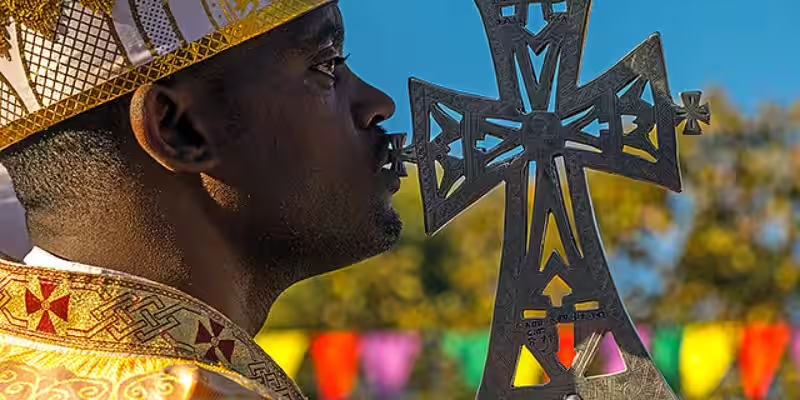
The presence of Christianity in Africa predates the well-known arrival of European missionaries by centuries. Ancient Christian communities thrived in North Africa, particularly in Egypt and Ethiopia, long before the spread of Islam. These early churches, like the Coptic Orthodox Church of Alexandria, developed their own distinct theological traditions and liturgical practices, demonstrating that Christianity has always had an African identity. Their survival through periods of immense upheaval is a testament to the deep roots of faith on the continent.
The Ethiopian Orthodox Tewahedo Church, for instance, claims a lineage stretching back to the Queen of Sheba and King Solomon, with its origins deeply entwined with the Old Testament and early Christian traditions. This historical depth challenges the simplistic narrative that African Christianity is solely a product of colonial evangelization. It highlights a continuous, albeit sometimes isolated, spiritual heritage that existed and flourished independently, adapting and enduring through various eras.
The Dawn of Modern Missions and the Shaping of African Christianity
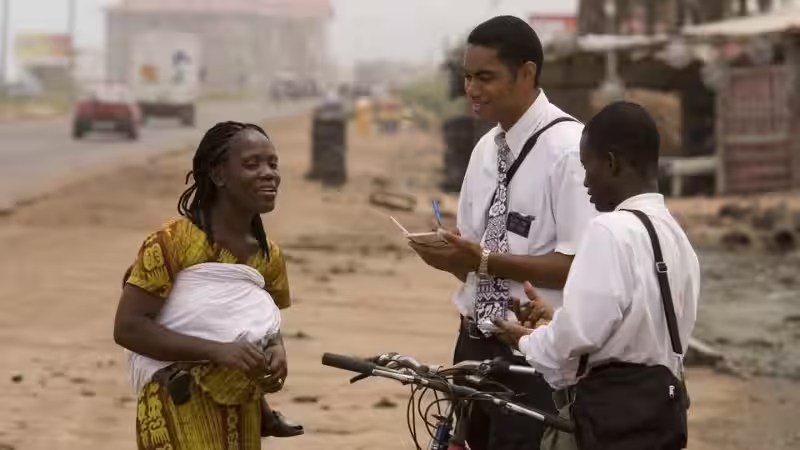
The 19th and 20th centuries witnessed a massive influx of European missionaries across sub-Saharan Africa. Driven by a complex mix of religious zeal, humanitarian concerns, and colonial ambitions, these missions established schools, hospitals, and churches, fundamentally altering the religious landscape of many regions. This period, while undeniably influential, also brought with it significant challenges and complexities, as Western doctrines were often introduced with little regard for existing African cultures and belief systems.
However, it’s crucial to avoid a purely colonial lens when discussing this era. Many African converts embraced Christianity with genuine conviction, finding in its message of hope, liberation, and community a powerful resonance with their own aspirations. The missionary encounter, therefore, was not a one-way street; it sparked a dynamic process of adaptation and indigenization, where African Christianity began to take on its own distinct forms, blending biblical narratives with traditional African worldviews.
The Rise of Indigenous Churches and the African Voice
One of the most significant developments in the history of African Christianity has been the emergence of independent indigenous churches. These movements, often initiated by African pastors and prophets, sought to liberate Christianity from foreign control and to express its teachings in ways that were more relevant to the African context. These churches, sometimes referred to as African Independent Churches (AICs), represent a powerful assertion of African agency in the religious sphere.
Examples of this shift are abundant, from the Zion Christian Church in South Africa, which seamlessly integrates biblical teachings with ancestral veneration and healing practices, to the numerous Pentecostal and Charismatic movements that now dominate the religious landscape in many parts of the continent. These AICs demonstrate a remarkable ability to synthesize faith and culture, creating forms of worship that are both deeply spiritual and authentically African. Their growth signifies a decolonization of faith, where African voices are no longer speaking in borrowed tongues but are articulating their own theological understanding.
Theological Innovation and Cultural Synthesis
African Christianity is characterized by a profound engagement with indigenous cultures, leading to unique theological insights and practices. Scholars and theologians are actively engaged in Africanizing biblical interpretation, finding parallels between biblical narratives and African oral traditions, proverbs, and cosmologies. This process allows for a deeper understanding and appropriation of Christian faith within an African framework.
For instance, the concept of community is central to many African societies, and this naturally finds expression in African Christian theology. The idea of the church as an extended family, or “Ubuntu” – a philosophy emphasizing interconnectedness and humanity – often informs how believers relate to one another and to God. Similarly, ancestor veneration, a significant aspect of many traditional African religions, is sometimes discussed in relation to the communion of saints in Christian theology, highlighting a bridge between the seen and the unseen worlds. The healing ministries prevalent in many African churches also draw upon traditional understandings of spiritual well-being, offering a holistic approach to faith that addresses both physical and spiritual ailments.
Today, African Christianity is a global phenomenon, with African churches and denominations increasingly making their mark on the international stage. The continent boasts the largest and fastest-growing Christian populations in the world, and its religious energy is palpable. This growth is driven by a variety of factors, including vibrant evangelism, charismatic leadership, and a deep-seated desire for spiritual fulfillment.
The future of African Christianity is likely to be shaped by continued indigenization, interfaith dialogue, and a growing engagement with socio-political issues. As African nations grapple with challenges such as poverty, inequality, and political instability, Christian communities are often at the forefront of social justice movements, providing aid, education, and a voice for the marginalized. This active role demonstrates that African Christianity is not just about personal salvation but about contributing to the transformation of society. The continent’s religious dynamism promises to offer fresh perspectives and enduring spiritual insights for the global Christian family.
Frequently Asked Questions about African Christianity
What is African Christianity?
African Christianity refers to the diverse expressions of Christianity that have developed and are practiced by people of African descent, primarily within the continent of Africa and its diaspora. It is not a monolithic entity but encompasses a wide range of theological interpretations, liturgical practices, and cultural adaptations that blend Christian beliefs with indigenous African worldviews, traditions, and social structures.
How did Christianity arrive in Africa?
Christianity has a long and complex history in Africa, predating its spread to Europe. It was present in North Africa from the earliest centuries of the Christian era, with significant early churches in Egypt (Coptic Church) and Ethiopia. In sub-Saharan Africa, Christianity was introduced through various means, including missionary efforts by European churches (Catholic and Protestant) from the 15th century onwards, and more recently, through the growth of independent African churches.
What are some distinct characteristics of African Christianity?
African Christianity is often characterized by:
Syncretism and Adaptation: The integration of certain indigenous beliefs, practices, and cultural elements into Christian worship and theology. This can include ancestor veneration (interpreted differently from traditional African beliefs), the use of traditional music and dance, and addressing spiritual warfare.
Emphasis on Community and Social Justice: A strong focus on communal life, collective well-being, and addressing socio-economic issues, poverty, and injustice.
Spiritual Warfare and Healing: A prominent emphasis on the reality of spiritual forces, demons, and the power of God to bring healing and deliverance from spiritual and physical ailments. This often leads to ministries focused on deliverance and miracle services.
Charismatic Expressions: A significant presence of charismatic and Pentecostal forms of Christianity, characterized by spontaneous worship, speaking in tongues, prophecy, and divine healing.
Indigenous Leadership and Theology: A growing movement towards African leadership within churches and the development of African theological perspectives that engage with local contexts and concerns.
Are there different types of African Christianity?
Yes, there is immense diversity within African Christianity. It includes:
Older Churches: Ancient churches like the Coptic Orthodox Church of Egypt and the Ethiopian Orthodox Tewahedo Church, which have very distinct histories and traditions.
Mainline Denominations: Churches descended from European missionary efforts, such as Catholic, Anglican, Methodist, Lutheran, and Presbyterian churches, which have adapted to African contexts.
Pentecostal and Charismatic Churches: A rapidly growing segment, often referred to as the “African Pentecostal explosion,” with a wide array of denominations and independent ministries.
African Independent Churches (AICs): Churches founded by Africans, often blending Christian beliefs with African cultural elements and responding to specific African needs. These can range from prophetic healing churches to more ethno-national separatist movements.
How does African Christianity interact with traditional African religions and beliefs?
The relationship between African Christianity and traditional African religions is complex and varied. In many instances, there has been a process of adaptation and reinterpretation where certain cultural practices or concepts are brought into a Christian framework. For example, the role of ancestors might be re-envisioned within the Christian understanding of the communion of saints, or traditional healing practices might be re-contextualized within a Christian understanding of divine healing. However, there are also instances where aspects of traditional religions are seen as incompatible with Christian doctrine and are rejected.
Is African Christianity monolithic?
No, African Christianity is far from monolithic. It is incredibly diverse in its expressions, denominations, theological interpretations, and cultural contexts across the vast continent of Africa and its diaspora. The Christianity practiced in an urban center in Nigeria might differ significantly from that practiced in a rural village in Kenya or among the African diaspora in Brazil.